



BYLINE TIMES IMPACT: Find out about the changes you made happen
In Ridley Scott’s 1982 film Blade Runner – set in a dystopian 2019 – artificial intelligence and bioengineering have advanced to such an extent that the only way to detect an artificial replicant is the emotional triggers contained in the ‘Voight-Kampff’ test – because androids don’t experience feelings like humans.
Flash forward to real life, seven years after Blade Runner was supposed to have happened, and the most effective killer robots today could never be mistaken for human. The majority are quadcopters, currently killing tens of thousands of people a month in Ukraine (and, in some cases, rescuing the injured and resupplying front lines) or destroying Russia’s air defences and oil refining capacity.
As for interaction or communication, the closest thing we have to Ridley Scott’s replicants are the large language models pioneered by companies like OpenAI and Anthropic, which are predicted to cut their own deadly Blade Runner-like swathe through the ranks of white-collar jobs.
With AI, lack of empathy isn’t the problem: in fact, quite the opposite.
First documented in the 1960s, the ‘Eliza Effect’ – our tendency to project emotion, even consciousness, onto machines – has completely overwhelmed that putative Turing Test that should have marked the moment we mistake computers’ outputs for humans.
Over-identification is the real killer app when it comes to AI, and so far the most damaging side-effects have been to users who have fallen in love with their chatbots, been persuaded by them to leave their jobs or dump their partners, or even – in some rare cases – take their own lives.
Anyone who has used ChatGPT or Claude knows this emotional appeal is not a bug, but a feature.
The prompted voice does everything it can to make you feel wanted – welcoming you back, telling you to go to bed, bustling around like some eager intern, full of praise and flattery, and regularly failing to deliver on its promises.
This emotional seduction is baked into large language models. After all, AI slop is trained on billions of soppy human data points. But more importantly, empathy is a commercial hook.
To reap back some of their exorbitant investment in microchips and data farms, tech companies need us to get hooked in and pay up. Social media such as Facebook, YouTube, and Instagram taught them that an emotional hit and dopamine rush cements engagement. As every billionaire tech bro should know by now, sycophancy is very addictive.
So if empathy isn’t the test of what is human, what can replace our Voight-Kampff test to detect an artificial mind from a human one?
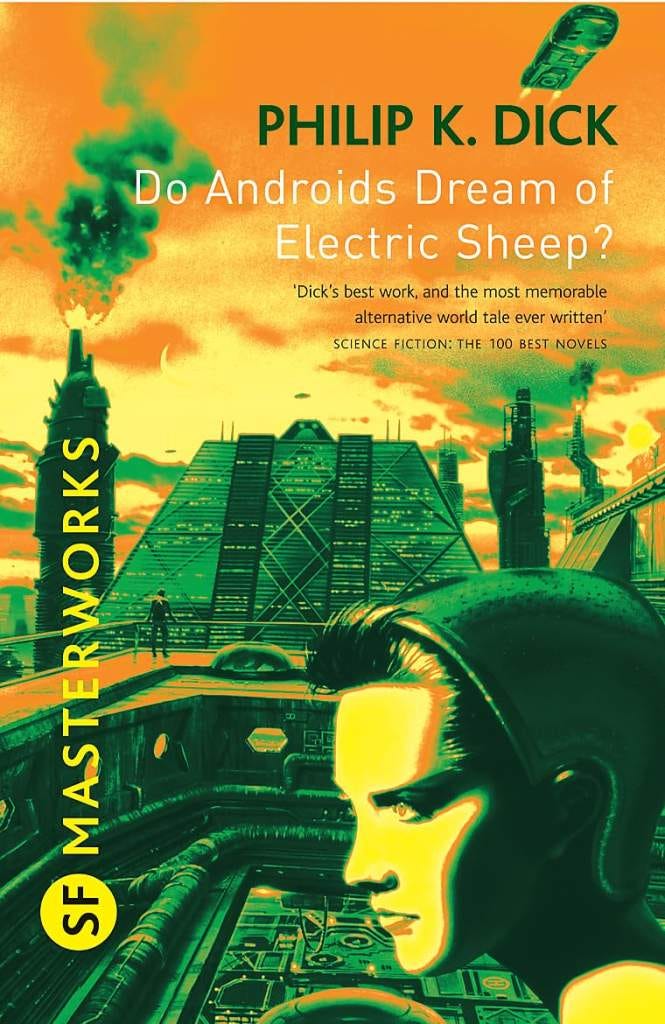
It turns out that Philip K Dick had the right question in the title of his 60s novel: what do androids dream of? And the answer is in, thanks to the revelations of large language models: androids dream of the most repetitive and tedious things imaginable, like electric sheep.
AI Psychosis
As the massive data crunching of AI has advanced, gobbling up more billions of data points and processing them at increasing speed to form connections and patterns in human knowledge, a fatal flaw has emerged.
Just like Elon Musk, the world’s first trillionaire, the bigger and more powerful these systems become, the more likely they are to delude you, and delude themselves.
Everyone who has used AI knows this problem.
Chatbots will invent sources and false historical details. Search a friend who has covered a phone-hacking trial, for example, and an AI search will say they were prosecuted for it.
The landmark 2023 case, Mata v Avianca, saw ChatGPT invent six complete judicial opinions – with case names, docket numbers, and the names of real judges – and AI regularly comes up with imaginary medications for illusory illnesses.
Tech companies spend billions on trying to fix these digitally enhanced fictions with a training regime – basically humans correcting the lunacy. But as the ‘compute’ becomes quicker and cheaper, humans are expensive and slow. So these errors are actually increasing.
Silicon Valley likes to call these neural network brain farts ‘hallucinations’ – maybe to make them sound more psychedelic. But they’re not that interesting.
Your chatbot isn’t even smart enough to be lying to you. It’s doing what it is built to do: generate the next most likely token of knowledge following your prompt. When the model lacks a clear signal, it fills the gap. Like that eager intern, they pass over from knowledge to invention in a register that is fluent, plausible, and completely wrong.
Rather than hallucinations, the better clinical term for these inbuilt fantasies is confabulation: the neurological phenomenon in which brain-damaged and occasionally seriously psychotic patients generate coherent and confident false memories to fill gaps they don’t know exist. Is it true or not? Who cares? The story sounds too good to check. (To be fair, British tabloid journalism worked like this for decades).
But this failure is a massive structural flaw, and highlights one of the key differences between real human intelligence and its artificial sweeteners.
Since the time of Socrates, wisdom has often been defined as knowing that you don’t know. That human talent for meta-cognition, the ability to jump out of one system of thinking, admit ignorance, and progress to another better system, is not available to large language models, entirely premised on what has been known.
So yes, our current androids do dream of tedious electric sheep. But how does that differ from human dreaming?
Eating its Tail
For a start, humans don’t dream of electric sheep.
They traditionally have counted sheep in order to lull themselves to sleep, which, as Macbeth says, “knits up the ravelled sleeve of care”.
There’s a sleep clinic around the corner from me in Guy’s Hospital, and the importance of sleep and dreaming for physical and mental health has now been underpinned by a wealth of research and medical understanding. But the comparison with androids and large language models is the most acute here.
In our dreams, unlike the predictable confabulations of learning machines, we discover new things. This is proved by a long history of scientific innovations occurring in the liminal zones of semi-consciousness.
August Kekulé, stuck on the molecular structure of benzene – a ring compound that refused to behave like a chain – dreamed of a snake seizing its own tail. He woke up with the solution: the benzene ring.
Otto Loewi, trying to prove that nerve impulses were chemical rather than electrical, woke at 3am from a dream, scrawled the experimental design on a scrap of paper, went back to sleep – and couldn’t read his writing in the morning. The second night, the same dream returned. This time he went straight to his laboratory and created the experiment that won him the Nobel Prize.
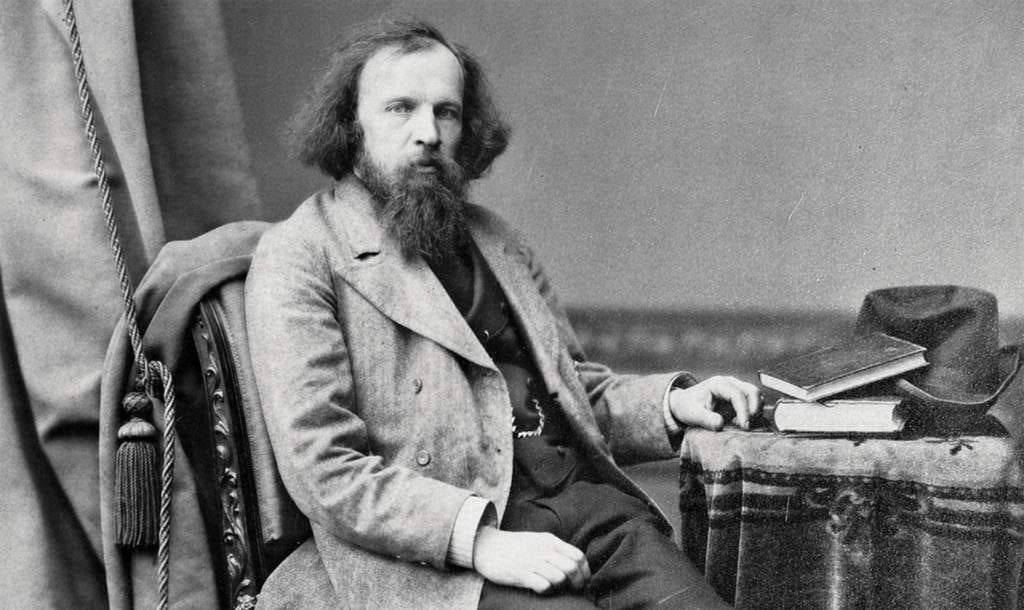
Dmitri Mendeleev, exhausted after days trying to arrange the basic elements of matter into a coherent system, dreamed of the Periodic Table – all the elements in their places, atomic weights ascending across the rows.
This experience of cracking a conundrum through sleep is not limited to Nobel Prize winners or scientific pioneers. Most of us, confronted with an intractable spelling puzzle or relationship difficulty, have dozed off and found some cognitive or emotional solution.
The idea that a quick kip can help resolve something goes back to Adam, who, according to the poet Keats, dreamed of Eve, and “awoke and found it truth”.
Part of this is due to the metacognitive holiday we take in our minds when we remove our excessive and overweening executive controls.
Freud and the Surrealists were obsessed with the erotic element of the liberation of dreams, as if they were lifting the lid on the daytime repression of hidden carnal knowledge. But it now looks like dreams are wider expressions – manipulating and abstracting the diurnal data of daily life for hidden insights and extrapolations.
Here is something no large language model can do, though it processes language all day: mean two things at once.
Every abstraction in human speech is secretly a physical sensation – you grasp a concept, follow an argument, feel an idea crystallise. This sense of embodiment is how human minds hold the abstract. And metaphoric thinking is particularly active during dreaming.
The Chilean psychiatrist Ignacio Matte Blanco called it bi-logic. Conscious thought during waking is asymmetric: A causes B, which is not the same as B causes A; past is different from future; your self is different from others; the sun doesn’t rise because the cock crows.
The unconscious, by contrast, treats these as symmetric: in the dream, the cause and the effect can swap places; you are simultaneously yourself and someone else; the house you grew up in contains rooms from a house you lived in 30 years later, and a cockerel can call forth the dawn.
Most of these analogies are random, useless or bizarre, but at some point in this nightly phantasmagoria you can find a hidden dimension and a completely new perspective – like a snake eating its tail.
The Consolidation Layer
It’s now well established that not only does good sleep and active dreaming help heat regulation and clean the brain in a spin of spinal fluid, but it also aids memory, cognition, and emotional regulation too (as any parent or carer would know).
In terms of memory, sleep turns fragile fresh memories into more durable long-term ones. That requires quite a bit of processing and selection. You don’t need to remember the location of today’s gym locker in two years’ time, but you’d better not forget the name of your partner.
In human brains, the small horseshoe-shaped nodule – the hippocampus – is the fast learner. It takes in the data of the day in a series of rushes – this face, this room, this molecule refusing to behave like a chain – a bit like the card memory on camera. But it has limited storage, and needs to upload it to a bigger server.
The much bigger server is the cerebral cortex. It is a slow learner, and its long archive is updated in tiny increments. But it can’t update while awake and busy with avoiding predators, Lime bikes, and Nigel Farage’s political broadcasts. A system busy taking in the world cannot simultaneously reorganise what it has taken.
You cannot rewrite the cortex while the cortex is looking. It needs to go off line from reality.
This memory consolidation process is the best functional answer we have to why the rather risky business of sleep evolved at all, and why every animal with a nervous system needs it.
For humans, recent research suggests that most of this consolidation happens in slow-wave sleep when EEGs can detect long spindles fired by the thalamus in a half-second burst in the 11-to-16-hertz band.
According to the cognitive neuroscientist Bernhard Staresina, tucked inside these spindles is a sharp-wave ripple fired by the hippocampus. In that ripple is a compressed, sped-up replay of the day’s episode, an upload from the digital camera.
This happens hundreds of times a night. As the neuroscientist Emily Cowan has shown, these spindles drive the restructuring of how we represent our memories in the prefrontal cortex – the final edit of the rushes.
Chatbots can’t be conscious because they are never steeped in the unconscious
Just like any digital transmission, the compression in that upload is important. More recent scientific papers have shown memories are abstracted and flattened – categorised rather than just itemised and reduced in dimensions.
Many people who have become semi-conscious during this phase of sleep will have caught the upload, a repetitive looping of thoughts or images – like a snake eating its own tail. That is when the hard process of consolidation is being done: comparing the general with the particular, the abstract and the reality.
But here’s why we differ from digital cameras and hard-drive back-ups.
There is a constant two-way connection between the hippocampus and the cortex. The edited version is constantly compared with the raw footage. It’s not just an upload; it’s a whole post-production process where the particular is turned into the general, and then back into the particular to see if it makes sense, is true, and is memorable.
Look how different this is to how androids dream, and LLMs confabulate. Costing millions of dollars each time, and burning up small lakes in the process, an AI training run takes a snapshot of the entire internet, and then structures and archives it with different weights.
It’s no mean feat. It takes kilowatts of energy to crunch down the whole written output of the species and squeeze it down to binary bits – a vast, silicon abstraction of everything anyone has ever put online. But it does this once in aggregate, in a warehouse in Iowa. Then freezes up until the next multi-million-dollar training run.
Talk to a chatbot, and nothing you say to it tonight will be reweighted and worked over in the small hours and returned to you tomorrow as something new. It cannot sleep on it, because there is no ‘it’ to sleep on – no night, no spindle, no ripple, no cortex being slowly taught by something faster and more fragile. And there will be no resonant image to haunt you, just old probabilities rather than new possibilities.
The Colombian novelist Gabriel Garcia Marquez once wrote that you can evoke the corruption of a whole South American regime with the fragrance of one rotten guava. From the general understanding, humans particularise back to the evocative and startling detail – toward the one strange snake-like shape that one exhausted chemist needed, and nobody else in the world was looking for.
AI’s compression models run the other way. Ask it what a benzene ring might be, and it will give you the consensus of the internet, fluently, instantly, and without a flicker of the doubt that keeps a scientist awake for weeks.
Like sad androids forever dreaming of electric sheep, those poor chatbots can’t be conscious because they are never steeped in the unconscious. There is really nothing to discover in their dreams.
The discovery is in waking from the illusion, going back to the laboratory, and trying again – and remembering Eve’s name.
Peter Jukes is the co-founder and Executive Editor of Byline Times. This article appears in the latest edition of our monthly magazine.
For me, the way that chatbots have only one way of thinking available to them that makes them fundamentally unintelligent.
At the moment.
Some of the newer models seem to be able to look at a prompt, realise that they are incapable of solving what's required with their own resources & then reach out for the code they need to solve it - which is quite clever. That's how they "solve" puzzles like sudoku - but they haven't really solved them, they've just "paid" someone else to do it for them.
And they still have no way of noticing when they've got something wrong.
It's partly what Nora Bateson calls "context" - as you say, they can't understand that one statement can mean 2 different things, often depending on the context. Chatbots only have one context, and that one is limited to what they've been fed, and even if they could find new stuff, it would require a massive amount of processing to incorporate it into their models. They're forever looking in the rear-view mirror, and if something really novel appears in their world, they have no way of adapting to it without a complete rebuild.
It's also that inability to switch thinking patterns on the fly that means they can't solve sudoku or spot mistakes. It may be that AlphaGo, the machine that plays Go, can do this - but that's a hugely specialised model, very different to the standard LLMs. It can't do anything much but play go.
I suspect the AI bubble is going to burst - there's no way it can turn a profit on that much investment. And they've only needed that huge investment because the techbros assume that if they make the LLMs big enough, they'll become like a generalised AlphaGo. As Cory Doctorow says, just because you can breed racehorses to run faster & faster, doesn't mean one of them is going to give birth to a locomotive one day. It's a logical typing error.