

'Why I Quit Your Party – And Joined The Greens'
On the Byline Podcast, Adrian Goldberg hears from Phil Burton-Cartledge, a political author and academic who is part of what seems to be a rising trend - Your Party members quitting to join the Greens
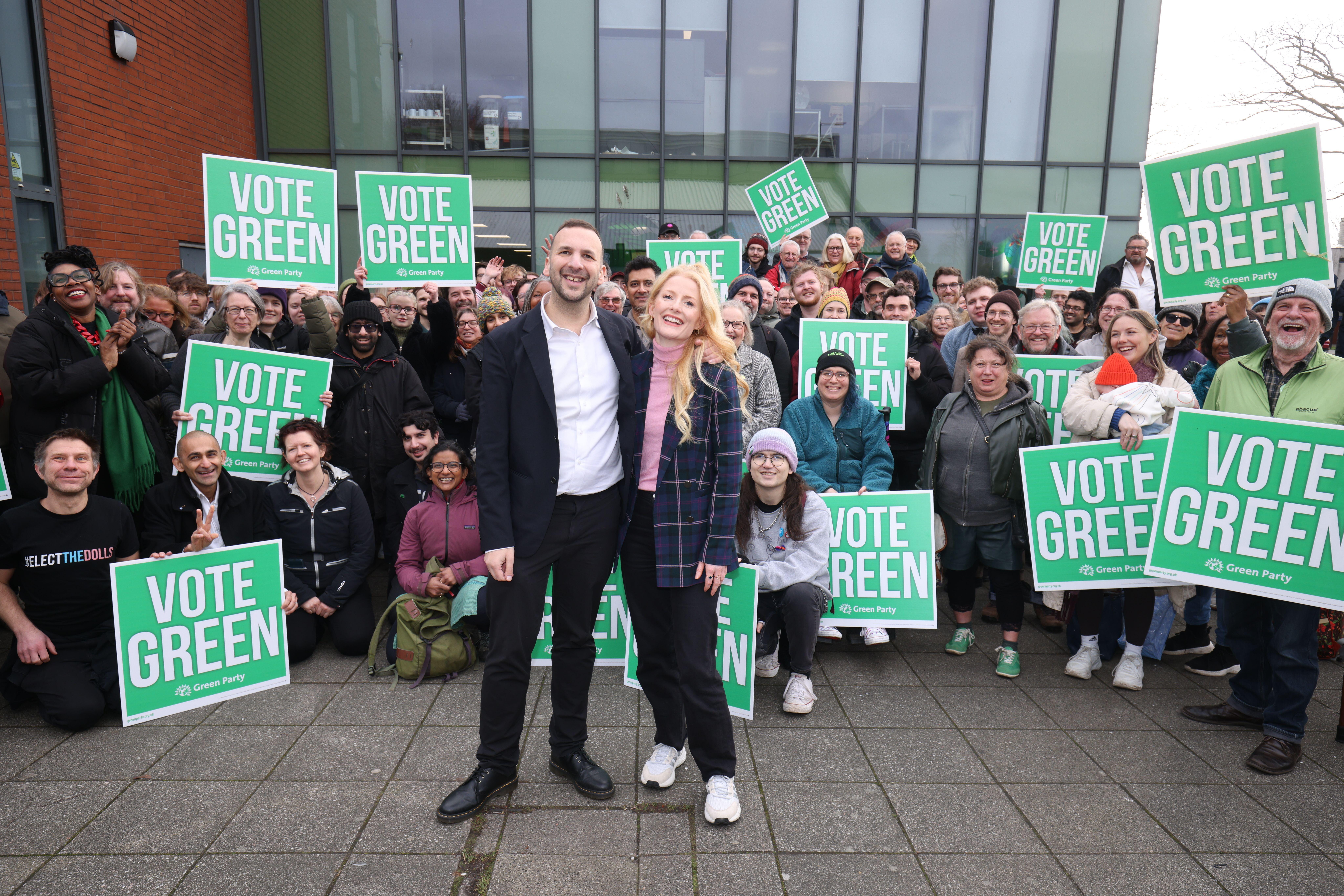
As Nigel Farage welcomes numerous ex-Conservative MPs to Reform UK is the fledgling Your Party losing members to the Greens? Well, in at least two cases, the answer is yes.
The most high profile defector is Jamie Driscoll, former Mayor of the North of Tyne Combined Authority. He joined the Greens in December despite having been a founder member of Your Party, and has now been followed on that path by Phil Burton-Cartledge.
Phil is an academic at Derby University and is also the author of The Party’s Over: The Rise and Fall of the Conservatives from Thatcher to Sunak. What made him join Your Party in the first place, and what now has made him quit?
“I suppose it’s all about my own political trajectory. I come from quite a left wing background. I’ve always been really interested in building political power of working-class people. I mean, despite having a double-barrelled name, I’m from a working class background, and I’ve always been interested in, how do we do working-class politics, how can we fulfil the dream of fundamentally rebalancing power and wealth in favour of working people and their families, to quote the 1974 Labour manifesto.”
He says that after many years of working for the Labour Party, he moved to Your Party primarily because of Labour’s attempt to deselect Diane Abbott in June 2024. “That was the final straw for me,” he explains.
Though he felt “a bit sceptical” about whether a new party of the left could form, and had his own criticisms of Jeremy Corbyn’s leadership, he says, “I was initially quite enthusiastic, and I was looking forward to joining.” But the botched membership launch, meant that he “got on board somewhat reluctantly, and since then, it’s just been quite a dispiriting experience of people trading insults in Facebook groups, because that seems to be where most of the party is most active.”
Put off by what he terms”backbiting” and “shenanigans”, Phil Burton-Cartledge felt that “Your Party has kind of missed its mark, has failed to make an impact on British politics, and as a result of them missing their moment, the Greens have been able to really take off”.
Membership of the Green Party has surged to nearly 200,000 members, partly, Phil says because so many people on the left are thinking, like he did, “What can I do to help rebirth a radical working-class politics that is appropriate to the early 21st Century? You know, we’ve been thinking about the Greens for quite a while and what they represent, and how they’ve transformed themselves into a mass party. And so I thought, right, okay, that’s where I’m going to be, and that’s where I’m going to put my efforts.”
The protracted birth of Your Party coincided with the the Greens being galvanised by the election of Zack Polanksi, whose broad appeal surprised many. “By the summer last year, people who were progressively-minded were clearly fed up with the Labour Party. And so when Zara Sultana announced that the fact that she and Jeremy Corbyn and the independent alliance of MPs were actually cooking up a party together that really struck a chord in the country.” says Burton-Cartledge.
Your Party was able to sign up 800,000 people to its mailing list, but failed to capitalise on that moment, falling into dispute with one another, which enabled “the very savvy Zack Polanski to say, look, those people over there, they’re mucking about. They’re too busy talking amongst themselves. They’re not providing the change that the country needs”.
The Greens were able to say “we’re clearly a party of the left, a party that takes seriously cost of living issues, takes seriously what we might call class issues, so tens of thousands of people that would have otherwise been attracted to Your Party, went with the Greens.” It was a message that has inspired many, including Burton-Cartledge, who decided to use his “experience of analysing British politics and being actively involved in politics to help that political project along.”
The Green Party are, he feels more effectively tapping in to changes in society wrought by Britains move from an industrial to a service economy as the state expanded post the Second World War. “Not just in Britain, but in most West European countries, the expansion of the state involved expanding education systems, welfare systems, NHS, other public services and so on. So, over a period of years, millions of people that would previously have worked in private industry for an employer producing some sort of commodity in return for a wage, were now being employed to produce services. The object of those services would be to educate people, to care for people, to make people healthy again, to provide social security for people, and so on.”
This rise in what he calls ‘immaterial labour’ has forced people to work with others from different backgrounds, weakening the hold of social conservatism and is especially marked amongst younger people.
“My argument that I make in my book is that social conservatism is in long term decline because the sorts of values, the immaterial labour, which, of course, is the sort of labour that the vast majority of people are now being socialised into, and spend their working lives doing, select for certain values, which are being sociable, being tolerant of people from different backgrounds, being familiar with people from different backgrounds, which maps across onto social liberal values.
“And if you look down the generations, when it comes to voting behaviour or adherence to particular values, that you see that the younger people are, the more likely they are to have socially liberal values.”
While Your Party might be every bit as socially liberal as the Greens, their collapse into recrimination has made it less easy for them to be an engine for change, for shaking up the old politics.
The Labour Party saw its membership swell to about half a million members in the ‘Corbyn surge’ of 2015, fuelled, Burton-Cartledge says, by a similar process “It’s almost as if you have this rising generation of working class people who were looking for a political vehicle for their voice, because they’ve been excluded from politics so long.” That support, he says has bled away from Labour into movements like Black Lives Matter and Palestinian solidarity campaigns, but is now actively seeking expression through political parties again “and the Green Party have kind of won out for now”.
Thanks to the Left Lane substack.