


BYLINE TIMES IMPACT: Find out about the changes you made happen
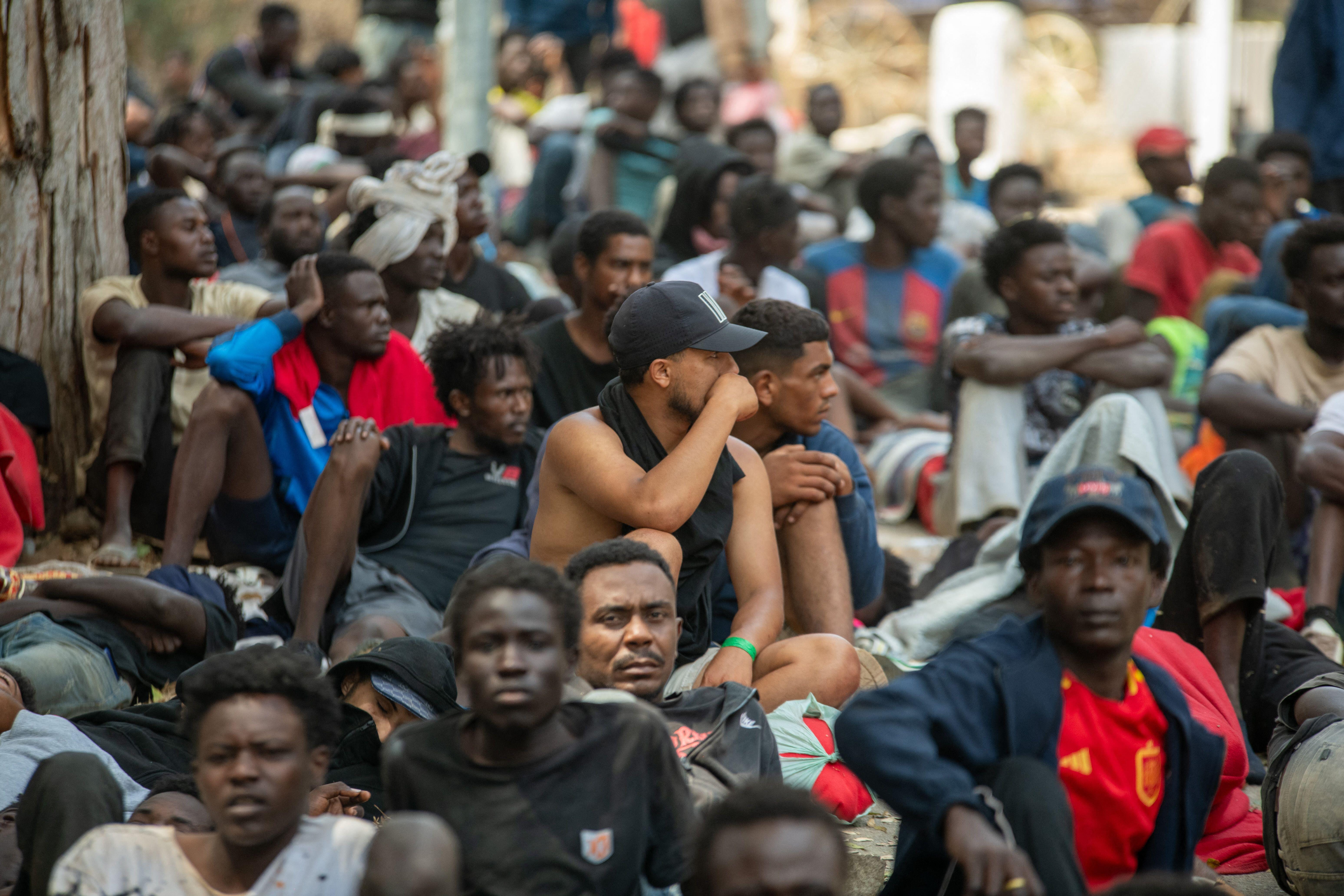
It was immediately branded as a “migrant invasion” and roused the far-right on both sides of the Atlantic – but as the dust settled on the curious influx of more than 50,000 people to the border of Spain’s North African territory of Ceuta last week, some believe the incident actually shows all the hallmarks of a planned incursion, designed to put pressure on Pedro Sanchez’s socialist Government in Madrid.
That’s the conclusion of Stephen Zunes, a professor of politics and director of Middle Eastern Studies at the University of San Francisco, who told the Byline Times Podcast, “Some of them were indeed migrants, but whatever their status, it was clearly facilitated by the Moroccan regime. There are videos of lorry loads of young men being trucked to the border. You don’t get 50,000 people simultaneously arriving in a corner of Morocco without a fair amount of logistical support, and the Moroccan police, who usually guard the border, essentially threw the gates open. This seems very much a political effort to undermine and embarrass Sanchez and to divide Europe.”
Professor Zunes pointed to a similar incident in 2021 when Brahim Ghali, the President of Western Sahara – over which Morocco claims sovereignty – flew to Spain for medical treatment. Morocco responded by allowing almost 10,000 people into Ceuta and the neighbouring Spanish enclave of Melilla. “It was a shot across the bow,” he said – and one which yielded results. “Morocco has been extracting all sorts of political and economic concessions from the Spaniards, including getting Sanchez to break with nearly 50 years of Spanish policy by coming out against the idea of a referendum on self-determination for the people of Western Sahara.”
The latest ‘provocation’ appears to have been Sanchez’s effort to improve relations with Morocco’s neighbour and rival Algeria, which has become a key source of natural gas to Spain – not least because of Russia’s invasion of Ukraine, and the ongoing paralysis in the Strait of Hormuz. Crucially, Algeria supports the right of the people in the Western Sahara to decide their own fate, including independence. “Western Sahara is recognised as a non-self-governing territory by the United Nations,” Professor Zunes explained. “That is a colony which has the right of self-determination, which which must include the option of independence – something that Morocco has not honoured. Indeed, the United States and Israel are the only two countries that have formally recognised Moroccan sovereignty [over Western Sahara].”
It can also be assumed that the US and Israeli governments will take pleasure in Spain’s discomfort over the migration issue. Sanchez has refused to support Trump’s war in Iran; and previously described Israel’s attacks on Gaza as “the extermination of a defenceless people.”
That’s not to suggest that either Washington or Jerusalem were directly involved in the Ceuta incident – there’s no firm evidence to support that – but Professor Zunes suggests the tacit support of the United States, in particular, has emboldened Morocco’s autocratic monarch, King Mohammed VI. The White House recently allocated funds, for example, to a development project in occupied Western Sahara. “This is very much part of an effort by the United States to consolidate Morocco’s control of Western Sahara,” Zunes observed. In return, Morocco has announced that a new road between Tiznit and Dhakla, which is mostly within the disputed territory, will be named ‘The Donald Trump Highway.’
The Ceuta incident has also strained the European alliance, with Italy’s Prime Minister Georgia Meloni briefly closing her country’s borders in defiance of the Schengen Agreement, which guarantees free movement. Spain condemned the "selfish, polarising and unlawful" reaction of some EU counterparts. The vast majority of the more than 50,000 North Africans who arrived in the hope of gaining access to Europe have now been turned back, after being encouraged to travel across Morocco by social media accounts of questionable origin – although, sadly, 72 people died after attempting to cross into the Spanish territory by sea.
Professor Zunes concludes: “You have this nexus of the United States, Morocco, and Israel, all of which want to marginalise the relatively progressive Spanish Prime Minister. The way that the right wing in Europe and United States has taken this on – and Trump in particular – shows they want to divide Europe. We’ve also seen this in the EU meetings, where the more right-wing governments, like in Italy, are saying that Spain shouldn’t be part of the Schengen Zone, and that’s been supported by a number of other governments.” But though Ceuta and Melilla are technically in the Schengen Zone, they are subject to special conditions, and Zunes explains, “Spain actually has very tight controls of travel between them and the Spanish mainland for this very reason. So this was not an invasion of Europe. Ceuta is not in Europe, and those crossing into Ceuta can no more make it to the European continent from there, than they can from anywhere else in Morocco.”
Listen to Adrian Goldberg’s full interview with Professor Stephen Zunes here: