

In recent weeks, much of the global conversation about the US-Israeli war against Iran and its affiliates has centred on markets, trade routes and economic stability. Governments are convening meetings about energy supply, analysts are tracking oil prices, and headlines warn of disruptions to global shipping.
As Easter arrives — a moment traditionally associated with reflection, sacrifice and renewal — it is difficult not to notice something unsettling in this framing.
Economic Cost
Turn on the news, scroll through political commentary, or listen to diplomatic briefings and a particular pattern emerges. The dominant language used to describe the conflict is economic. Bond markets are nervous. Oil prices are rising. Stock markets are a rollercoaster. Shipping routes are under threat. Fuel shortages are only days away. Governments are convening emergency meetings to discuss supply chains and global trade flows.
These are, of course, real concerns. Around a fifth of the world’s oil consumption passes through the Strait of Hormuz each day, making it one of the most critical chokepoints in global energy supply. Disruption there can quickly ripple across international markets, pushing up fuel prices and affecting the cost of living for millions of households worldwide.
War also carries much broader and measurable economic consequences. The International Monetary Fund has repeatedly warned that geopolitical conflicts can slow global growth and fuel inflation by disrupting trade and energy markets.
But it is worth remembering that these economic consequences are secondary effects. They stem from something far more immediate and devastating: the human cost of war itself. Acknowledging that reality does not diminish the pain people feel when their livelihoods are affected.
In war, lives are lost. Families are displaced. Communities are shattered.
Human Cost
According to the United Nations High Commissioner for Refugees, global forced displacement has now surpassed 110 million people — the highest level ever recorded — with conflict remaining the primary driver.
And yet much of the international political conversation seems to orbit around the mechanics of global commerce. In London this week, dozens of countries gather to discuss the reopening of the Strait of Hormuz. The urgency of securing shipping routes is clear. But the prominence of that conversation raises an uncomfortable question: why does restoring trade appear to command greater diplomatic momentum than ending the violence that disrupted it in the first place?
At the same time, the United States is pushing the boundaries of human exploration in space, sending people further beyond Earth than at any point in history on the Artemis II rocket that launched on Wednesday. The first time in nearly 50 years that our species is sending humans back into deep space. It is a moment that could represent the best of human ambition and curiosity. Yet the political rhetoric dominating headlines this week is not one of wonder but of what President Trump called in his late-night address on the same day, “total annihilation” of nations and peoples.
Taken together, these contrasts reveal something curious about our collective priorities.
In moments of crisis, we appear remarkably efficient at calculating the economic consequences of war. But we seem far less capable of keeping the human cost at the centre of the conversation.
Which raises a simple but uncomfortable question.
Where, exactly, is the humanity?
One possible answer lies in the broader political and economic moment we are living through.
The World Turning Inward
For much of the late twentieth century, globalisation encouraged societies to think beyond national borders. Trade expanded, travel became easier, and international cooperation — however imperfect — became a defining feature of the political landscape. The language of politics increasingly reflected this reality, emphasising shared interests and global interdependence.
That moment now appears to be receding.
Across much of the world, governments are turning inward. Economic resilience, domestic industry and geopolitical competition have become the dominant priorities. The language of global cooperation has gradually given way to something harder-edged: the language of national survival.
Alongside this shift has come the resurgence of more openly nationalist and authoritarian political movements across many democracies. Political figures such as Donald Trump in the United States, Nigel Farage in the United Kingdom, and a growing number of far-right parties across Europe have built political momentum through narratives rooted in division, cultural threat and national grievance. Politics in this frame is no longer about shared responsibility across borders or even within them, but about protecting the interests of a narrowly defined “us” against a supposedly threatening “them”.
That framing is politically useful.
Fear, Difference, Grievance
It channels frustration, simplifies complex problems, and offers easy targets. Fear, difference and grievance are powerful political tools — often far more effective at mobilising support than the slower, more complicated work of cooperation. It simultaneously dulls the senses when harm is committed against the “other”. A school shooting in our own backyard is a tragedy but the bombing of a school in a faraway land during a war is collateral damage.
Economic insecurity has played a role in making these narratives resonate. Despite overall global economic growth, many people in advanced economies feel financially more vulnerable than previous generations. According to the OECD, income inequality across most developed countries has widened significantly over the past four decades. While real wages for large segments of the population have stagnated, wealth has increasingly consolidated at the very top.
When that happens, political storytelling tends to follow a familiar pattern.
Rather than confronting the structural forces driving inequality — tax policy, corporate consolidation and the extraordinary accumulation of wealth among a small global elite — public anger is redirected toward those who are far more visible and far less powerful. Migrants arriving on small boats, refugees fleeing conflict, or governments in distant nations become convenient symbols of threat, even when they have little connection to the underlying causes of economic insecurity.
In other words, the focus shifts away from those concentrating wealth and power, and toward those with the least control over either.
At the same time, consumer culture has encouraged people to look increasingly inward. Social media platforms — designed to maximise engagement and advertising revenue — have transformed much of daily life into a continuous stream of personal feeds, shopping recommendations and algorithmically curated information. The effect can be a gradual narrowing of perspective, where attention is directed toward individual consumption, identity and personal grievance rather than collective experience.
A Moment of Hope
In that environment, it becomes easier for political actors to frame global crises in economic terms rather than human ones. Markets are measurable. Supply chains can be tracked. Oil prices move in real time.
Human suffering, by contrast, does not appear neatly on a balance sheet.
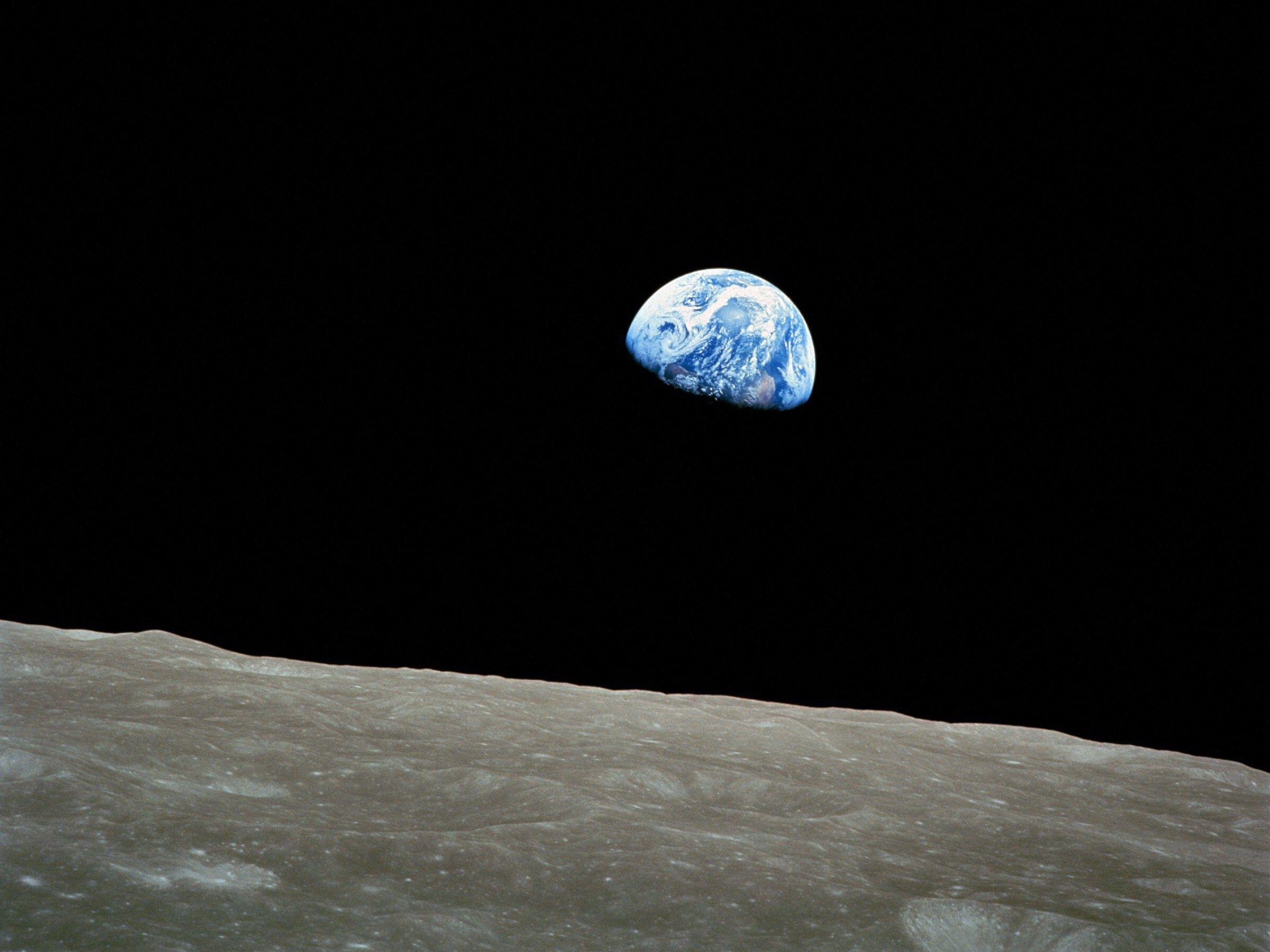
And yet the contrast with this week’s space mission offers a reminder of another way to see ourselves. As the crew of the Artemis II prepared for launch, its Commander, Reid Wiseman, spoke of undertaking the mission “for all humanity”.
It is a phrase that carries a quiet but profound truth. Viewed from the vastness of space, the divisions that dominate political rhetoric — borders, markets, rivalries — begin to shrink in significance. What remains is a single, fragile planet shared by billions of people whose lives are far more alike than different.
Perhaps the real question is not whether humanity has disappeared.
It is whether we are willing to recognise it again.

As a 27 year Navy veteran who flew missions in both Iraqi conflicts, he would know about the costs.