


BYLINE TIMES IMPACT: Find out about the changes you made happen
Ukraine’s capital, my home for a quarter of a century, has been under terrorist siege for the last 48 hours. The definition of terrorism is the calculated use of violence to achieve political goals. Putin’s goal is the subjugation of Ukraine, and so the country’s capital of Kyiv is again one of his primary targets.
Of course, Kyiv has been under attack since 24 February 2022. But things are different now, with attack capabilities enhanced through technological advances, Russia is experimenting with new kinds of cruelty. The purpose of the current attack strategy is not just the physical harm that they can do in destroying buildings and bodies, Russia’s current theory of war now also encapsulates psychological terrorism.
The Cat-and-Mouse Race of Technical Advancement
The Russian war against Ukraine is well known to be a race of technological advancement from each side. When Russia first introduced the Iranian-made Shahed drone to their arsenal, Ukraine sought ways to counter the threat they posed. The new generation of these drones, called “reactive” drones, now feature jet-powered engines that can propel these flying bombs at speeds of up to 600 Km/h. A significant upgrade from the 200 Km/h that the older variants were capable of. Getting a bead on machines travelling at such velocity is not impossible, but it is very difficult.
So as Russia has nudged ahead in the cat-and-mouse game – of designing more efficient means of raining death on civilians in their homes versus the more efficient means of intercepting these powerful weapons – Russia has also refined their strategy of drone use.
Psychological Terrorism
Previously drones were used in massive raids, intent on overwhelming the crews trying to interdict them, and hundreds of drones would flood the skies over Kyiv, home to 3 million people and the sixth most populous city in Europe. Those mass attacks would happen in a pattern of roughly once every ten days. Always at night, to catch families as they slept in their beds.
Now, Russia is firing its new jet drones at the city on a near hourly basis, causing the air raid sirens to sound more frequently than ever before. Every time those sirens sound, people face a choice: find shelter or go on about their daily lives. That choice then translates to a life-or-death outcome if someone finds themselves at the spot impacted by one of these almost unstoppable machines. Life in Kyiv is literally a death lottery.
Knowing that, the constant reminder of that fact, as sirens blare across the Ukrainian capital, is where the psychological torture is being inflicted.
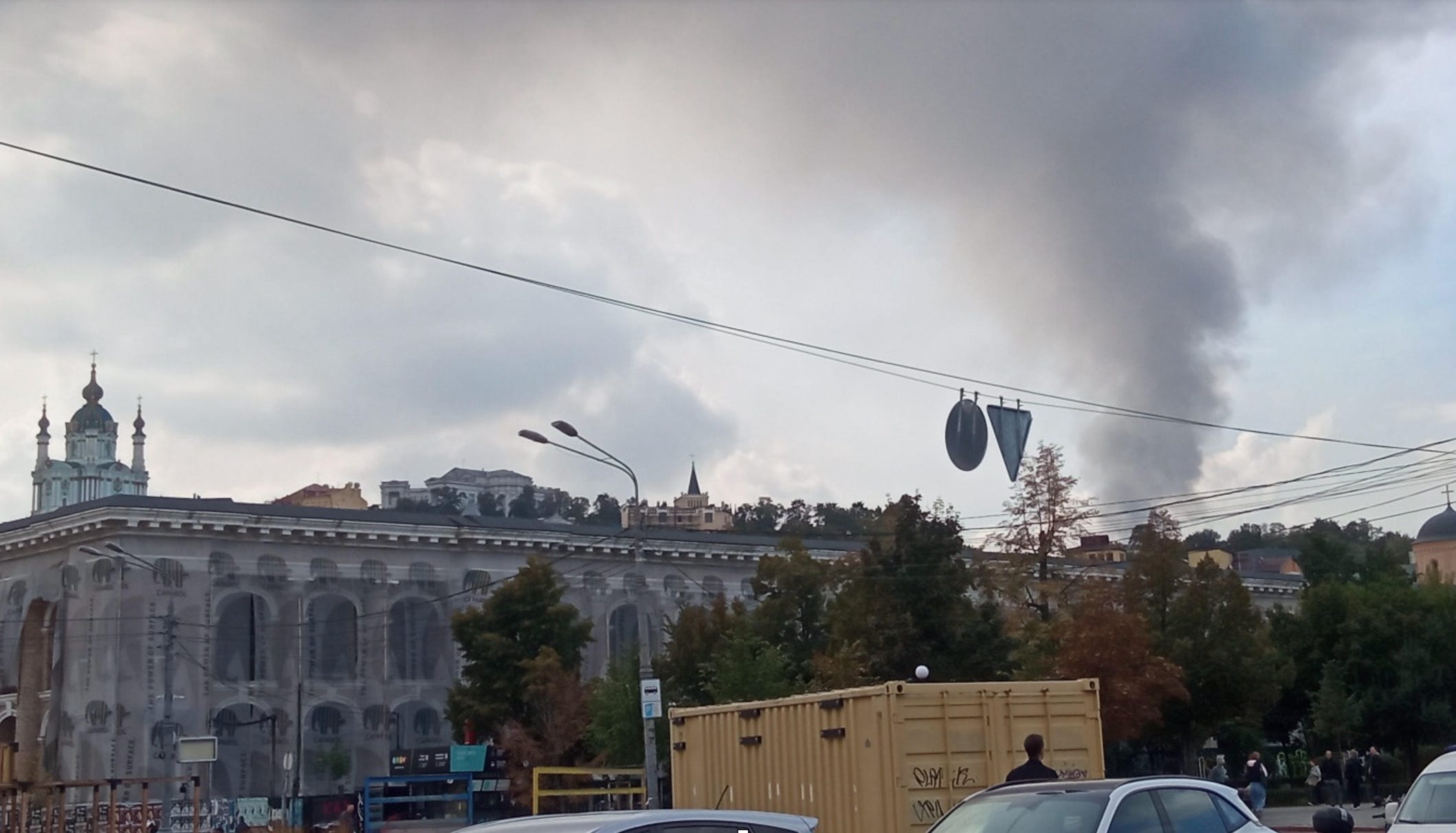
While new defences are being developed and tested, it seems like we are all almost naked now. There are three promising interceptor models in the works, the Government tells us, but that development was unable to stop the strikes yesterday. When we hear the impacts and see the rising clouds of black smoke over the city horizon or above our landmarks, we know that someone, somewhere, may have just been killed or severely wounded as a result.
The targets struck in recent days have included the central railway station in Kyiv, a broad daylight attack causing panic to the thousands of passengers who will have been in that location at that time. Business centres have been hit. A maternity hospital took a blow. A kindergarten was also struck.
Last night saw Russian cruise or ballistic missiles being added to the deadly cocktail of terrorist hardware, with impacts occurring at 4 am and causing foundations to rattle while folks hoped or prayed that they might evade death or injury this time around.
The Delusion of the Diplomatic ‘Deal’
Against this backdrop, the Presidents of Ukraine and the US met yesterday on the sidelines of the UN General Assembly in New York. Donald Trump once again confidently stated that he thinks he can end the war because he thinks Vladimir Putin “wants to do a deal.” Reality check, this war is not going to end through such wishful thinking.
It’s interesting to look back at the history of Mr Trump’s pronouncements over the war in Ukraine. Back in 2024, when he was campaigning with the central promise that he would negotiate an end to the war “in 24 hours”, Trump repeated at least ten times that he believed that Putin was “ready to do a deal.”
After his return to office, during the first year of his second term as the most powerful man on the planet, Trump repeated another ten times that he thought Putin “wanted to do a deal” to end the war.
In 2026, accompanied by a flurry of shuttle diplomacy from his crack negotiating team of Steve Witkoff and Jared Kushner, Trump has announced another ten times – that is now 30 in total if you’re keeping count – that he thinks Putin wants to do a deal.
There is spin, and there is substance. 30 times Trump has given Putin the benefit of the doubt, and yet the war still continues. So we can only conclude that in spite of the words of the US President, the Russian President does not, in fact, “want to do a deal.” Unless, of course, that deal is one in which Ukraine simply capitulates.
Here’s what capitulation looks like. It’s not just handing over the remaining territory of the Donbas that Russia has been unable to – and will remain unable to – capture by military force, that step is (according to Kremlin sidekicks Peskov and Lavrov) a precursor only to a ceasefire.
A ceasefire, not a peace deal.
A peace deal over Ukraine, as dictated by Moscow, must address the “root causes” of the war. Followers of Russian propaganda will know that in Moscow’s eyes a “root cause of the war” is the activities of NATO in what Moscow would like to claim is its “sphere of influence”, which is; anything that was once behind the Iron Curtain. Whether Soviet or satellite.
In attempts to stop this war from even starting when 200,000 troops sat on Ukraine’s borders, Moscow demanded that if we wanted to avoid an invasion (one that it was simultaneously denying was going to happen) NATO would have to withdraw from bases in NATO member countries in central Europe. NATO would also have to commit to not accepting any new members, ever, for any reason. This is not just a deal over Ukraine. Clearly.
But on the demands that would be made to Ukraine, under threat that the war will start again unless they are met without question, there would be the famous “demilitarisation” of the country.
Code for: leave yourself open to our next attack.
This is not just a deal over the Donbas. Clearly. Leaving Ukraine with a limited army and limited defensive capabilities and no allies is a recipe for only one thing. At some point in the future there will be more war, when Ukraine is less capable of being able to resist.
This is why Putin’s psychological and kinetic terrorism will be resisted, and why Donald’s delusions of a simple deal or of being able to trust the word of Putin must be ignored.
A solution to the war in Ukraine is not a bargain over who owns a few square kilometres of land on the eastern fringe of Europe. If actual diplomats were being sent in to try to broker a sustainable peace, they would see that. But Trump does not use diplomats, he has sent real estate brokers in their place. Ukraine is living with the consequences.
