

Tuchel’s England – like Southgate’s – is Proudly Multiracial
The newly announced England men's football squad for the 2026 World Cup in America is a standing rebuke to flag-waving racist demagogues, argue Jon Bloomfield and David Edgar
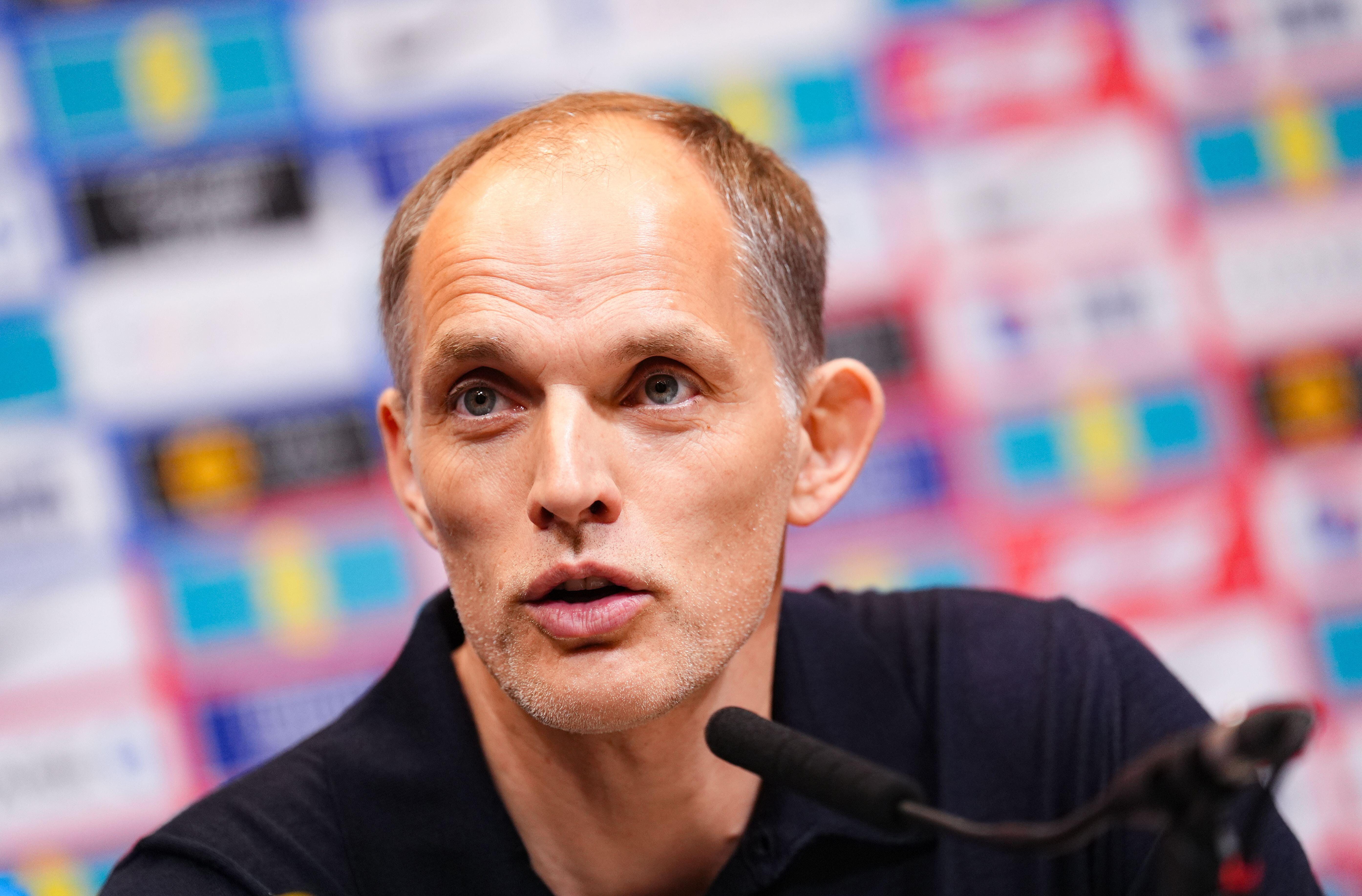

Thomas Tuchel, England’s German-born football manager has just announced his 26 man squad for this summer’s World Cup in America. There’ll be lots of rallying behind the team – and much hype – as the tournament gets underway. In a civic display of identification, many fans will put a flag on their car bonnet or in their front window. If England progress, the flags will proliferate. But this will be very different from last year’s explosion of cherry-picker flag installations on lampposts and round-abouts organised by a motley collection of far- right activists and self-styled English patriots.
The present decade has seen a most alarming shift to the right in the immigration debate. In the 1970s, the demand for “remigration” and mass deportation was found largely on the fascist fringe, was successfully rebutted, and was deemed by the BNP to be too extreme 20 years later. As David Edgar and I argue in the new edition of our Little Black Book of the Populist Right, these themes have returned to the centre of contemporary politics.
Renaud Camus’ ‘great replacement theory’ – the belief that liberal elites are deliberately importing immigrants, above all Muslims, to replace white people – once the belief of out-and-out racists, is now part of respectable talk. Gorton and Denton Reform candidate Matthew Goodwin advocates the great replacement theory throughout his much self-vaunted Suicide of a Nation (whose twelve footnotes support a 196-page polemic).
In April last year, Nigel Farage announced that Reform would establish a Minister of Deportations, expel all those seeking asylum in the UK and retrospectively suspend the status of indefinite leave to remain. In June, former Conservative and UKIP MP – and current Telegraph columnist – Douglas Carswell called for the “mass deportation of Pakistanis from Britian. I don’t care how long you’ve lived here. Out”.
So, with regard to the World Cup, let’s be clear who and what we are rallying behind this summer.
The Multiracial, Cosmopolitan England We’ve Become
The England football squad mirrors today’s multiracial, cosmopolitan England. Tuchel, like Gareth Southgate before him, has chosen a team that largely reflects the England we have become. Not completely. We have yet to see any significant Asian or Muslim presence in English football’s higher echelons, although Liverpool’s star player of the last decade Mo Salah has shown us the potential, while full back Djed Spence, black and Muslim, makes it into the squad.
As the nation cheers England on, it’s important to remind ourselves and all those flag-waving patriots the actual composition of this England team.
It was partly the multiracial nature of the team which inspired then England manager Gareth Southgate’s ‘Dear England’ open letter before the Euros in 2021, with its clarion call for his team not just to “stick to football”, but “to interact with the public on matters such as equality, inclusivity and racial injustice”. (James Graham’s television drama series Dear England is broadcast on the BBC from Sunday 24 May).
The three goalkeepers remain traditionally white English. But of the twenty-three outfield players, an astonishing eighteen were born or have parents from outside these shores. Two pivotal figures, Declan Rice and Harry Kane are of Irish descent. Indeed, due to his Irish heritage, Rice played for Ireland’s youth teams from 2015-2018, winning seventeen caps from Under-17 to U21 level and then made his senior debut in 2018, earning three caps, before switching his allegiance from the Republic of Ireland to England in 2019.
Unsurprisingly, when over 40% of footballers in the English Premier League are black, there is a strong Caribbean presence throughout the squad with eight players having at least one Caribbean parent.
This is combined with a strong representation of players with links to former British colonies in Africa. Kobbie Mainoo was born in Stockport, to parents from Ghana; Jude Bellingham’s mother came from Kenya; Bukayo Saka is British-Nigerian, born in Ealing, to Yoruba Nigerian parents while his Arsenal team-mates Eberechi Eze and Noni Madueke, were both born in London, to Igbo Nigerian parents.
Furthermore, two of Tuchel’s key defenders have origins from other parts of Africa. Ezri Ngoyo Konsa was born in Newham, Greater London, to a Congolese father and an Angolan mother while his fellow central defender Mark Guehi was born in Abidjan, Ivory Coast and moved with his family to Lewisham at the age of one. It is hard to envisage how either set of parents would have been able to enter and stay in the country under the rules that Home Secretary Shabana Mahmood is planning to introduce, including a doubling of the period during which immigrants – including football players – can be granted indefinite leave to remain.
The 2021 census showed a significant, if still small, rise in the number of mixed-race citizens within the UK. They feature heavily in Tuchel’s squad. The fullback Reece James was born in London to a Grenadian-Dominican father and an English mother; Jarell Quansah has a Ghanaian parent while Tino Livramento was born in Croydon to parents of Portuguese and Scottish heritage. Bellingham is mixed race, a combination of English and Irish from his father and African from his mother. Both Nico O’Reilly and Morgan Rogers are mixed race with one parent of Jamaican descent.
We’ve Had This Argument Before
So backing this team means supporting a mixed, multiracial country. We’ve had this argument before. When at the onset of Euro 2020 – delayed until 2021 due to COVID – the England football team declared its intention to show its opposition to racism in sport and wider society, the hard right thought they had a juicy target. Before the tournament began, Conservative MPs voiced their opposition to the team taking the knee in support of the Black Lives Matter movement. Home Secretary Priti Patel came out with a TV interview decrying the move as “gesture politics”. Through his press spokesperson, then Prime Minister Boris Johnson refused to condemn those few supporters choosing to boo the team at a pre-tournament game.
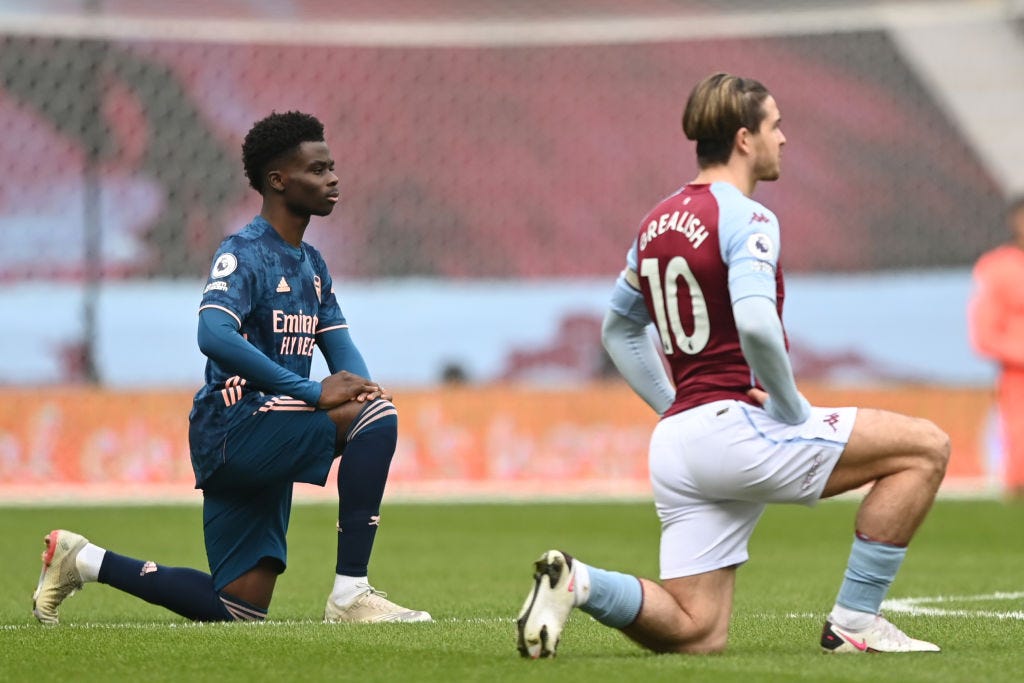
The team, and manager Southgate, stood their ground and the public mood rallied to the team. More fans chose to cheer and applaud the team when it took the knee at kick-off; many opposing teams showed solidarity by following suit; the multiracial squad exceeded expectations in reaching the tournament’s final; and when the team lost on penalties and racist abuse of three black players followed, there was an outcry with overwhelming support for them.
Suddenly, Conservative politicians were falling over themselves to praise the team and decry the racists. When Patel condemned the racist abuse received by the players following the final, England player Tyrone Mings brutally observed “You don’t get to stoke the fire at the beginning of the tournament by labelling our anti-racism message as ‘Gesture Politics’ and then pretend to be disgusted when the very thing we’re campaigning against, happens.” The tweet garnered half a million likes.
Anti-migrant hostility abated for a while. However, encouraged by Donald Trump’s electoral victory in the US and amplified by a vitriolic social media landscape, it has since revived and expanded.
A Standing Rebuke to Racist Demagogues
Farage’s Reform UK made dramatic gains in May’s local elections, winning over 1,400 seats, gaining control of 14 councils and coming first in the popular vote. The Financial Times recently reported that its immigration policy would require the deportation of at least 2 million people living in the UK. The party’s home affairs spokesperson Zia Yusuf brashly responded on X: “You’d better believe it.”
This thinking shapes the policy not only of the far-right but also has spread into the heart of the Conservative party. Tory high-flyer Katie Lam, a Shadow Home Office minister and herself the descendant of refugees fleeing persecution from Nazi Germany, declared last autumn that there are “a large number of people in this country who came here legally, but in effect shouldn’t have been able to do so. They will need to go home.” Her goal is for the UK to become “a mostly but not entirely culturally coherent group of people,” a dog whistle for ‘white.’ Here are the ghosts of Powellite thinking, returning to prominence within Conservative ranks. Lam retained her post as a shadow minister.
It is worth remembering these pronouncements during the World Cup. Our team, like our NHS, is multi-ethnic. (Ethnic minorities form 28% of the staff working in English hospitals.) Neither would function without the contribution of those whose parents or grandparents were born abroad.
As we cheer the team on, let’s not forget they are a standing rebuke to demagogic politicians who want forcibly to evict hundreds of thousands of people who are legally here, in order to break up our multi-cultural country and replace it with ‘a culturally homogenous’ one.
Which kind of country would we prefer?
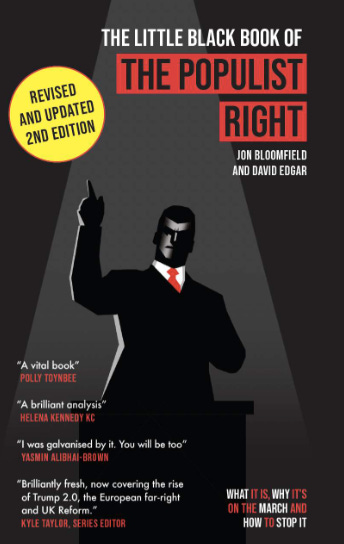
Jon Bloomfield and David Edgar are authors of The Little Black Book of the Populist Right, whose revised and updated 2nd edition is published by Byline Books
 | A guest post by
|
 | A guest post by
|