


The Trump administration’s efforts to criminalise antifascism as a form of terrorism lurched forward last week when a federal jury in Texas found eight protesters guilty of domestic terrorism charges in connection with their alleged ideological association with antifascism, also known as “antifa.”
The case, which centred around a July 2025 demonstration at an ICE detention facility just outside of Fort Worth, Texas, was the first major test of the administration’s attempt to criminalise dissent through the use of a sweeping anti-terrorism statute.
During the incident, protesters gathered outside of the ICE facility to stage a noise demonstration in solidarity with the detainees inside. As is often the case in Texas (an open carry state), some of the protesters brought firearms to the demonstration, but most left their weapons in their cars and headed out for what they believed was a peaceful protest.
However, at least one person in the group was armed when police were called to the scene. While the details are still contested, it is believed that one person opened fire, striking a police officer with a bullet in the process. Prosecutors claimed the shooting was an attack plotted by antifa operatives, but ultimately only one person was convicted of the most serious charges, attempted murder.
Last week’s verdict was the first time in U.S. history that anyone has been convicted on domestic terrorism charges in connection with antifa. It was also the first time that the US Government has explicitly accused individuals of a crime for being part of what prosecutors described as an “Antifa cell.”
However, these charges did not require the government to link the defendants to a specific group or organisation. The Government maintains a list of foreign terrorist organisations, but there is no domestic equivalent because such organisations are considered protected under the First Amendment.
Despite this, in September, Trump designated antifa as a domestic terrorist organisation.
Legal experts say the case could set a new precedent in terms of the lengths the Government can go to stifle dissent, serving as a test of “how far they can go in criminalising constitutionally protected protests.”
But that’s not the only precedent being set. The Texas case also represents a watershed moment in modern information warfare, serving as a potent example of how the Government can use disinformation to manufacture an enemy out of its own citizens.
A Decade of Disinformation
Antifascism has existed as a political movement in the US for decades, and even longer in Europe, but it only rose to prominence after Trump’s election in 2016. Not long after antifascism entered the stage, so did the disinformation targeting the movement.
Following the deadly extremist attack at the far-right Unite the Right rally in Charlottesville, Virginia, in 2017, Trump and his allies started hyping the idea of a violent “alt-left” that they sought to portray as equally as violent as the right-wing extremists who had just murdered a protester. (The evidence is clear here: Violent extremism in America is overwhelmingly a right-wing phenomenon).
Over the next several years, this grew into an expansive domestic disinformation campaign involving elected officials, government agencies, think tanks, social media influencers, and the entirety of the right-wing media apparatus.
The disinformation campaign surrounding antifascism was (is, really) two-pronged. One major aim was to associate antifascism with chaos, violence, and anti-Americanism. Simultaneously, another aim was to expand and ultimately collapse the definitional boundaries of antifascism so that the term could be applied as a catch-all to describe essentially any liberal or left-wing activist movement.
This was achieved through years of coordinated messaging and media coverage portraying Democrats and liberal activists as “radical leftists” and positioning civil disobedience and property crimes on the same threat level as fatal extremist violence.
If a car was set on fire at a protest, Fox News would feature footage of the ensuing flames in prime time coverage for the next week, while right-wing social media accounts would circulate images (some real, some fake) and attempt to link the incident to a broader left-wing movement by falsely identifying the culprit as an immigrant, socialist, feminist, or trans person, and demanding that Democrats disavow them. If a right-wing extremist committed an act of violence, these same actors would seize on the period of uncertainty immediately after the tragedy to spread rumours and baseless accusations about the perpetrator being “antifa,” thereby creating an automatic mental association between violence and antifa among the American public.
Manufacturing Enemies
At times, the disinformation campaign targeting antifascism even included the use of fake social media accounts posing as antifascists in an effort to make it look like they were plotting violence. The same dynamic has also played out offline, as described in court documents in which extremists have admitted to dressing up in all black to pose as antifa and incite violence.
This has often resulted in outbursts of fear and anger from people who saw these rumours and believed they were real, and in some cases it has spilled over into actual threats of violence and even real-life clashes.
There have also been numerous instances in which viral rumours about antifa plotting to invade American towns and engage in violence have resulted in residents showing up at protests with guns to defend their communities against non-existent busloads of antifa terrorists. On a few occasions, these rumours have even duped local law enforcement agencies, resulting in resources being wasted in an effort to protect communities from a manufactured threat.
Despite it being fake, politicians and officials in the Trump administration have still used the public outcry stemming from these rumours as proof that “antifa” was terrorising American cities and that something needed to be done to stop them.
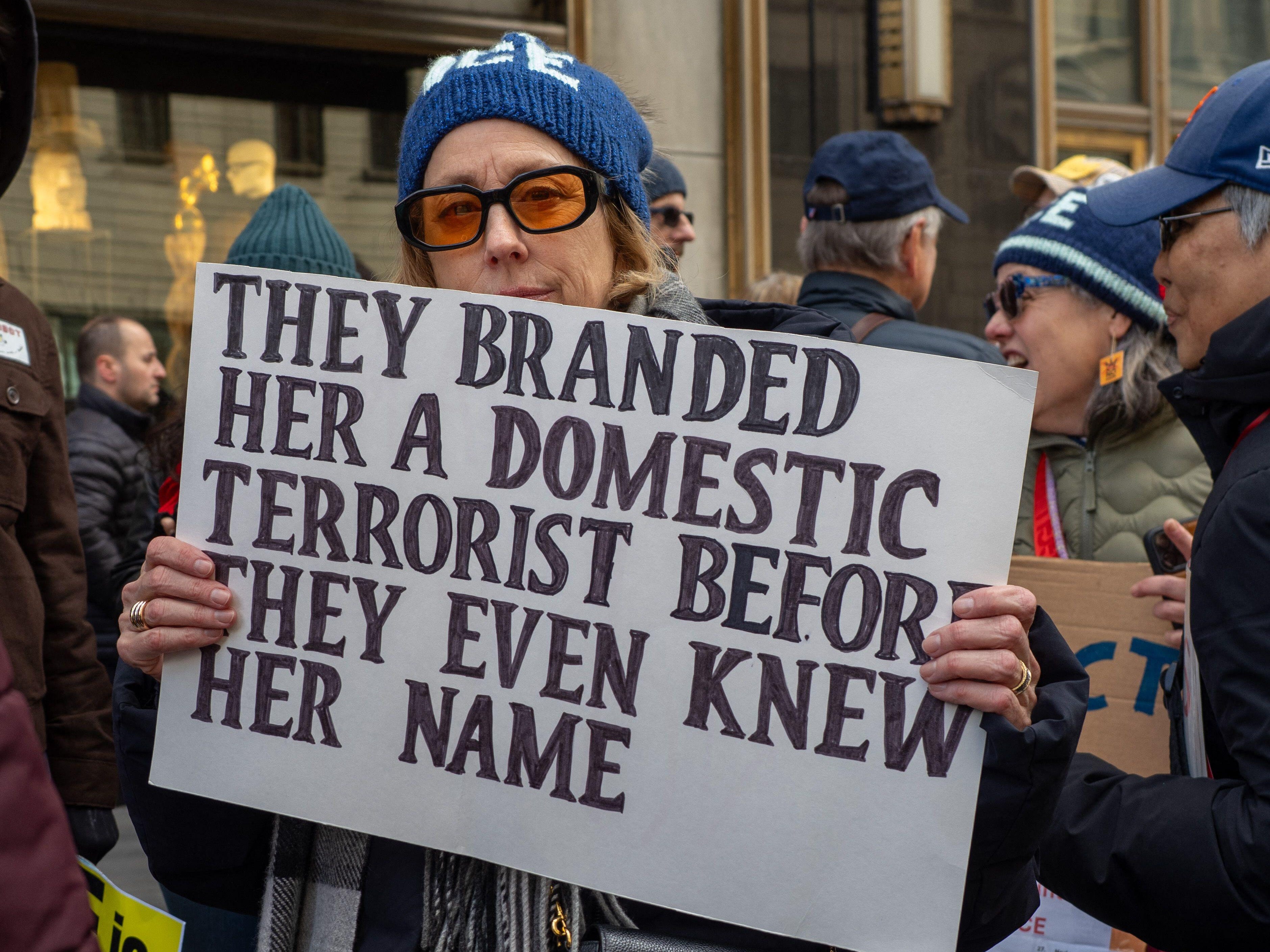
Having gotten away with labelling antifascists as domestic terrorists, the Trump administration now appears to be trying to use this strategy even more broadly, including in its efforts to justify its use of fatal violence against peaceful protesters. Both Renee Good and Alex Pretti—Americans who were killed this year by federal law enforcement officers while peacefully protesting ICE—were immediately labelled by Trump administration officials as “domestic terrorists,” despite doing nothing that even remotely resembled an act of terrorism.
Months earlier, when Trump designated antifa as a domestic terrorist organisation, he cited alleged attacks on ICE officials as part of the rationale for doing so. The idea here is that if people who attack ICE officers are domestic terrorists (as the Trump administration claims they are), and if Good and Pretti are domestic terrorists (as the Trump administration claims they are), then they must have attacked those ICE officers (as the Trump administration claims they did), and if they attacked those ICE officers, then they must have been antifa, and if they were antifa, then they must have been domestic terrorists—and therefore, according to this twisted logic, they deserved to die.
No evidence is needed in this self-reinforcing loop; the application of the label “domestic terrorist” serves as proof that a crime was committed, which in turn provides a justification for the killing of two Americans.
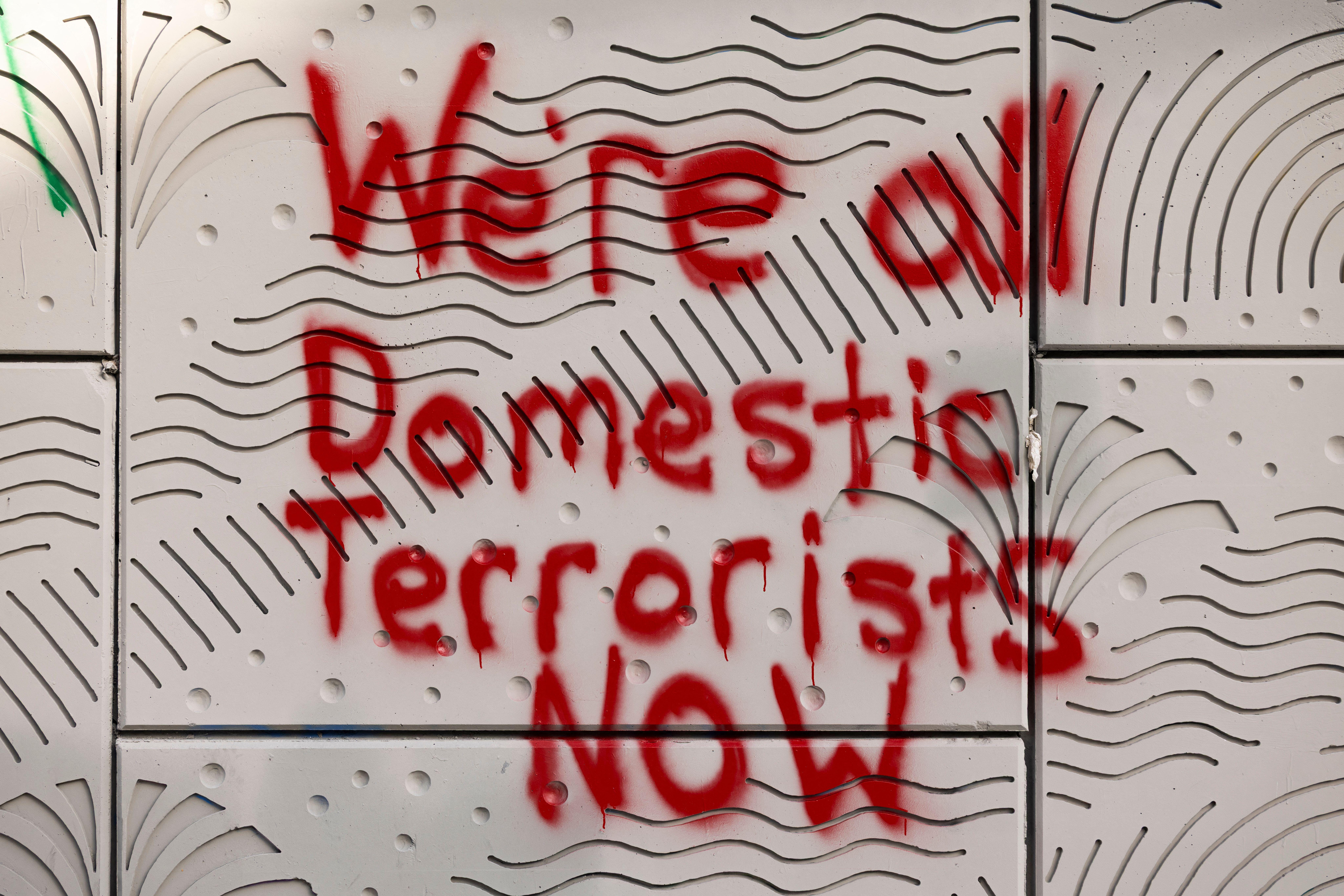
This is the power of disinformation. Rather than inventing something new, it works by reshaping what already exists: redrawing the meaning of words, reframing lawful actions as threats, and, in the process, constructing enemies out of citizens.