


BYLINE TIMES IMPACT: Find out about the changes you made happen
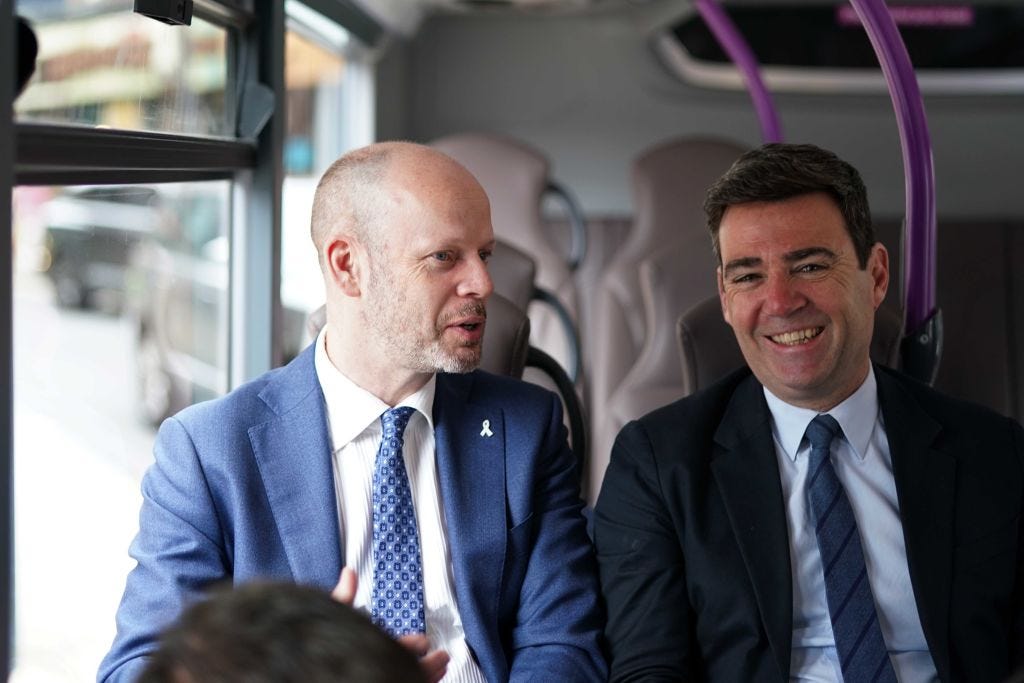
Andy Burnham’s Government should throw off the shackles of the international money markets and look at alternative ways of funding public investment, argues one of Labour’s former elected Mayors, Jamie Driscoll, who says the UK is being “held hostage” by global financiers. Driscoll, who served as Mayor of the North of Tyne Combined Authority between 2019 and 2024, has set out a radical plan ahead of Burnham’s first budget as PM, which looks likely to be constrained by self-imposed spending rules when it is unveiled next month. In his report Hostage Nation, Driscoll points out that nine out of ten sets of fiscal rules adopted since 1997 were later abandoned and he believes they are unnecessary.
“Pretty much everybody in this country wants better council housing; we want an energy system that's reliable, so we don't keep seeing spikes in energy prices; we want better public transport,” Driscoll told the Byline Times Podcast. The problem, in his analysis, is that “Governments keep being told, ‘Oh, there's no money there, and the reason there's no money is because the bond markets won't like it’. It's almost as if they're trying to appease these angry gods who give us weird signs.”
He compares financiers to betting shop owners: “Like anyone who runs a betting shop, they're in it to make a profit. That's their business. Fair enough. But they don't do it on the basis of approving or disapproving of Government policy, they do it on the basis of who's going to make them the most money. So rather than having our entire plans to stop crumbling concrete in schools depending on the output of a trading desk in New York, Hostage Nation says ‘let’s stop being hostages to the bond market’. Fund it ourselves directly.”
His stance is a challenge to orthodox monetary thinking, which relies on the notion that ‘you can’t buck the markets’. Governments borrow from banks and other financial institutions to top-up public spending, and the rate of interest paid on these loans is seen as an indicator of the wisdom (or otherwise) of a nation’s economic strategy – witness the massive rise in borrowing costs during brief Liz Truss’s brief reign as PM.
In what is being seen in some quarters as a ‘slow motion repeat’ of that episode, the UK is currently paying higher borrowing costs than our counterparts in the G7 industrialised nations – prompting the former chief economist of the Bank of England, Andy Haldane, to suggest that Burnham’s Government looks like a traditional tax and spend Labour administration “with better Tik Tok videos.”
But Driscoll says the UK’s current borrowing predicament is “because oil prices are surging as a result of the war in the Middle East, inflation is higher in America, and America's central bank, the Federal Reserve, is putting up their interest rates to try and combat inflation. All that means is the international markets think, ‘Oh, I'm going to get a higher yield in America, so I'll move the money there.’”
He insists the Bank Of England could sidestep that problem by redesigning the tax system to incentivise UK pension funds to invest their holdings in British industry and long-term infrastructure projects. Driscoll said, “we've got over £2 trillion in pensions, and Andy Haldane himself gave a speech earlier this year, pointing out that we used to invest 50% of our pensions in British industry. We now invest less than 5% in it. I want people to have good pensions. I want people to have secure savings. I don't want that to be subsidising global corporations, I want it to be affecting British industry and getting things built that we need here.”
Likewise, he suggests that the billions saved annually in cash ISAs could be directed towards homegrown industry. Driscoll’s proposals would require changes to the current system of tax breaks, but could unleash massive sums outwith the whims of the market. He’s now a Green Party councillor in Newcastle and his spending priority would be the creation of a nationwide programme for retro-fitting solar panels and insulation to the nation’s ageing and energy-inefficient housing stock – a move that could save households billions and create thousands of jobs
“We've got loads of people in cold, damp homes being ill, costing the NHS money,” Driscoll says, citing a pilot study conducted in Sunderland in 2016. “By spending £5,000 per home, they reduced hospital admissions by 30% – and a hospital admission is a very expensive thing. So you're getting your money back there. If you're going to start insulating a Victorian terrace in Newcastle or Leeds, those scaffolders, the people insulating the roof, fixing the solar panels – all of those jobs are local jobs, and all that money gets re-spent in the local high street. That's what keeps our economies going. And the Office of Budget Responsibility’s own figures say that for every pound you spend on something like that, you get 40 pence back immediately in the taxes on the workers.”
Watch Adrian Goldberg interview Jamie Driscoll on the Byline Times Podcast here.