

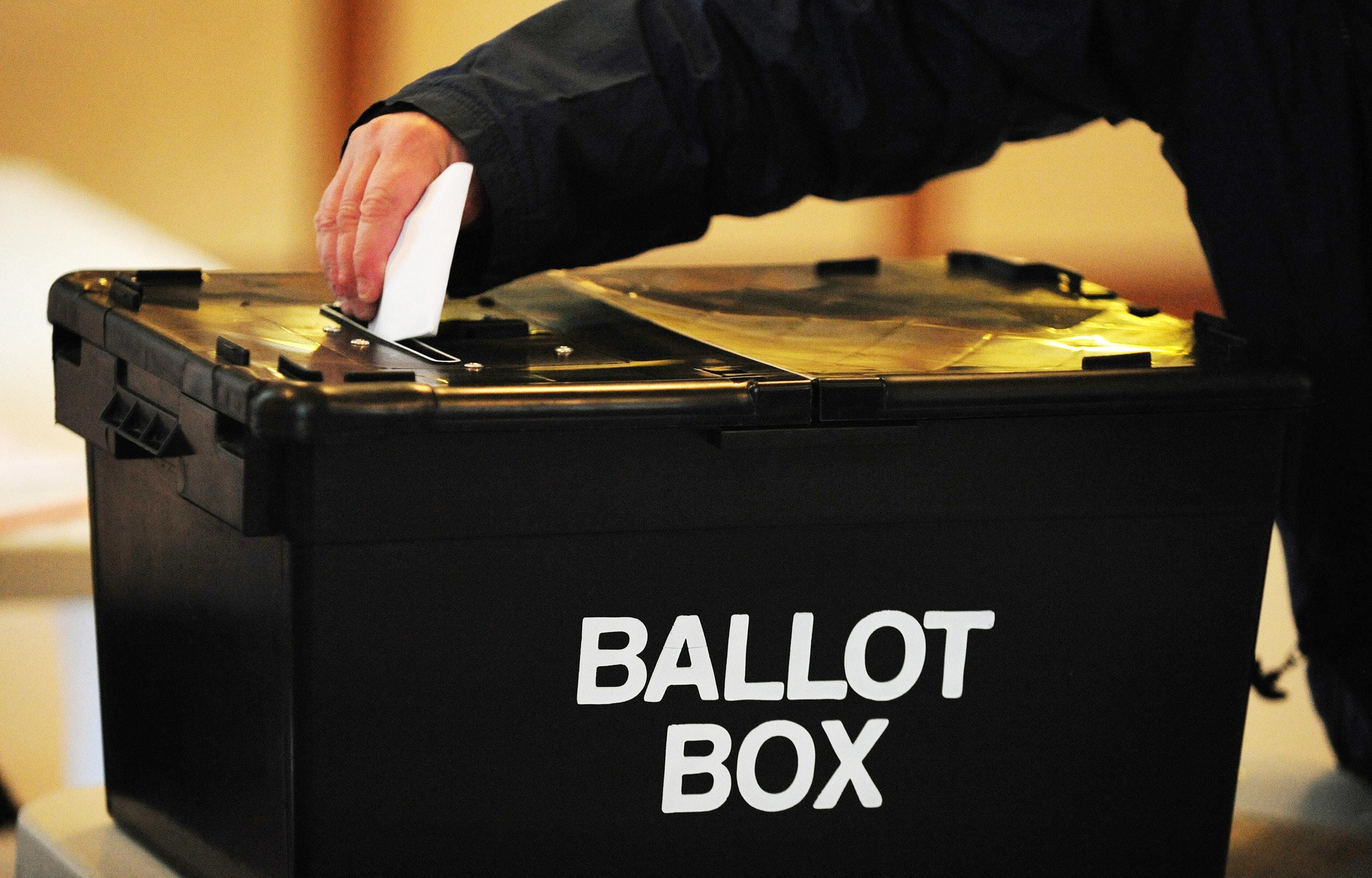
He might sound like a turkey welcoming Santa Claus down the chimney, but Labour MP Alex Sobel is in no doubt – the ‘first past the post’ electoral system which delivered his party a landslide victory in 2024 needs to change.
Debates about the prospect of voting reform have been reignited by Greater Manchester Mayor Andy Burnham, a potential party leader and Prime Minister, currently seeking a Westminster seat via the Makerfield by election. Sobel welcomes his support, arguing that now the traditional two party system is effectively dead, the way we choose our government has to evolve.
In an interview with the Byline Times Podcast, Sobel – Chair of the All Party Parliamentary Group on Fair Elections – said: “People need to have confidence that the seats allocated in Parliament follow the votes that are cast in a General Election, and that just doesn’t happen anymore. First past the post is a 19th century system based on having two large parties, but the proportion of the vote for the two leading parties has continued to decrease over time. If you look at elections in England, really it’s a five-party system; and six in Scotland and Wales.”
He points to the recent local elections, where one Labour councillor was elected with just 20% of the votes; while a fellow MP was elected at the last General Election with a modest 23% share. “That’s not legitimacy,” Sobel says.
Ironically, the fracturing of the electorate has worked to Labour’s advantage – at least in the short term. Thanks to the vagaries of first past the post, Sir Keir Starmer was the recipient of a handsome 174 seat Westminster majority two years ago, despite leading a party which polled 560,000 fewer votes than his supposedly ‘unelectable’ predecessor Jeremy Corbyn. Sobel argues that such a mismatch between votes cast and seats gained sows mistrust among the electorate, feeding a dangerous narrative that politicians are self-serving and out or touch.
Current polling suggests that if the current system was scrapped, the UK’s two traditional ruling parties would be the biggest losers, with insurgents on the left and right both enjoying considerable support. The Greens, and to a lesser extent Your Party, are eating into Labour votes; whilst the Conservatives are being outflanked by both Reform UK and Rupert Lowe’s Restore Britain. Suggest to Sobel that an alternative system might hand the keys of Downing Street to a far-right party, though, and he has a ready riposte: “If you look at the current polling, Reform will be a massive beneficiary of first past the post. They could form a majority on under 30% of the vote. So what may have [previously] guarded against extremes may actually usher them in; and then they may make changes to the way that democracy is, that lock everybody else out forever.”
One of the traditional arguments in favour of first past the post has been the suggestion that it provides stability and clarity across the five year span of a parliament. That’s hardly been the case in recent years, when Prime Ministers have been turfed out office with the frequency of football managers; and Sobel scoffs at the idea that the current system is inherently any more stable than the coalition governments which are usually formed by proportional representation.
“The only time recently we’ve had a five-year Government with the same Prime Minister was in a coalition – David Cameron,” he says. Cameron’s successor, Theresa May, lasted only three years, followed by the tumultuous 2019-2024 Conservative Government, when Boris Johnson, Liz Truss and Rishi Sunak all occupied the top job. “I’m not sure anybody thought that was massively stable Government,” Sobel observes drily. “The genie is out of the bottle – the extreme party could have a majority on 29% of the vote. Less than a third of the country would vote for them in the first past the post, but they could have over half the seats – that’s the way first past the post works when you have a lot of parties. But under most PR systems that would be flattened out, and maybe they would be able to be part of a coalition, but with another party that wasn’t so extreme.”
The question remains of which kind of alternative system the UK should adopt. The Scottish and Welsh Parliaments each use different proportional methods designed to better reflect the number of votes cast for each party; while Andy Burnham has said he favours a ‘Supplementary Vote,’ which allows electors to plump for a ‘second choice’ candidate. Sobel is calling for a National Commission to investigate the most appropriate method and has secured the backing of more than 100 MPs.
It shouldn’t be forgotten that the UK overwhelmingly rejected Proportional Representation in a referendum 2011, but Darren Hughes, chief executive of the Electoral Reform Society, argues that we have moved into a significantly different political era. “These last 15 years feel like 50,” he said. “We’ve had Donald Trump, we’ve had Brexit, we’ve had the pandemic, we’ve had wars in Continental Europe. This has not been a regular period of time, and I think things have totally changed.”
Hughes also points out that voters are now much more willing to ‘shop around’ and switch party allegiance compared to previous generations.
“So you’ve got a massive change in political culture, and that’s come through quite heavily in recent years within the Labour Party itself. The party members have voted overwhelmingly to support proportional representation, the trade unions have made a big shift on that from where their position has been. The British Social Attitudes survey now has a majority of people wanting a change in the voting system. That hasn’t happened before. So there is a much different politics from the last time we seriously looked at the voting system issue, and that’s before you take into account just how people feel about the state of democracy right now. That means that we can’t simply carry on in the way that we’ve been going.”
Watch or listen to Adrian Goldberg’s interview with Alex Sobel MP and Darren Hughes of the Electoral Reform Society by clicking below
It's not true that the UK "overwhelmingly rejected Proportional Representation in a referendum 2011"--because the UK was not given a PR system to vote for: although, wanted by the LibDems, this had been a condition of forming a coalition government with the Tories.
Instead Cameron acted in bad faith by fudging the issue: offering the UK public a referendum on the "Alternative Vote" system--which is not PR.
AV had been rejected in a 1998 report by the Jenkins Commission on Electoral Reform, because "so far from doing much to relieve disproportionality, [AV] is capable of substantially adding to it".
AV was also described by Roy Jenkins as "disturbingly unpredictable" and "unacceptably unfair".
And I remember AV as being very badly explained in the 2011 referendum advice: enough to put anyone off voting for it--as probably intended.
It was the Jenkins Commission which instead came up with a recommended AV+ or "Supplementary Vote" system that Andy Burnham is now proposing.
It was not Proportional Representation, that we had a vote on, it was on some Clegg mash up called the Alternative voting Method. It was sold to us as a halfway house towards fair elections! Who knows why people voted against it, but I think there was total dismay that we, the electorate, were not being offered a proportional representation. People might have rejected it because it was shit. Clegg blew it for all of us and put back any chance of reform, on the back burner for the foreseeable future. What a dick that man was.