
Nicolas Maduro’s capture was a moment to feast on. In the days that followed Trump’s brazen removal of the Venezuelan leader, social media quickly became an arena for political debate and point-scoring. As a Venezuelan journalist, I was in there too, offering counterpoints and badly-needed context for people who knew little about the country. And then I received a message from my aunt.
“Please remember that you share a family name with us. We’re still here. I’m scared.”
I felt a familiar chill. The last time I felt it was in Kabul, after a meeting with the Taliban’s Minister of Communication. He told me he’d just deported a journalist for “lying”. I remember going back to my hotel feeling foolish and naive. How could I convey the truth about this country without putting people in danger long after I leave Afghanistan?
Over the last 20 years, Venezuela – although not run by a militant, theocratic government like the Taliban – has become a repressive state, and the voices of people inside are being silenced at an alarming rate.
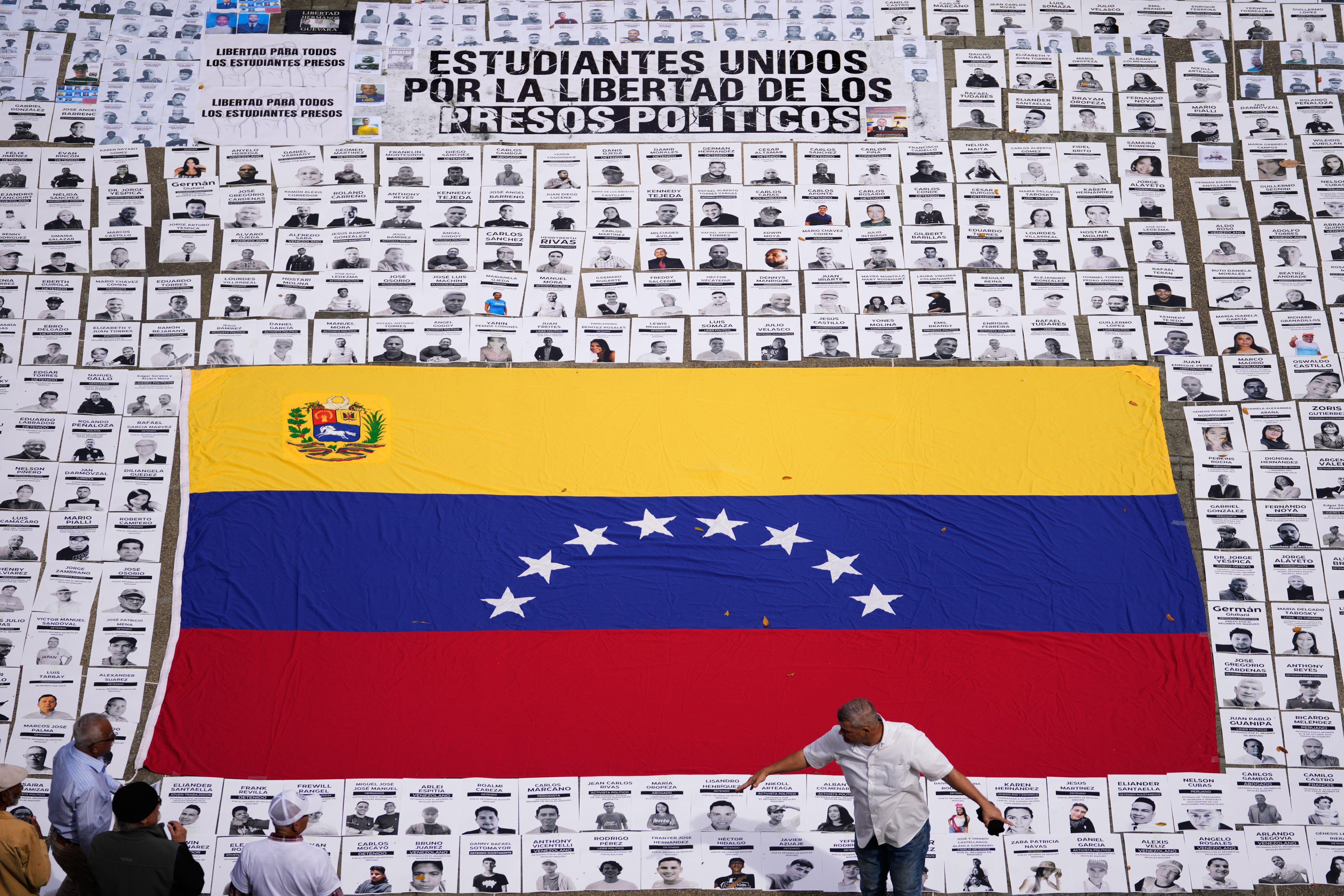
Between 2014 and late 2025, Venezuelan human rights organisation Foro Penal documented more than 17,882 politically motivated arrests for dissent, protest or criticism of the government. Hundreds of people are still behind bars today.
Many were imprisoned after anti-Government protests. Some were detained after the Government introduced the “law against hate” – which human rights groups have decried as a tool for silencing dissent. Journalists, economists, activists and politicians have left the country – out of fear.
The presidential election in 2024 was another turning point. Opposition candidate Edmundo Gonzalez claimed victory after volunteers collected tens of thousands of voter tallies and posted them online, showing a majority win of at least 70% of the vote. But the Maduro-run electoral council declared a different total and Maduro remained in power, sparking international criticism from several foreign governments and international observers.
What followed was a campaign of systematic persecution and arrest. Ordinary people were targeted, including Marggie Orozco, a doctor from Táchira who was detained in August 2024 after sending a WhatsApp voice note criticising the election results.
After Maduro’s capture by US forces at the start of 2026, Venezuela’s new Government, led by acting President Delcy Rodríguez and other loyalists, issued an emergency decree ordering police to “immediately undertake the search for and arrest of any person involved in the promotion of or support for the armed attack by the United States.”
More than a dozen journalists were detained in the days that followed. Armed ‘colectivos’ – pro-Government paramilitary groups – have been seen patrolling certain parts of the capital Caracas, reportedly inspecting civilians’ devices.
People within the country talk about an uneasy calm. My grandmother tells me the dogs in the neighborhood are quiet because there aren’t as many pedestrians in the streets to bark at.
Friends are deleting WhatsApp messages and clearing their internet search history on their phones – in case they’re intercepted.
“It’s the same old psychoterror we’re used to, but now we’re even more anxious,” said one of them.
The most painful part of it all, for me as a journalist, is that I cannot – out of love for everyone there – be their advocate, and their voice.
As the world tries to make sense of Trump’s plan and what it means for both Venezuela and the rest of the world, the feelings of people inside the country are not just valuable – they’re vital. And based on my own conversations, there’s a real mix of perspectives that seem to be constantly evolving.
There’s a yearning to celebrate Maduro’s removal. Hope that a transition to democracy is near. Contempt for Trump who may have emboldened Maduro’s loyalists to entrench themselves in power. Bewilderment about what exactly this foreign President plans to do with Venezuelan oil.
The diaspora – all eight million of us scattered across the globe – have taken up an important mantle. Venezuelans are speaking up at demonstrations around the world and on social media, even though some dismiss our perspectives as politically skewed, much like the Trump-loving Cubans in Miami, or Iranians who long for the days of the US-backed Shah.
We represent about a quarter of the Venezuelan population and a diverse range of people from all kinds of socio-economic backgrounds who felt forced to leave because we saw no future back home. I would argue we have every right to be part of the debate, even though it’s true that being outside does naturally skew our priorities. We’re not navigating the country’s chaotic economy, nor do we feel the immediate threat of imprisonment.
That’s why, until the people inside Venezuela can speak freely, any narrative about the US operation and the country’s uncertain future is incomplete. I heard one useful analogy this week: Venezuela is like a patient who has tried every treatment to try to beat a long‑term illness. Trump’s intervention is like an experimental drug and no one yet knows how much it’ll help or hurt. But only the patient can tell us how they really feel.
We might need to ask about what the situation in Iran was after the fall of the Shah. I believe that crucially, the Savak (savage and much feared secret police) staid in place, so policing and crucially the cultural habits of policing staid in place too. Perhaps this can be verified or dismissed?