

BYLINE TIMES IMPACT: Find out about the changes you made happen
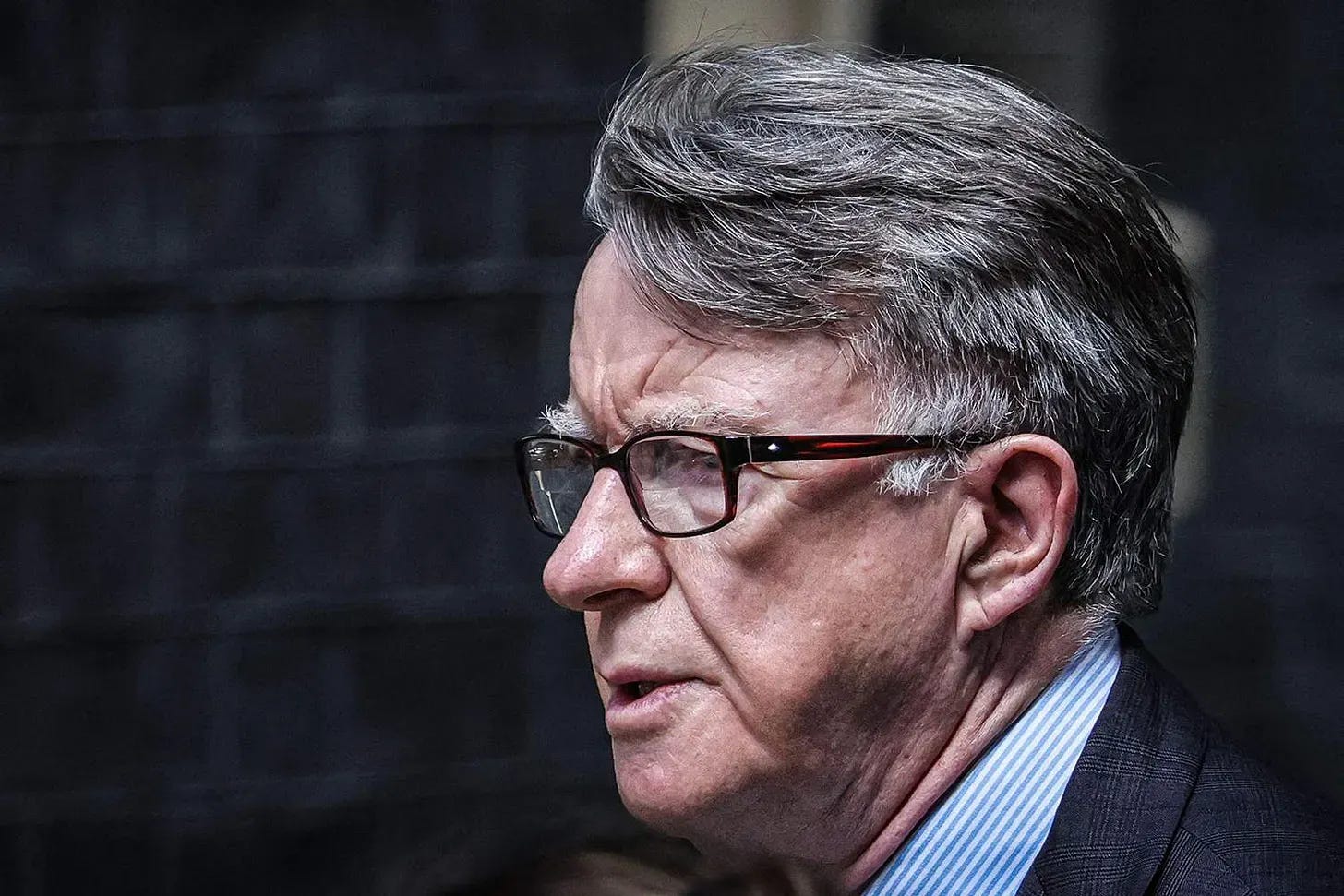
A persistent whiff of scandal has been drifting through the corridors of Westminster, connected to Peter Mandelson. Now on their summer break, MPs might be reflecting on just how much they underestimated the influence he had, and not just within No 10. His downfall was not only about his friendship with Epstein and passing Government secrets. It was about how he, and by extension the Labour Party, became implicated in Russia’s efforts to capture our democracy.
Before they left, Keir Starmer’s team had been soft-pedalling in reply to calls from all sides to stop foreign donors bankrolling British politics.
And a public inquiry into the Russian interference? Forget it. There was much moaning about how expensive public inquiries are and how long they take. Then there was the supposedly terrible prospect of reopening questions about the legitimacy of Brexit.
As one of the people pushing the Government for answers, I was told that there were numerous political, legal and technical reasons for not “overdoing” new safeguards for political finance. A response straight out of Yes Minister.
However, what came across loud and clear beneath all the arguments was a sense of fear about the scale of what may be found out about foreign money channelled to UK parties through proxies.
This is where Mandelson comes in. The history of his business dealings with Russia has been hiding in plain sight for years, and arguably offers a glimpse into a much larger jigsaw of political corruption and interference during the Londongrad years of the 2010s.
It started soon after Mandelson, then a Government minister, first met Oleg Deripaska at his Moscow offices in 2005. A long and evidently profitable relationship followed between the architect of New Labour and a Russian oligarch from Putin’s inner circle. It was a two-way street. Mandelson introduced British businesses to the Russians, while Russians were introduced to the Brits they wanted to meet.
In 2008, Mandelson introduced his friend Deripaska to the then Shadow Chancellor, George Osborne. That was less than two years before the Conservatives finally swept back to power. They boarded Queen K, the Russian’s 238-foot, $150 million Lürssen superyacht, which was moored off the coast of Corfu, where the two British politicians were staying.
Apparently, the question of party funding formed part of the friendly bilateral discussions on board. When Osborne was subsequently confronted by journalists outside his party headquarters in Millbank Tower, he appeared to imply that the Russians had offered money, but that his party had not accepted it.
However, it was around that time that the first donation from a wealthy, UK-based Russian donor was made to the Conservatives. Many more millions followed over the next eight years. It was enough money to cover the party’s central annual budget several times over, by my estimation. A coincidence? My contacts in European governments believe that these donations were, in fact, part of a scheme.
Just a few months later, in January 2009, in his capacity as Business Secretary, Mandelson refused to refer the sale of the London Evening Standard for a public-interest investigation. The buyer was another Russian friend of his, Evgeny Lebedev, who became Lord Lebedev of Siberia in 2020, the year of Brexit. He was elevated to the upper house by another good friend, Prime Minister Boris Johnson.
After the Conservatives won the 2010 general election, Peter Mandelson set up Global Counsel LLP, a political-risk and strategic advisory consultancy. Deripaska’s En+ Group became a lucrative client, and approaches were made to the large Russian state-owned entities Sberbank and Rusnano, as well as Sistema Group, a conglomerate closely linked to the Kremlin. For many years, Global Counsel employed a Russian full-time who, according to his friends, “worked on Russian deals”. A graduate of Moscow State University, he had previously been the London correspondent of the Russian state news agency RIA Novosti.
Following Russia’s annexation of Crimea in 2014, Mandelson’s agency continued to prop up the appeal of Russian businesses and the Russian economy. It claimed that “the sanctions levelled against Russia have not proved as effective as they might have been”, and bizarrely, that “[i]f western governments are like the Eurovision professional juries handing Russia nul points, western businesses are like the Eurovision audience that gave Russia top points – more interested in keeping the song going.”
Then things started to unravel. It was becoming clear that the Kremlin had weaponised businessmen like Deripaska to corrupt Western politics. Alexey Navalny’s investigation used photos videos and the account of Belarusian escort Nastya Rybka to show that Deripaska hosted Russian Deputy Prime Minister and Putin’s top foreign-policy boss Sergei Prikhodko aboard his other yacht, the Elden, off Norway during the 2016 US presidential campaign. It was thought that the two men discussed sensitive electoral information obtained by Deripaska from Paul Manafort, Trump’s campaign manager. The information that subsequently was used to target US voters using Russian bots and online disinformation pumped out by the GRU, Russian military intelligence.
Oleg Deripaska was sanctioned by the US in April 2018, with the US Senate’s Committee on Intelligence explaining that “Deripaska has managed and financed Kremlin-approved and -directed active measures campaigns, including information operations and election interference efforts.” He also financed a political party in Montenegro. (He was sanctioned by the UK following the Russian full-scale invasion of Ukraine in 2022)
Since then, the US and Europe have used sanctions as a deterrent against foreign actors and the proxies they used to interfere in politics. For example, the US sanctioned Igor Chayka and eight companies in 2022 for funnelling Russian money to political parties in Moldova. In the last couple of years, the EU sanctioned Voice of Europe and A7, the Pobeda Political Bloc and the Cultural Educational Centre of Moldova, for facilitating political financing and electoral interference.
Britain, in contrast, has been slower and not used sanctions to the same effect. Which is puzzling, considering that our laws are toothless in bringing proxies to account. Deripaska was sanctioned by the UK, but not until 2022 - four years after the US. For several years, I have also tried to secure a formal investigation into a political donation allegedly channelled through a permissible British donor on behalf of an impermissible foreign actor. The police confirmed in writing that the law was useless: the relevant offence (S.61 PPERA) “has not seen a successful prosecution in the UK in the last 25 years”.
The Representation of the People Bill returns to the Commons on 2 September and is due to move to the House of Lords for the second reading on 14 September. It presents a once-in-a-lifetime opportunity to close all loopholes but it is unlikely to do so considering how many of them are still out there. Sanctions are not currently part of the Bill but, if included, they could, like in the US and EU, deter foreign actors and their helpers, regardless of the ingenuity of their political laundromats.
Perhaps call it the Mandelson amendment.
