


BYLINE TIMES IMPACT: Find out about the changes you made happen
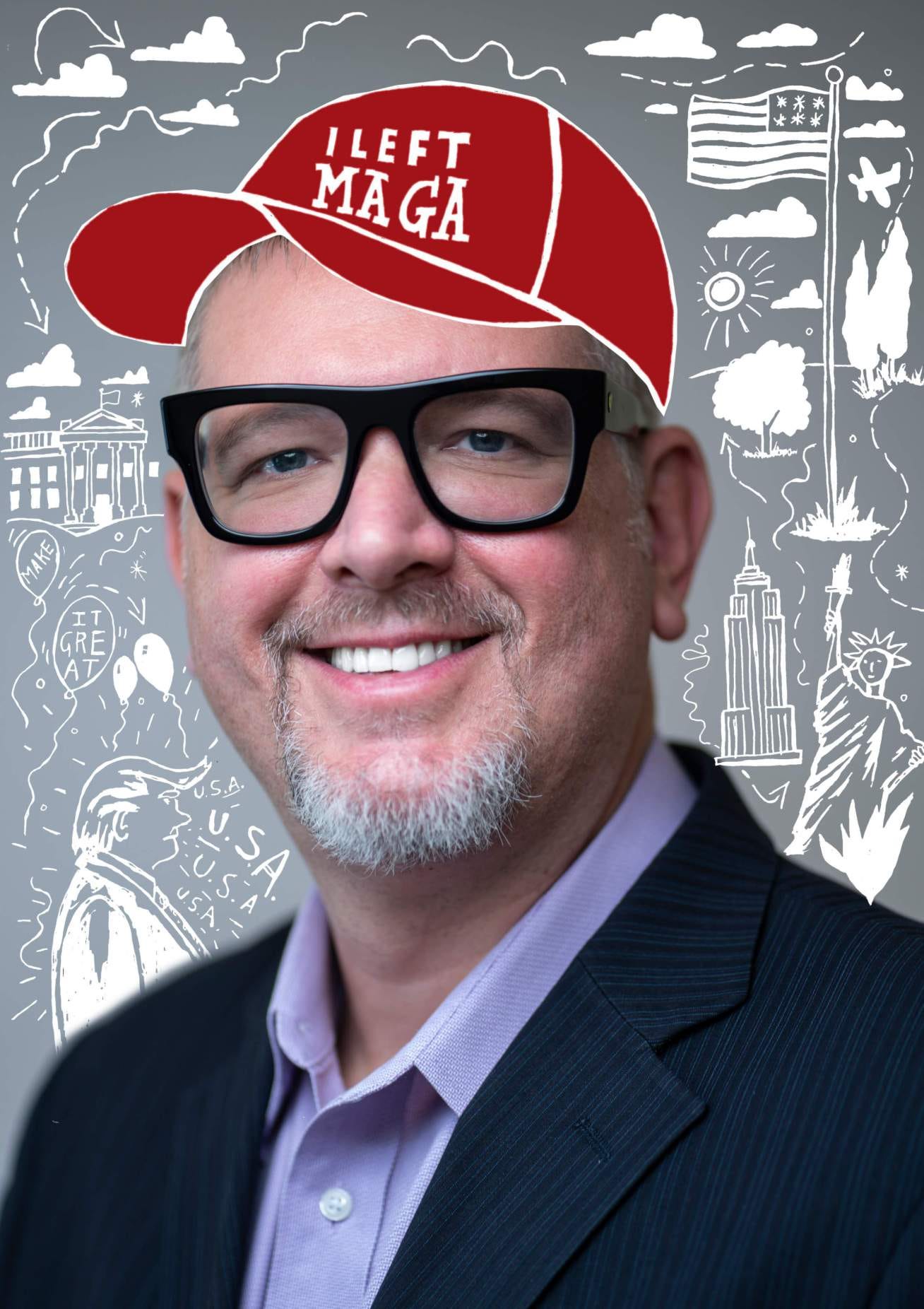
Hardeep Matharu: What is your background in life and politics, and how did you end up in Donald Trump’s ‘Make America Great Again’ movement?
Rich Logis: I come from a quintessential middle-class family. My parents had a variety of public and private sector jobs, and they were highly apolitical. I don’t think my parents ever even voted. I formed some of my political beliefs in college, but spent many years between then and 2015 voting for third-party candidates. In 2015, I was a slightly left-leaning independent. I believed the two parties were the same. I felt very politically lonely. I thought democracy had failed most Americans, and most elected officials cared most about their donors and the wealthy and powerful.
When Trump came on the scene, I was not immediately enamoured with his campaign. But over the course of many months, I found myself nodding in agreement with some of his points about economics, jobs going overseas, once vibrant communities being hollowed-out; his rhetoric about the structural flaws within our political system. Even though he was from the world of wealth and influence and ran as a Republican, I was very enticed by his outsider status.
As time went on, I became more and more in agreement with what he was saying – so much so that, in early 2016, I decided to work on the campaign and became a volunteer doing grassroots work. I wrote part of the call script for the Trump campaign. I showed people where to get registered to vote. Where to vote. I recruited people to vote for Trump, including Bernie Sanders voters. I started to develop relationships with other Trump voters. In 2016, that victory was vindicating for me. I felt like we had taken on the entire world.
I got deeper and deeper into the MAGA community and wound up professionally producing a podcast using my own money (that could have gone to my family or to my business) to meet my goal of being an aspiring MAGA pundit. I was writing freelance articles for Fox, The Federalist, RealClearPolitics, and WorldNetDaily which popularised the Obama ‘birther’ conspiracy theory. I spoke at, donated to, and sponsored Trump groups. I worked again on, and was a donor to, the 2020 campaign. I was very public and unapologetic about my support.
HM: When did your thinking and support begin to shift?
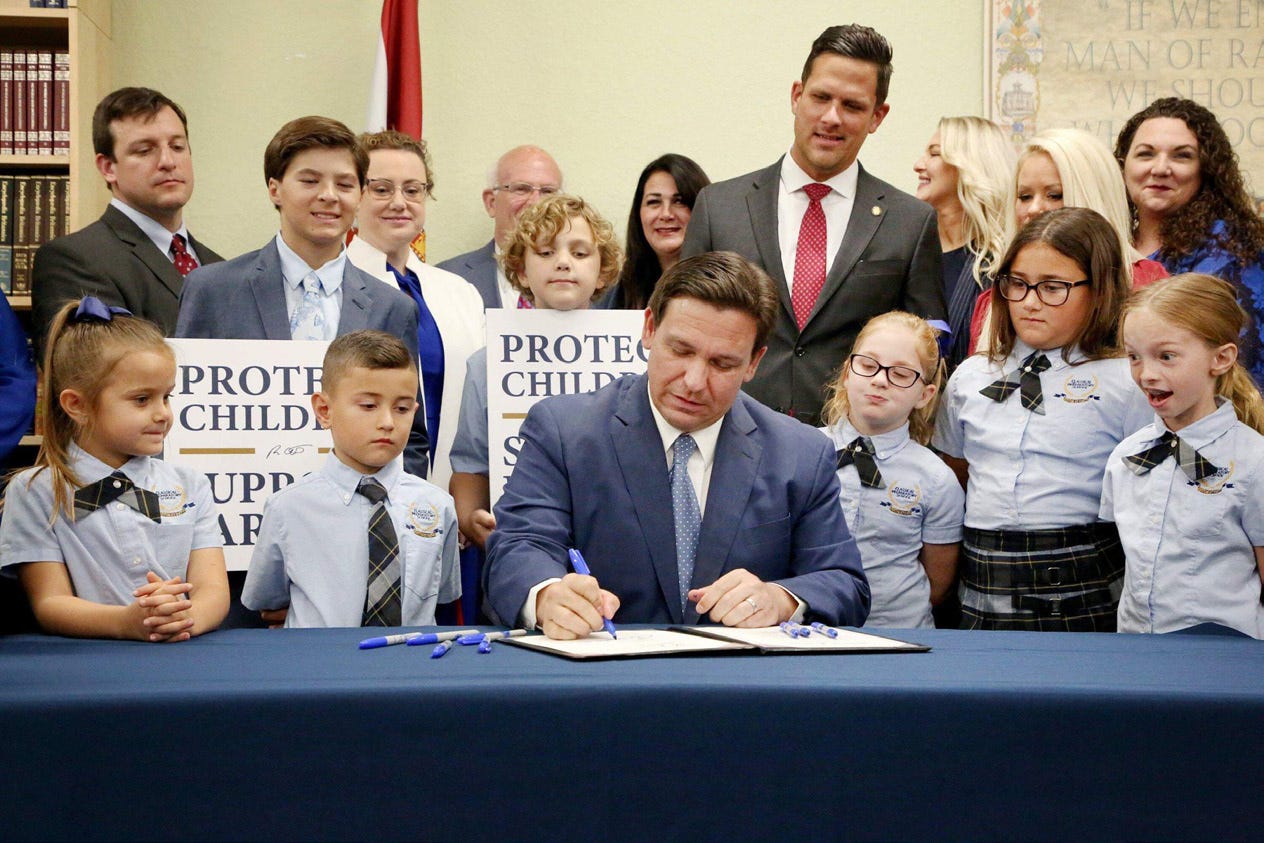
RL: The cracks started to ever so slightly form in the summer of 2021. The Covid Delta surge was ravaging the country. Kids were dying. I have two small children myself. My Governor in Florida, Ron DeSantis, platformed Covid anti-vaxxers at one of his press conferences – and it really shocked and confused me, because he had been a proponent of the vaccine up until that point. So I decided to do something that sounds very simple but was profoundly life-altering for me: I diversified my news and information sources. As I started to step outside of the MAGA media bubble, I started to gradually realise that so much of what I believed turned out to be false. I spent a lot of nights in solitude with my thoughts going through this year-long personally tumultuous time, where I had to examine so much of what had been sincerely held beliefs that were false.
I published my memoir earlier this year, One Betrayal Too Many: Why I Left MAGA, and in it I talk about my year of heaven and hell – this year of reckoning in having to come to terms with the fact I had allowed myself to believe lies, falsehoods, and conspiracy theories. I also wrote about a ‘they’ – a ‘they’ who were mostly Democrats; but a ‘they’ who were trying to abridge my rights and trying to indoctrinate my children; a ‘they’ who were coming for my guns, trying to turn America into a communist country; a ‘they’ who were trying to replace white people with brown people and foreigners; a ‘they’ who were trying to persecute Christians.
For me, the final straw was 24 May 2022, the day of the Uvalde, Texas school shooting. Even though Trump was not in office, I knew exactly how he and the GOP were going to respond – and they did: by calling for more guns and more access to guns. That was the day I quietly left MAGA. There was something that had been gnawing at me for doing it privately, because I had always been so unapologetically public in my support for Trump. So on 30 August 2022, I wrote a mea culpa saying sorry to anyone I may have hurt with my words, deeds, and rhetoric and that I wanted to renounce my prior support for Trump and MAGA.
I had to accept a very uncomfortable truth which was the Republican Party and Trump deemed acceptable avoidable death, suffering, and trauma
I didn’t think anybody would care. I figured there would be a few comments here and there, and I would close that chapter of my life and move on. But it turned out people did care. I received one comment after another from people very desperately looking to pull their loved ones and friends out of MAGA. I had to acknowledge that I had helped the President divide the country; that I was complicit and culpable in assisting the President in amplifying conspiracy theories that had resulted in unnecessary deaths, suffering, and trauma. And I was naive and unoblivious to the fact millions of relationships had been torn asunder by this movement.
So then came my organisation Leaving MAGA – a new community for people who leave, for people who have doubts about their support for Trump and MAGA, as well as for friends and family for those still in the thrall of MAGA. We are creating, and continuing to build, a pathway for people to leave behind MAGA extremism, and we feel the best way to show someone that exit ramp is by introducing them to others who have also left. Our community has nearly three dozen members and are all individuals who, like me, were very deep in MAGA and then had their own epiphany. As I like to paraphrase the late venerable American writer Ernest Hemingway, the epiphanies happened gradually and then suddenly all at once. The support for MAGA no longer comported with our values. Which led to us making the liberating but painful decision to walk away from something that had shaped our identity.
HM: MAGA has always been a movement that has gone beyond politics, engaging people’s visceral emotional and psychological feelings about themselves and the world. Did you experience this or was it simply Trump’s political positioning that captured you?
RL: The best way of describing MAGA is as a community. It’s where people find gathering in a sense of belonging and camaraderie. It’s where people feel seen and heard. In my case, as a writer and a podcaster, when I would go to my Trump events, people would tell me ‘hey, Rich, I listened to your newest podcast episode, I read your latest article’ – I was appreciated and respected, and that was really intoxicating. Because I had a second family and, as embarrassed as I now am to admit this, it took precedence over my own blood family – I neglected at times my duties as a husband, a parent, and a business owner.
What MAGA represented for me really transcended politics and ideology, but there was a political aspect to it. I believed we were embroiled in an existential battle between good and evil and I was on the right side of history as a real American and everyone who was against us were fake Americans and hostile enemies. I realised after leaving MAGA I had allowed myself to fall prey to a multi-decade coordinated effort to dehumanise and vilify Democrats, progressives, and leftists etc – and this propaganda and agitprop has been effective, consistent, and disciplined. After the 2016 election, I lived on Breitbart and in its comments section.
For all of the mythology of ‘rugged individualism’ within MAGA, it’s comprised of human beings which means it is a very emotional and conformist community. But I don’t have any self-defence for my ignorance and my choices. I have agency. Everyone in MAGA has agency. No one coaxed or coerced me into supporting Trump. But it’s also true all of us are susceptible to being influenced – and I very quickly believed that, if Hillary Clinton and the Democrats had won in 2016, they were going to seize power politically indefinitely. It sounds delusional because we know that’s not the case, but it’s what I came to believe and I was around others who also felt that way.
Trump was very persuasive. It was very clear both parties viewed him as a threat. For some, that was a disqualifier. For me, that was an enticement because, when I realised both parties viewed him as a threat, I thought ‘this is the guy needed for this job right now’. I was very seduced by the idea of tearing the entire system down and starting anew because the only way to save democracy was to obliterate the established political order. I was wrong to think that.

HM: Did you feel democracy had personally failed you?
RL: I was not someone who was economically struggling in 2015-16, but I thought the two parties cared more about representing their donors and the wealthy and the powerful. I think it’s a relatively anodyne reason people have for supporting Trump as a candidate. I don’t think that’s applicable any longer, but for people who felt democracy and capitalism had failed them, Trump gave voice to that and highlighted the flaws within our political system. As someone without any government, military, or political experience, he was able to speak about some of these issues from some position of authority because he didn’t come from that world. Yes, he had wealth and influence, but he wasn’t someone who had made economic decisions that had hollowed-out once vibrant communities.
MAGA became a movement based on someone who was leading it. At Leaving MAGA, we don’t refer to it as a ‘cult’ – we don’t think it’s an accurate description. It takes away people’s agency to say that. It also does more harm than good because we want to extract people from MAGA, and calling them cultists makes them dig their heels in deeper when we want to show them the pathway out. When you leave MAGA, you reclaim your agency, individuality, and empathy.
HM: As you said, you have your own family and business. So what was so special about the community, and sense of identity and belonging, that MAGA provided?
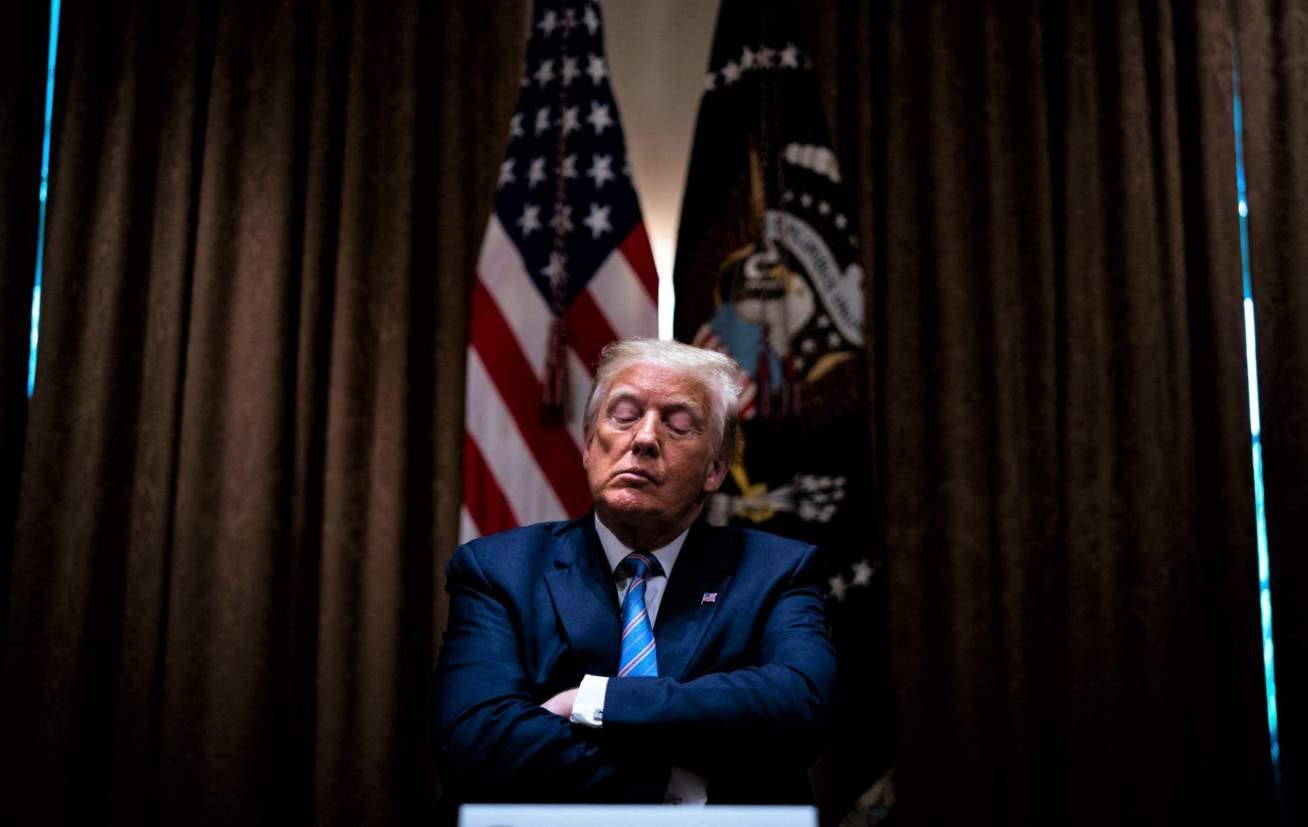
RL: I felt like I was this patriotic political soldier and the President was the general. We had a rule that, even if you disagreed with the President on something, you never spoke out publicly because that meant you were engaging in the same type of behaviour as Democrats and anti-Trump Republicans. I actually viewed the 2016 Election as a second founding of America, and I felt I was part of something historic.
MAGA shaped my identity, worldview, being, and personhood. The prospect of walking away from that second family and community, and those tight-knit relationships, is terrifying. We would go to holiday parties and invite each other to birthday parties. It was exhilarating and enthralling, and novel and exciting. Leaving is also terrifying because you have to question something that has been so integral to one’s life.
I knew the President had mismanaged the pandemic. I didn’t support what happened on January 6, but I thought initially it had been hyperbolised into a bigger deal than it was. I also didn’t believe the 2020 Election had been stolen and I vehemently disagreed with the President because I knew he was being dishonest, and Trump voters did not deserve to have their intelligence insulted like that. But as the issue of Ron DeSantis happened, I started to better understand January 6 and the conspiracies that fuelled it; then Uvalde – these moments helped me get over my own cognitive dissonance where I had a set of sincerely held beliefs but what my eyes were showing me were conflicting with those beliefs.
HM: The Covid Delta surge, and DeSantis’ platforming of anti-vaxxers, was during a pandemic in which Donald Trump had already suggested to the American public that injecting disinfectants such as bleach might be a way to treat the Coronavirus. Do you think that it’s in these life and death moments when the dangerousness of such political movements is truly exposed?
RL: There’s no doubt being a parent of small children influenced my eventual decision to leave. With the Covid Delta surge resulting in children dying from the virus; Uvalde where the majority of victims were children – I had to accept a very uncomfortable truth which was the Republican Party and Trump deemed acceptable avoidable death, suffering, and trauma.
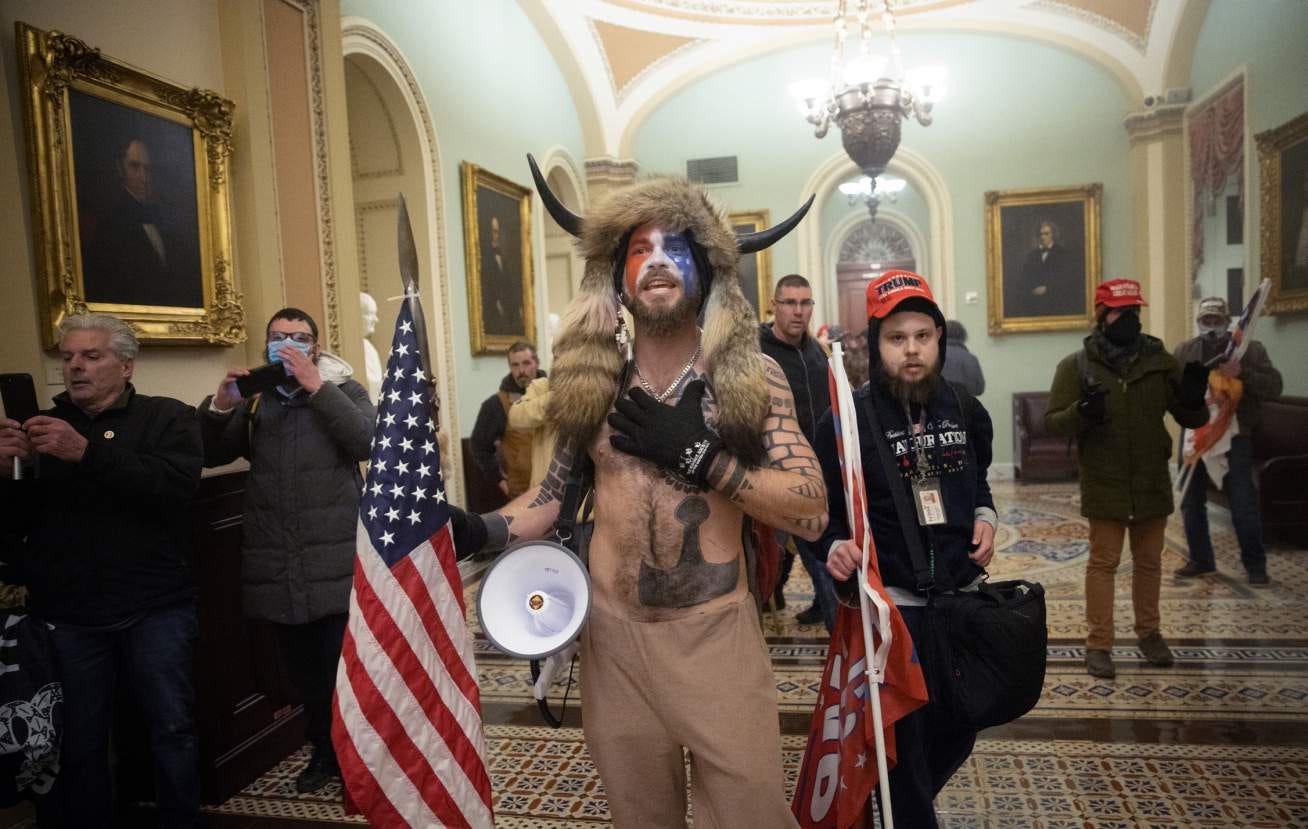
There was also a defence of politically motivated violence. In February 2022, the Republican Party deemed January 6 to be legitimate political discourse and helped amplify the conspiracy theories that Antifa, Democrats, and leftists were the ones who actually stormed the Capitol. When I started to diversify my news sources, I realised groups like QAnon, which I thought were fringe and operating in the dark bowels of the internet and had no influence at all, did have influence – and the President had given credibility to these conspiracies. I looked at groups like the Proud Boys as hangers-on with no influence, but it turned out they had the blessing of the most powerful person in the world.
HM: Would you say that turning your back on the movement took bravery, considering there will be many who will never ever forgive anyone who was ever involved in MAGA? Or was it more about critical thinking and realisation, and then come what may?
RL: MAGA was another limb attached to my body. To walk away, I had to sever that limb. I never thought of myself as this intrepid person. I feel I need to continue to do this work to continue making amends for some of the damage I caused as a participant.
I think most people in MAGA, deep down, are actually good people. I don’t defend the ignorance, but I think they have been led astray and had their natural fears exploited and manipulated. That’s something Trump, the GOP, the MAGA media and influencers have done very, very well – and that division has distracted us from the fact that, as Americans, I believe we actually agree much more than we disagree. We want economic opportunity, good schools for our kids, high-quality healthcare, a safe and secure country. We might disagree on how to reach those outcomes, but there’s more concurrence than there is a difference in opinion. I don’t think most people in MAGA are extremists, but the contradiction is that MAGA is an extremist group because it encourages its adherents to dehumanise those with whom they disagree – that we have to crush our opponent before they crush us.
To go through the process of self-examination, it’s really hard. But at Leaving MAGA, we’re trying to normalise changing one’s mind – that admitting we made a mistake is not a weakness, it’s a show of strength and maturation. When I left MAGA, I became what I call a born-again human being, where I rediscovered my empathy. Leaving was good for my soul, psyche, and mental health. It makes someone a more sympathetic and empathetic person. It’s why I think the best way of approaching people in MAGA is with empathy, because they have succumbed to mis- and disinformation campaigns.
We are in the United States of Algorithms. Once it’s in the feed, and those one or two videos are viewed, that’s then all people are getting. When I was in MAGA, I was addicted to fear and rage. I was always angry even though I was on the winning side, and I was always afraid of some group or somebody – I always thought there was some devilish liberal behind every tree. MAGA media fuels a lot of the addiction. No one watches Fox News to edify, inform, or educate oneself, but because it reinforces and affirms the addictions to rage and fear. If you watch it for just five or 10 minutes, you’ll feel like there’s a communist takeover of America.
I actually viewed the 2016 Election as a second founding of America, and I felt I was part of something historic
We have a support group every week for friends and family of those in MAGA and something we often speak about is relieving attendees of the pressure of feeling like they can change their MAGA close friend or loved one – because no one can change another person; the change can only come from within the individual. So our support group focuses on self-care, how to set boundaries, and how to keep ourselves mentally grounded as we continue to love and cherish our MAGA close friends and loved ones who have succumbed to extremism and mis- and disinformation.
HM: We don’t live in a wider culture that encourages people to think critically, more deeply, or to be self-examining and change their minds: to be human. At the same time, as you say, the MAGA movement is in itself very dehumanising – built on far-right, white supremacist ideas around racial hierarchy and ‘invasion’, which its members presumably believe and disseminate. How can both be kept in mind when trying to help those wanting to leave?
RL: We want people to feel like Leaving MAGA is a place where they are recognised and are seen and heard. You have to counter the toxicity of the MAGA community with something that is based more on justice, fairness, and love. But it is not enough to just distance oneself from the President. Someone has to also renounce the lies, falsehoods, and conspiracy theories of MAGA politics because the renunciation is how someone starts to make amends. And have to commit to building democracy up rather than tearing it down – by making the continued case that we, as Americans, agree more than we disagree.
In Leaving MAGA, we have a very diverse assortment of people who have left. We have black, white, and Hispanic people. Men and women. Gay and straight. One lady came to MAGA through her Christian nationalist church. Another member was at January 6 and went to prison – he rejected Trump’s pardon. We have a black American who was so desperate for community and to be welcomed, he wore a Confederate flag wristband so he could fit in. We are debasing our own integrity [when we do such things] because we are letting ourselves become someone who, deep down, we really aren’t. But we believe we are doing it for the right reasons. Who doesn’t want to Make America Great Again?
And the problem always is the ‘Again’ part. As a country, our progress has not been linear, it’s ebbed and flowed. Unfortunately, a part of MAGA is about going in reverse. But I would tell those who, to their credit, have never been MAGA, that we can either reject or welcome those who leave. We have to ask ourselves: what is achieved by shunning those who leave? It might feel good in the moment, but, if we are going to talk about saving democracy and building a big tent, that requires welcoming people who are maybe unlikely allies. I’m not a historian, but something I know about American history is that every time we have been in a crisis situation, the way we’ve moved forward is by forming unlikely but necessary alliances. So if someone who is in MAGA having doubts feels like they’re going to be ostracised or shamed, that makes it less likely for them to leave.
I am of the belief there are more people than ever who have quietly left MAGA and are privately harbouring doubts, questioning their belief system, and there’s cognitive dissonance and they’re feeling confused and don’t know what to do. We are a place they can come to safely, freely, and without judgment and fear of recrimination.
HM: How would you describe yourself politically now? Where do you think America is at on its 250th anniversary, given the damage done by a second Trump presidency not just domestically but around the world?
RL: I am a registered independent and don’t belong to any political party. In 2024, I did work on Kamala Harris’ campaign as a co-chair of a committee in Florida doing some outreach and media. I intend to vote Democratic this November. I keep my registration as independent because I feel it brings a bit more credibility given that Leaving MAGA is a non-profit and I want to keep some arm’s length distance from the political parties.
America right now is suffering from a crisis level of mis- and disinformation. Something we are looking to do at Leaving MAGA is to create media literacy programmes because it’s so sorely lacking. How to tell between something that is real and something that’s fake is only going to be exacerbated with AI.
It is true that we are divided and polarised, but I don’t think this is the most divided we’ve ever been. It’s why I do have faith that the American people are going to confront it. I think more and more apolitical Americans are starting to pay attention and, as a result of that, even though I am loth to prognosticate, I think there is going to be an electoral revolt against MAGA in November. Apathy does more harm than good, and we have to encourage participation in our democracy because, even though people might say they don’t care about politics, politics cares about them. In 2024, there were nearly 90 million voting age Americans who didn’t vote. I understand they might feel like their vote doesn’t count or politicians don’t listen to them, but what’s the outcome of not voting? What the Trump administration is doing. So I think we are going to have a recalibration in November and, if Democrats became the majority party, they’re going to have to do the hard work of governing and keeping the promises they are making to get elected.
I have to remain optimistic, especially with those who are in MAGA. I know people can change. We are living proof it’s possible. If we can destigmatise the changing of one’s mind, we can create more harmony between those who were never MAGA and those who left. Because the alternative is to remain in this intense polarisation which only helps those who seek to divide us.
HM: What is the biggest thing you’ve learned as a result of your MAGA journey?
RL: What I came to understand about myself, and about people who leave, and just the overall process about changing one’s mind, is that we are all individuals who control our destiny. I was able to break free from the manacles of a movement which took away my individuality. I understood that it’s possible to be individuals and still be part of a community, and just how necessary community is. It’s not something we want, it’s something we need. I didn’t realise before MAGA just how important community is to us. It’s why with our organisation, we are going to continue to make people feel like this is a community they can be proud of. ●
Visit leavingmaga.org to read testimonials and for more information
Hardeep Matharu is Editor in Chief of Byline Times. This article appears in the current print and digital edition of the Byline Times monthly magazine.