

BYLINE TIMES IMPACT: Find out about the changes you made happen
The progress towards gender equality can sometimes seem agonisingly slow, with figures from the Office of National Statistics revealing that, even now, almost a century after women won the right to vote, they still earn around 7% less, on average, than their male counterparts. As if that weren’t bad enough, we’ve seen influencers promoting the ultra-conservative ‘tradwife’ movement in recent years, complementing the rise of the toxic manosphere.
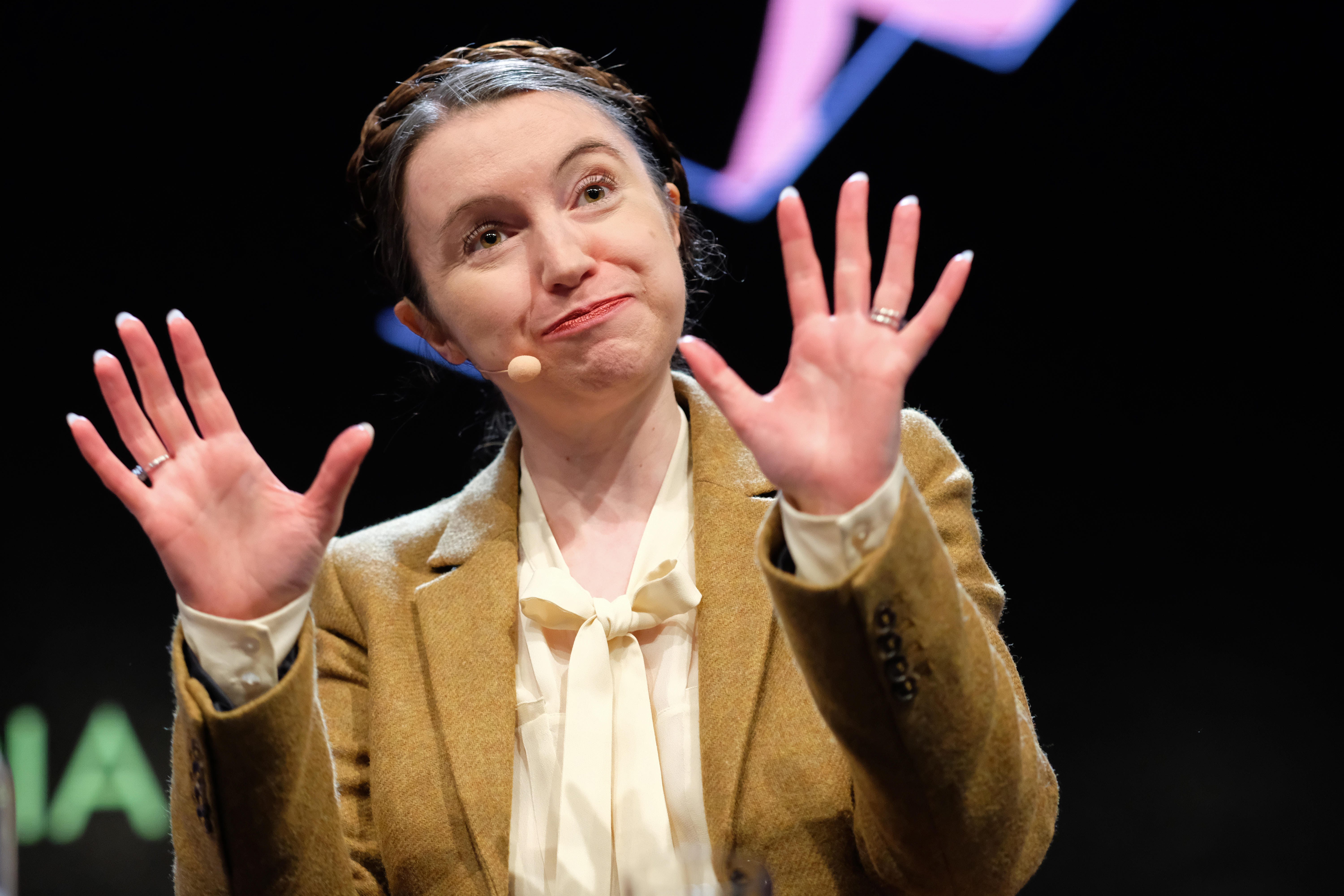
If you find this all a bit depressing, let me introduce you to Victoria Bateman, an upbeat feminist historian who is on a mission to explode the foundational myths that sustain so much current Western thinking about the ‘natural’ division of the sexes. Her impressively researched book Economica: A Global History of Women, Wealth And Power spans civilisations and millennia, to flatly contradict the belief that our roles are biologically determined or permanently fixed.
As Bateman explains in an interview with the Byline Times Podcast, the idea that men have always been the ‘producers’ and women simply reproducers is plain wrong. “I think that is quite a dangerous way of looking at the past” she says firmly. “Not only is that false – throughout history women have been doing all the kinds of things that men have been doing – but I think it also serves to perpetuate the idea that the great civilisations of human history were built by men alone, and right now we stand on a knife edge in terms of the future of women’s rights, and indeed the future of our economy and the global economy. If you have that idea that only men built the great civilisations of the past, then projecting forward, what do you have to lose from pushing women into the home? So I think now more than ever we need to challenge that very old-fashioned view of the past.”
Bateman points out that even at the dawn of human civilisation female hunters played a crucial, but often overlooked role, in sourcing food. She cites the discovery of archaeological remains in the Andes, in 2018, as one piece of an emerging jigsaw. “In the last handful of years there’s been this realisation that women were actively involved in hunting alongside men. So, for example, in the Stone Age in the Americas, 40% of big game hunters were women. But in addition to that, there’s also a growing understanding within the archaeological and anthropological community that ‘gathering’ was just as important, or possibly even more important, than hunting, and that women really dominated. We’re talking about laying traps to catch smaller game, collecting shellfish, gathering fruits and vegetables – and that often was the mainstay of the diet, which might then be supplemented at feasting times with the carcass of a big animal. So, really, from the beginning, women were there at the heart of their communities, providing for those communities. They weren’t simply reproducing the next generation, they were keeping us all alive.”
Many ancient civilisations were also matrilineal rather than patriarchal; that’s to say, power passed down through the female line, meaning that women were at the top of the social structure. Bateman says that “long before Jesus Christ and Mohammed, there was the Mother Goddess who determined the fertility of the land, the fertility of society. That was who people looked up to, that was who people made offerings to. So you had, in many early societies, this real reverence towards female power and female control.”
Why, then, has the role of women been downplayed? And how did they come be viewed, in some societies anyway, as weaker beings who needed protection? Bateman describes an historical “rollercoaster”, which has seen women’s rights travel through peaks and troughs. Changes in their status might have been determined by geography, or the style of farming employed a particular society. One example is nomadic pastoralism, “where animals would have to be moved seasonally or taken to water, sometimes over long distances. Where you had that nomadic herding of animals, those also tend to be societies that today are some of the most sexist – and I think that is in part because the men herding these animals away from home, became very fearful of what their wives were doing whilst they were away. So, sadly, societal practices developed such as the seclusion of the wives, female genital mutilation, forced veiling – so that men could try to control their wives from a distance and prevent them from being impregnated by competing men. The geography of our early farming communities has cast a long shadow.”
The Indus Valley, by contrast, spanning parts of modern day Pakistan and India was once “a bit of a Utopia” for women according to Bateman. “If I had to choose somewhere to be a woman 5,000 years ago, I think the Indus Valley would definitely be towards the top of my list. It was a bigger civilisation, for example, than Ancient Egypt. You had numerous towns connected to villages, systems of irrigation and flood control over the land, you had peaceful trade and exchange between inland and coastal areas. And we know that within that society, men and women were relatively equal. We can see it in the evidence of nutrition from the skeletons that remain from that time, and also in the grave goods. How people were buried and sent off into the afterlife tells you a lot about how respected or not people were in their communities and the state of their wealth, and we know that men and women were sent into the afterlife with the same types of grave goods. This was a society that wasn’t just relatively gender equal, it was also relatively equal in terms of wealth as well.”
In the West, too, women have proved capable of competing at forefront of technology and cutting edge processes. One of the key achievements of the Industrial Revolution was the emergence of mass literacy, which saw the rise of the novel – a female-dominated art form. Bateman explains that, “the novel was a really revolutionary thing, and women dominated to the point that by the end of the 18th Century/early 19th Century, ten of the twelve most read novelists were women, to the point that even some male writers started to pretend to be women in order to draw in readers.” Then there was Priscilla Wakefield, “who set up the first bank for women and children in the late 18th century. She wrote 17 books and supported herself and her family through writing.”
None of this is to suggest that discrimination against women isn’t a real historical fact; nor that it has disappeared today. Quite the opposite. Bateman is clear-eyed about how men have sought to exercise control across the centuries – but she is also determined to challenge the narrative that women have only recently begun to contribute to the world’s economic well-being. She also recognises that we live in a time when regressive forces are once again seeking to oppress them and regards her book as powerful ammunition in the culture war around traditional gender roles.
“What we’re experiencing today in terms of these social conservative tendencies that are anti-women, anti-immigration, anti globalisation…we’ve seen them all before,” she asserts. “In fact, 2000 years ago, within the Roman Empire, Augustus was fuelling the flames of these sentiments. People started to be worried about all these working women starting businesses and earning money rather than getting married and breeding for the good of Rome. They worried about falling marriage rates, they worried about falling fertility, and that fuelled a movement to push women increasingly into the home to breed, so that society wouldn’t need so many immigrants. That movement didn’t help the Roman economy, and it won’t help us today
“We have to keep protesting, we have to keep having our voices heard, we have to keep unionising. We need make sure that we stay on track.”
Economica: A Global History of Women, Wealth And Power is out now and published in paperback on July 2.
Listen here to Adrian Goldberg’s full interview with Victoria Bateman on the Byline Times Podcast.