


BYLINE TIMES IMPACT: Find out about the changes you made happen
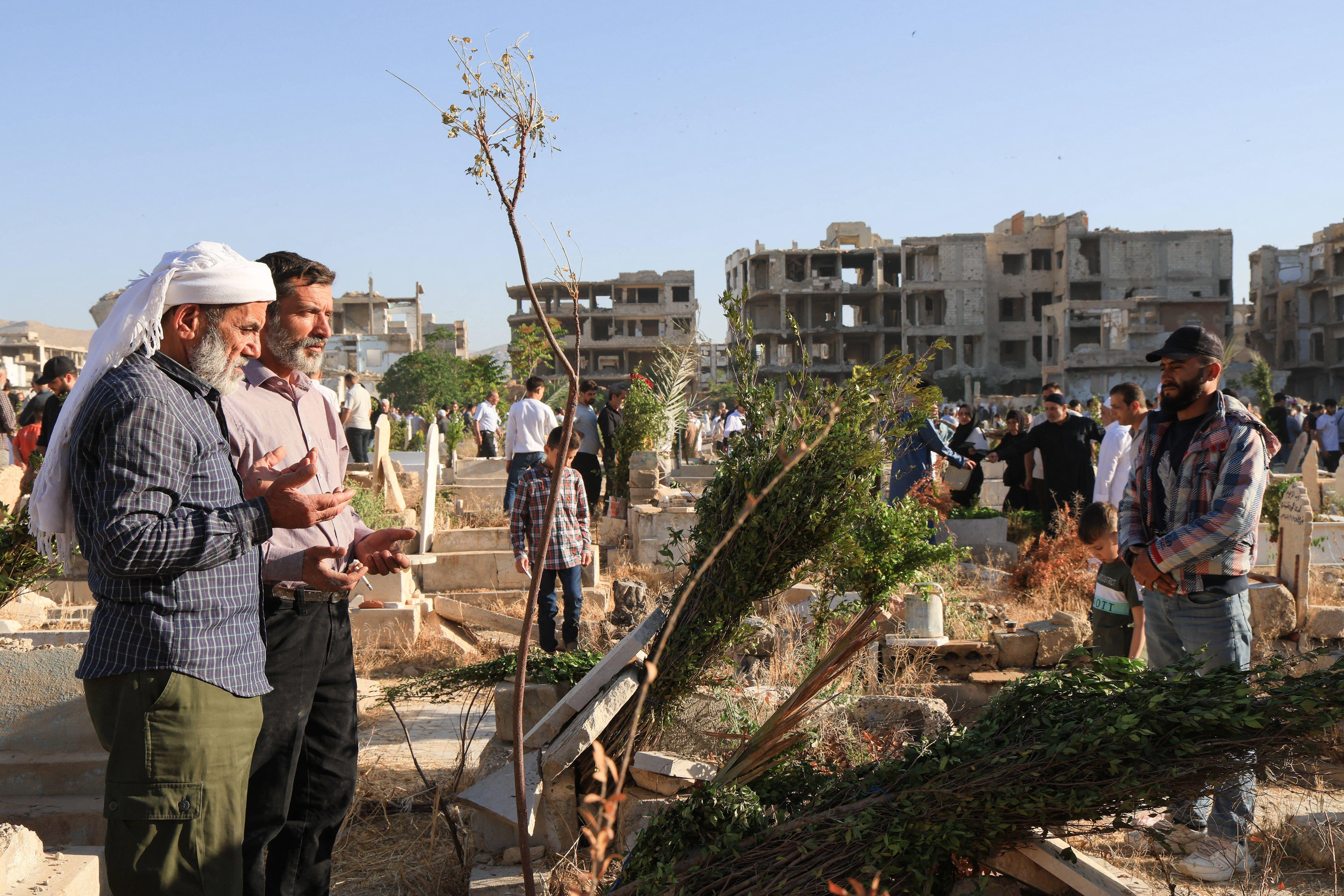
For Syrians in Britain, the prospect of return suddenly feels imminent. Yet, as the philosopher Alexandre Kojève suggested, the collapse of a regime doesn’t instantly create a functioning society – it leaves us confronting freedom within a “total emptiness.”
Through a small survey I conducted in Britain, the term “Syrian refugee” was often associated with words like “pity”, “paperwork”, “war” and “suffering”. But from everyday conversations within the Syrian community here, I know the fear is more complicated: it is not only about the past, but about the uncertainty of return.
Recent Violence and Renewed Uncertainty
The emptiness left after the fall of an old system is not only philosophical. In Syria, it appears in the fragmented spaces where power is contested between state forces, former regime loyalists, local armed groups, tribal factions, and communities trying to protect themselves.
In March 2025, that fragility became visible in violence that broke out in Syria’s coastal region, including areas such as Jableh and Baniyas in Latakia and Tartous governorates. UK Government country guidance, Crisis Group, Human Rights Watch and the UN Syria Commission describe how attacks by pro-Assad loyalists against transitional security forces were followed by a response that escalated into sectarian violence against Alawite civilians, including killings, looting, displacement, and attacks on homes and religious sites. The UN Syria Commission reported around 1,400 deaths, showing how quickly collective blame can turn civilians into targets. Alawites are a religious minority in Syria, historically concentrated in the coastal region, particularly Latakia and Tartous. The Assad family comes from an Alawite background, and during decades of Assad rule, some Alawites were associated with the regime’s military and security structures. But this association is not universal: many ordinary Alawites were poor, politically powerless, or also suffered under the regime.
In my interview with an Alawite member of the Tayyar Dalil movement inside Syria – an independent Syrian civic/political movement that calls for a democratic, liberal and decentralised Syria based on equal citizenship, rule of law, pluralism and rights – they rejected that simplification. There was “no unified stance” among Alawites when the regime fell, they explained. Some feared the vacuum and collective punishment; others felt relief after years of loss, poverty and being used as a “human reservoir” for the war.
In July 2025, violence in the southern province of Suweida exposed the same instability. Crisis Group and UN reporting describe a local dispute between Druze and Bedouin groups that escalated after government intervention, drawing in wider armed actors and Israeli airstrikes. A Durzi individual from Suweida, now living in Britain, described the province as a place where “everyone carries a weapon under the slogan of resistance”, with weapons “even” reaching children.
Together, the events on the coast and in Suweida make “safe” difficult to accept as a simple word.
Is Syria Being Understood Too Simplistically?
The risk of returning to Syria is often reduced to a simple logic: if the new leadership is Sunni-led, then Sunni Syrians are safer. The UK Home Office Country Policy and Information Notes and EUAA country guidance both distinguish between groups facing different levels of risk, with Alawites and Druze identified as especially vulnerable.
But this can become misleading if it turns identity into a shortcut to safety.
Being part of a particular shared sect does not guarantee protection. The UK Home Office Country Policy and Information Note on criticism of the Syrian government shows that political dissent still carries risk, especially where speech crosses unclear “red lines”. A Sunni who criticises the current authorities, rejects their ideology, or is seen as politically unreliable, may not be protected simply because they belong to the majority.
The Tayyar Dalil member described the deeper risk as trans-sectarian: when the state becomes “ideologically biased” and cannot reassure citizens equally, fear reaches minorities, women, journalists, activists and even members of the majority who disagree with the dominant discourse.
A member of the Syrian Durzi community in the UK described their fear as not only about who holds power, but what kind of state is being formed. They warned of a move towards a “mono-colour” state, where those who differ “intellectually, religiously, or culturally” become exposed.
The New Humanitarian and the Migration Policy Centre also warn that the return of refugees can be used as evidence of safety, even when it is driven by poverty, legal pressure, or fear of deportation. A country can become quieter without becoming safe. A refugee can belong to the majority sect and still remain uncertain about what return would mean.
Beyond Sect: Why Identity Alone Cannot Guarantee Safety
Sect still matters in Syria, but it is not the final measure of risk. The UK Home Office Country Policy and Information Note suggests that political expression remains uncertain, with unclear limits around criticism of sensitive ministries, sectarian violence, and organised opposition. In that legal grey zone, accusations of threatening “national security” or disloyalty can become more dangerous than sectarian identity itself.
Safety also changes by place. EUAA country guidance describes Damascus as relatively stable, while areas such as Homs, Suweida, the coast, and parts of the north remain exposed to local armed control and insecurity. A returnee from Britain may be judged not only by sect, but by where they lived, whether they claimed asylum, what they posted online, or whether they are seen as politically or culturally changed by exile.
A Durzi individual from Suweida, currently living in Britain, said disarmament efforts appear to focus mainly on minorities, while weapons remain widespread elsewhere. They warned that “another kind of war is coming” against those who differ “intellectually, religiously, or culturally” from the ruling power.
In this sense, safety is not only about being Sunni, Alawite, or Druze. It depends on loyalty, geography, speech, and how power chooses to read you.
What ‘Safe’ Really Means
If identity alone cannot ensure safety, then the next question is what safety actually means.
For a Syrian legal expert specialising in International Human Rights Law, safety is not simply the absence of hostilities but goes beyond to encompass security from any plausible act of violence, persecution, and abuse. The return of refugees must also be dignified and voluntary.
The legal expert also explained that refugee protection under the 1951 Refugee Convention is based on an individual’s well-founded fear of persecution. This means asylum and return decisions should not be reduced to sectarian identity alone. Even a Sunni Syrian may still face risk because of political views, social beliefs, gender identity, sexuality, or other personal circumstances.
Recent reporting from a range of international sources describes ongoing risks in Syria, including arbitrary detention, torture and ill-treatment, enforced disappearances, abductions, revenge killings, sexual and gender-based violence, and the continued presence of Islamic State. These risks show that safety cannot be measured only by whether large-scale hostilities have decreased.
The legal expert also pointed to poverty, lack of basic services, and unresolved housing, land, and property disputes as major barriers to return. Human Rights Watch’s 2026 reporting describes around 90% of Syrians as living below the poverty line, while UNHCR, EUAA, and the Syria Justice and Accountability Centre point to destroyed homes, weak infrastructure, limited healthcare, landmines, and unexploded ordnance.
Fear of Return Among Syrians in Britain
For Syrians in Britain, fear of return is now tied to legal security as much as to Syria itself. The UK Home Office announced that from 2 March 2026, refugee protection would shift to a temporary Core Protection model, with status reviewed every 30 months and return expected if the home country is later considered safe. Adam Bernard Solicitors’ legal and analysis warns that this repeated review process creates long-term uncertainty for refugees in the UK.
This turns “safe return” into a recurring threat rather than a distant possibility. Refugees may rebuild lives, work, study, and raise children, while still knowing their protection can be reassessed every two and a half years.
The paradox is clear. While the Home Office moves towards regular safety reviews, UNHCR reports that Syria still faces major gaps in basic survival needs, and Human Rights Watch’s 2026 reporting says the vast majority of Syrians remain below the poverty line.
According to the Druze individual from Suweida, “Bread now costs ten times more, and electricity has increased a hundredfold.” They warned that people returning might find their property seized by “gangs from the old regime or individuals connected to the current government”.
Returning isn’t just about crossing a border; it is about survival, reclaiming a home, and escaping fear.
The same individual, now living in Britain, asked: “Is there safety for women in general? Is there safety for a man who is different from the majority of society?“ For those abroad, safety isn’t just about government rules. It is the deep fear that the new life they built could be torn away from them again.
Who Decides What is ‘Safe’?
There is a harder question to measure: how does a society learn to live with freedom after years of war and repression? When a regime falls without stable institutions, trust, or a shared direction, the result is dangerous chaos. True stability requires more than the collapse of a government; it requires a system where people can disagree, speak out, return, and rebuild while being legally protected.
While governments like Britain evaluate whether Syria is “safe,” this assessment must not be simplified. Safety depends on specific questions: safe for whom, under whose authority, and at what cost to the individual? Kojève’s concept of a void is not just a theory. It describes exactly what happens when a government collapses, but the questions of basic security and authority remain completely unanswered. Syria is still stuck in this vacuum.
For Syrians in exile, safety is not just a word in a policy document. It is determined by whether a person can speak without social or political punishment, or whether a journalist can ask questions without being treated as a threat. This uncertainty heavily impacts children raised in exile who have formed their language, education, and identity entirely in host countries. For them, forced return is not a homecoming - it is a secondary disruption to their language, society, and sense of belonging.
Thanks. A very illuminating article. It brings into sharp focus the UK’s policy towards asylum seekers and refugees which seems increasingly to be based on cruelty.