

The Billionaire, the Bible, and the Battle for Britain: Sir Paul Marshall and the Rise of Elite Evangelical Nationalism
He funds newsrooms, churches, and schools – but what is driving ‘Britain’s newest media mogul’? James Bloodworth reports
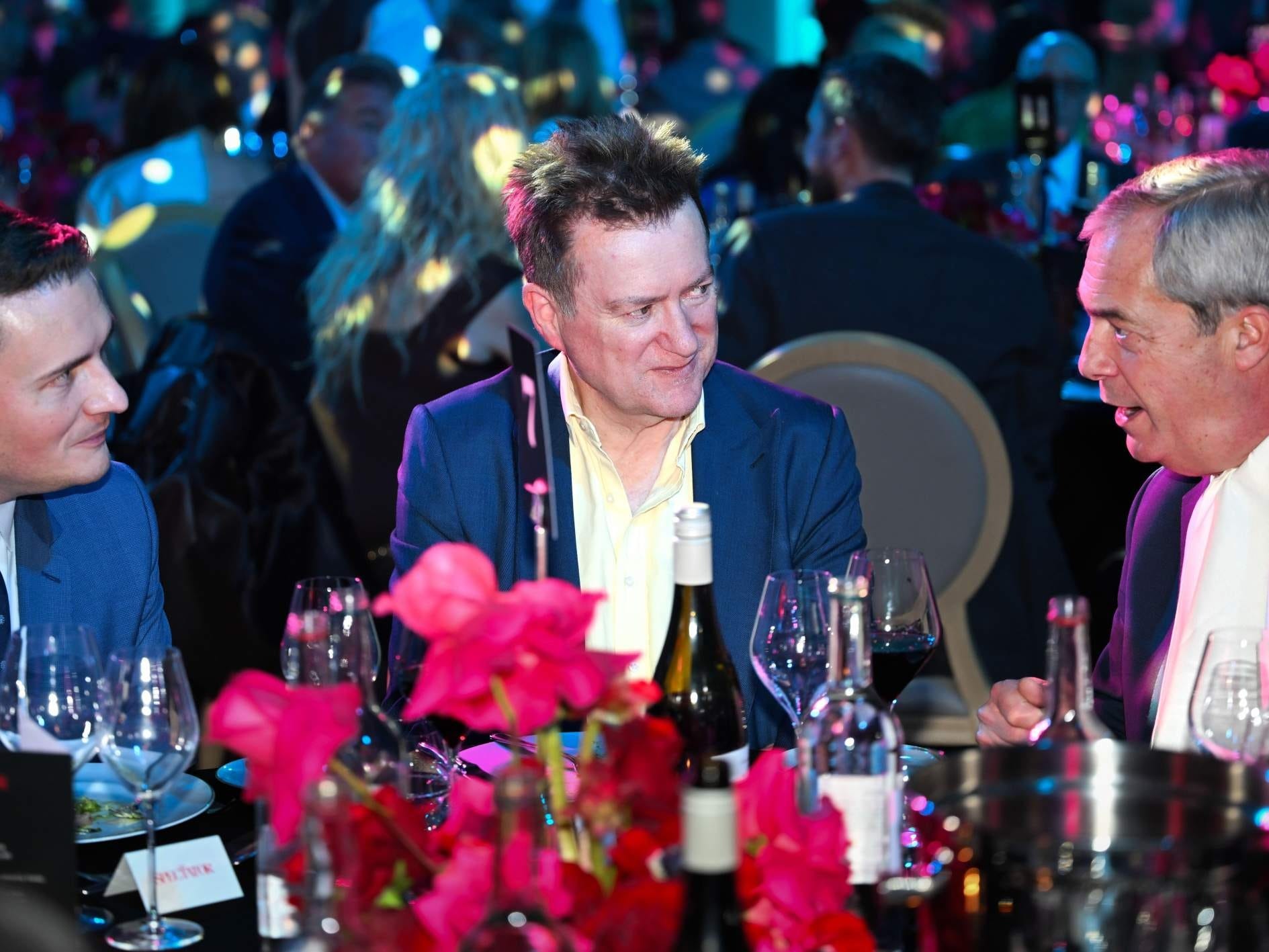

Sir Paul Marshall, co-founder of asset management firm Marshall Wace, is one of the UK’s most powerful – but least scrutinised – political actors.
His personal fortune is immense. In recent years, his political views have grown more ideologically assertive. And his influence – spanning newsrooms, churches, and schools – reflects not so much the decline of the British establishment as its quiet radicalisation from within.
At the heart of Marshall’s political vision is a spiritual diagnosis: he believes that liberalism has “lost its moorings”, that the Enlightenment has corrupted society, and that only a revival of Christian values – as interpreted by a narrow and authoritarian strain of elite evangelicalism – can save Britain from moral collapse.
The organisations he controls appear to be working towards that end.
Although he speaks in the calm and assured register of a philanthropic investor, the ambition is unmistakable: moral realignment and a re-Christianised UK.
Creating a New Media Ecosystem
Marshall’s most visible intervention has been in the media.
A sector once dominated by the centre-right is increasingly shaped by nationalist and post-liberal thinkers.
In 2021, he poured £10 million into the fledgling GB News, becoming its largest investor after the departure of founding chair Andrew Neil. A year later, he doubled down with additional funds and stepped in as interim chair. In the overhaul that followed the channel repositioned itself as Britain’s first “anti-woke” broadcaster.
Commercially, the channel has struggled. Industry reporting suggests GB News has accumulated losses of more than £100 million since its launch – a reminder that ventures of this kind are often valued less for their profitability than for their political reach.
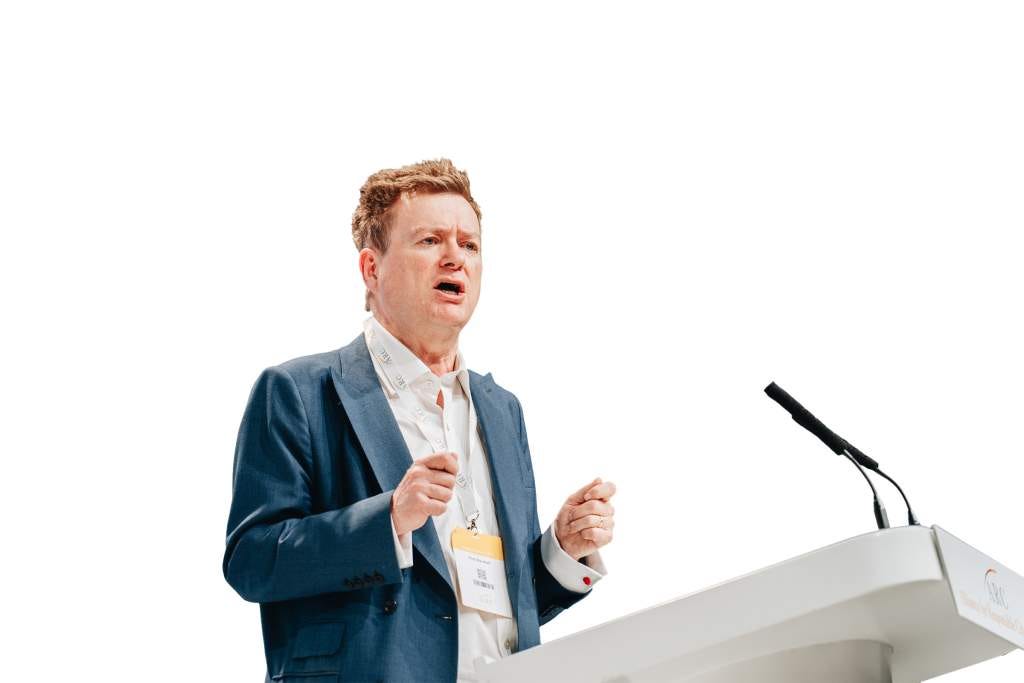
Alongside GB News, Marshall owns UnHerd – a digital publication launched in 2017 under the banner of intellectual independence and heterodoxy.
UnHerd styles itself as a refuge from ‘groupthink’ and publishes voices from across the political spectrum. Yet, like GB News, its editorial tone has increasingly come to mirror that of the radical right. Though publishing occasional columns by contrarian left-wing intellectuals, such as the former Greek financier Yanis Varoufakis, most contributions tend to rail against a small number of left and liberal targets: gender medicine, liberal institutions, and Hollywood ‘elites’.
Also like GB News, UnHerd has recently expanded into the United States, where its Editor is the conservative writer Sohrab Ahmari, a prominent voice in the emerging post-liberal movement who rejects liberal neutrality in favour of a more assertive Christian moral order.
One can learn a great deal about UnHerd’s brand of ‘anti-establishment’ politics from what it omits to publish.
Its stable of self-styled dissident writers have little to say about climate change, human rights abuses, or extreme inequalities of wealth. Instead, readers are treated (one might also say: subjected) to a daily onslaught of ‘culture war’ fodder.
I occasionally wrote for UnHerd between 2018 and 2020 when I was asked to contribute by its then Editor Tim Montgomerie (with the freelance rates being generous). I had recently written a book, Hired: Six Months in Low-Wage Britain, which presented an in-depth look at declining post-industrial towns. It coincided with the right’s new-found interest in ‘left behind’ members of the working-class who had voted for Brexit. They lived in towns like Bolsover and Hartlepool and were seen as the bedrock of a political ‘realignment’ that was sweeping away the old denominations of left and right. I happened to be in the right place at the right time.
The realignment itself was largely superficial. Over time, UnHerd began to publish more content that critics have described as conspiracy-driven.
During the pandemic, it championed the Great Barrington Declaration, which called for the authorities to let the Coronavirus spread among the healthy population. It hosted comment pieces by Oxford University professor Sunetra Gupta, an advocate of ‘natural herd immunity’; and Stanford University’s Jay Bhattacharya, who has since gone on to work for the Trump administration. The conference at which the declaration was launched was backed by libertarian think tanks with ties to fossil fuel interests.
His Christianity is not the Christianity of soup kitchens or social justice. It is the Christianity of governing classes who feel they have lost their place in the social order
Marshall’s UnHerd has also been in the vanguard of right-wing efforts to challenge what its Editor-in-Chief, Freddie Sayers, has described as the “disinformation movement”.
The campaign formed part of a broader push from sections of the right to portray disinformation researchers, fact-checkers, and media monitors not as neutral arbiters but as politically motivated censors. In this telling, those warning about conspiracy theories or extremist narratives have become the real threat to free speech.
It is a pattern that recurs across Marshall’s media ecosystem, where the exhortation to ‘think for yourself’ frequently leads to conclusions that align neatly with powerful interests.
The Guardian described Marshall in 2023 as “Britain’s newest media mogul”, noting that his ownership of UnHerd, his control of the Spectator magazine through UnHerd Ventures, and his active bid for the Telegraph newspaper placed him at the apex of an emerging conservative media ecosystem.
Taken together, these outlets combine broadcast outrage, establishment cachet, and mass newspaper reach. Critically, they orbit the same ideological premise: that western civilisation itself is under threat from progressive elites.
Establishing an Elite Religious Vanguard
But Marshall is no vulgar tabloid bigmouth. He is very much a behind-the-scenes operator.
When he does put pen to paper, he appears more concerned with metaphysics than the ups and downs of the Westminster village – his pet subjects including the so-called crisis of meaning, the loss of shared values, and the spiritual decay at the heart of liberal modernity.
In a 2022 UnHerd piece titled “Progressives have sacrificed liberalism”, Marshall lamented the collapse of the classical liberal consensus. The Enlightenment, in his view, had replaced God with reason and in doing so had “displaced the Christian ethic” that once tethered society to virtue.
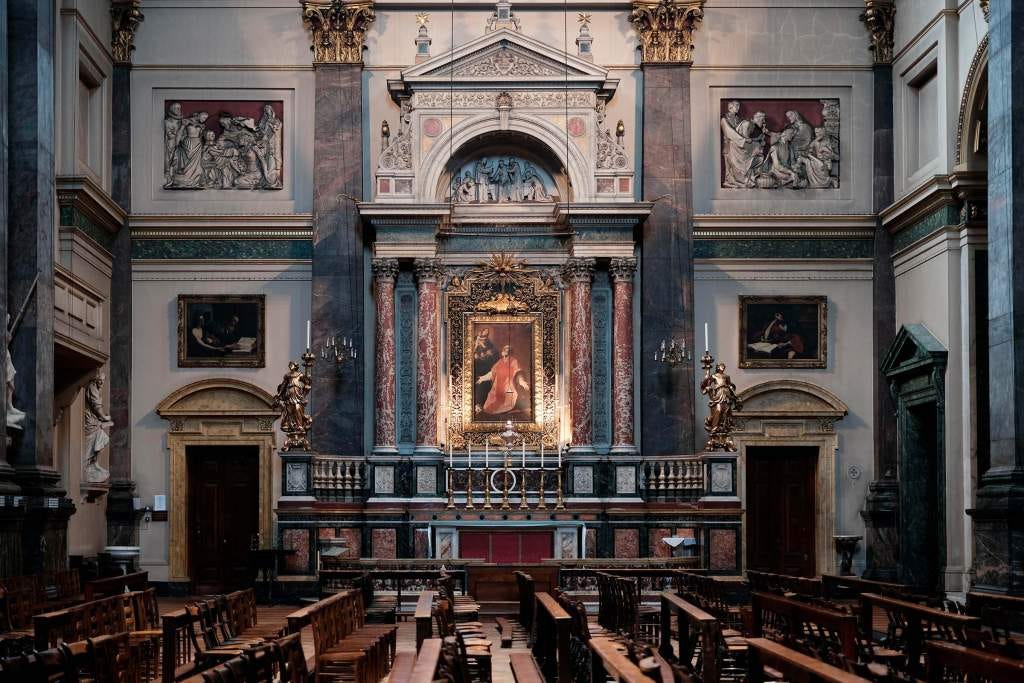
It is this framing that helps explain why Marshall – who has made vast sums speculating on the financial markets – is now investing so heavily in media, education, and the church. The goal is not so much piecemeal reform as civilisational renewal.
Beneath the philosophising lies a more radical agenda: Marshall is not simply promoting media pluralism but constructing a parallel establishment. And by opening his cheque book, he often finds institutions willing to listen – particularly in sectors such as the church, where dwindling resources have made outside funding increasingly influential.
Nowhere is Marshall’s mission clearer than in his involvement with Holy Trinity Brompton (HTB) and the wider evangelical networks orbiting the Church of England.
HTB, in one of London’s wealthiest neighbourhoods, has become the beating heart of elite evangelical Anglicanism. It functions simultaneously as a spiritual home and a social hub – a place where theology and networking merge seamlessly.
As Professor Linda Woodhead, a leading sociologist of religion at King’s College London, explained to me: “If you go to Holy Trinity Brompton, you’ll find a marriage partner. It’s very much a social network where people very consciously go at that age, find one another, get well connected … It’s a small group of people who ran Britain … and, quite understandably, they want it back.”
It presents itself as sleek and modern, its services built around charismatic preaching and contemporary worship. Yet, the vision it promotes is deeply hierarchical: traditional family structures, male leadership, and a rigid moral code.
Through its Church Revitalisation Trust, which Marshall funds, HTB has expanded its reach across Britain, planting churches and promoting an agenda that merges evangelical theology with authoritarian values.
“Traditional family, heterosexual men in charge of everything – that’s basically the agenda,” says Woodhead. “In England, it’s much more about gender than race.”
In this way, HTB functions not just as a church, but a meeting point for an elite that sees Christianity as a vehicle for cultural authority. What Marshall appears to be building is not a mass religious movement but a religious vanguard – a spiritually anointed elite with the resources and networks to reclaim national influence.
Under the Cover of ‘Public Good’
Marshall’s charity work has long been celebrated in elite circles.
In 2002, he co-founded ARK (Absolute Return for Kids), originally as a children’s charity. Over time, it grew into one of the most powerful academy chains in the UK, a key player in New Labour’s and later Conservative efforts to reform education through public-private partnerships.
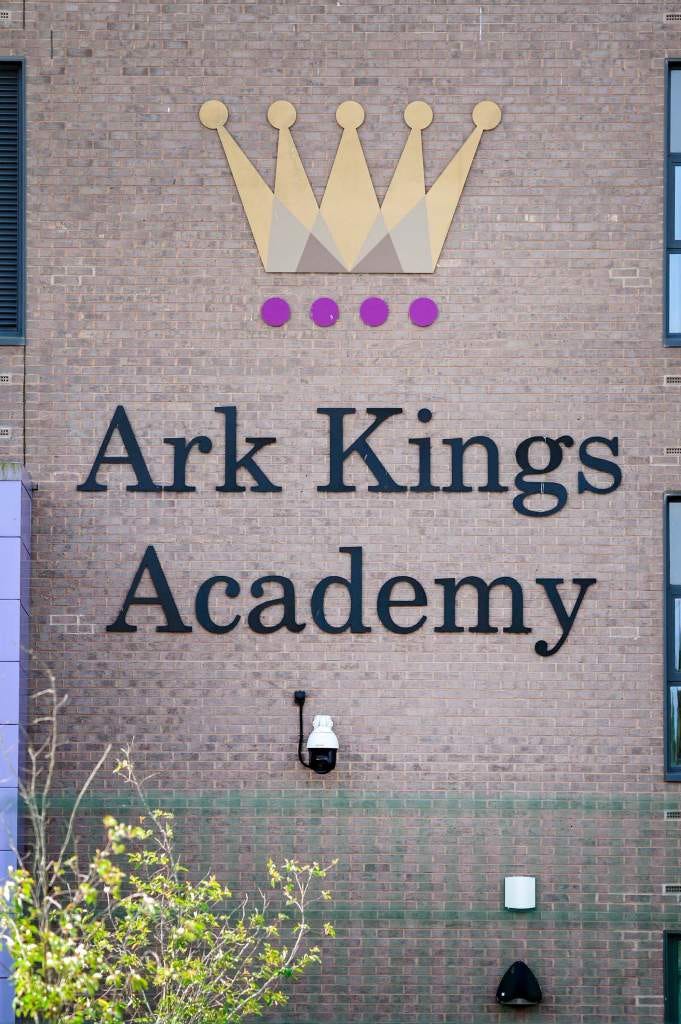
In media profiles, Marshall is often portrayed as a compassionate capitalist – a man who, despite his hedge fund millions, wants to ‘give back’.
As former Cabinet minister Michael Gove – whom Marshall appointed Editor of the Spectator after his £100 million takeover – told the House of Commons in 2024, Marshall is a “distinguished philanthropist”. Gove reportedly made his mind up to support Brexit after a telephone call with the billionaire.
But such effusive praise can obscure the ideological dimension of this charitable giving.
ARK promotes a technocratic, results-based vision of schooling, with a strong emphasis on discipline, testing, and leadership – language that often echoes the moral vocabulary of evangelicalism.
In this model, schools do not simply educate; they help impose a moral framework. They also centralise authority, frequently reducing the role of local democratic governance.
In 2020, ARK received £4.9 million in taxpayer support from the Government’s Match Challenge fund. The Church Revitalisation Trust received similar sums.
In effect these subsidies, offered under the banner of philanthropy, channel public money into privately driven ideological projects. As critics have noted, this reflects a broader pattern: elite philanthropists advancing political agendas under the cover of public good.
Displacement and Civilisational Decline
Look beneath the surface and the culture war begins to reveal its class character.
If America’s evangelical right believes the United States is God’s chosen nation, Britain’s evangelical elite often appears to believe that it was chosen to run the country – and that liberalism has carelessly allowed that authority to slip away.
Where the American religious right tends to speak in the language of biblical prophecy, the British version more often drapes its theology in the language of civilisation and cultural decline.
Yet, despite Marshall’s considerable resources, it may prove difficult for his vision of Christianity to gain the same political foothold in Britain as it has in the United States. The difference is structural as much as cultural.
As Nick Spencer of the Christian think tank Theos told me: “The ecclesiastical landscape is completely different [in the UK]. Paradoxically, because [American evangelicals] never had an established church at a federal level, they were able to work up this narrative of exclusion … this idea that all the liberal elites have got power. It’s hard to do that in the UK when the Archbishop of Canterbury crowns the head of state.”
Britain’s Christian right therefore finds it harder to portray itself as an ‘outsider’ movement. Its grievances are not rooted in exclusion but in displacement – a belief that power once rightly belonged to it, and that a liberal, pluralist society has stolen this.
Marshall’s own rhetoric mirrors this shift.
He does not speak of saving souls and helping the poor and needy, but of restoring order. His religious politics are less about the transcendent and more about the managerial: Britain has lost its way, and it is time the adults took charge again.
The aim is not to fill pews or convert the masses. It is to re-Christianise the ruling class and transform Britain’s moral landscape from above
It is this sense of elite displacement that has found fertile ground in the emerging post-liberal right – a movement that blends elements of conservative nationalism with critiques of globalism, liberal democracy, and secular individualism.
Figures such as Reform UK MP Danny Kruger, a former advisor to David Cameron, and a prominent voice within the same post-liberal milieu, exemplify this current.
Like Marshall, Kruger moves within a political and religious environment in which evangelical Christianity, social conservatism, and elite networks increasingly overlap. In speeches and policy papers, Kruger has argued for the reintegration of faith, nation, and tradition into the centre of British political life. He has also aligned himself with campaigns to restrict abortion limits, spoken of the need to rebuild Britain’s Christian foundations, and promoted a more assertive role for national culture and institutions.
Marshall’s platforms – UnHerd, the Spectator, and GB News – give prominence and legitimacy to these ideas, forming an intellectual architecture for a movement that rejects the liberal consensus of the past three decades and seeks to construct a new one in its place. Within Marshall’s ecosystem such arguments are not fringe; they are treated as serious contributions to the UK’s future.
But this authoritarian Christian right also contains competing strands.
As Professor Woodhead told me: “[The former Archbishop of Canterbury] Justin Welby represents the globalist, free-market type – still hierarchical, but not nationalistic. The other type is more England-focused; more about the nation, the family, and tradition. Danny Kruger’s in that group. Marshall seems to bridge the two.”
Marshall, in other words, is not simply bankrolling a resurgent nationalist media. He is helping to assemble an elite alliance between old-school neoliberal evangelicals and a newer, more culturally nationalist, Christian right.
It is, as Woodhead warns, a potentially combustible combination – especially if this elite movement were to fuse with more openly populist currents such as Reform or figures on the far-right fringe such as Stephen Yaxley-Lennon (‘Tommy Robinson’): “Right now, they don’t have the numbers. But if they ever made common cause with populists? That would be a real movement.”
Re-Christianising the Ruling Class
One of the key rhetorical tools used by this movement – and amplified across Sir Paul Marshall’s platforms – is the phrase ‘Judeo-Christian values’.
To the untrained ear it sounds ecumenical. Across outlets such as UnHerd and GB News, the phrase is frequently invoked to defend ‘Western civilisation’ from perceived moral and ideological threats.
But it is less a theological category than a political one.
As Woodhead points out, the term Judeo-Christian may be historically incoherent, but it is nevertheless politically useful: “There’s no such thing as Judeo-Christian really. But it helps form coalitions between Jewish and Christian authoritarians, often very posh English men. It’s also a way of not being accused of antisemitism. Because before, evangelical triumphalism was supersessionist – Christianity was going to replace Judaism. But this ‘Judeo-Christian’ thing papers over that.”
In this sense, the phrase functions less as a description of religious reality than a language of political convenience – one that helps build alliances across the conservative right while insulating its advocates from accusations of antisemitism.
But there is a paradox at the heart of this movement: Evangelical Anglicanism, even at its most assertive, remains a minority within British Christianity, let alone British society.
Holy Trinity Brompton may attract approximately 20,000 attendees, but that is a tiny number in a country of 67 million – most of whom no longer attend church at all.
“Evangelicalism isn’t the majority among Anglicans, let alone the country,” Woodhead told me. “The big story is church decline – and they haven’t changed that.”
But the numbers are almost beside the point. Marshall’s project is not about mass revival but elite realignment. The aim is not to fill pews or convert the masses. It is to re-Christianise the ruling class and transform Britain’s moral landscape from above.
This is why control of media matters.
It is why HTB functions less as a congregation and more a training ground for future leaders. It is why the Church Revitalisation Trust – a church-planting network funded by Marshall – typically plants churches not in struggling parishes but in urban centres, university towns, and upwardly mobile enclaves.
The plan is not to save souls but to shape minds.
Radicalisation from Within
If there is space for this movement to grow, it is partly because the Church of England itself has been weakened. Once a confident national church that saw itself as custodian of England’s moral vocabulary, it now presides over steady decline.
Attendance has fallen for decades. Parishes struggle to stay open. Clergy numbers are shrinking. Increasingly, the institution appears unsure whether it is a guardian of national identity or a managerial arm of a multicultural state.
In that atmosphere of uncertainty, assertiveness counts for a lot. As does money. In a church short of congregants and cash, the loudest voice often belongs to the person holding the cheque book.
As Professor Woodhead argues, the Church of England has “ceded the territory” of national identity. It no longer speaks comfortably about Englishness, even though it remains the established church, with bishops in the House of Lords and an Archbishop who crowns the monarch. In stepping back from a robust articulation of nation and culture, it has left room for others to fill the gap.
Into that gap step figures such as Sir Paul Marshall, armed not only with incense and hymnals, but with capital. When institutions weaken, donors gain leverage.
A struggling parish or diocese is less likely to interrogate the worldview of a benefactor willing to bankroll church planting schemes, leadership programmes, or revitalisation trusts. The cheque book becomes a theological instrument.
Holy Trinity Brompton and its associated networks have flourished not because they represent the majority of Anglicans but because they offer clarity, structure, and resources in a moment of drift.
Their message is confident and future-facing. Their critics call it authoritarian; their supporters call it decisive. Either way, it is filling a vacuum.
This is how institutional capture happens in slow motion.
We are watching not the rise of a populist outsider, but the radicalisation of the British establishment from within. Marshall is not storming the Winter Palace – because he already lives inside it. He funds schools, churches, and newsrooms not with a vision of democratic renewal, but with a longing for a radical vision of the past.
His Christianity is not the Christianity of soup kitchens or social justice. It is the Christianity of governing classes who feel they have lost their place in the social order – and who believe they alone are the right people to take it back.
If the liberal centre continues to retreat – and if the Church of England continues to cede the moral ground – the space for projects like his will only grow. And with it, may return an old conviction: that power belongs to those who believe they were born to exercise it.
James Bloodworth is Special Features Correspondent for Byline Times. He is the author of Lost Boys: Undercover in the Manosphere published by Atlantic Books. Follow James’s own Substack here
Anyone claiming the moral high ground while employing Michael Gove is probably heading into nightmare territory.