


BYLINE TIMES IMPACT: Find out about the changes you made happen
The decision to leave the EU heralded a decade of damage for the UK. Since 2016, the British economy has shrunk by approximately 8% compared with what it would have been had the UK remained in the European Union, with trade down a striking 18% compared with previous forecasts.
Employment and wages have been heavily suppressed, with the value of the pound still lower than it was before the Brexit vote.
A plan that was sold as being about opening the UK up to the wealth of the world has instead made it a poorer and more insular place.
But the damage – perhaps most significant – has also been political and cultural.
Before Brexit, British politics was fought mostly on the grounds of policy and ideology. For decades, ‘tax versus spend’ and ‘investment versus cuts’ were the battlegrounds that most elections were waged on.
History is not entirely written in distinct chapters, and one era will always bleed into the next. But history will undoubtedly look back at the referendum as the moment when British politics shifted decisively away from its former trajectory.
The terms of that shift were clearly set out during the campaign.
On one side, Remain campaigners focused on geopolitical and economic issues; while their Leave opponents focused on conjuring false statistics and scare stories about marauding armies of dark-skinned invaders.
In a battle between complicated political ideas and simple cultural scare stories, the simple scare stories won out. It was a turning point – not just for Britain’s place in Europe, but for politics’ place in our culture.
Lying and ‘Lefty Woke’
Political parties began heavily prioritising emotion over facts and fearmongering over hope. In this new – more cynical – era, confident dishonesty became the most prized asset.
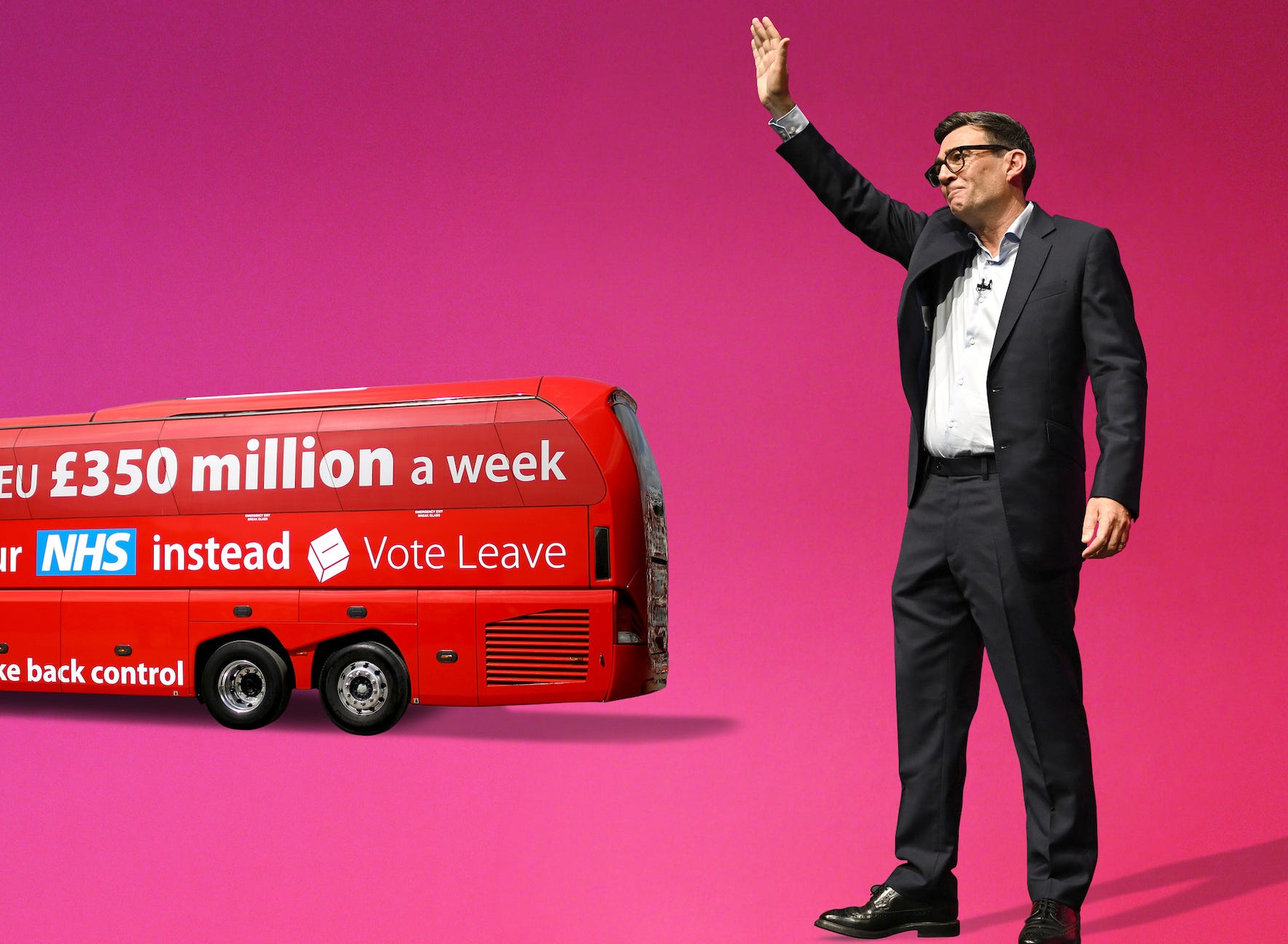
Boris Johnson, a former journalist who’d been sacked twice for lying, was elevated to Prime Minister. Dominic Cummings, the former director of the Vote Leave campaign (who came up with the ‘£350 million a week’ NHS red Brexit bus slogan), was given the job of running his entire political agenda.
It was a shift also reflected in the media.
Political journalism, which was once focused on analysing competing policies and ideologies, became akin to sports commentary with journalists reduced to speculating on which competing piece of political dishonesty would best ‘cut through’ with the public at any given time.
In this new culture, plans to deport migrants to offshore detention centres were no longer discussed in terms of practicality or even ethics, but were dissected in terms of how they set the ‘narrative’ for opponents to respond to. When such simplistic policies failed to actually deal with the complex issues surrounding migration, Britain’s culture warriors instead searched for new battlegrounds.
Trans people, who make up a tiny minority of the population, became the next big target. At successive Conservative Party Conferences, ministers stood up to deliver speeches lambasting gender-neutral toilets while accusing their opponents of hating women.
At its cultural peak in 2022, the then Conservative leadership candidate Rishi Sunak – an incredibly mild-mannered man who looked like he would struggle to fight his way out of a paper bag – promised to bravely fight against what he called the “lefty woke culture that is trying to cancel our history, our values, and indeed our women”.
Much of the media followed suit with this framing. Every major interview with a leading Labour politician seemed to contain at least one question about whether men could ever be women, or women could ever have penises.
Meanwhile, the public started to look elsewhere.
As politicians and journalists continued to focus on these niche ‘culture war’ obsessions, a public increasingly disillusioned with a government that ignored their material concerns began to turn away from the Conservatives in ever greater numbers.
The result was the party’s worst general election defeat in living memory and the return of the first Labour Government in 14 years.
But, though Keir Starmer became Prime Minister with a promise to return politics back to “service”, his Government was quickly mired in exactly the same culture war battles that helped bring down his predecessors.
With the help of his then Chief of Staff, Morgan McSweeney – a proto-Cummings figure whose brief was more about messaging than delivery – Starmer’s Government became focused on winning over what McSweeney described as the “hero voters” who had backed Reform UK in the 2024 General Election.
In a landmark speech, Starmer warned that the UK risked becoming an “island of strangers” and that high net migration figures had caused “incalculable damage” to British society.
The result was the ignition of a new culture war within the Labour Party itself. Its electoral coalition, which until that point had been dominated by liberal-minded, university-educated voters in metropolitan areas, fractured in half.
In a more measured political environment, one might have expected both the main political parties to react to these kinds of setbacks by reorienting themselves back towards the sorts of basic material issues that previously dominated British politics.
But, with Nigel Farage’s Reform still in the ascendant, Labour clung to the belief that elections would be won and lost on the cultural battlefield.
The Conservatives, who had arguably been more damaged by this mindset than any other party, also doubled down on this belief, electing in Kemi Badenoch a leader whose entire career had been forged in the heat of the culture wars.
‘Politics of Place’
Throughout this period, there were signs that an alternative approach was possible.
In London, Labour’s Sadiq Khan won repeated re-election as Mayor with large majorities, precisely through focusing on the sort of core material issues that were being ignored elsewhere.
In Manchester, too, Andy Burnham retained huge popularity as the region’s Mayor by focusing on what he called the “politics of place”, while eschewing the far more nebulous concerns of culture warriors.
Burnham’s success was particularly interesting in that it focused on appeals to unity rather than division. His address at the 2025 Labour Conference was notable in its attempt to unify party members behind a common progressive agenda – in stark contrast to Keir Starmer, who devoted his own speech to lashing out at what he described as the “extreme” views of “snake oil merchants” on the left.
At the time, Burnham’s interventions were derided by most commentators, who predicted he had killed off his chances of ever entering No 10. Yet, what they failed to understand – and what Burnham had already anticipated – was that the arc of British politics was already turning in his direction.
Burnham’s victory in the Makerfield by-election, in the face of a typically divisive campaign by Reform, paved the way for him to root this unifying “politics of place” back in the heart of Westminster.
It is a political project that is now well underway.
Burnham’s first speech as Prime Minister at the Labour Party Conference in September was remarkable in its return to the sort of material concerns so long ignored by his predecessors.
Unlike Starmer, who devoted most of his final conference speech to attacking his political opponents on the right and left, Burnham ignored such battles in favour of making a direct, emotional, and political appeal to the country at large.
His speech – in which he was forced to pause for extended periods to fight back tears as he spoke about his recently deceased father, Roy – focused on trying to tell a deeply human and personal story about where the country had gone wrong during the past decade and where he could start to turn it around.
Prepared over many weeks, with Burnham working on the text until the very last minute – outside of the political influence of his aides – his address eschewed the niche culture war obsessions of his predecessors in favour of a broad and compelling narrative about national pride and renewal.
It did not mention his opponents in the Conservatives or Reform once.
After a long decade in which Westminster politicians had divided the country into competing cultural armies, Burnham shifted the agenda back towards a unifying politics of care, democracy, and fairness.
It is a shift that is already having a broader impact.
Reform, the rise of which has so dominated the political and media agenda in recent years, is now polling at its lowest level for almost two years, with the ratings of its cultural warrior-in-chief – Nigel Farage – also falling through the floor.
Zack Polanski, who first rose to prominence because of his success as a social media warrior, has also seen support for his Green Party plummet amid an internal battle over a motion declaring all Zionism to be racism. Days after it was passed at the party’s Conference, Polanski lost the Holborn and St Pancras by-election to Labour.
Even the Conservative Party, whose leader was selected on the basis of her culture war credentials, now appears to be slowly turning back towards the sort of material economic issues that it has so neglected in recent years.
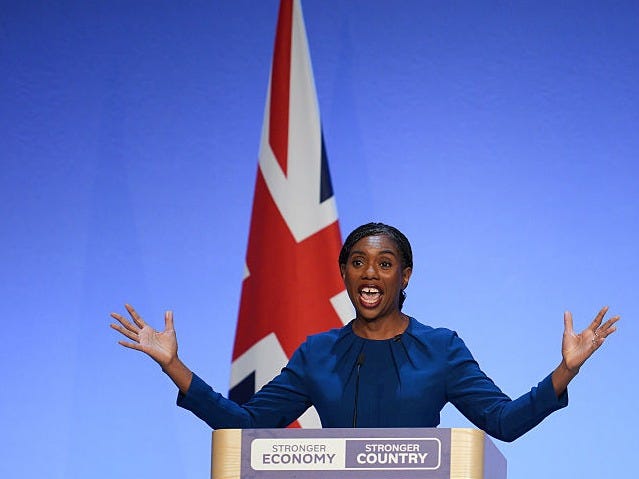
Kemi Badenoch’s own Conservative Conference speech was most notable for its condemnation of Reform’s descent into ethnonationalist politics and its MP Suella Braverman’s questioning of the Englishness of black England football players.
Burnham appears to now be taking back control of our politics, with his opponents fighting to keep up.
Of course, none of this is to suggest that Britain’s culture wars are entirely over. After all, nothing is more likely to excite the culture war dead-enders than Burnham opening the door to a re-run of the 2016 EU Referendum. And, having set up such an ambitious programme of action, it remains to be seen whether his Government can deliver it.
Yet, for the first time in a generation, Britain is now led by someone capable of telling a very different story about what politics should be concerned with – and appears willing to engage in the fights necessary for the change he believes the country needs.
After a decade of endless social media debates about wokeness and patriotism, the UK is now led by someone willing to ‘rip off the plaster’ and engage in the sorts of difficult material issues that actually affect most people’s lives – whether it be social care, the cost of living, or this country’s place in Europe.
By rooting politics in the physical and lived world, rather than a virtual social media battlefield, Andy Burnham has a real opportunity to seize control of the coming era. All the signs from his first Conference speech in Liverpool are that it is an opportunity he is determined to take advantage of.
Adam Bienkov is Political Editor of Byline Times
This article appears in the new edition of Byline Times monthly magazine available now in print and digital form.