



BYLINE TIMES IMPACT: Find out about the changes you made happen
A look back at the crowd scenes when Geoff Hurst’s hat-trick fired England to World Cup glory in 1966 offers a remarkable insight into the national psyche at the time. There’s barely a St George’s flag in sight in the stands at Wembley.
Supporters backing Sir Alf Ramsey’s all-conquering side were waving Union flags instead. Even the tournament mascot, World Cup Willie, sported a red, white, and blue shirt – despite none of the games being staged in Scotland, Wales, or Northern Ireland.
‘England’ was implicitly understood to be ‘Great Britain’ – and Britain was, to all intents and purposes, England.
That may not have been the view in Edinburgh or Cardiff, but south of the Tweed and east of Offa’s Dyke, the two concepts – Englishness and Britishness – appear, at that moment, to have been interchangeable.
This was always a fiction, of course. But, as England and Scotland both challenge in this summer’s World Cup, the recognition that they are two distinct nations – not just in football, but in politics as well – is becoming impossible to ignore.
For Scotland and its supporters, this is their first appearance in the tournament since the creation of the Scottish Parliament in 1999, with the Tartan Army last seen at a World Cup in France in 1998.
In the years since, the pro-independence SNP became the dominant force at Holyrood, giving voice to a distinctive civic nationalism based around ‘place not race’, but which unquestionably seeks to distance itself from Westminster.
A similar pattern is also emerging in Wales, now led by Plaid Cymru, making it impossible for England football fans to wave the Union flag with the same unalloyed fervour as they did in 1966.
Those images seem to belong not just to a different time, but to a different place.
The trend towards separatism, especially north of the border, began with Margaret Thatcher’s election as Prime Minister in 1979. She used Scotland as a testbed for the hugely unpopular poll tax and, although voters knocked back independence in the 2014 Referendum, calls for a second ballot have been amplified since Brexit, with 62% of Scots (unlike their English counterparts) having voted for the UK to remain in the EU.
This all means that English nationalism, buried for so long under the Union flag, must now find a distinctive means of expression – both on and off the field of play.
The signs are, to say the least, unpromising, as there are few mainstream voices willing to articulate what Englishness might mean without its Celtic fringe.
The parties most likely to form the next UK government may differ on the extent to which they support future devolution, but all are agreed that the Kingdom must remain United.
None seems willing to address the possibility that England might one day have to fly solo, leaving the football terraces as one of the few locations where a distinctive sense of Englishness is able to express itself.
This has traditionally been achieved through the medium of ‘boots and fists’, a phenomenon I witnessed first-hand when following England to the Euro finals in 1988 and the 1990 World Cup in Italy, where thuggish behaviour – at least by a substantial minority of supporters – was the norm. This was allied to a brand of nasty racial purity.
The Tartan Army cleaned up its act and has proactively chosen to define itself against the stereotypical (if somewhat outdated) model of the English football hooligan
In 1984, when John Barnes scored with a breathtaking solo effort against Brazil in a 2-0 victory, some supporters claimed the winger’s goal didn’t count because he was a Jamaican-born black player, and therefore didn’t count as English – never mind that England’s cricket team had long featured overseas born (white) players such Tony Greig and Allan Lamb.
There has been much progress since then, with England’s away support (like the team itself) diversifying considerably, but there remains a solid block of begrudging ethnonationalists among the Three Lions’ following.At last year’s World Cup qualifier against Andorra, travelling fans chanted for the far-right agitator Stephen Yaxley-Lennon (‘Tommy Robinson’), railed against the Pope and the IRA, and maintained a general background hum of World War Two references (despite now having a German manager, Thomas Tuchel).
They showed their colours – literally – in the aftermath of the Euro finals in 2021, when Gareth Southgate’s team was defeated by Italy in a penalty shoot-out. Three black players who missed vital spot-kicks – Bukayo Saka, Jadon Sancho, and Marcus Rashford – were all subject to vile racist abuse online.
The then England boss understood only too well what he was dealing with and penned a Churchillian open letter on the eve of that tournament, which later inspired James Graham’s successful National Theatre play Dear England and a recent BBC TV adaptation of the same name.
Southgate managed a youthful, multiracial squad and he ‘got it’. When his charges said they wanted to ‘take the knee’ in the aftermath of George Floyd’s murder by a white police officer in America, he ensured it happened, seeking to infuse both his team and their supporters with an inclusive, progressive spirit. His letter asked rhetorically: “Why would you choose to insult somebody for something as ridiculous as the colour of their skin?”
Anticipating criticism of his stance, he argued that “unfortunately for those people that engage in that kind of behaviour, I have some bad news. You’re on the losing side. It’s clear to me that we are heading for a much more tolerant and understanding society”.
What sounded like cheerful optimism five years ago sounds more like naivety now, as the likes of Reform UK, Restore Britain, and the Conservatives jostle to reverse the progress made in recent decades.
Supposedly serious politicians propose scrapping the Equality Act, and self-appointed ‘patriots’ – powered by online fundraising and equipped with cherry-pickers – have been emboldened to hoist the flag of St George on lamp-post after lamp-post. They insist it’s not racist – honest, Guv – but members of diverse communities with memories of the 1980s beg to differ, associating the flag with the BNP and violent flat-top pubs whose regulars used it to mark their territory.
But the red cross on the white background doesn’t belong to the thugs and the hooligans.
It can also be attached to the Royal Shakespeare Company, the collected works of George Orwell, and the zillion and one other great things England has given the world – including organised football.
So can we hope for the development of a more constructive and inclusive form of English nationalism? Perhaps – and football might just hold the key.
Older readers may remember a time when Scottish fans were feared for their rowdy behaviour. In 1977, they invaded the Wembley pitch and tore down the crossbar. Two years later, on their next trip to London, one supporter was stabbed to death and another died in the fountains of Trafalgar Square, amid more scenes of mayhem. Yet, in the years that followed, the Tartan Army cleaned up its act and has proactively chosen to define itself against the stereotypical (if somewhat outdated) model of the English football hooligan.
Despite the exorbitant ticket prices, they have headed to the States in party mood and vast numbers, to represent a nation comfortable in its own skin and relaxed about the colour of that skin. The Saltire will be welcomed as an invitation to party, not as a declaration of war.
The flag of St George, on the other hand, despite a trend of recent improvements in English fan behaviour, will continue to be regarded with a certain wariness abroad, just as it is at home.
The Three Lions may stay in the tournament longer than Scotland, but the evidence suggests that when it comes to embracing a more modern and welcoming form of nationalism, some England supporters – like their politicians – also have further to go.
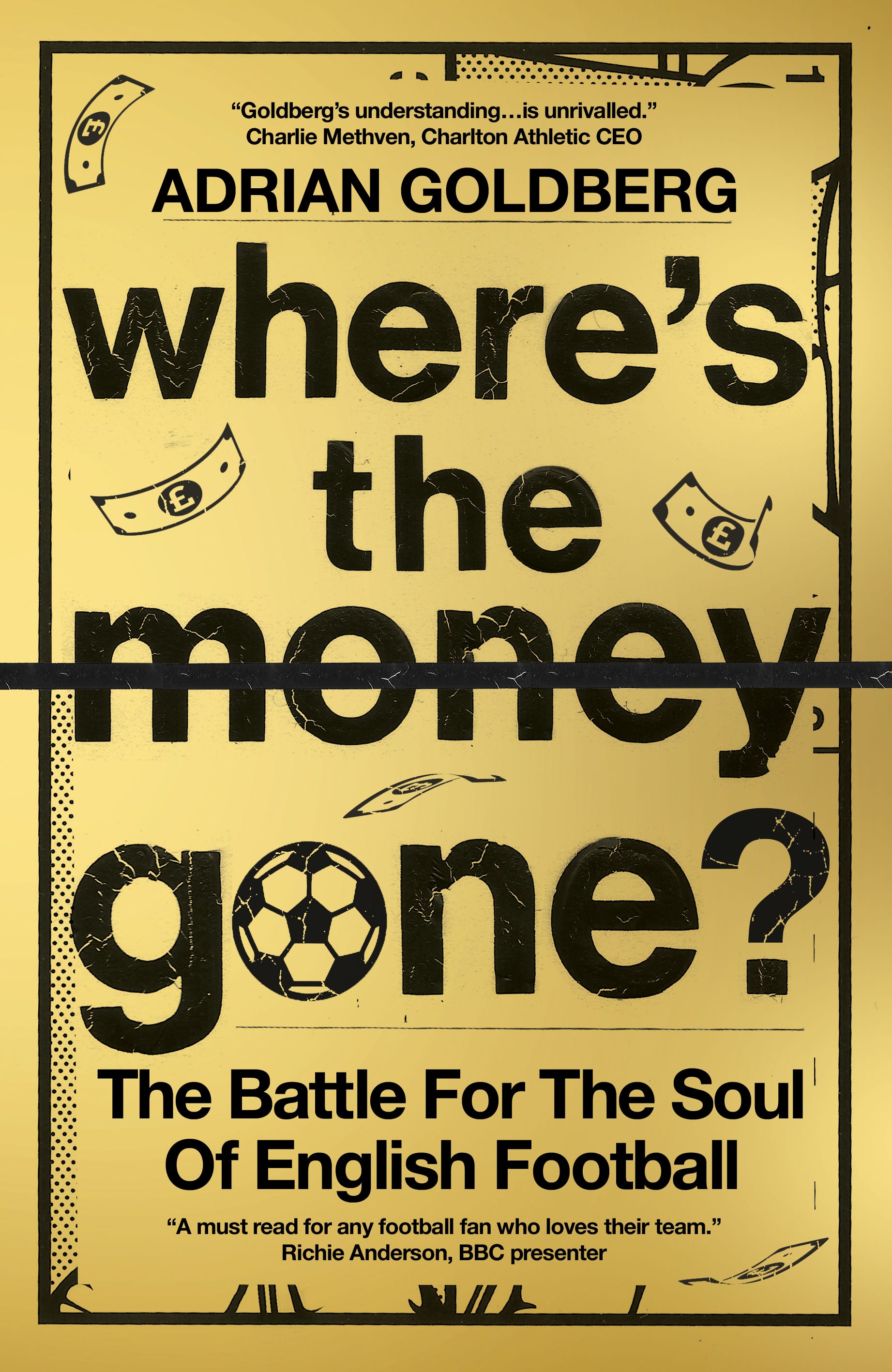
Adrian Goldberg is the author of Where’s the Money Gone? The Battle for the Soul of English Football published by Byline Books
The jingoistic "Ingerland" types need to be tutored about the real St. George, the man they implicitly venerate through their attachment to his flag.
I wonder how many realise he wasn't English, and in fact never came anywhere near here. He was Turkish-Palestinian, a soldier in the Roman army, and was executed for refusing to persecute minorities. That was the quality that led to him being adopted as England's patron saint, as it represents true English values. Would that English "patriots" actually follow the example St. George.
I am currently reading “The English” by Jeremy Paxman. It is a really interesting book and reveals that the English have no real sense of identity unlike the Scottish, Welsh and Irish. We don’t have a national dress and our anthem is the national “God Save The King”. I haven’t finished it yet (JP is a little too Conservative for me, which puts me off a little) but will continue to read it because my Dad (who sadly dies last year) gave it to me the last time I saw him and he said it was funny.