


BYLINE TIMES IMPACT: Find out about the changes you made happen
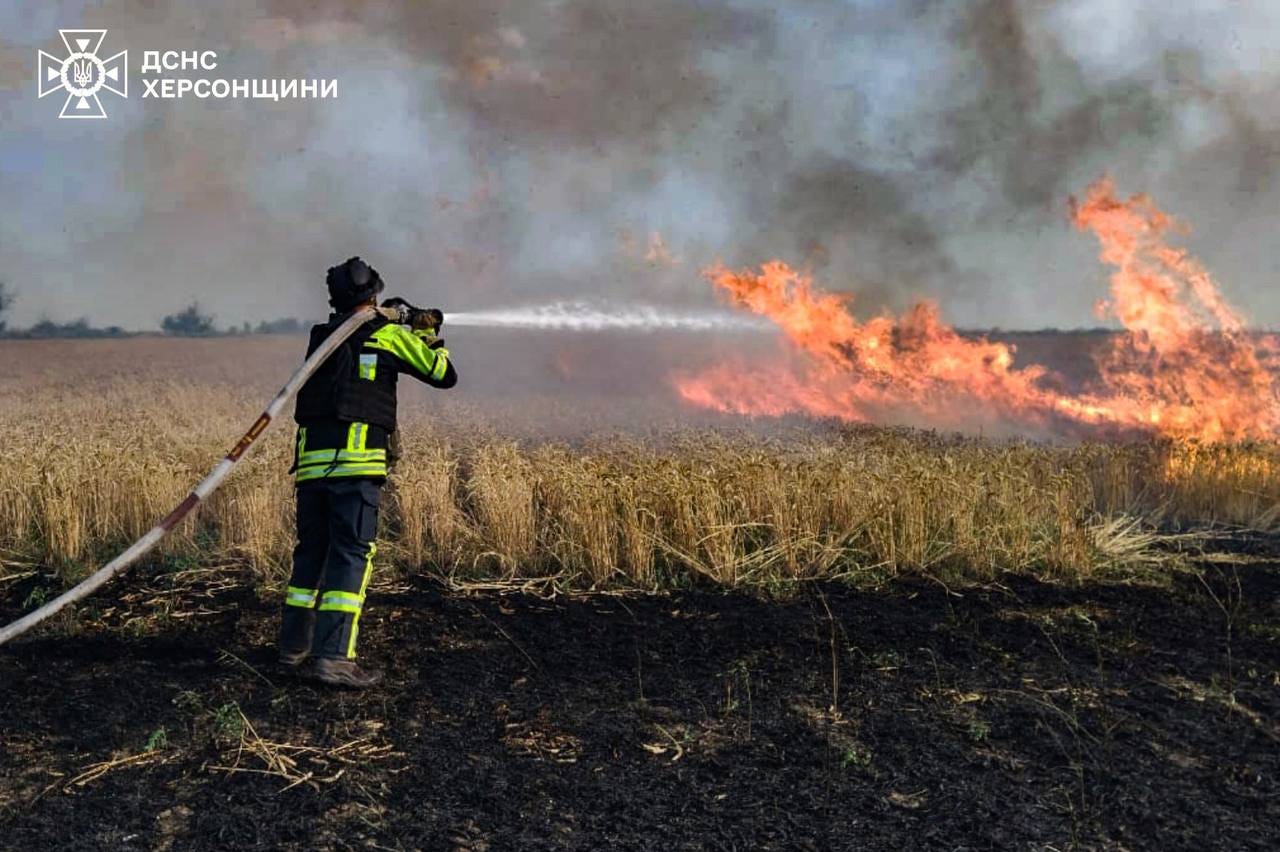
In the Beryslav district of the Kherson region in southern Ukraine, over the past week, Russian forces have burned about 4,000–5,000 hectares of fields, an area roughly the size of central Paris.
“Russians are now setting the harvest on fire,” said Vicki Aken, Country Director of Mercy Corps, an American NGO working in emergency response, economic recovery, energy, and agriculture, after visiting Kherson in early July. “I saw fields burning.”
Swarms of drones attack from multiple directions, dropping incendiary devices to start fires.
Farmer Victor Hordiienko, an athletic man in his thirties, spoke to Byline Times in Odesa, where he had driven the same morning from Urozhaine. The Head of the Kherson Oblast Farmers’ Association, and the son of Oleksandr Hordiienko, a farmer killed by a Russian drone in 2025, he lost 1,700 hectares of the 2026 harvest to these fires.
“You put out the fire from one direction, and it burns from another,” he said. “Everything is burning, and we can’t stop it. Firefighters cannot come here because of attacks.”
Drone attacks continue as the farmers fight fires, with explosives dropped from high altitude, beyond the range of electronic warfare (EW) units. Hordiienko’s team counted seventeen drones at one time during such swarm attacks.
Vicki Aken said to Byline Times that the risk of crop loss makes bank lending impossible, as loans cannot be repaid if harvests are destroyed. One farmer in Kherson told her he has to relocate fields every year or two as the frontline shifts.
Russian forces use the same swarm drone tactic to burn villages. In Urozhaine, Vilne, Tarasa Shevchenko, Rakivka, and Shlyakhove villages in the Kherson region, drones drop incendiary devices from multiple angles to spread fire in all directions. Dry vegetation, haystacks, and heat intensify the blaze.
“People in their 70s and 80s cannot escape,” said Hordiienko. “Some are burning alive. Others are injured or killed in my village Urozhaine.”
Urozhaine, a village of about 500–600 people before the war, now has only 50–70 residents left.
“If you stop by Urozhaine, you won’t recognize people,” said Hordiienko. “It’s the 17th Century there. People walk covered in dirt, unshaved, unwashed. They live for months without water or electricity.”
Yet the sky battle belongs to another century.
Drone Warfare
“More than 100 FPVs a day; up to 20 within an hour,” said Victor. “They fly in groups on different frequencies, making detection hard.”
Fibre-optic drones, still only about five per cent of attacks, cannot be intercepted by radio-based systems. They are increasingly able to reach up to 40 km from their operators and for Hordiienko, the risk is growing. His nearest fields lie 12 km from Russian positions, the farthest 25 km. This week, a Russian drone destroyed one of his tractors 40 km from the front line.
In the past two weeks, drones struck the homes of Hordiienko’s eight employees. One tractor driver left after his house was attacked six times and burned down. A drone hit the farm office three weeks ago, critically injuring a security guard, who remains in hospital.
FPV drones are not the only threat. Guided aerial bombs (KABs) and artillery also terrorise the village. Hordiienko’s car was hit by artillery, with a shell passing within ten centimetres of his head and leaving a hole in the vehicle.
Despite repeated attacks, Hordiienko remains in Urozhaine.
“He is incredibly brave,” said Vicki Aken. “These farmers will not be driven from their land.”
“How can I leave?” Hordiienko said. “I can’t run the farm from Odesa. I’m in the field: a psychologist supporting farm staff and a security guard protecting them with EW and an anti-drone gun.”
Hordiienko, who used to hunt with his father before the full-scale Russian invasion, can shoot down drones passing at nearly 1,000 meters, but says this has become harder as they become increasingly manoeuvrable.
“Last time, I couldn’t hit it,” he said. “Driving at 60 km per hour, I saw a dot in the rearview mirror speeding toward us. We jumped out of the car. It drove 20 meters before the drone struck the fuel tank.”
A new threat is AI-controlled FPV drones, which lie in ambush for targets. In spring, Victor’s team was hit by just such a drone hiding in the wheat. It exploded under the vehicle, destroying the engine and leaving the farmers with concussions.
Fields are also mined, with FPV drones dropping magnetic mines that explode when machinery passes.
Kherson is All Fields
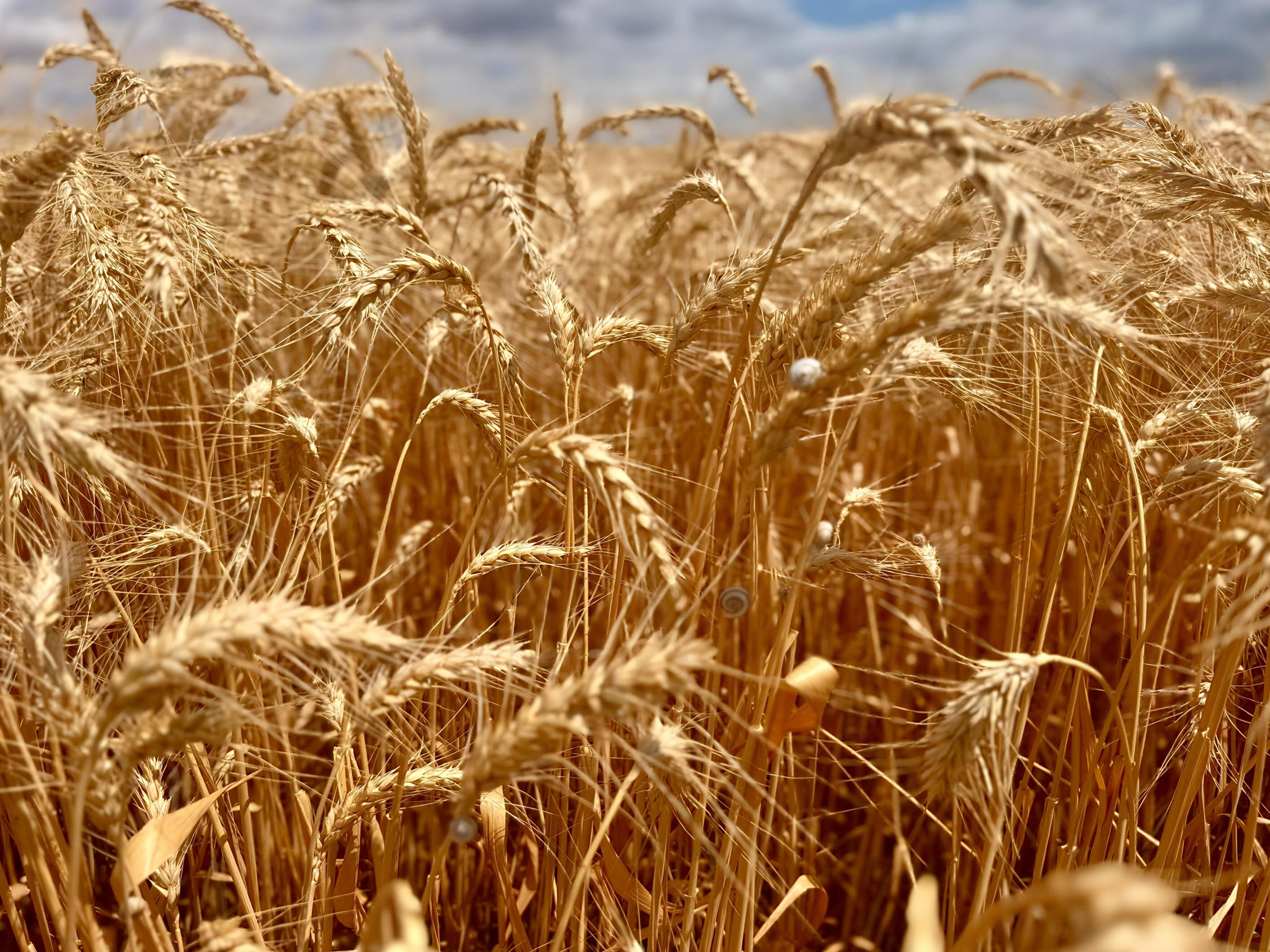
“Kherson is all fields,” said Hordiienko. “About 80% of the regional budget comes from agriculture. We grow wheat, barley, vegetables, potatoes, sunflowers, flax, and peas. In recent years, rapeseed has become profitable.”
Before the full-scale invasion, the now-occupied Kakhovka district produced up to 80% of Ukraine’s vegetables, he says.
The war has added severe structural constraints. About 99% of irrigation infrastructure lies in occupied territory on the left bank of the Dnipro River. Attempts to use water from the Inhulets River have not replaced lost capacity, covering only a small share of the land. Overall, irrigation remains minimal. The state covers up to 80% of irrigation costs, but most farmers cannot access the program because equipment and infrastructure remain in occupied or inaccessible areas, under shelling and drone threat. Only a small number of farmers in Kherson are able to use it.
Hordiienko needs an electronic warfare system costing about half a million dollars to protect his land from the drones. Mercy Corps, funded by private foundations and governments, cannot fund military equipment but continues to support the Hordiienko family with cash grants. Aken said that farmers remain central to rural communities, providing jobs, equipment sharing, tax revenue, and local support. She described Victor Hordiienko as passionate, outgoing, and deeply committed to Ukraine, his community, and the memory of his father.
Yet, at the Ukraine Recovery Conference 2026 in Gdańsk last month, Aken says she saw strong interest in Ukraine’s agricultural recovery, but little will to support Kherson. She quoted one of Kherson’s farmers, “It’s not financial support: it’s survival.”
For Ukrainians, the destruction of harvests carries a historical memory. During the Holodomor, the man-made famine of 1932–1933, Stalin’s authorities confiscated grain and millions starved. As Nobel Prize-winning Ukrainian human rights lawyer and civil society leader, Oleksandra Matviichuk, said: “Not to have food is probably the worst thing imaginable for Ukrainians who survived Holodomor.”
Russia’s full-scale invasion has again disrupted Ukraine’s agricultural system, weaponising food. For farmers in the Kherson region, the war is not only territorial but existential, as it targets the land, the harvest, the family tradition, and their very identity.
