

BYLINE TIMES IMPACT: Find out about the changes you made happen
When I interviewed Russians who fled after the full-scale invasion of Ukraine for my book Leaving Russia, many believed the greatest danger ended once they crossed the border. They were wrong.
The State Duma’s latest legislation, which Human Rights Watch has described as a “civic death law”, signals that the Kremlin is no longer content to silence its critics at home. It is now seeking to punish them abroad, weaponising citizenship by restricting access to passports, bank accounts, property and consular services.
Passed last week, the measures target Russians convicted in absentia for opposing the war and those branded ‘foreign agents’, potentially blocking them from renewing passports, registering marriages, buying or selling property, or accessing essential legal services.
The Justice Ministry, which already manages Russia’s lists of ‘foreign agents’ and ‘extremists’, will oversee a new state registry of people living abroad accused of evading criminal or administrative penalties.
In practice, the law could affect tens of thousands of political exiles prosecuted under Russia’s expanding arsenal of laws targeting dissent, including the ‘foreign agent’ law, ‘undesirable organisation’ legislation, charges of ‘discrediting’ the military, and calls for sanctions. While the law is clearly aimed at political cases, its scope extends to any criminal conviction under Russian law.
The legislation also allows Russian courts to seize money from frozen domestic bank accounts to cover legal costs and court-ordered damages, further tightening the financial screws on critics abroad.
The Kremlin’s strategy was best summed up by Duma Deputy Speaker Pyotr Tolstoy, who mocked anti-war exiles as “freedom fighters” and predicted many would “change their tune” once their finances were threatened. “The wallet is a liberal’s most sensitive organ,” wrote Tolstoy, the great-great-grandson of literary icon Leo Tolstoy, on Telegram.
The move echoes Alexander Lukashenko’s playbook, adopting a tactic long used by the Belarus dictator to deny exiles access to passports and other essential consular services
But the logic behind the measure is older. Vladimir Kara-Murza, the exiled Russian opposition leader, argues that the Kremlin is reviving the Soviet-era practice of stripping political opponents of their citizenship in all but name.
“This law will leave many Russian citizens abroad for political reasons without the most basic proof of their identity,” said Kara-Murza, who was released in August 2024 in the biggest Russia-West prisoner swap since the Cold War.
Russia has long hunted its opponents abroad, from the tsars to the Soviet KGB. What is new is turning bureaucracy into an instrument of political control.
The Kremlin is increasingly using passports, property rights and consular services to punish political critics in exile. Rather than relying solely on covert operations against individual enemies, it is building a more systematic framework for constraining those who have left Russia.
The fixation with exiles has deep Soviet roots. Felix Dzerzhinsky, founder of the Cheka in 1917, regarded émigrés as unfinished business beyond the state’s reach.
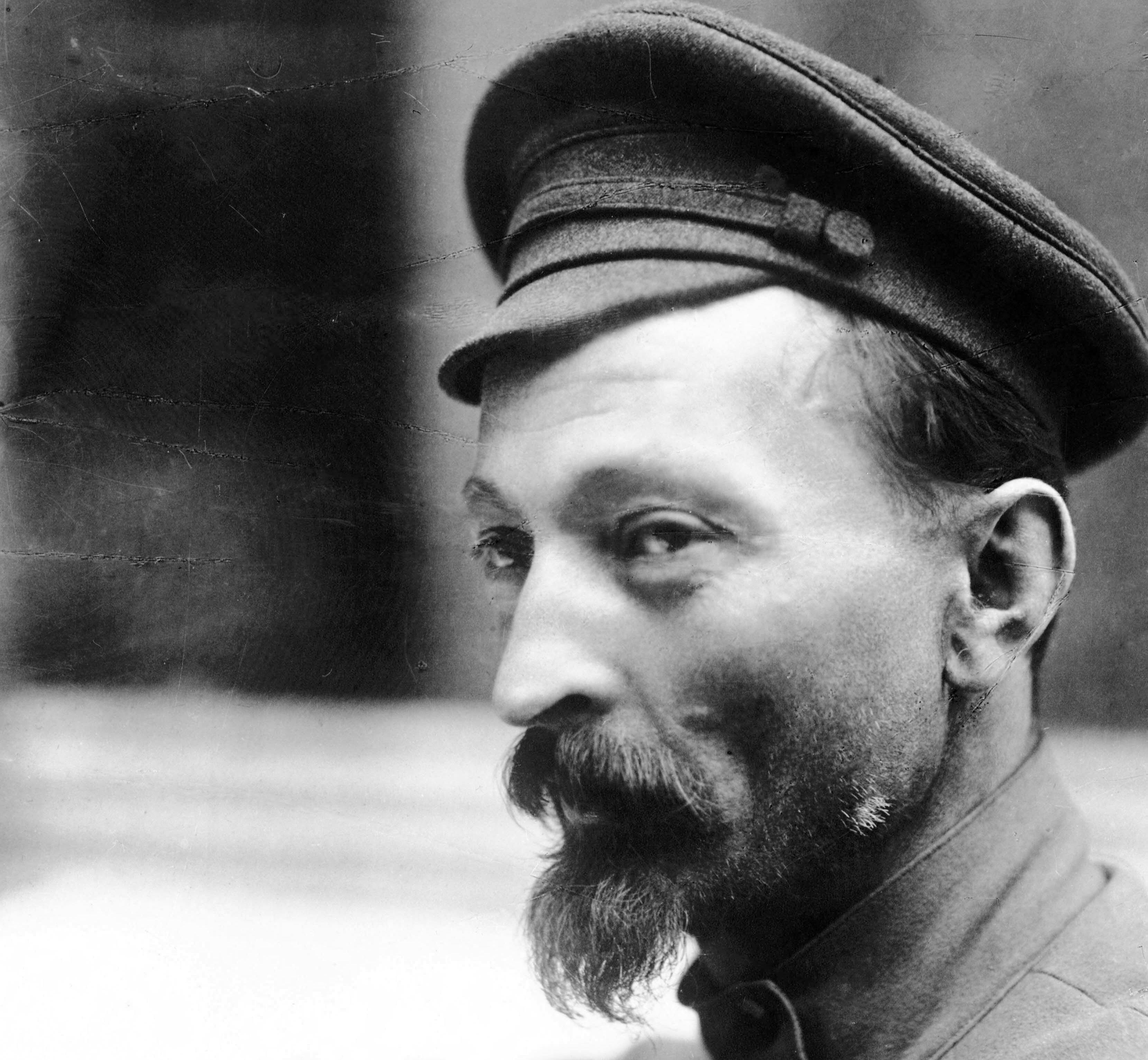
Under Iron Felix’s leadership, the Cheka carried out the Red Terror, using arrests, intimidation, violence and executions to eliminate perceived enemies. The recently reported decision to restore Dzerzhinsky’s statue to Lubyanka, outside the headquarters of Russia’s security services, symbolises the rehabilitation of that tradition.
Like Dzerzhinsky’s Cheka, Putin’s FSB and military intelligence agency, the GRU, operate on the premise that enemies of the state remain legitimate targets wherever they flee.
After fleeing Russia, I received an anonymous Telegram message warning that the authorities were “dissatisfied with the tone of your reporting” and that I would soon face “security problems of a personal kind.”
The threat came amid a wider crackdown on journalists covering Russia, with the March 2023 arrest of Wall Street Journal reporter Evan Gershkovich highlighting the growing dangers of reporting on Russian politics.
For my book, I interviewed dozens of exiles who had fled Russia after receiving death threats or facing political persecution. Since the full-scale invasion of Ukraine, two Russian contacts I knew have also died in suspicious circumstances in Tel Aviv and Washington.
They were Dan Rapoport, an outspoken Putin critic and Alexey Navalny supporter, who died after falling from the 10th-floor balcony of his Washington apartment in August 2022, and Slava Rabinovich, a financier and prominent anti-Kremlin activist, who died in Israel in July 2022 from complications after being struck by a car while walking in the Israeli capital. Their deaths were viewed with suspicion within Russia’s exile community, reinforcing fears that even leaving the country offers no guarantee of safety.
Those fears were further exacerbated by the assassination of Maxim Kuzminov, the Russian helicopter pilot who defected to Ukraine and was found shot dead in a coastal town on Spain’s Costa Blanca in February 2024.
But the Kremlin’s response is no longer limited to pursuing individual enemies through intimidation, surveillance or suspected acts of violence abroad. The new citizenship measures represent a shift towards a more systematic form of repression: the weaponisation of bureaucracy itself.
Through control of passports, property rights and digital state services such as Gosuslugi, Russia’s online portal for accessing government services, the state can reach far beyond its borders and target thousands of critics simultaneously.
The impact is already being felt. Marina, who fled Nizhny Novgorod for Berlin after being labelled a ‘foreign agent’ in 2023, can no longer obtain the consular notarisation needed to issue a power of attorney to sell her apartment in Russia.
“I really need the money to pay for my daughter’s medical treatment in Germany, but I can’t sell my flat,” said Marina, who asked for her name to be changed for security reasons. “I may have to return in person, but there’s a real risk I’ll be detained. I’m stuck in limbo.”
Platon, a Moscow human rights activist living in exile in Latvia, said losing access to Gosuslugi would effectively erase his legal existence in Russia.
“Everything now goes through Gosuslugi,” said Platon, who left Russia after the military mobilisation in September 2022. “Without it, you can’t deal with the state, obtain documents or manage your affairs from abroad. My passport expires next year. If I can’t renew it, I’ll be stranded because I’m still years away from qualifying for Latvian citizenship.”
Russian novelist Boris Akunin, who lives in London and is accused by Moscow of “justifying terrorism,” revealed in 2024 that authorities had frozen more than $65,000 in Russian bank accounts held by his wife, Erika. The popular writer, whose real name is Grigory Chkhartishvili, said the seizure of 6 million rubles was part of a broader crackdown on his family’s assets.
Listed by Russia as both a “foreign agent” and an “extremist and terrorist” after condemning the invasion of Ukraine, Akunin has urged Russians abroad to safeguard their finances.
His case highlights the challenge now facing European governments: as Moscow extends repression beyond its borders, host countries must decide whether to treat those targeted as ordinary migrants or as victims of transnational repression in need of protection.
Human Rights Watch has urged governments to “provide effective alternatives to documentation, allowing exiles to work, travel, and access essential services.”
But for many Russian exiles, the struggle is not only about documents or legal status — it is about preserving a connection to a country that has become increasingly hostile to them.
Asked whether he feels separated from Russia, Akunin replied: “From which Russia? There are at least two. There is the Russia I love and the one that makes me sick. The first one is forever with me. As for the second one, we have always been at odds.”
Jason Corcoran reported from Russia for 14 years and is the author of the recently published Leaving Russia: How Putin Forced a Country’s Future to Flee.
