

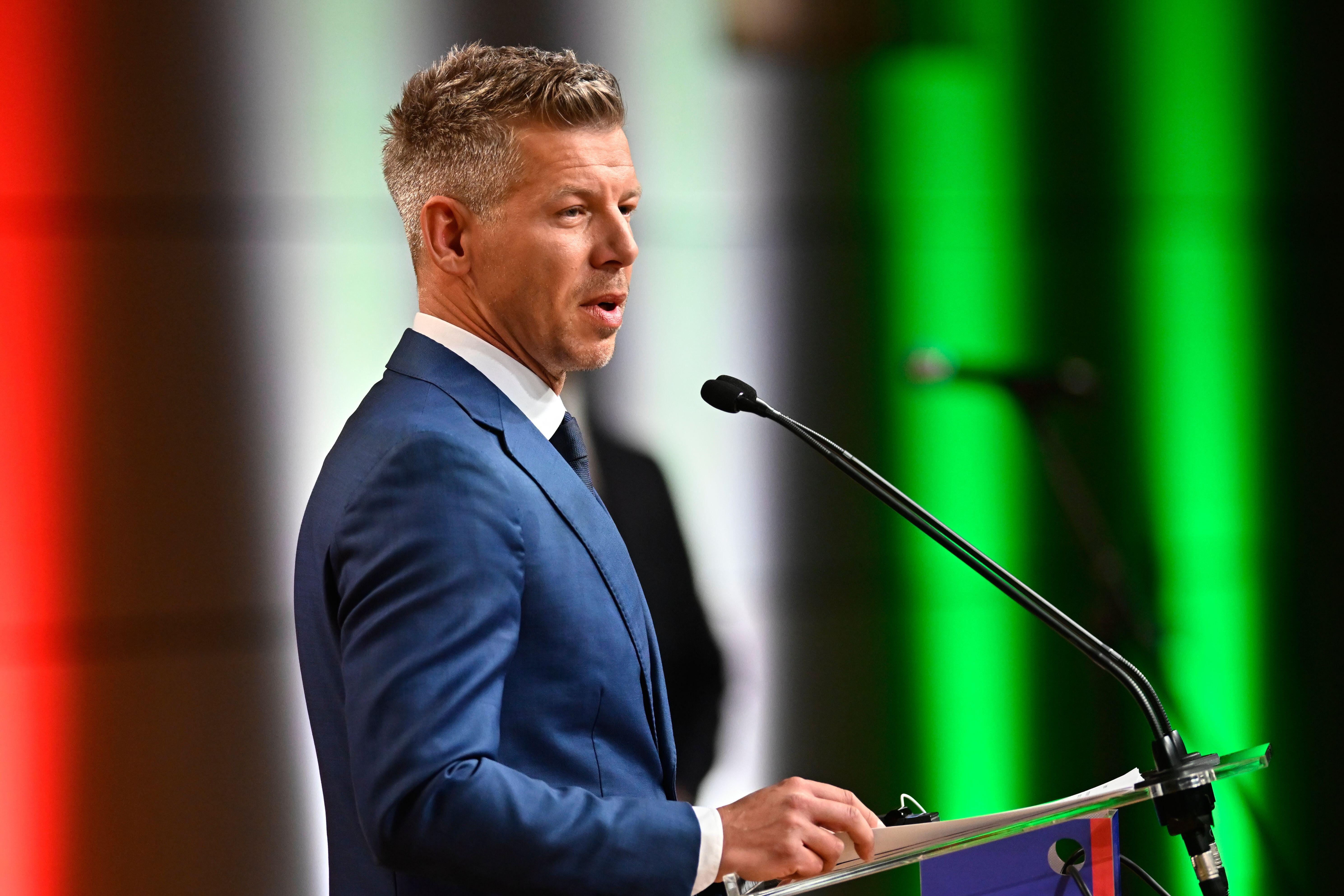

“Voters in Hungary are aware of the fact that this was a decision between two evils – and Péter Magyar is the lesser evil.”
Amid the rejoicing of liberals across Europe and the United States over the defeat of Hungary’s authoritarian leader Viktor Orbán, Dr Georgios Samaras, an academic specialising in the far right at the School for Government and the Policy Institute, King’s College London, sounds a cautionary note on the latest Byline Times Podcast. Yes, the new Prime Minister Magyar may be more friendly towards the European Union and NATO but he is, says Samaras, still a conservative figure working within a framework established by Orbán’s Fidesz party.
“There’s this assumption that once the strongman loses, democracy returns [but] over 16 years, Fidesz managed to rewrite the constitution to weaken institutions,” Samaras argues. “Judicial independence is no longer a thing. Media freedom is no longer a thing. So in order to reverse this, a political party must come from the left. It must come from an extremely progressive political land that doesn’t exist in Hungary. The fact that Orbán lost doesn’t mean that a return to liberal democracy is guaranteed, because Fidesz had entrenched itself in laws and state bodies. It’s literally everywhere. So I would definitely push back firmly on the idea that Péter Magyar represents a progressive break.”
Samaras points out that Magyar was himself a prominent Fidesz politician who once held various Government roles, including a position in Orbán’s office, before rebelling against Government corruption and joining the opposition Tisza party in 2024. Part of his electoral appeal derived from the fact that he was not Orbán, but in Samaras’s analysis, the two men aren’t that far apart ideologically. “Magyar wants to suspend permits to workers from outside the EU; he opposes migration quotas. He doesn’t like location of migrants. He has not really addressed LGBTQ rights…”
The “deeply authoritarian” structures imposed by Orbán will now, Samaras says, empower his successor. “So Orbán is gone. Fine [but] these embedded forms do not disappear overnight. In this case, we are talking about a system that was created over 16 years, and loyalists remain in power. It’s the whole public administration. So this kind of conservative ‘common sense’ that Fidesz spent years creating still exists. Now the question is, does Magyar go after this? I don’t see him abandoning the tools that Fidesz left behind. These are powerful political tools that, once inherited, create powers and flexibility that most leaders would not really want to just destroy.”
At the same time as urging caution about Magyar’s ascendancy, Samaras acknowledges that Orbán’s departure will come as a blow to President Trump, Nigel Farage and other conservative nationalists – a view echoed by David Edgar and Jon Bloomfield on this Substack.
Hungary’s symbolic value to Trump and MAGA was underlined a few days before Sunday’s election when US Deputy President JD Vance appeared at rally for Orbán and posed for pictures with him – to no avail. Magyar romped home with a two-thirds majority, and now has a secure grip on power, despite fears that his opponent might seek to undermine the legitimacy of the vote.
“Hungary has indeed achieved something quite real,” Samaras says. “I’m not going to downplay this. Orbán has been removed, and we have a new political entity and a new political leader who has secured a parliamentary super majority.” Magyar, he acknowledges, may even “repair some of the ties with the EU and reverse some of the worst forms of capture.”
But he cautions that the new leader’s “continuity with Hungarian rights on migration and nationalism is deeply alarming. Hungary is a broken country under Orbán. Hungary is the most expensive country right now in the EU [and] the question we need to ask is, ‘what made Orbánism possible?’ If we pinpoint the reasons why it became so powerful [and ask] ‘has Hungary fixed itself after this election?’ I think that the answer is no.
“Orbánism survived for 16 years. It is a political ideology that is not going to go away anytime soon.”
Watch or listen to Adrian Goldberg’s full interview with Dr Georgios Samaras here.