

BYLINE TIMES IMPACT: Find out about the changes you made happen
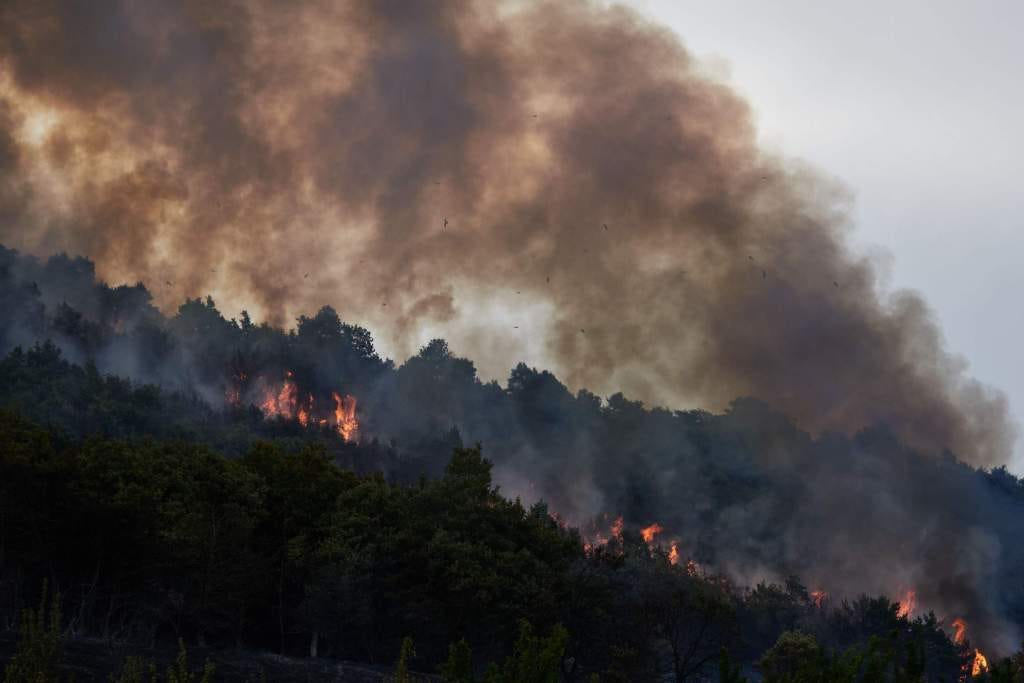
A resilient nation begins with an informed public. As yet another heatwave grips Europe, the headlines have become depressingly familiar. Record-breaking temperatures and wildfires, food systems on the brink, trains slowing because the tracks are too hot.
An estimated 2,200 people have died from heat in the UK in June alone, with hospitals struggling to manage in temperatures they were never designed for.
We sometimes hear that this is ‘the new normal’. I wish that were true.
It now looks very likely that next summer, coming in the aftermath of the El Niño that is due to hit this autumn, will bring yet another jump in heat records.
As Professor Hayley Fowler, one of the UK’s leading climate scientists, observed during last November’s National Emergency Briefing summit: this is the least extreme climate we will experience for the rest of our lives.
Until the world stops burning fossil fuels and acts with urgency to protect and restore nature – actions we know will make us better off – climate extremes will continue to worsen.
Avoiding uncomfortable realities has never made societies safer. Quite the opposite.
The UK’s resilience actually depends on people being trusted with the evidence about the challenges we face.
Governments around the world recognised that public understanding was integral to their nations’ pandemic responses. Regular televised briefings did not eliminate debate, but they helped create a shared understanding of the evidence on which democratic decisions could be made.
The climate and nature crisis now threatens our food supply, our health, our economy, our infrastructure, the basic functioning of our society, and our national security. The public needs to know this – from independent experts and with government endorsement.
So far, we hear a stream of seemingly disconnected stories: floods, droughts, food prices, energy bills, migration, and insurance. Rarely are we shown how they fit together in the bigger picture, how it is starting to reshape our own lives, and how our response to climate and nature will be central to everything else that we care about.
Some have argued that governments can leave climate communication to scientists, charities, or the media. But what the public needs is a clear and coherent message, in which the words and actions of the government align with the messages from science.
Governments do not leave public health or national security messaging to others.
Public understanding is integral to any democratic nation’s resilience. Only a properly informed public will support the government in taking the actions that will not only deal with the threats we face, but which will simultaneously strengthen our economy, our society, and even our national pride.
The Government’s role is not to tell people what to think. It is to ensure everyone has fair access to the best available evidence with which to think for themselves.
That is the rationale behind the People’s Emergency Briefing: a documentary film presented by Chris Packham and featuring robust evidence from nine of the UK’s top experts on the climate and nature crisis, what can be done, and the benefits of doing so.
Thousands of screenings are now taking place across the UK and beyond, in community halls, workplaces, universities, schools, cinemas, festivals, and places of worship. This is fast becoming a civic moment.
These events are not just screenings. They are also conversations in which people can understand the evidence and discuss practical responses together.
The approach is not to tell people what to think or feel, but to trust the public to draw their own conclusions from the facts.
What has struck me most is the widespread sense of relief, hope, and energy that emerges at these events. Relief that the problems people already sense are coming out of the shadows. And hope, because in facing the challenges together, we radically improve our chances of taking effective action.
Interim results of a survey of screening audiences by Professor Lorraine Whitmarsh of the University of Bath finds that almost nine in 10 people leave the screenings feeling better informed. More than half feel more hopeful, and almost nine in 10 more motivated to take positive action.
As it happens, the same actions that reduce climate risk can also create warmer homes with lower energy bills, cleaner air, greater energy security, poverty relief, health improvements, and a thriving, resilient economy for the future. So there is nothing not to like about the UK taking this path.
Democratic leaders can only move as fast as public understanding allows. Building that understanding is not a distraction from political change; it is one of the preconditions for it – creating the political space for governments to act with confidence.
A televised National Emergency Briefing would greatly enable Andy Burnham’s stated agenda of hope, universal opportunity, and ‘good growth’.
The UK cannot solve these global challenges alone. But someone has to show what good democratic leadership looks like. Imagine if the UK became the first nation with a prime minister who invited the public to hear, from independent experts, the best available evidence about the risks we face – and the opportunities that come with responding well.
The message of the National Emergency Briefing is also that there is plenty all of us can do to help.
The big social awakening that we need could be happening right now, and all of us can be part of it. After so many decades of inadequate action, there is no guarantee of success. But, in the words of James Baldwin, “nothing can be changed until it is faced”.
Here’s how TO HELP:
First, visit www.NEBriefing.org and find out more.
Second, find and attend a screening of the People’s Emergency Briefing.
Third, talk to your friends, family, and colleagues about it, and encourage them to attend a screening too. Better still, host a screening in your community or workplace. We provide lots of guidance and support.
Next, ask your MP to support a UK-wide televised emergency briefing, delivered by independent experts. Enter your postcode into the website to see if your MP is already on board.
Beyond this, the ‘Take Action’ page of the website has links and guidance on a myriad of ways any of you can help to create the change we need. You will also find links to organisations that can help you learn more, or just connect with others who care.
Professor Mike Berners-Lee is a leading expert on carbon footprinting.
He is a Professor in Practice at Lancaster University’s Environment Centre. His books include A Climate of Truth and The Burning Question