


BYLINE TIMES IMPACT: Find out about the changes you made happen
The gruesome failed execution of Christa Pike has re-ignited debate about the death penalty in the United States, but few voices are more emotionally charged than those of families of murder victims who choose to renounce the idea of state-backed vengeance being extracted in their name. Among them is Reverend Doctor Crystal Walker, a Christian evangelist preacher, whose 28-year old son Edward was shot dead in Ohio in 1995 and whose killer has never been brought to justice.
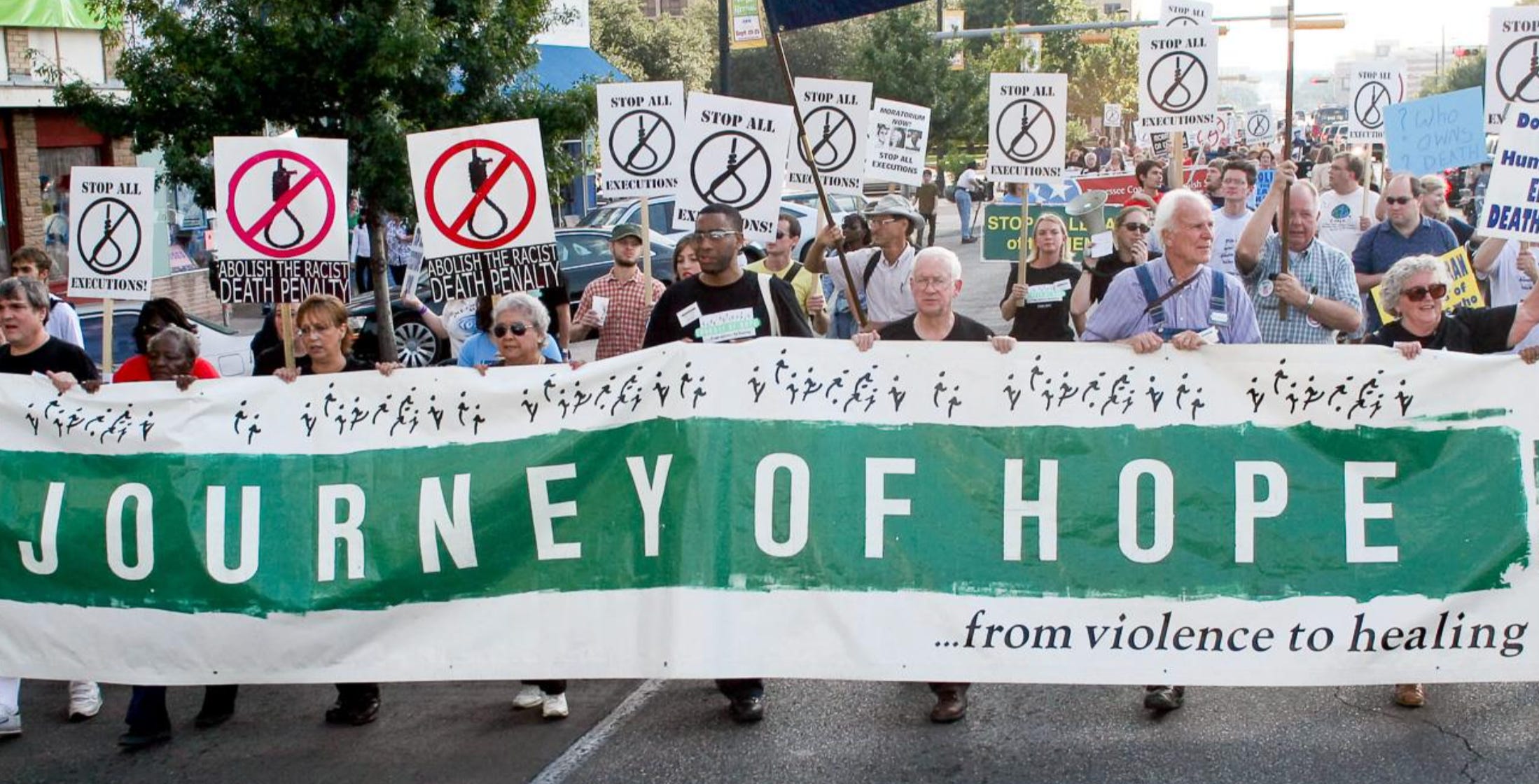
Now a leading voice in Journey Of Hope an organisation founded in the 1993 by the families of other murder victims, Rev Walker admitted in interview with the Byline Times Podcast that, when Eddie was killed, it tested her religious faith. “I said ‘good’,” she recalls, upon hearing that another young man had been killed in retaliation, But, she quickly recognised, “‘good’ was not me,” and she attended a prayer vigil for the other victim, having realised that “I never wanted another mother or sibling or grandparent to feel what I was feeling. That family suffers as well.” She admits to sinking into a “deep funk” of depression lasting five years which challenged her religious faith, and “in order to get out of my funk, I thought about someone else and what they would be going through.”
Rev Walker doesn’t romanticise her son’s life, acknowledging that “he did have his issues”, and was a drug dealer. But he was also “an avid basketball player, a mechanic, and just a funny, hard-headed guy all around.” He was survived by a daughter, who was just two weeks short of her second birthday when he was killed.
It was an experience that Walker admits, “actually tested my view of the death penalty, because I was always against the death penalty since [I was] a teenager,” but over time, her opposition to it has strengthened, leading to speaking tours with Journey of Hope across the US and beyond.
“We've gone to consulates. We've gone to churches. We've gone to education facilities all over, just to talk about our stories and the impact that the death penalty has on everyone, “ she says. “You can't blame someone for being upset – fiercely upset – when something happens in their families, but in order to get healing, I – like the other members of Journey of Hope – have to be released from the violent part.”
Their message seems to have found a receptive audience, with 11 American states having abolished the death penalty in the last 20 years; but although support for execution nationally has waned to its lowest level for 50 years, last year’s national tally of 47 executions was the highest since 2009, with some governors – notably Ron DeSantis in Florida – showing record-breaking enthusiasm for the practice.
Rev Walker describes the Christa Pike incident, in which the Tennessee inmate twice survived attempts to kill her by lethal injection, as “absolutely horrific.” As a prison visitor, Walker has heard accounts from convicts which echo Pike’s own abusive childhood and which have been raised in mitigation for her 1995 murder of classmate Colleen Slemmer. “I’ve heard stories of eight year olds who were given drugs, or two or three year olds who were raped; horrific stories of what goes on in some of these families. It doesn't excuse the crime, but it does give you insight into why these people were not really thinking about what they were doing, or just not connected to what they were doing.”
The political polarisation of the United States means the death penalty is unlikely to become a key issue in the forthcoming mid-terms. In the meantime, previous problems with lethal injections – though rarely as extreme as in the Christa Pike case – have prompted five states to reintroduce death by firing squad. Walker observes, “it’s absolutely incredible that we could even be in this place.”
Pike herself remains in hospital, where her future remains uncertain – along with that of more than 2,000 other people languishing on death row.
There’s an unmistakeable racial dimension to sentencing, with 76% of those executed having killed white people, even though white people account for fewer than half of all murder victims. Racism and sheer incompetence in the US legal system mean that many innocent people are likely to have gone to their deaths.
“There have been so many people that have been removed from the death penalty because their cases were overturned, and a lot of them were African Americans,” Walker said. “I know of one case in Ohio where a young man was placed on death row on the the testimony of a child – this child was pressured by the police, and recanted his testimony in later years, and the [convict] got off death row. One of our Journey of Hope members – her son just got off a prison sentence. He was on death row, then he was commuted from death row, then he was in prison for, I think, 25 years in total – and he was released because it was found that he really had nothing to do with the crime. So there are innocent people who are executed all the time.”
Watch Adrian Goldberg’s interview with Rev Dr Crystal Walker here.