


BYLINE TIMES IMPACT: Find out about the changes you made happen
The Reckoning Project is a consortium of journalists, researchers, and legal professionals, bridging professional gaps, in order to hold the highest powers to account by investigating war crimes and collecting witness testimony from their survivors.
The present scale of mass atrocities is almost too much to comprehend. With civilian populations in Ukraine, Gaza, and Sudan under near-constant fire, it seems like perpetrators of war crimes may never be held to account for their actions. But in this new age of impunity, people are still fighting the long game to ensure that there is light at the end of the tunnel, drawing from lessons learned and precedents set in the aftermath of previous dark periods.
How do we prosecute human rights violations? How do we apply lessons from Nuremberg, or Bosnia, or Rwanda to present-day crimes?
The 1990s paved the way for the top politicians to be prosecuted, showing that the international community could catch high-level war criminals, impose consequences, and societies could hope to heal. And, while the past could not be changed, there could at least be a semblance of justice for victims even in cases when responsibility goes all the way to the top. That is, according to renowned legal scholar, Beth Van Schaack, who served in the Biden Administration as Ambassador-at-Large for Global Criminal Justice.
“I think we thought that world order had been established and that we would now have a system of justice that would respond to atrocities. We had built models, they were working, they could be replicated, we could look at historical justice issues,” she said in the first episode of a new podcast from The Reckoning Project.
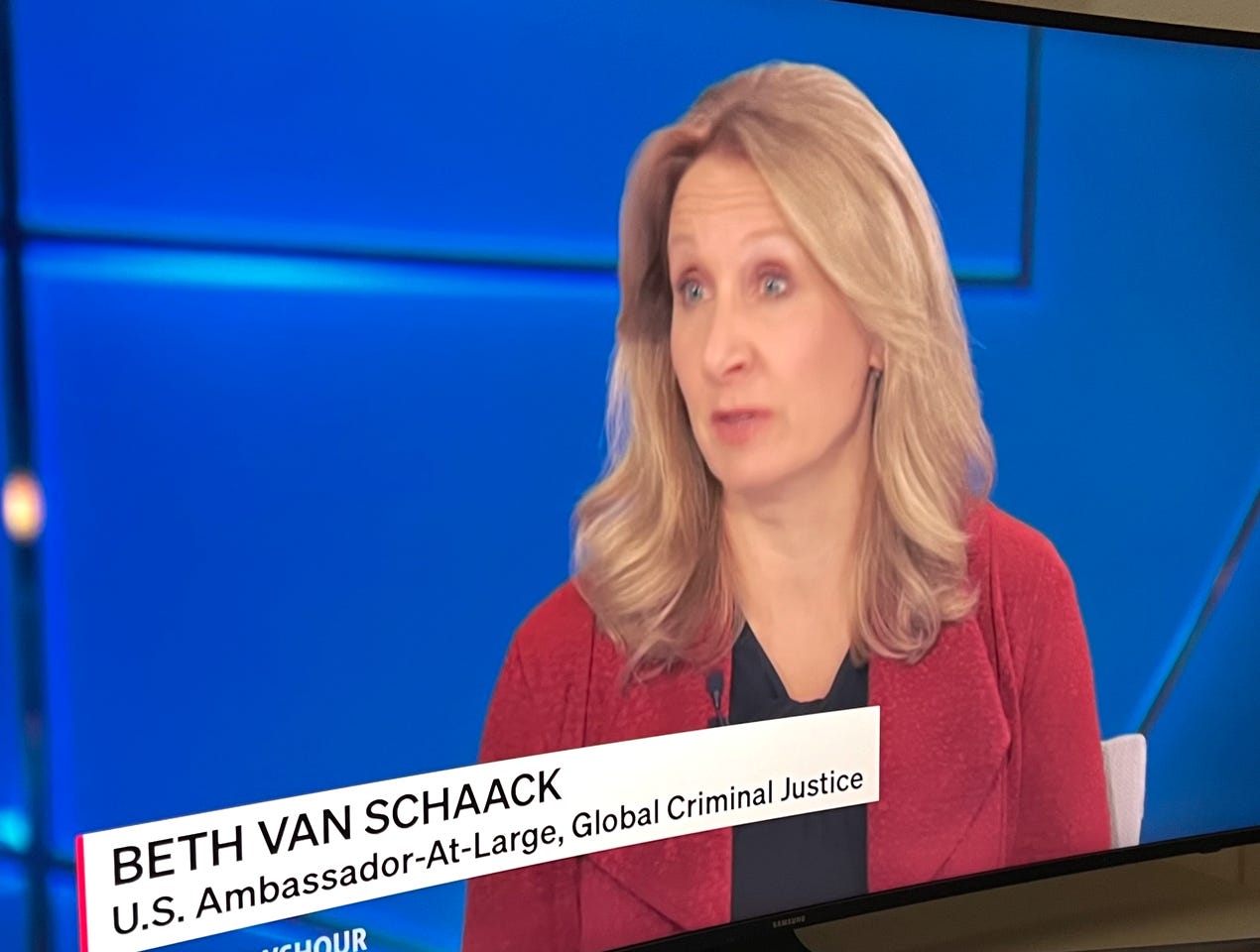
“There would be consequences if you made the distinct strategic choice to use atrocities and repression to consolidate power, or to take territory … there was this sense that the law was functioning in a way similar to how it might function in a domestic system.
“They showed that it could be done if the international community was truly committed to the imperative of justice,” she said.
In this first podcast episode, presented by war correspondent Janine di Giovanni, we recall the dramatic capture of Serbian President Slobodan Milosevic in Belgrade.
His death mid-trial somewhat robbed the public of a sense that justice had been done following atrocities committed in the Balkans. But it set a powerful precedent, and other perpetrators have been held to account, such as the recently deceased Ratko Mladic, the “Butcher of Bosnia”,, who was forced to serve a life sentence in The Hague for his role in the 1995 Srebrenica massacre.
Alongside Van Schaack, Reckoning Project researcher Viktoriia Novikova recalls her work. Novikova has been involved in collecting testimonies from residents of Oleshky Children’s Home in Ukraine’s occupied Kherson Region.
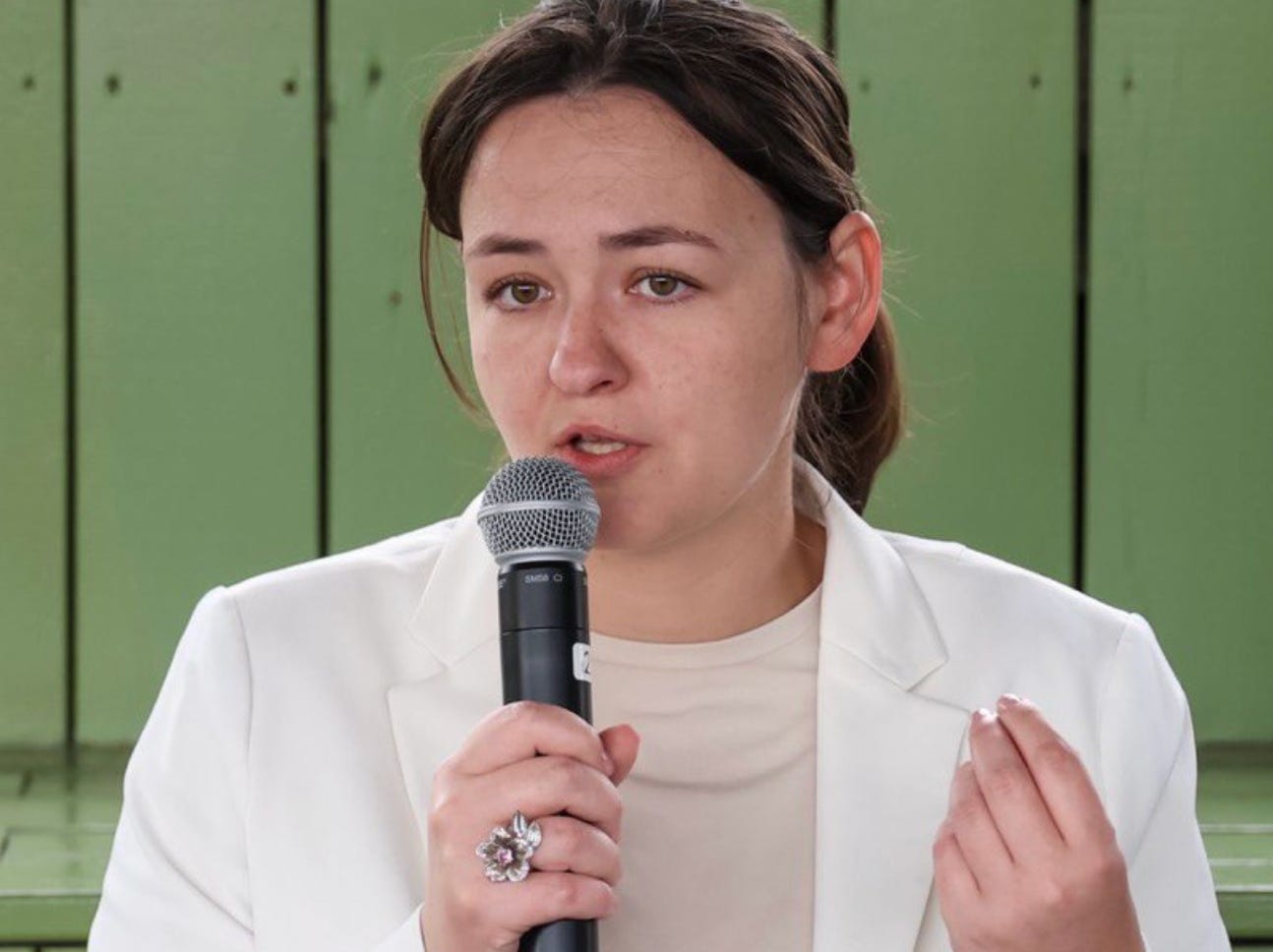
She speaks about how its residents suffered under occupation, and how Russia has long been using the deportation of Ukrainian children and vulnerable adults as a demographic weapon, with the aid of local collaborators. “Russians took around 30 adult residents to the eastern edge of Kherson region, where they were absorbed into the Russian system…their Ukrainian identities were erased, their names changed and replaced,” she said.
She directly connected the disappearance of residents with Russian Commissioner for Children’s Rights Maria Lvova-Belova – “the architect of Russia’s abduction programme”. As many as 35,000 Ukrainian children have been forcibly transferred to Russia and Russia-occupied Ukrainian territories, according to Yale’s Humanitarian Research Lab. And now, the humanitarian crisis in Oleshky is escalating too, with Russia blockading routes out of the town, while residents have been cut off from vital food and medical supplies.
Is the international community still truly committed to justice? It seems harder than ever to pursue nowadays, but behind the scenes, legal professionals, researchers, NGO workers, and dedicated journalists and activists are still working tirelessly to this end.
In the past four years, the International Criminal Court (ICC) has issued arrest warrants against Russian President Vladimir Putin and Lvova-Belova, as well as Israeli Prime Minister Benjamin Netanyahu. The narrow scope of the warrants against Putin and Lvova-Belova can be of benefit.
“Sometimes more focused indictment or charges can be more effective if you can fully develop an evidentiary record with respect to particular emblematic incidents, rather than trying to indict and prosecute an entire war,” said Van Schaack.
Now, of course, we see the Trump administration pushing to dismantle the ICC, sanctioning staff, and pressuring other countries to withdraw. But there still remains a grassroots drive for justice.
Listen here to The Reckoning Project: Part One - From Milosevic to Putin. Produced by Charles Bell and Aliide Naylor