


BYLINE TIMES IMPACT: Find out about the changes you made happen
Twenty-four hours after I left home, I reached the historic centre of Mexico City feeling the thrill and weariness that accompanies arrival in a great and distant metropolis. The sight that greeted me as I approached my hotel on Avenida Cinco de Mayo tilted my balance toward the weariness.
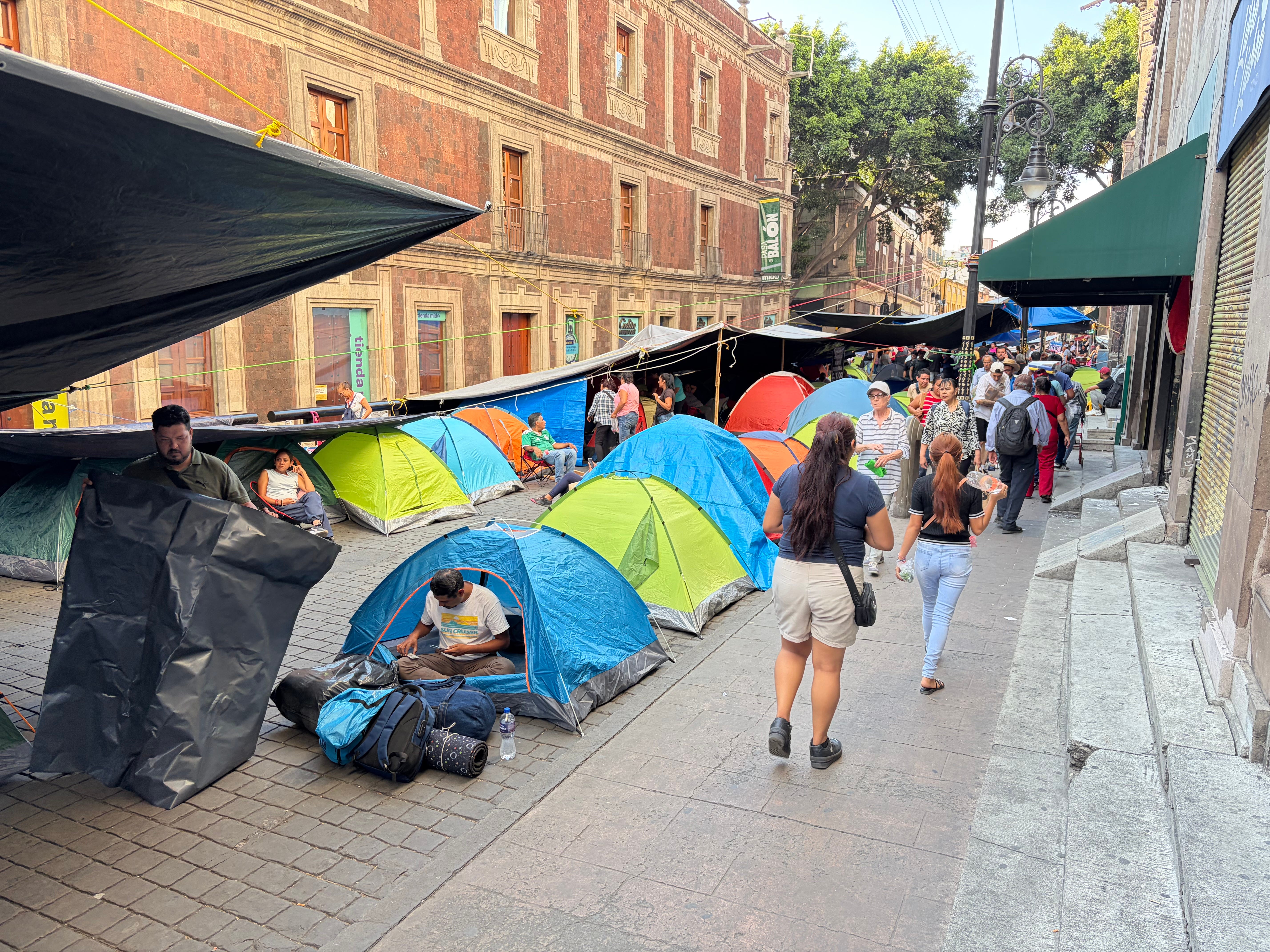
It hadn’t been visible when I checked the location on Google Streetview. Tents, hundreds of them, as far as I could see, pitched so that the entire road was blocked save for a few narrow gaps through which the campers and pedestrians stooped beneath tarpaulins and high-stepped over guy ropes.
My chaperone, Alberto Tovalín, and I sought a route through this polyester labyrinth, luggage in hand, stumbling into dead ends where groups of people sat chatting and eating barbecued meat from smoking grills whose scent mingled with the odour of the drains. I’d only seen anything similar in American cities whose homeless residents exist in tent encampments; but these people looked relatively affluent.
We found an exit by my hotel and stepped with relief into the open space of the foyer. I asked the receptionist what was going on. ‘Teachers,’ she explained, looking as forlorn as anyone might whose business’ entrance has been rendered near-inaccessible on the cusp of the tourist season. ‘It is a teachers’ protest.’
The beauty and intensity of Mexico, and the gentleness, generosity and sincerity of the writers I met while publicising a Mexican edition of my last book — Armando González Torres, Elena Enríquez Fuentes, Javier García-Galiano, the translator Jorge Brash, my chaperone Alberto and interpreter Sarah Boréalis — were revitalising, even as the country’s problems were alarming.
On the second day, I explored Coyoacán, the elegant district of cobbled streets and squares where Frida Kahlo’s cobalt-blue house is preserved as a museum. The seven-mile walk back to my hotel enabled me to process the city’s sensory deluge. Nine million people live in Ciudad de México (abbreviated to CDMX), and twenty-three million in the city’s greater metropolitan area. The centre is further congested by tourists.
People, people, everywhere you look, swarming through sun-parched streets of squalor and grandeur. The air is thin – the altitude made my nose bleed and my water bottle deform – and polluted by industrial fumes, as the city sits in a basin surrounded by mountains that obstruct their dispersal.
Dogs run free, children play by the roadside calling over the roar of endless intersecting vehicles; drivers negotiate via their horns, swallows dart over their heads. Gesturing traffic directors blast their whistles every few seconds. (If motorists need guidance, perhaps that is because there is no driving test in CDMX – to gain a licence you pay a fee and sign a declaration that you can drive.) Pink taxis match the blossoms of bougainvillea bushes growing from the cracked pavements, fervent birdsong bursts from the jacarandas and bulbous palm trees. Motorcyclists accelerate at errant pedestrians while pillion passengers clutch large boxes.
Pedlars weave through slow traffic in the midday sun, selling nuts, chocolate and cold drinks to drivers who summon them to their car window. Infants wander between restaurant tables seeking to sell chocolate bars, then hand over the proceeds to exploitative adults. Mariachi tunes blast from tinny speakers on street corners. The music competes with violinists, child accordionists, old men cranking barrel organs.
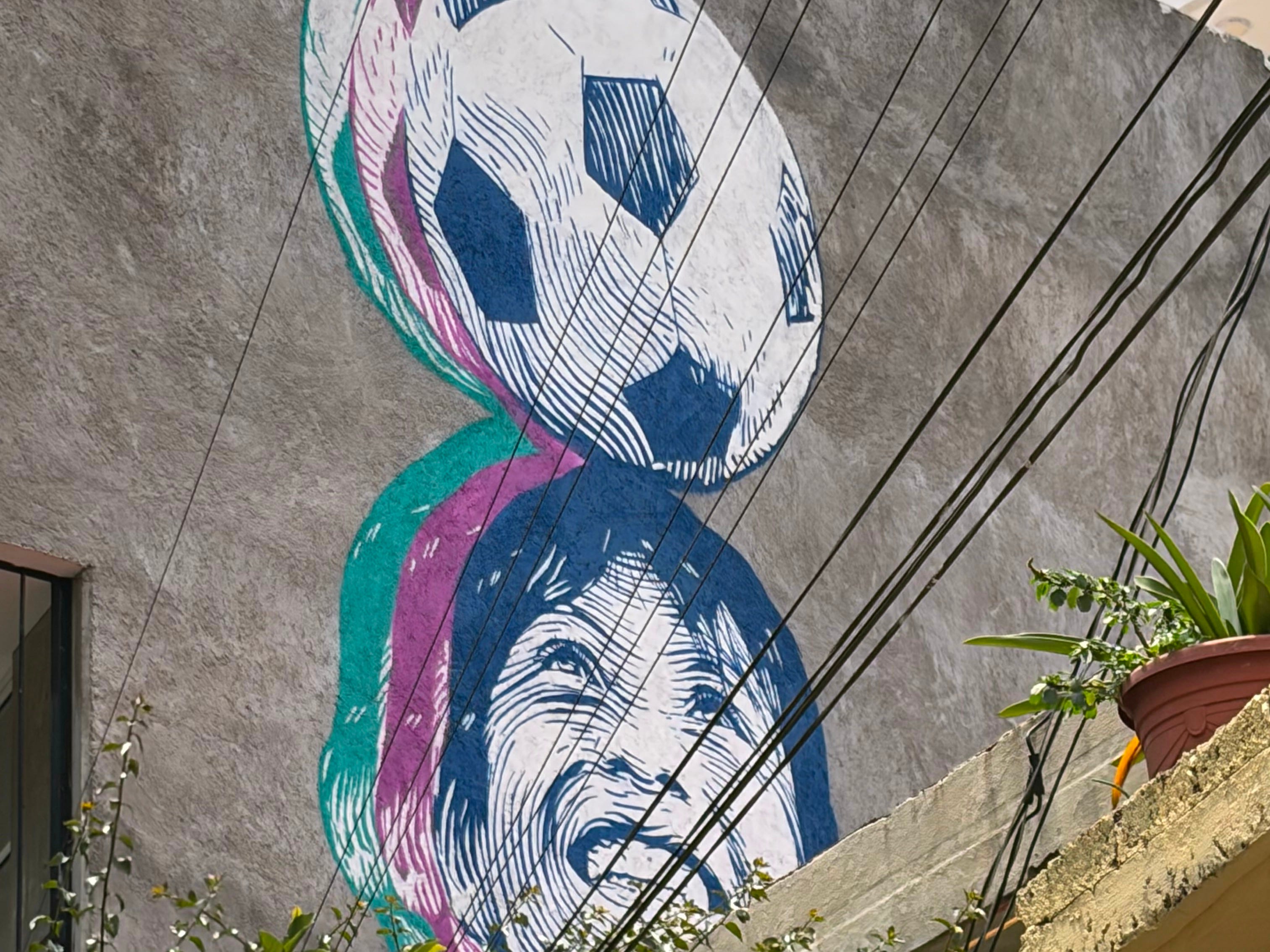
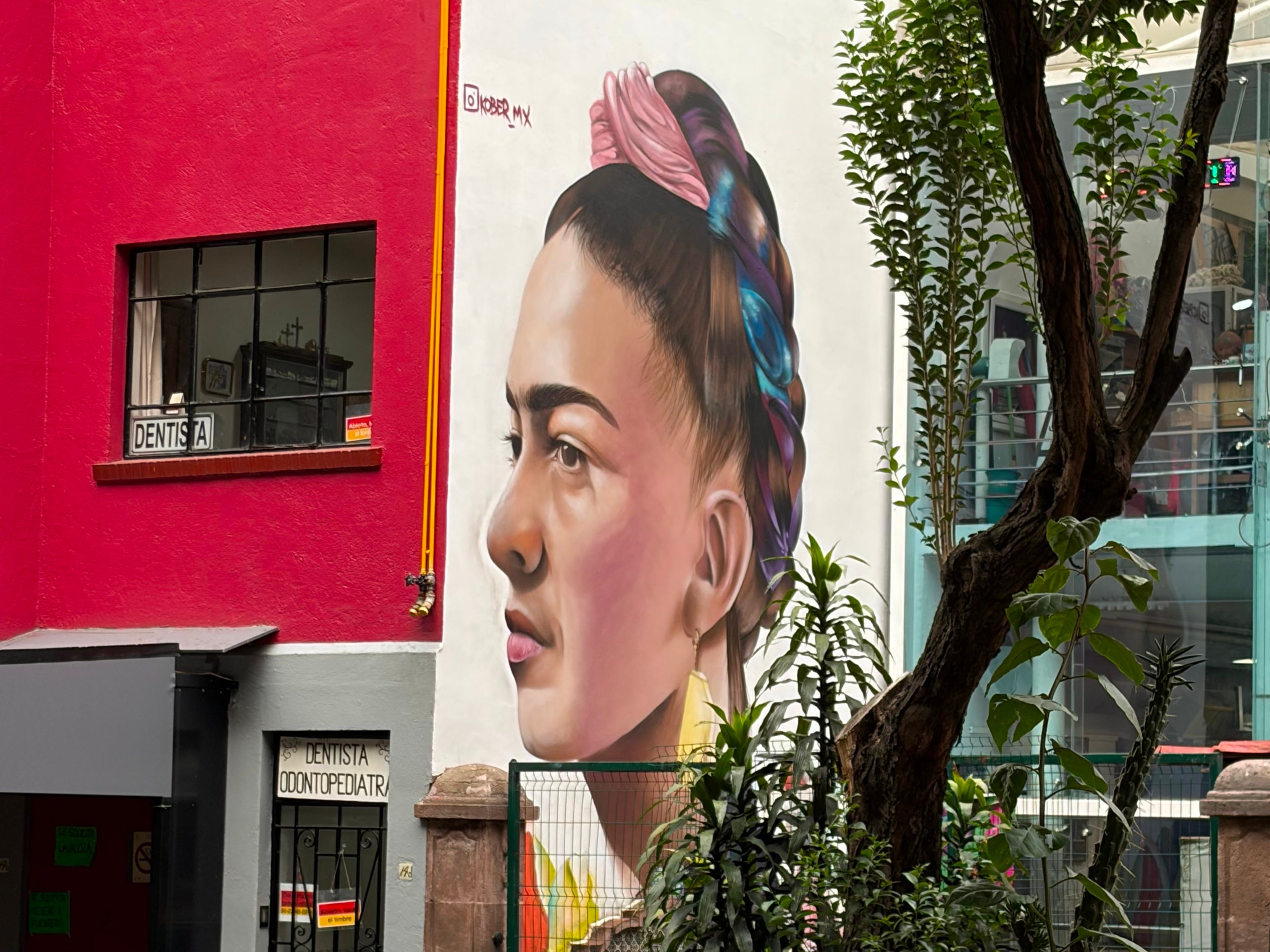
A food vendor scatters jalapenos on a hotdog, another slams a machete into a watermelon. Vast neoclassical Colonial-era buildings loom over crumbling shops with sun-faded painted signs, which exude a wistful cheer countered by the spirals of barbed wire that top many of the city’s walls. Of these, some bear hyper-coloured murals – Frida Kahlo’s face stares you down from across the city – and others political graffiti: feminist resistance to violence against women, criticism of the FIFA World Cup, pleas for justice for the ‘disappeared’.
After a couple of days of murmuring ‘Hola’, ‘Gracias’ and ‘Perdón’ to the teachers as I squeezed my way through the camp on leaving or returning to the hotel, I was on nodding terms with some of them. At 10pm one night in late May, as the smell of frying beef and onions drifted from a barbecue under the adjoining tarpaulin, I spoke via Google Translate with Daniel Ángel Cortés Guadarrama. He explained that all the thousands of protestors are from the state of Oaxaca, around 300km south-east of Mexico City.
“The problems we face as education workers are not only labour-related but also economic,” he said. “Working 30 years only to not have a pension sufficient for old age, when the state does not provide the conditions for a public education that guarantees opportunities for students and instead uses those economic resources for personal matters, leaves teachers in Mexico in a position of working without the tools to create minds for the future.”
By “personal matters”, he was referring to the state’s history of ignoring the embezzlement of education funding by government-allied officials in the teaching unions. Aside from highlighting this criminality, the demonstrators – who are dissident members of the National Coordinator of Education Workers (CNTE) – are rejecting a proposed 9% pay-rise and seeking the repeal of education reforms that have depleted their pension funds. They also believe that public funding is misdirected in ways that deprive children of a decent education.
“The teachers of Oaxaca and some other states have been fighting for 46 years against Government policies that do not guarantee our children the opportunity to grow educationally and socially,” said Guadarrama. “Today we are here because we see it as an opportunity for the world to know that the Government does not protect its teachers in old age. The World Cup is an international forum to expose how a government spends economic resources on social programs that do not create social wellbeing.”
Much of the world’s gaze will rest on Mexico this month for the first time in forty years. Thirteen of the FIFA World Cup’s 103 matches are being held here, including the opening fixture on 11 June, between Mexico and South Africa, at the famous Azteca Stadium where in 1986 Argentina beat England – or rather, Diego Maradona did, first with his ‘Hand of God’, then with one of the greatest individual goals the game has seen.
My parents bought our first colour TV for that tournament, and the eight-year-old me watched aghast but transfixed as England’s midfield and defence flailed in his wake. The Mexican broadcasts’ low-definition vividity singed itself on my memory: the world brightened that summer, regardless of the football result.
On my first day in CDMX I travelled across the city in the hope of taking a stadium tour but found them suspended while it was being prepared for this summer’s tournament. I mooched around neighbouring streets decorated with murals of indigenous children playing football and satisfied myself with the purchase of a replica Mexico shirt in a shop staffed by a young woman who served me while caring for her infant daughter.
Later, I read of how street vendors have been displaced from the area while it is cleaned and homogenised into an appropriate setting for a global sporting event, how similar displacements of ‘undesirable’ citizens have occurred across the city – much as Paris bussed out its African migrant population before the 2024 Olympics – and how the pre-tournament gentrification has raised rents, such that lower-income residents can no longer afford to live there.
A report by Deloitte predicts that the tournament will bring a $2.7 billion economic benefit to Mexico, equivalent to 0.14% of national GDP. It should create 112,000 temporary jobs, largely in the food service, hospitality and transport industries. More than five million football fans from across the world will descend on Mexico City, Guadalajara and Monterrey, and hundreds of millions more will watch at home; no wonder activists are seeking to push their cause into view before the world’s attention moves elsewhere. Besides, they act in a Mexican tradition of protesting against the backdrop of the World Cup or Olympic Games.
Forty years ago, 100,000 Mexicans booed their President on live television during the opening ceremony, and throughout the tournament demonstrators chanted ‘¡Queremos frijoles, no goles!’ (‘We want beans, not goals!’) in protest against the Government’s focus on football while its citizens were starving after the catastrophic 1985 earthquake.
The country’s expenditure on hosting the Olympics in 1968 prompted the Mexican Student Movement, in which thousands of university students protested against the authoritarian Institutional Revolutionary Party, demanding democracy and greater political freedom. Their actions received support from across society. Government suppression of dissent culminated in the Tlatelolco massacre on 2 October 1968, when hundreds of peaceful protestors are thought to have been shot dead. During the country’s first World Cup two years later, Mexico’s rulers maintained such tight control that no one could protest.
No one expects state-sanctioned murder in 2026, but Claudia Sheinbaum’s left-leaning National Regeneration Movement Government has already begun a violent clampdown on the teachers’ movement.
Daniel Guadarrama said: ‘Today, thanks to the Government’s media policy, teachers are labelled as criminals for being the only sector that raises its voice against a corrupt Government. We believe that within a month there will be favourable responses to our demands, but the repression against teachers is something that could change our struggle.’ The day before we spoke, police in Oaxaca had fired shots at protesting teachers.
On 1 June in CDMX, hundreds of riot police used tear gas to repel the demonstrators from entering and occupying the Zócalo, the city’s main square, which is to be the site of a World Cup fan zone.
That evening, I walked there from the San Rafael district and found it barred from all sides by tall metal hoardings guarded by the riot police. Residents and shopkeepers who needed to enter were allowed in via a checkpoint if they showed ID, and I joined the scrum as policemen barked orders through megaphones. I waved my passport at them, and they nodded me through. The city-centre was like the eye of a storm. I wandered through the deserted square, where a huge Mexican flag fluttered over a battalion of officers being instructed how to respond to any further incursions.
Teachers are far from the only profession fighting for better pay and conditions, and in some cases Sheinbaum’s Government is bringing welcome change. Two years on from her landslide victory, she retains substantial support as much of the electorate welcomes her social reforms and recognises that reversing the country’s fortunes will take time. Service workers will benefit from changes to the Federal Labor Law, which include enforcement of the minimum wage without including tips, mandatory seating for retail employees, regular pay-packets and guaranteed annual leave.
My experience at the hotel on Avenida Cinco de Mayo suggests there is still some way to go. On my first morning, a waitress served me breakfast and after eating I left without paying, on the assumption that it would be charged to my room and I could settle the 190 peso (£8) cost when I checked out. I returned the next morning to be told by another waitress that her colleague had had to pay my debt and I needed to reimburse her by cash or bank transfer.
The day after I spoke with Daniel Guadarrama, I travelled on to Xalapa in Veracruz province, four hours east of Mexico City. My interpreter, Sarah Boréalis, and I were chauffeured through this unforgettable landscape by a friendly young man with the habit of driving hands-free down the motorway at 90kmph while he unscrewed his water-bottle or opened a bag of roasted almonds. The radio belted out a Mexican version of Billy Ray Cyrus’ ‘Achy Breaky Heart’ before switching to a football show. The driver pointed out the great volcano Popocatepetl with its snowy peak issuing a thick white cloud of smoke, and its dormant neighbour, La Malinche. We sped through valleys of luminous green grassland, and between arid hillsides of stratified beige rock and yucca plants.
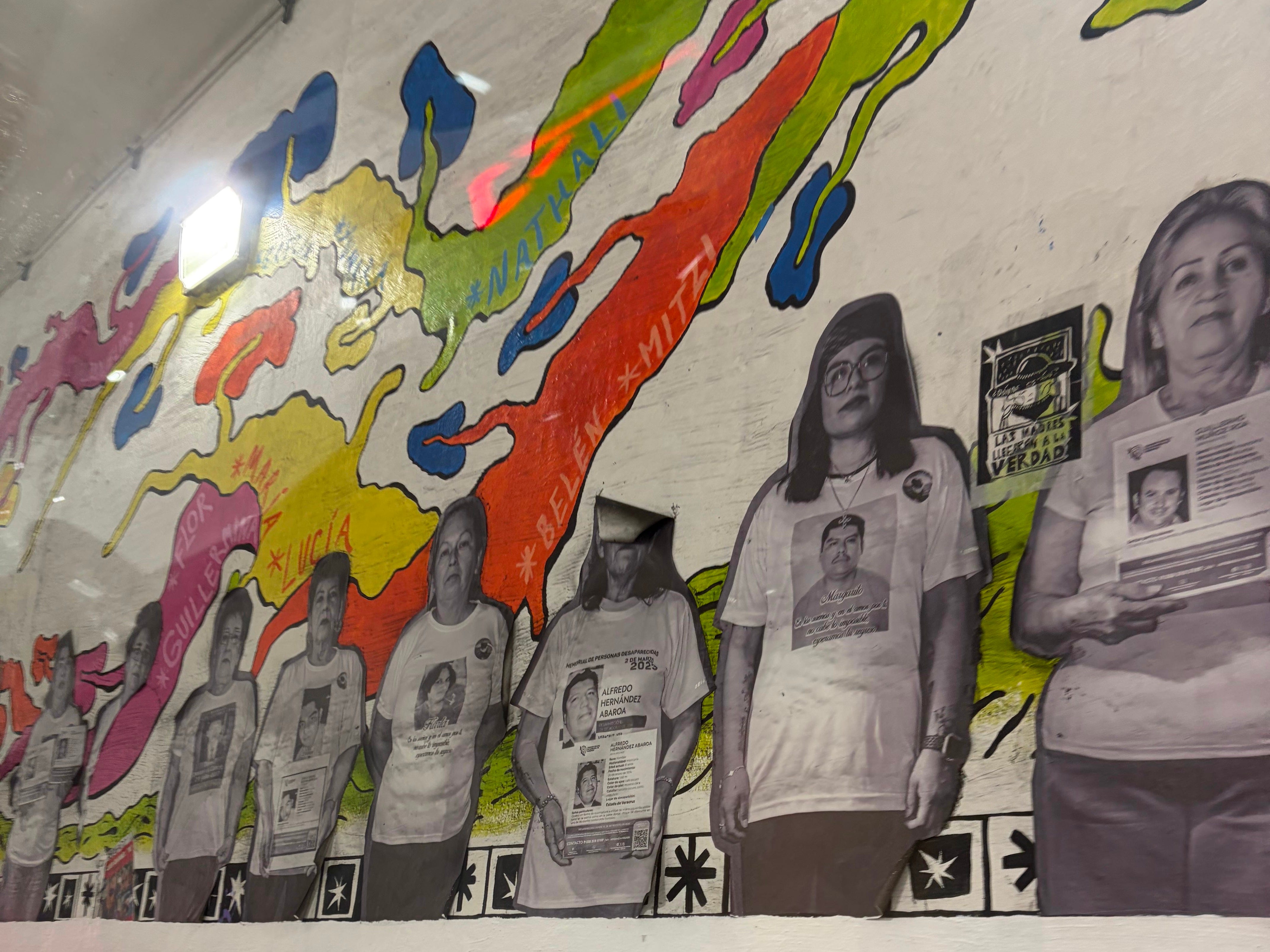
As we entered Xalapa, we drove through a white-walled tunnel plastered with posters. Many showed women holding photos of their adult children who have been ‘disappeared’. A picture of a pensive-looking young man named Cedrik Abdiel Ramírez Aguilar caught my eye as we sat in traffic. He was one of five friends abducted by an armed group on leaving a nightclub together in 2020, whose bodies were discovered four years later in a clandestine grave. Last summer he was finally given a formal burial in Xalapa.
The next day, I walked through the university city and noticed another poster with a photograph of an electrician named Antonio de Jesús Viveros Ladrón de Guevara. He was last seen in 2014. His page on the Dignificando La Memoria website, which commemorates those who have vanished, only includes a statement from his mother: ‘Unfortunately, we know nothing about him. I’ve received calls and messages, but they’re all extortion attempts, and the authorities haven’t been able to find those people; we don’t know what really happened, what the motive was, or where my son is.’
Some of the abducted are pressed into forced labour, often in coffee and sugar plantations. Some become cartels’ hitmen in the knowledge that they will be shot if they do not comply. Some are kidnapped for a ransom, then murdered when their families cannot pay. Some women are forced into sexual exploitation; although men account for 62.5% of missing persons, girls and women aged 15 to 19 are the most vulnerable group. A poster on a lamppost in Xalapa commemorates Diana García Rivera, who was 20 when masked men abducted her from a Cancún nightclub six years ago. She has not been seen since. The conviction rate for violence against women and girls is around 2% of the cases that reach court and those imprisoned can often bribe their way out of jail.
Since Felipe Calderon’s Government deployed the military to launch its ‘war on drugs’ in 2006, the cartels have responded by abducting more than 134,000 people, often with the assistance of corrupt state officials. A Human Rights Watch report explains the typical chain of events: “Members of security forces arbitrarily detain individuals without arrest orders or probable cause. In many cases, these detentions occur in victims’ homes, in front of family members; in others, they take place at security checkpoints, at workplaces, or in public venues, such as bars. Soldiers and police who carry out these detentions almost always wear uniforms and drive official vehicles. When victims’ relatives inquire about detainees’ whereabouts at the headquarters of security forces and public prosecutors’ offices, they are told that the detentions never took place. … In cases where state agents work with organized crime in carrying out disappearances, the collaboration may take one of many different forms. Most commonly, security forces arbitrarily detain victims and then hand them over to criminal groups. Police, soldiers, and investigators may also work with criminal groups to extort the families of the victims, or tell those groups when victims’ relatives report disappearances – information that abductors then use to harass and intimidate families.”
The narcotics cartels’ grip on vast areas of Mexico is too powerful for the Government to counter, especially given that elements of the police and army are under the narcos’ control. The British Foreign Office currently advises against any non-essential travel to areas in the states of Baja California, Chihuahua, Chiapas, Colima, Guanajuato, Guerrero, Jalisco, Michoacán, Sinaloa, Tamaulipas and Zacatecas. This year alone the most powerful cartel, the Jalisco New Generation (CJNG), will sell an estimated $12 billion of cocaine and crystal meth produced in a network of labs across the country, plus up to $10 billion in fentanyl largely imported from China. The CJNG is at war with other cartels and with the Mexican and US governments.
In February of this year, the Mexican military drew information from US intelligence in order to assassinate the CJNG leader, Nemesio Rubén Oseguera Cervantes aka ‘El Mencho’. The CIA has lately eliminated other major figures in a significant escalation of its war on the cartels, which supply an estimated 80-90% of the fentanyl and methamphetamine consumed in the USA.
I spoke with a young woman named Johari Pedraza Ramos, a student of international relations at the University of Veracruz in Xalapa, where I had been invited to discuss my book at its annual international literary festival. The World Cup prompted conflicting feelings, she said – it is a chance to show what Mexico can do, but she was frustrated at the Mayor of Mexico City’s expenditure on fripperies that won’t benefit citizens. Clara Brugada’s administration has installed extravagant candelabras in one of CDMX’s major metro stations, covered buildings and public transport with axolotl-themed branding and painted road bridges lilac ahead of the tournament.
She also spoke of the concern that Mexico is becoming “a second Venezuela” owing to policies that are causing inflation and an over-reliance on exportation. “Prices are rising up amazingly,” she said. “A kilo of tomatoes in the old times was 20 pesos. Right now, it’s 50 pesos at least, sometimes 70 pesos or 100. So, it’s changed a lot. Things are getting more expensive.”
It is this cost-of-living crisis that has led the teachers to reject their 9% pay-rise. “And people are not investing anymore in Mexico because of all the violence. Also, right now, we are renegotiating the free trade agreement with the US and Canada. So things are not looking really good for us. In Venezuela, they have a lot of beautiful natural resources that are worth so much, but they’re not shared; they’re sucked up and exported. And there are so many riches here too, but they’re just exported. I love Mexico, but it has the potential to improve, a lot.”
Towards the end of my time in Mexico, I thought of the joy that football has given me since the 1986 World Cup, both to play and to watch, and how grotesque the game has become at elite level; how its best players could singlehandedly fund, say, housing or educational projects in developing countries without noticing the dent in their pay packets. Some do; most don’t.
I wondered how many players will think of the families of the disappeared, or of the teachers who will not be able to afford to retire, or the impoverished Mexicanos shunted out of view while the corporate behemoth swaggers into town trumpeting platitudes about uniting the world.
Keiron Pim is the author of Endless Flight: the Genius and Tragedy of Joseph Roth (Granta, 2022), now published as La Fuga Sin Fin: Genio Y Tragedia de Joseph Roth by the Universidad Veracruzana Press.