


BYLINE TIMES IMPACT: Find out about the changes you made happen
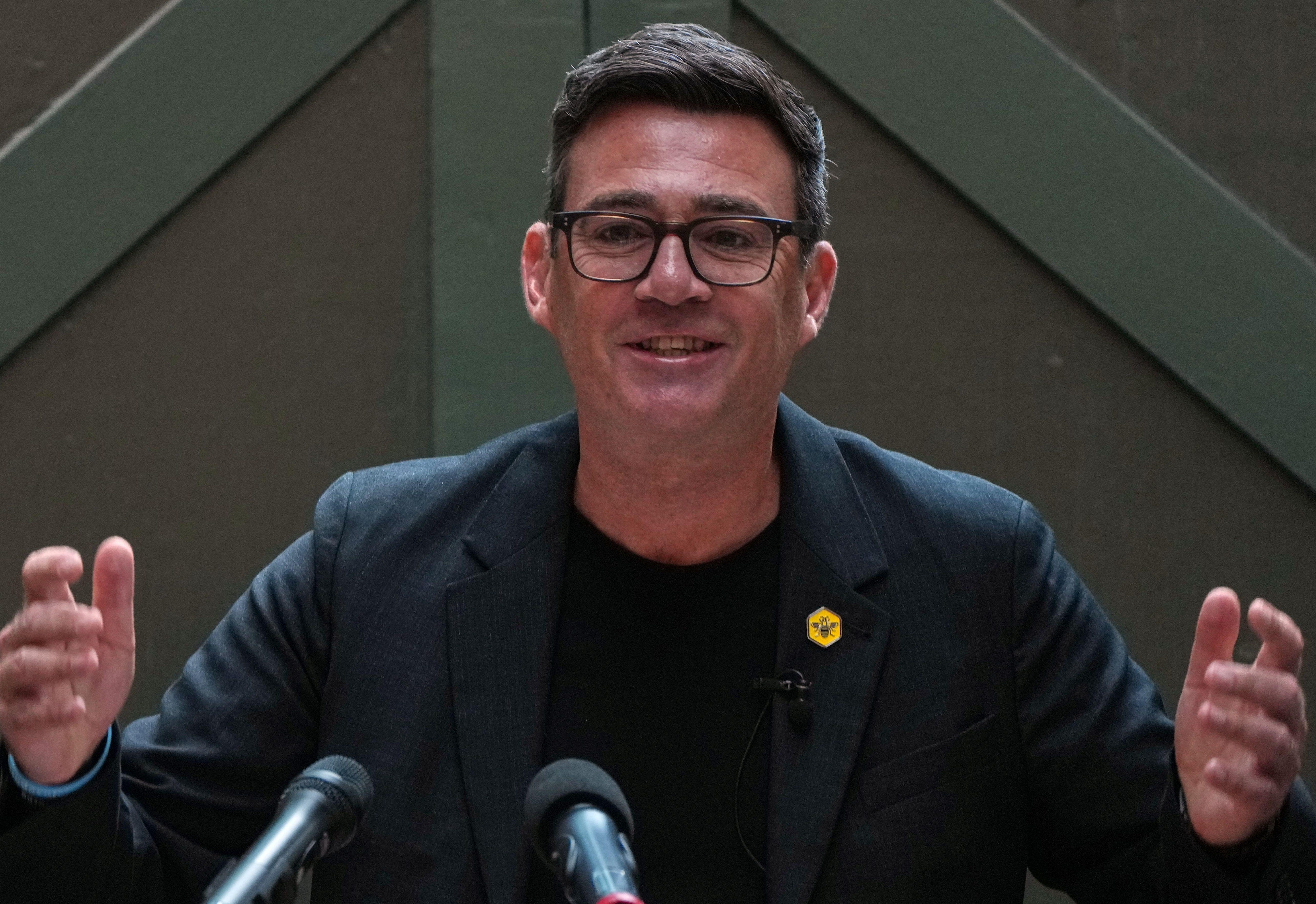
In the Daily Telegraph’s telling of Andy Burnham’s first major policy speech since his return to parliament, the likely next occupant of Downing Street wants to take Britain back to the 1970s. From where Thomas Forth is sitting – as the CEO of tech company Data City based in Leeds – that doesn’t sound like such a bad idea. In a widely shared recent essay on his blog, Forth argued that the post-industrial malaise of the UK’s cities beyond London and the South-East can be directly attributed to Margaret Thatcher’s obsessive centralisation of the state – a process Burnham has now promised to reverse by giving greater powers to local authorities and creating a “Number 10 North”, which would place Manchester at the heart of national decision making.
In an interview with the Byline Times Podcast, Forth laments that “the cities that invented the modern world through the Industrial Revolution” – a list that includes Birmingham, Glasgow, Sheffield, Liverpool, Newcastle and Hull – have struggled to reinvent themselves in the modern era. “Why are these cities so poor?” he asks. “Why are their economies so weak? They are very substantially weaker than their equivalents, in North America or Europe. The UK has no Munich, it has no Milan, it has no Barcelona when it comes to the economy having successful firms and big businesses that generate lots of high paying jobs.” He argues that even smaller European cities such as Rotterdam, Antwerp, Copenhagen, Stockholm and Dublin offer models of prosperity their UK equivalents can aspire to.
Forth’s concerns are backed up by figures from the ONS which show that only London and the South East are net contributors to the UK Treasury. Every other UK nation or region receives more from the public purse than it puts in – even Greater Manchester, generally regarded as a ‘boom town’ and where Burnham served as elected Mayor for 9 years. “Despite its recent success, Manchester and Greater Manchester remain weak economies within Europe,” Forth observes. “I used to live in Manchester and if you walk north from [recently gentrified] Ancoats, it’ll be about five minutes before you are in some of the deepest poverty in Europe. Okay, it’s building a huge amount of great big shining towers, and I think that’s fantastic, and it’s generating more prosperity than it has done for 30 years [but] it’s still reliant on money that’s sent from London and the greater South East to pay for its basic public services. So, definitely Great Manchester has turned the corner, but there’s a long way to go in terms of catching up with its equivalents in Europe.”
Forth argues that in seeking to curb the Militant Tendency which took Liverpool City Council to the brink of bankruptcy in the early 1980s, Thatcher went too far in restricting the autonomy of other major cities. She introduced ‘rate capping’ to limit their revenue raising powers and enforced privatisation of key services. This was combined with the abolition of England’s six metropolitan counties and the Greater London Council in 1985, which saw spending power gravitate back to politicians in Westminster and civil servants in Whitehall.
“What Thatcherism did was it got rid of the worst excesses of the far left, but with it, it swept away a huge amount of agency and ability for these cities to fix themselves going forward,” observes Forth. “If there’s one thing most people agree with in theory, but they’ve never quite put into practice in our politics, it’s that people in a place probably know better how to fix it than people 150 miles away. So I think that the big British cities, which had led the world in industry, needed to change, they needed to become more high value added, more service orientated [but] I think they themselves probably would have wised up to that and made the changes if they could have, but it was quite abrupt the extent to which they just had all the power taken away from them.”
Forth reflects on Birmingham, a city once regarded as a model of municipal enlightenment, but which was hindered in its attempts to reinvent itself from the 1980s onwards, amid mass factory closures. “I don’t think that Birmingham could have held on to being a massive manufacturing hub. If you look at somewhere like Munich, it’s massively shifted towards high-value added services, and Birmingham could have been that; it could have been a pioneer and a leader in biotechnology. Some very early examples of surgical implants and hip replacements were made in Birmingham - that could have easily developed into a world leading strength. Birmingham was quite forward-looking. It was a competitive political landscape. It didn’t need to have all of its local power removed, just to ensure that the far left didn’t gain any power. I think it could have been gently brought into a more modern era, I think it would have taken responsibility for that development, but unfortunately everything was abolished, so there was no chance of it happening.”
Leeds and West Yorkshire was similarly hobbled says Forth: “We had a metropolitan county that was doing lots of things around transport [but] the metropolitan county was abolished, the buses were deregulated. Suddenly, there was no power at all to do anything on transport. I think everybody admits that hasn’t worked well.”
Ironically, it took David Cameron’s Conservative government to restore metropolitan authorities at the prompting of his Chancellor George Osborne; although what Osborne gave with one hand – in terms of devolution – he took away with the other, by means of austerity. More recently though, in the most radical cases such as Manchester, public transport has again been brought under local authority control. The city has also started to enjoy greater power over its NHS and social care budgets. It remains to be seen how much more fiscal independence Burnham is willing to allow when, as seems inevitable, he becomes PM – and whether this will be allied to powers to raise taxes and set business rates, although he has previously suggested that both will be on the agenda.
One area where Burnham is unambiguous is his desire to initiate a substantial council house building programme, after years when Thatcher’s cornerstone ‘right to buy’ policy helped diminish the stock of local authority-owned accommodation. Forth sees the sell-off of council houses in Scotland as a trigger for the independence movement and says, “I think it was the disempowerment that was even more of a problem than the actual policy – the fact that there was no local say in that, there was no buy in.” Even in England, where ‘right to buy’ was more popular, it meant “there’s very little agency, very little belief that people in Birmingham or Manchester can really shape the direction of what they’re doing with their own lives and their community.”
Forth says that despite being viewed as an icon of the political right, Thatcher – ironically – created a form of centralised state planning that wouldn’t have been out of place behind the Iron Curtain. “And the problem with that idea [is] it doesn’t have a great record of actually working. There is a midway between having competition between places, but having a national solidarity safety net. So, in terms of competition within places. I don’t think anyone in Britain thinks that the NHS in Blackpool should be worse than the NHS in Chelsea, just because Chelsea has a stronger economy. I think even the people on the right wing of the Conservative Party would say ‘no, that’s not okay.’ This is a country and we work together and we do as best as we can, but within that, there’s got to be some area for competition between places. I think different solutions for different places is a great way to go. I don’t think it’s incompatible with ideas on the left, and I’m just surprised that it was Thatcher of all people who said ‘no, it’s one size fits all, everywhere has to follow the national rule’, and if you don’t, we’re going to kick you out.”
Watch or listen to the full interview with Thomas Forth on the Byline Times Podcast here.