


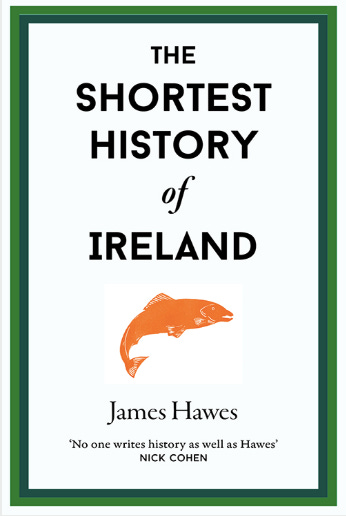
In his latest bestseller, The Shortest History Of Ireland, James Hawes approvingly quotes the American writer and Nobel Laureate William Faulkner, who once wrote: “The past is never dead. It’s not even past.” In a sprawling interview with the Byline Times Podcast, Hawes draws on this maxim to argue that the bitter legacy of previous decades and centuries in these islands will eventually lead to the unravelling of the United Kingdom and the demise of Great Britain as a political entity.
His starting point is the year 1641, when Charles I raised an army of English and Scottish ‘undertakers’ (or colonial settlers) in Ulster to fend off the Great Irish Rebellion, launched in pursuit of religious liberty. Though Scotland and England were separate states, Charles nevertheless raised a “Brittish” (sic) force to put down the uprising. Hawes observes that England and Scotland were at this time, “entirely separate kingdoms”. They nevertheless formed an ad hoc alliance, “which they themselves called the British Army, at a time when no such state existed. Uniquely in the world, I suspect, we have the British Army predating the British state.”
The idea of ‘Britain’ had been enthusiastically promoted by Charles’ father, James I (aka James VI of Scotland) whose dream of a union between the two nations had been rebuffed by Parliament. “They’d been flexing their muscles and had no intention of allowing this Scottish king to rule over them, with a power base in Scotland over which they had no control,” Hawes says.
Having been thwarted, James (and later Charles) sought to generate a sense of British-ness through conflict in Ireland. Hawes believes it was the monarchy’s way of attempting to sidestep parliament, and create an independent landowning power base which owed fealty to the Crown. “The idea is, it will be directly loyal to him and paying money to him, without him needing to go to the Westminster Parliament, cap in hand, for grants every few every years. And so, from the start, it’s a royal project about creating a brand new identity which will be separate from, and not totally controlled by, the Westminster Parliament. The foundation of Britain is much stranger than we think.”
It wasn’t until the Act of Union in 1707 that England and Scotland were finally formally united but, in Hawes’ analysis, the two nations have been uncomfortable bedfellows ever since, not least because the Scottish electorate (like their counterparts in Wales) have tended to vote for left/liberal MPs rather than Conservative, the favoured political brand of southern England. This estrangement, he says, continued to play out in the parliamentary politics of the 20th century.
'‘What happened in 1910 is that in two elections, the Liberals failed to gain a majority in England, and they only governed with the support of the Celts and in particular the Irish. This recurred in the two elections of 1974. Whenever that happens, the Tories are incandescent, because what’s really going on is warfare between two different tribes in England, the South and the North. And when the south of England finds it’s outvoted by a combination of the Northerners and the Celts, you get this extraordinary sense of of outrage that has almost no bounds, that will radicalise the Conservative party.”
Amid this ongoing tussle, he says, “Ireland is this proxy battlefield for English politics, which has a terrible effect in Ireland.” He cites as an example 1981, when Margaret Thatcher had lower ratings than Sir Keir Starmer has now, and sought to boost her popularity by opposing IRA prisoners’ demands for the restoration of Special Category Status. This had been granted in 1972 , but was withdrawn four years later. For Thatcher, the subsequent hunger strike, which led to the death of Bobby Sands, was a means of proving her mettle to a sceptical English public, ahead of the even more successful Falklands War the following year.
Hawes recalls: “Thatcher desperately needed a win, and she needed to get 10 Ulster Unionist MPs back onto the Tory whip because she was faced with people, like Jim Prior, who were threatening rebellion against her. That’s the root of why she chose to make the hunger strike a fight. It was entirely to do with British politics. There’s no doubt she picked a fight here, and it could easily have been fudged, in which case no one would remember the 1981 hunger strike. It would be a little footnote. Instead, it gave a whole new generation of radicalisation to the IRA.”
Tensions were exacerbated again by the EU referendum, when both Northern Ireland and Scotland voted Remain, but found themselves outnumbered by Brexit-backing England. This reignited the issue of the Irish border, which had effectively been dissolved by the Good Friday or Belfast Agreement. Hawes recalls: “Some of the Brexiters talked insanity — about having cameras to watch the border. Anyone who knows anything about Northern Ireland would know that if you stuck a camera on the border, it would last five minutes before someone took a shotgun to it, and then you’d have to have a cop to guard it, and then you’d have to have the Army to guard the policeman, and we’d be right back to a hard border. It was always insanity.”
After what Hawes describes as Theresa May’s “bung of a billion pounds” to keep the DUP on side, Boris Johnson became PM and “effectively purged the Conservative Party and turned it into the Brexit party, which is the root of where we stand now. The root of Farage’s success is that under Johnson, it was no longer possible to be a Conservative and not be a hard line Brexiter. It became a touchstone issue, like guns for MAGA Americans, or like believing Trump was cheated of the 2020 election. You had to believe this to be a Tory, and that’s what’s opened the door for Reform…”
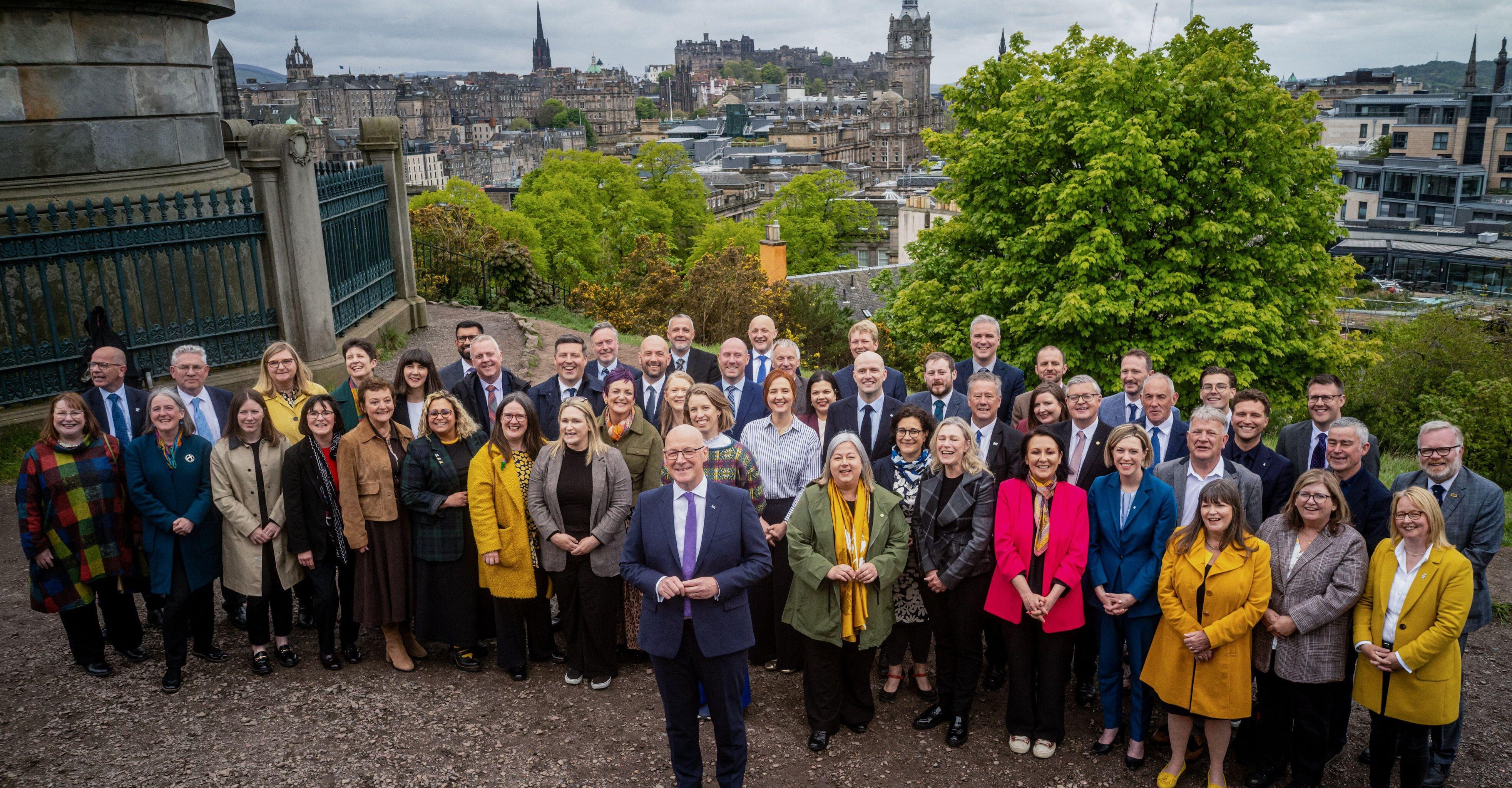
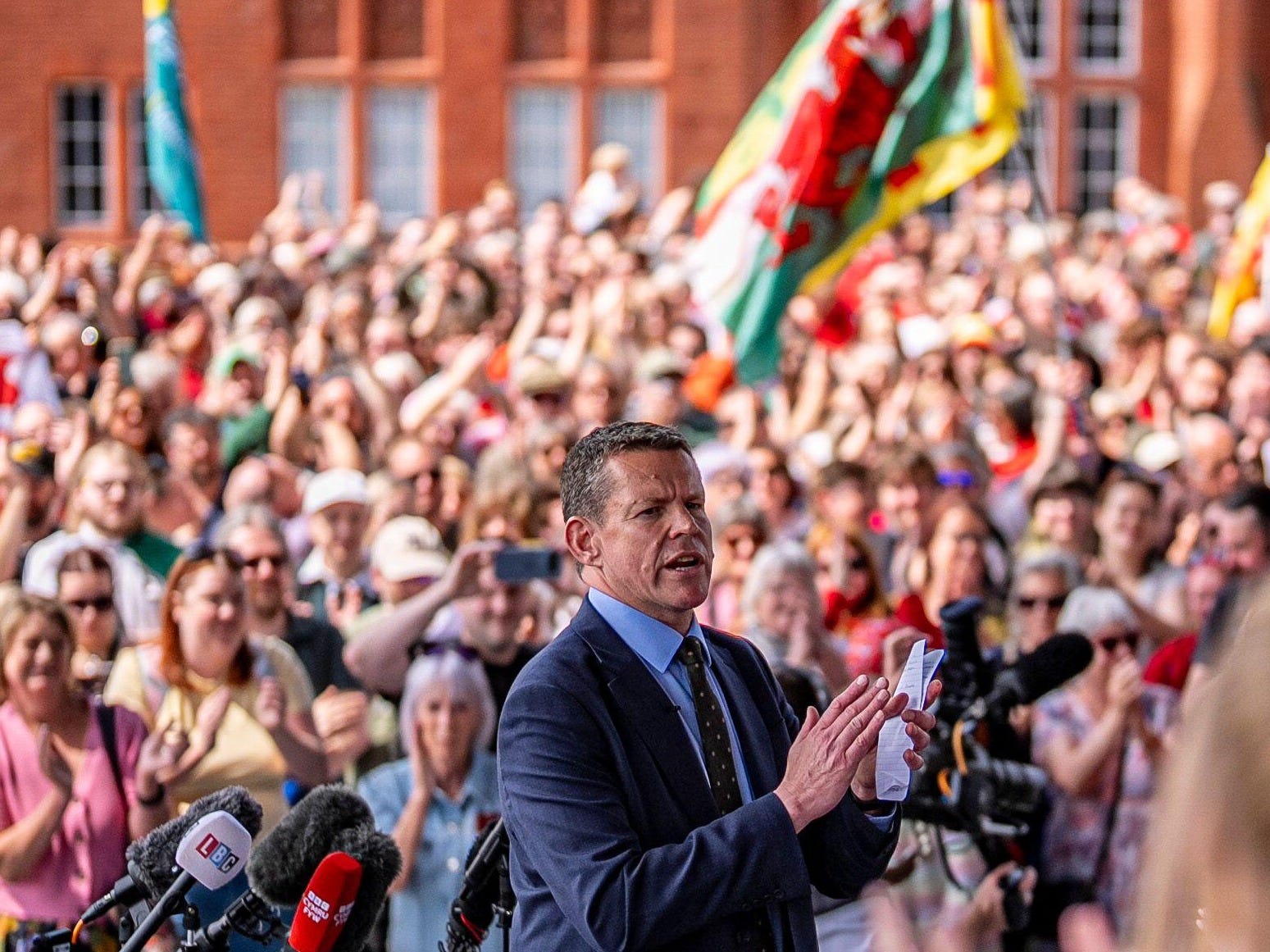
As English politics has moved ever rightwards since then, Scottish and Welsh nationalism has found new energy, with both the SNP and Plaid Cymru winning their respective elections for Holyrood and the Senedd. Hawes predicts that both will substantially increase their presence at Westminster, putting independence for Scotland and greater devolution for Wales higher up the agenda — especially in the event of a hung parliament.
And he ends with a warning to chill the bones of every unionist. “If anyone thinks that the United Kingdom is some ancient state which must be preserved at all costs and couldn’t possibly collapse, let’s just remember it was only founded in 1801,” he says, recalling that William Pitt the younger engineered the Acts Of Union at a time of rebellion across the the Irish Sea and in the aftermath of the French Revolution.
The UK, he says, “was founded for one reason and one reason only, which was to control Ireland. It’s not some ancient, natural, ethnic state. It was a political thing cobbled together by Pitt in order to suppress the Irish, to make them into a safe minority within this big new construct; just as Great Britain was only created because Westminster was terrified the Scots might not ratify the next king and might reopen England’s Civil War.
“So the idea that the UK could not possibly collapse? That’s fairyland. It can easily collapse. The whole Russian Empire collapsed in a couple of months in 1989 and if we don’t think the United Kingdom can go the same way, we’re in cloud cuckoo land.”
Listen to the full interview with James Hawes on the Byline Times podcast here.
The street messages in Edinburgh that greeted me as a 19 year-old Londoner in 1961 were
ENGLISH GO HOME
and
NO POPERY
--painted in foot-high white letters along the dark granite walls, impossible to ignore. It made me feel very English, and pretty unwelcome.
And London seemed very far away at 400 miles down South, where most of my Scottish fellow students had never been, and had no wish to go.
I understood that Scotland was another country: that England and Scotland were separate and different, with different landscapes, histories and cultures: and the main feeling of Scots towards the English was resentment.
And the main event on the 13 and 1/2 hour bus trip from London to Edinburgh (as I couldn't afford the train, only 5 hours) was crossing the border: woken at 5am to get out in the freezing cold and dark for breakfast.
I was impressed by the radical nature of Scottish politics: no private ownership of land! was the policy of Scottish Liberals--unthinkable in the South of England (and likely the North too).
And the Scottish Nationalist party seemed an entirely natural party, springing from the wish for independence.
Unfortunately for the separatists they depend on subsidies from London and the rich bits of England, I suspect Farage and Tice would take great pleasure in telling them to F off.