

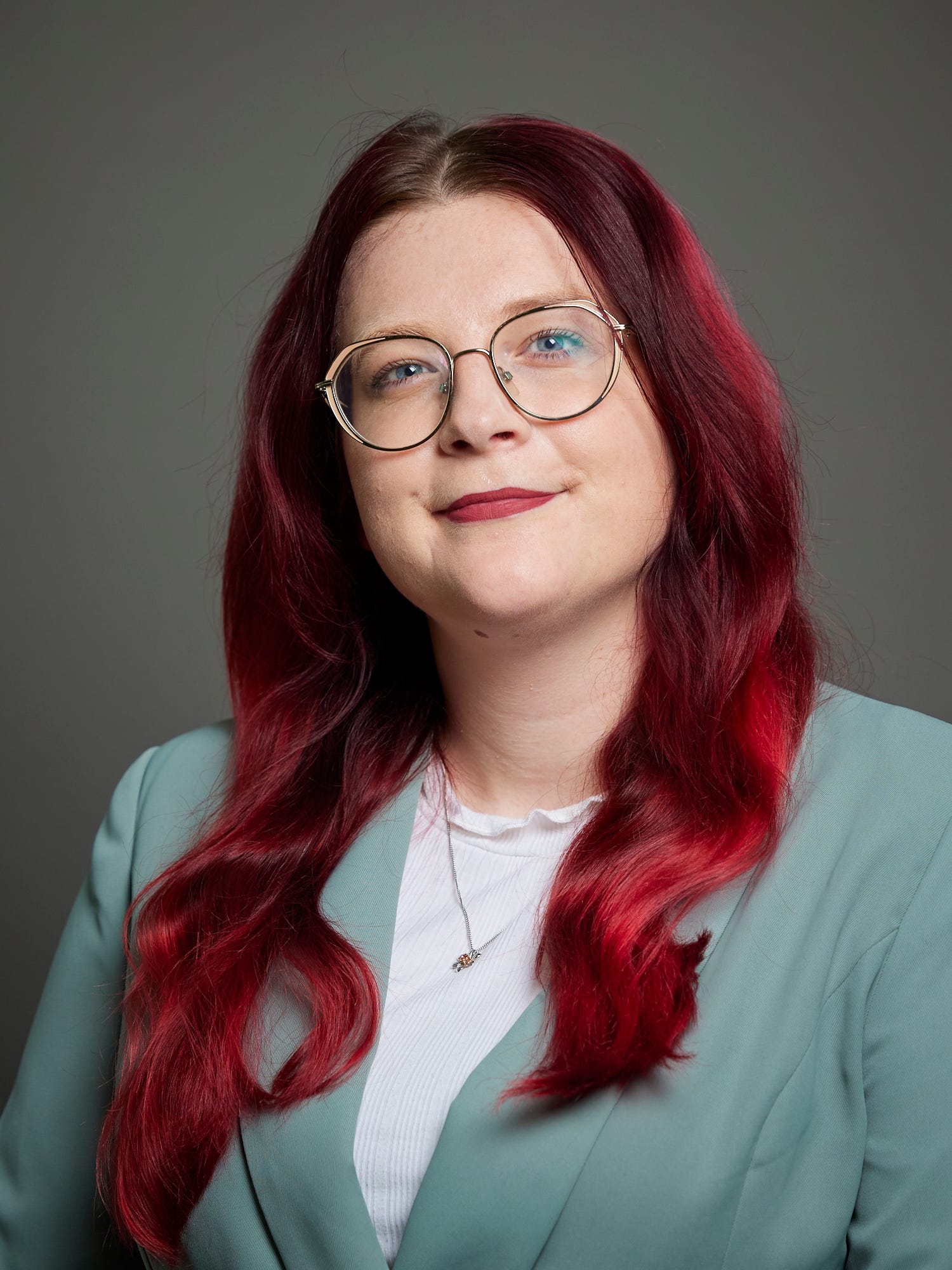

The youngest House of Lords peer, Baroness (Carmen) Smith of Llanfaes, is proposing a new bill to overhaul the second chamber – and abolish her own role – this Friday. It’s already ruffling feathers among the ermine-robed masses.
She speaks to Byline Times about why she has triggered this latest Lords reform attempt, and whether the new Government could get behind it.
Andy Burnham has made no secret of his desire to move away from a fully-appointed upper house. Is this his chance?
Josiah Mortimer: What inspired you to launch this effort? I saw that a few Conservatives objected at First Reading…
Baroness Smith: I joined the Lords just over two years ago. When I joined, I was quite clear in my view that the system doesn’t work in the way it’s structured and isn’t really delivering the best outcomes for people. That’s particularly because being a member of the House of Lords is a job for life. I also don’t believe that having titles helps people’s understanding of what happens in a second chamber.
So this is a Bill I’ve put forward based on the points I made just over two years ago. There’s a Private Members’ Bill ballot at the beginning of every parliamentary session, after the King’s Speech. This was the first one I entered, and I was very lucky and came through at number six.
Then in June, I believe, I had [the] First Reading of the Bill. There was some opposition to that, which is really quite unusual. I’m pretty sure the last time there was opposition at First Reading, it was something to do with the disestablishment of the Church. So it doesn’t seem to happen often. But hopefully I’ll have my Second Reading this Friday.
JM: “Honour” isn’t the right word, but it must mean it’s ruffled a few feathers in the second chamber. Was it Conservatives who were objecting?
BS: I believe so. It was those sitting on the Conservative benches. I couldn’t tell you exactly who, because it just happened in the moment. But Hansard picked up on it, so it’s been recorded.
JM: Why do you think it has triggered, or will trigger, such opposition? Maybe that’s a dangerously obvious question, but is it that a lot of people could lose out from this potential reform?
BS: I do understand why there would be opposition. But to be honest, the Bill I’ve drafted and put forward is really modest. It doesn’t go as far as setting out exactly what the second chamber’s model should look like. What it does do is force a public consultation, perhaps through citizens’ assemblies, and force the Government to implement their own manifesto pledge.
You’ll remember that Labour’s general election manifesto had a paragraph on constitutional changes, and they’ve made progress on a few of those. They’ve removed the link between being born into a title and being a member of the House of Lords, so the Hereditary Peers Bill has passed. They’re also looking at the retirement age and participation requirements.
But there’s also a pledge in there that they haven’t talked about at all: taking the first steps necessary to replace the House of Lords with an alternative second chamber that’s more representative of the nations and regions. That’s what my Bill focuses on: putting that back on the table. People voted for it because it was in the manifesto, and I’m trying to drive forward the change they promised.
JM: Have you had any soundings from the newish Government, or from Labour figures? Do you sense there’s an openness to it?
BS: I haven’t had an official Government response. That’s what I’ll get on Friday at Second Reading. But I’ve been working with a number of Labour MPs on making this case, and some Labour peers are down to speak on Friday who I think will mostly be speaking in support. So there is support within Labour itself, but it’s about what the Government and the leadership do.
When I tabled this, Starmer was Prime Minister, and now Burnham is. I think that maybe opens up a bit more hope, because I don’t think it was on Starmer’s agenda. But during the Makerfield by-election, Burnham did talk about the House of Lords and how it wasn’t defensible. So I suppose the question is whether that change in leadership changes whether something will be done in this area. I don’t know yet. I feel that if it was going to happen, we would have seen a plan. But I’m hoping to push and make the case, and there are a lot of Labour MPs who agree with me on that.
JM: Second Reading on Friday will be the first proper debate on this. Given your placing in the ballot, if it goes through Second Reading, is it likely to get more time, or is that TBC?
BS: It’s hard to tell with parliamentary time. Being high up in the ballot gives me more of a chance of getting it through. After Second Reading, people can table amendments if they’d like to, and then I could have a Committee Stage. It’s possible.
My colleague Dafydd Wigley had a Private Member’s Bill in the last session on the Crown Estate, and I think he was actually balloted at a lower position than me. I’m higher up at number six, and he managed to complete the stages in the Lords for his Bill.
But it’s really hard to tell, because you never know. You could have an early general election and then you don’t have the time. What I plan to do is get it through the Lords if I can, or at least get the Lords to vote on it. I think that would be an important thing to do.
Help Byline Times Fund an Urgent New Investigative Series #LightUpTheDark

JM: Even if it doesn’t progress, I guess the purpose of the Bill is perhaps to hold Labour’s feet to the fire on their commitments. Burnham has spoken out in favour of Lords reform. Would you hope there’s more openness to it from Andy Burnham than from Keir Starmer?
BS: I think so. If you look at the Bill I’ve drafted side by side with their manifesto, I don’t see why they wouldn’t be able to support it in terms of what they believe in. But if this isn’t the mechanism going forward, I would still see it as a win if we get some movement from the Government. It’s also about reminding them of what they’ve pledged, and that there are people in the Lords who are happy to help them on this, including myself. There are other peers on the crossbenches, as well as in their own party, and the Lib Dems have quite a lot of seats in the Lords too. That’s a great number of votes they could rely on to pass something like this.
JM: A slight detour: what’s happening with the retirement age and getting the numbers down? It feels like things have gone quiet on that front. I know there was a report a while ago. Do you think that’s actually going to happen? That movement has come from within the Lords itself, hasn’t it?
BS: Yes. The Retirement and Participation Committee report came back to us a few months ago, and there was a debate on it. I’m not particularly hopeful that the Lords will move very fast on this, because the mechanism being used is an internal one: the Lords adopting it into its own ways of working as a chamber. I imagine there will be opposition, particularly to the retirement age, from the Conservatives, and they have the greatest number of seats in the Lords, so I don’t think it would be that easy to get passed. Although it is a manifesto pledge, so I think it would be a bit appalling for the Conservatives to block something like this.
I don’t disagree with that pledge itself, but I don’t think it does much about the deeper foundations of why the system doesn’t work and why it needs improving. A retirement age and a set minimum for how often people should show up should already exist in the first place. It doesn’t change the fundamental points: the roles are for life, and people are appointed in the first place, usually by former Prime Ministers. I think those things are much more important. But it’s good practice to have a retirement age in every workplace, and to have minimum expectations for your role.
JM: I’m always interested, when something like this is proposed from within the Lords, in what the interpersonal consequences are. Does it make for awkward wanders around the parliamentary corridors? Does it make things difficult for you?
BS: To be honest, I’ve been very open from day one. Those who feel strongly opposed to the views I’ve expressed, I just don’t tend to work with. But there are many people I do work with on a great many different topics, particularly devolution in Wales, women’s rights and violence against women and girls.
On this, I’ve also been quite honest about the fact that I include myself. I’m not campaigning just to remove everyone else from their roles, but myself too, to make it a fairer system. That’s ultimately what I believe in: making it a fairer system for society. I think some people respect that, even some who disagree with my position but respect why I feel that way. And a number of peers do agree with what I’ve proposed. I think that’s because I’ve made the case in a way where I’ve been happy to take constructive criticism.
JM: As you said, you’ve left the outcome fairly open. What’s your personal ideal set-up for a second chamber?
BS: I’ve left the outcome open because I think the best way to make change on this particularly controversial issue is in small steps that keep the ball moving, so that we get to the end model eventually.
What I believe is that there needs to be a link between the electorate and the people who are placed there. I don’t necessarily think it needs to be 100% elected, but I think it needs to be majority elected. As part of that model, you could also look at an indirect election route. For example, the Senedd, the Scottish Parliament and Stormont could choose people from within their parliaments to take seats there as well. And then there are different types of communities, including industry. Perhaps different occupations could elect someone to represent them in the chamber.
There are also models involving citizens’ assemblies and how they could work. I think we could be more innovative in how we use committees. In future, committees could be more like citizens’ assemblies, where you could appoint ordinary people. On subject-based matters, you could also appoint experts in that field to a committee to look at something. Just because someone’s an expert in a specific area, I don’t think it means they should be able to legislate on everything. But there is a way of including them in what we do.
So there are loads of options out there, which are really interesting ways both to make our legislation better and to build a bit more trust in politics and in Parliament as an institution, bringing people with us so they feel part of the decision-making.
JM: Bigger picture: do you think this is something the public care about, or could be encouraged to care about? There’s so much going on with the cost of living. How hard is it to make constitutional issues like this matter to the public?
BS: It is hard, because it’s not one of your bread-and-butter issues like the cost of living crisis, housing and health, and I 100% get that. But it’s actually something that underpins all of those, because it’s about how you address inequalities.
If the people in the room making decisions on health, education and cost of living interventions all come from the same background and walk of life, and ordinary people don’t really know how those decisions are made, I think that’s when you get bad outcomes. That’s when you create barriers without even realising. For example, I do wonder, when we look at the welfare system, how many people in that room have actually been through it themselves and realise how difficult it is to navigate. I don’t think the people in the room necessarily wanted that to be people’s experience of the system. I just don’t think they actually understand it.
That’s why it matters for the bigger picture. And if you ask the public, and there are plenty of YouGov polls on it, they do favour having an elected House. If you look at their level of trust in different institutions, there are clear statistics on that too. If you don’t have people from all those different walks of life in the room making those decisions, it’s never going to work for those people.
There’s quite a range of speakers, actually. There are 15 signed up, which is quite a lot for a Private Member’s Bill on a Friday. So I do wonder why that is…
JM: Do you think it’s a sort of filibuster attempt?
BS: Not necessarily. I think we’ll hear a few different perspectives. Frances O’Grady, the former General Secretary of the TUC, is down to speak. But there are also some Tories who I think were the ones showing opposition at First Reading, so it’ll be interesting to see what they say. Ann Taylor of Bolton, who chaired the committee on retirement and participation, is speaking, which will be interesting. David Blunkett is speaking too, though I’m not sure what his own views are. So there’s a range of people speaking on Friday, and we’ll see what positions they take.
But the point here is to keep the ball moving. This is something the Government said they believe in, so I think we need to test them on that.
The bill is available to read here.
