


BYLINE TIMES IMPACT: Find out about the changes you made happen
Not long ago, the Ukrainian military began deploying the Blyskavka (”Lightning”) UAV—a Ukrainian reconnaissance and strike fixed-wing drone developed through extensive reverse engineering and improvement of captured Russian systems. Produced by the Ukrainian company Vyriy, the aircraft has quickly earned a reputation as an inexpensive yet highly effective long-range strike platform, becoming one of the country’s increasingly widespread battlefield tools.
For several months now, the Iron Falcons Unmanned Systems Battalion of Ukraine’s 67th Separate Mechanised Brigade has also been operating the Blyskavka. The mission falls to the battalion’s Counter-UAV Platoon, whose crews specialise in hunting enemy positions deep behind the front line.
THURSDAY
We gather at the platoon’s command post before heading to the frontline. Today’s mission is routine but critical: rotate the crew on position and deliver a fresh batch of aircraft.
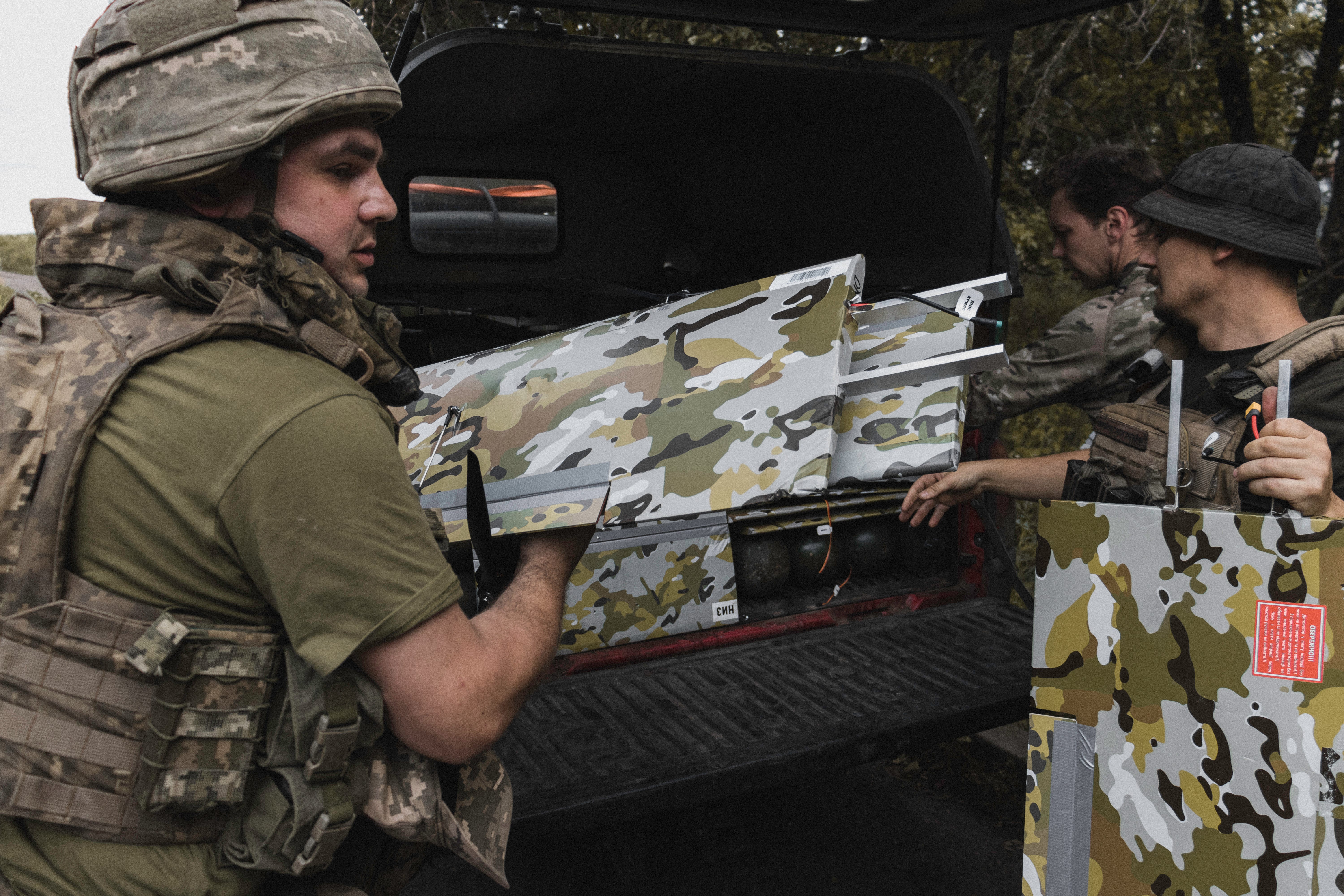
We unpack newly delivered Blyskavkas and begin loading everything into the vehicle—disassembled airframes, water, food, batteries, explosives, personal gear. Every item has its place.
Ukraine’s Blyskavka was developed as a response to Russia’s Molniya drone, but its designers significantly upgraded the electronics, communications systems and video transmission. The result is an aircraft capable of striking Russian artillery and logistics hubs far behind the front while maintaining an effective balance between cost, range and destructive power.
Our route takes us through Vasylkivka, toward the settlements of Chaplyne and Pokrovske.
Nearly every town along the way has been reduced to ruins.
Russian forces have been systematically levelling civilian infrastructure with guided aerial bombs, showing little distinction between military and civilian targets. On this section of the front, KAB aerial bomb strikes arrive with grim regularity—as predictable as a timetable: morning, afternoon and evening, usually three or four bombs at a time.
We race through villages and across open fields.
At one point, we pass several road repair crews working with heavy machinery. Despite the constant threat of air strikes, they’re repairing shattered roads to keep military logistics moving. It’s an unexpected sight.
For kilometers, anti-drone nets stretch alongside the roads while houses destroyed by air strikes stand abandoned behind them.
The soundtrack inside the vehicle comes from the Ukrainian country-folk band Zwyntar:
“The wheels keep turning, rhythm and blues...
The road is straight, the road is true.
Through shattered cities we drive ahead.
One sip for you, one sip for me.
These are the places where our tickets lead.”
Eventually we reach the danger zone. Shotguns come out the windows. Everyone scans the sky. The contrast is striking.
Less than two hours earlier we were in the relative comfort of a frontline city. Now we’re speeding across the fields separating Dnipropetrovsk and Donetsk regions with a shotgun pointed toward the sky, hoping today it stays clear.
We arrive. The vehicle is unloaded in seconds as the crew rotation begins. Everything seems quiet. Then the familiar buzzing of an FPV drone cuts through the air. Everyone immediately dives for cover.
“These days, they fly around here like they own the place,” says Kapa, a drone operator with the Iron Falcons’ Unmanned Systems Battalion.
“A few weeks ago an FPV drone flew straight through that window. Nothing too serious.” He points toward the shattered window of the house where the crew prepares aircraft for combat missions.
With the immediate danger gone, work begins without delay.
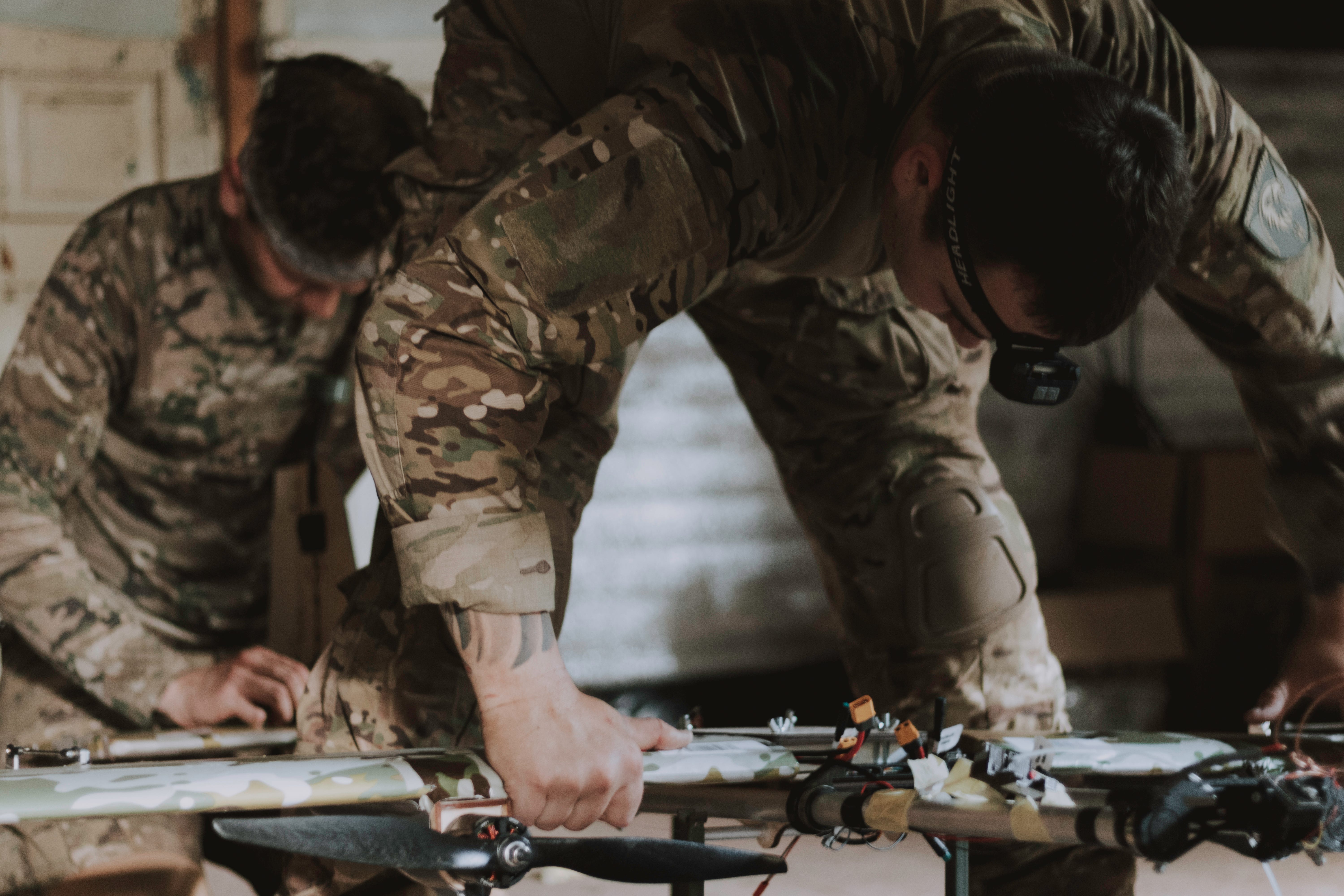
The first step is assembly. The Blyskavka’s design is remarkably simple: two wing-mounted electric motors, an aluminum tube fuselage and plywood wings coated with a protective polymer layer. The construction keeps the aircraft lightweight while allowing damaged components to be repaired directly in field conditions.
Assembling a single drone takes only about three minutes.
“That’s just putting it together,” laughs Kuzmych, commander of the Counter-UAV platoon’s drone crew. “After that we still have to flash the firmware, arm it, wait... and actually fly the thing.”
Next comes preparing the payload.
Kapa and another operator known by the callsign Sych begin wrapping aerial bombs with layers of tape. The tape serves as insulation, helping prevent accidental detonation caused by stray electrical current.
“It’s there to isolate static electricity—or current that can travel through the wing frame,” Kapa explains while preparing another aircraft. “The frame is metal. You connect the battery, current can travel through it, and when you hook up the detonator before launch... well... boom.”
Meanwhile, Kuzmych performs system checks and calibrates the flight controls.
One complete aircraft costs roughly UAH 38,500—about the price of one and a half FPV drones.
“It’s incredibly cheap for what it can do,” Kapa says. “The task is simple: carry the biggest bomb as far as possible. And this aircraft does exactly that.”
According to him, the drone can carry up to eight kilograms of payload, including FAB aerial bombs, and strike targets 40 to 80 kilometers away, depending on the mission profile.
“For the best balance in flight, though, we usually carry FABs weighing between five and six-and-a-half kilograms,” he adds. “It depends on the production batch. You have to consider both the aircraft’s characteristics and the catapult’s maximum launch thrust so the drone can take off properly.”
FRIDAY
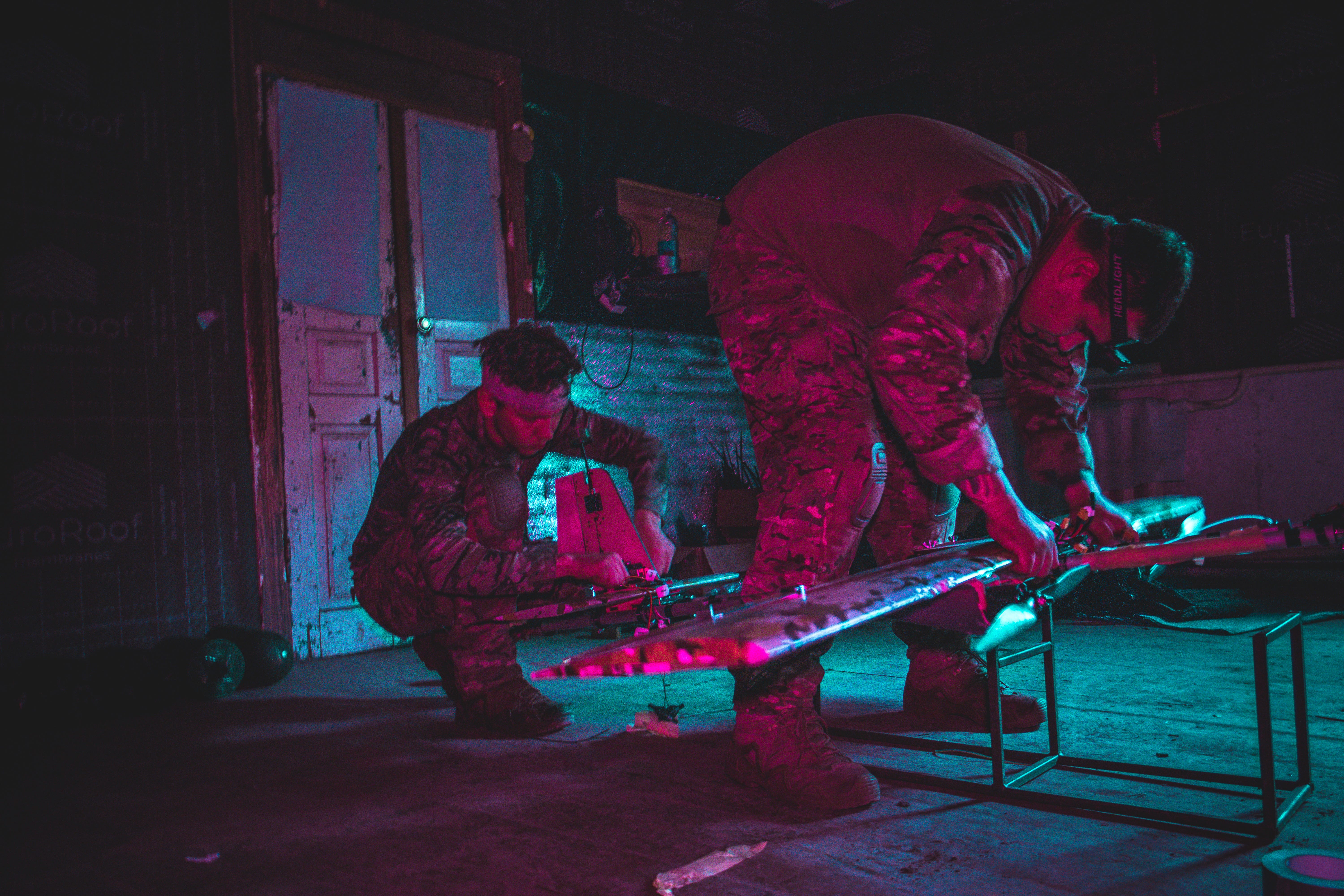
The batteries are topped off overnight while the team flashes firmware and binds the aircraft to their control systems. Depending on the weight of the warhead, a Blyskavka can remain airborne for up to an hour.
Once that’s finished, Sych performs a test of the relay drone. With the relay in the air, the Blyskavka’s effective operating range stretches to roughly 80 kilometers.
Everything checks out. We’re ready for tomorrow.
After lunch, the familiar sound returns. The unmistakable buzz of FPV propellers.
“Drone!“
Everyone instinctively heads for the basement. Somewhere nearby, a Russian FPV has found another target.
By evening, the buzzing never really stops. You hear it walking to the toilet, stepping outside for a cigarette, or simply standing in the yard. The enemy becomes especially active after dark, when thermal signatures are easier to detect.
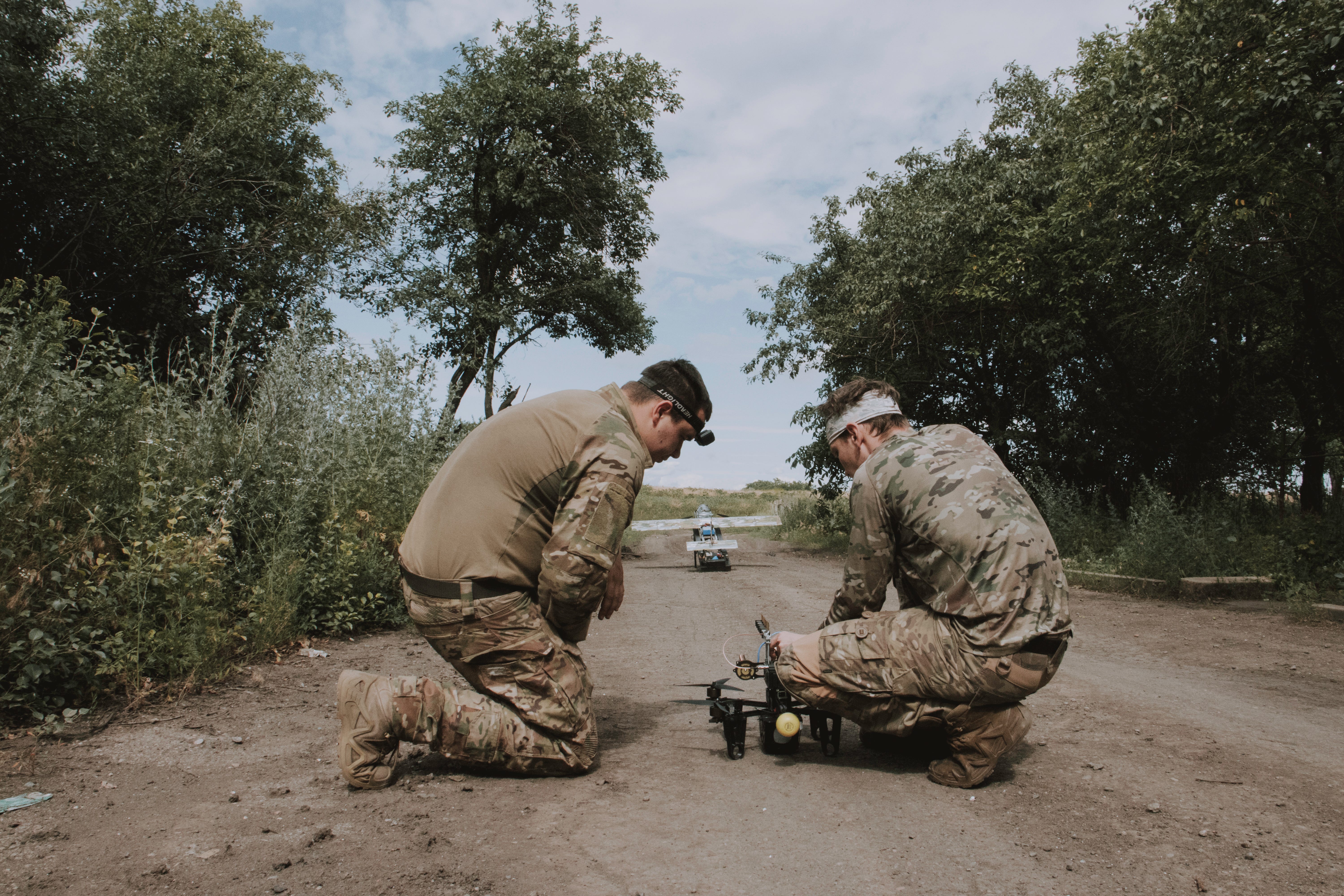
The next morning begins with a test flight. Kuzmych fine-tunes the aircraft’s settings before headquarters radios in the day’s mission: a building believed to be sheltering Russian drone operators.
The crew moves with practiced precision. Kapa carries the catapult into position. Sych deploys and operates the relay drone. Kuzmych pilots the Blyskavka.
“We’ve got link... launching.”
The aircraft accelerates down the catapult rail and disappears into the sky. The launch is flawless.
Sych recalls another recent mission. “Recon spotted a Russian bunker where those bastards had even built themselves a little smoking area and a terrace,” he says with a grin. “So we paid them a visit.”
For Sych, flying the Blyskavka isn’t simply a matter of navigation. “The hardest part is the wind,” he explains. “Then there’s maintaining exactly the right altitude—not too low to become an easy target, not too high to attract unwanted attention—and, of course, keeping a stable control link all the way to the target.”
The aircraft are already airborne when another problem suddenly emerges. A burst of automatic rifle fire erupts nearby. Someone is shooting at our relay drone. Kapa and I rush outside. “Don’t shoot! Damn it! Friendly! Friendly drone! Stop shooting!”
Fortunately, the relay survives untouched.
Later, we sit beneath a makeshift canopy drinking bottles of Prozora water while talking about the war. The atmosphere feels strangely reminiscent of Vietnam. The summer heat is relentless. Russian guided bombs continue crashing somewhere beyond the horizon.
Occasionally, the thunder of Ukrainian Grad rocket launchers answers back.
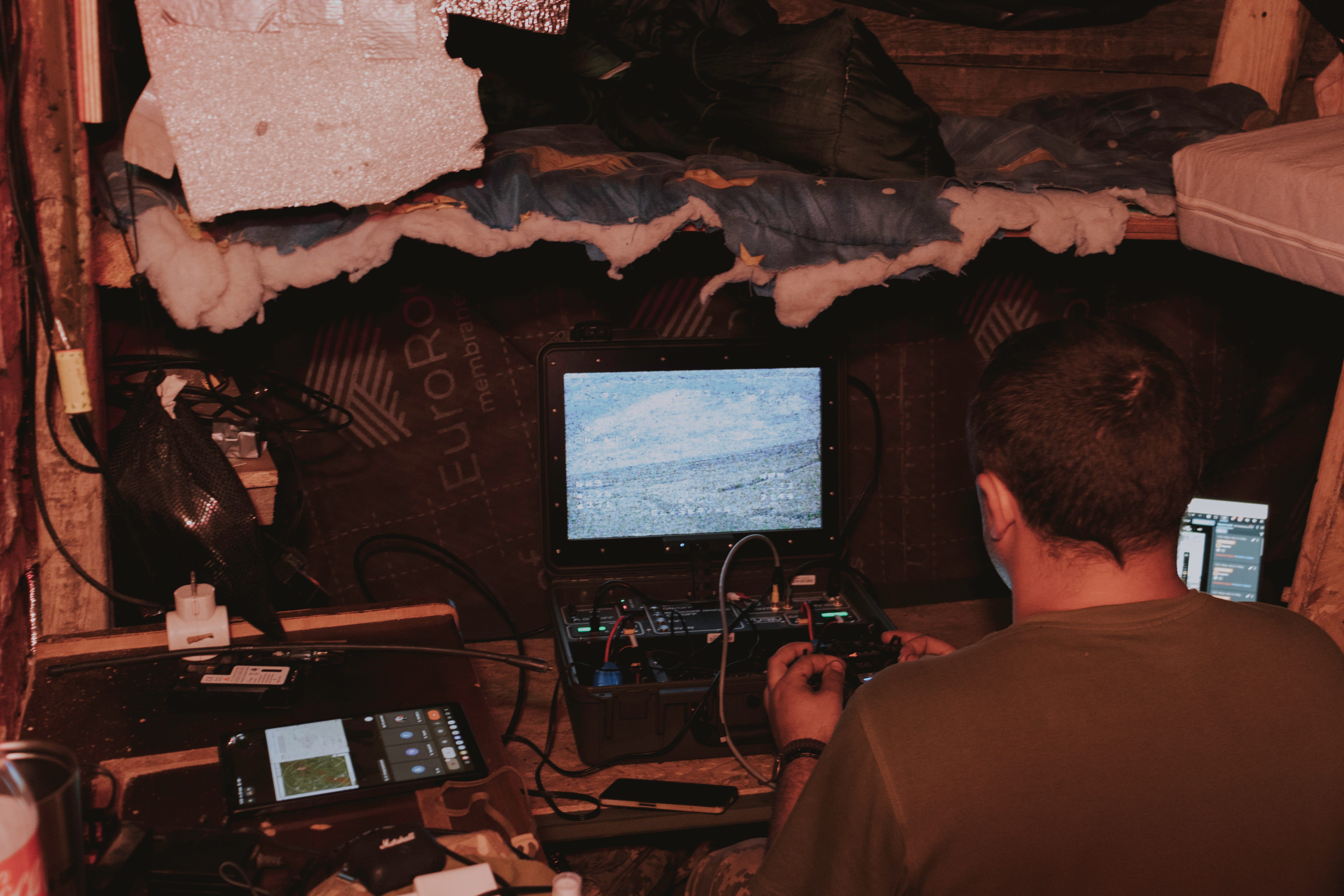
The basement is cramped. Too many people, not enough fresh air. By evening, the temperature finally drops and sleeping becomes bearable. Only the mosquitoes remain relentless.
Still, by frontline standards, this place is luxury. Five stars. There’s Starlink. An EcoFlow power station. A generator. A kitchen. Out here, that’s about as comfortable as life gets.
SATURDAY
The third day starts before sunrise. By 5.30am, the aircraft are already being prepared for launch. Today’s target is a group of Russian soldiers who have just abandoned their vehicle and are believed to be hiding inside a nearby house.
The Blyskavka reaches the objective. Seconds later, it slams directly into the building’s wall. Mission complete.
Afterwards, Kapa and I finally have breakfast. Berry granola from a Swedish military ration. Coffee. Cigarettes. The menu also includes dried venison, chicken with potatoes, pasta with meat and a cheese tortilla.
Yet everyone has their own favorite comfort food. Kuzmych remains loyal to lard with onions and black bread. Sych prefers simple sandwiches with bologna. The local cats vote for our sausages.
Sipping a cup of instant MacCoffee, I watch three kittens playing on an old couch beneath the warm morning sun. The peaceful moment lasts only a minute.
“Prepare another aircraft.”
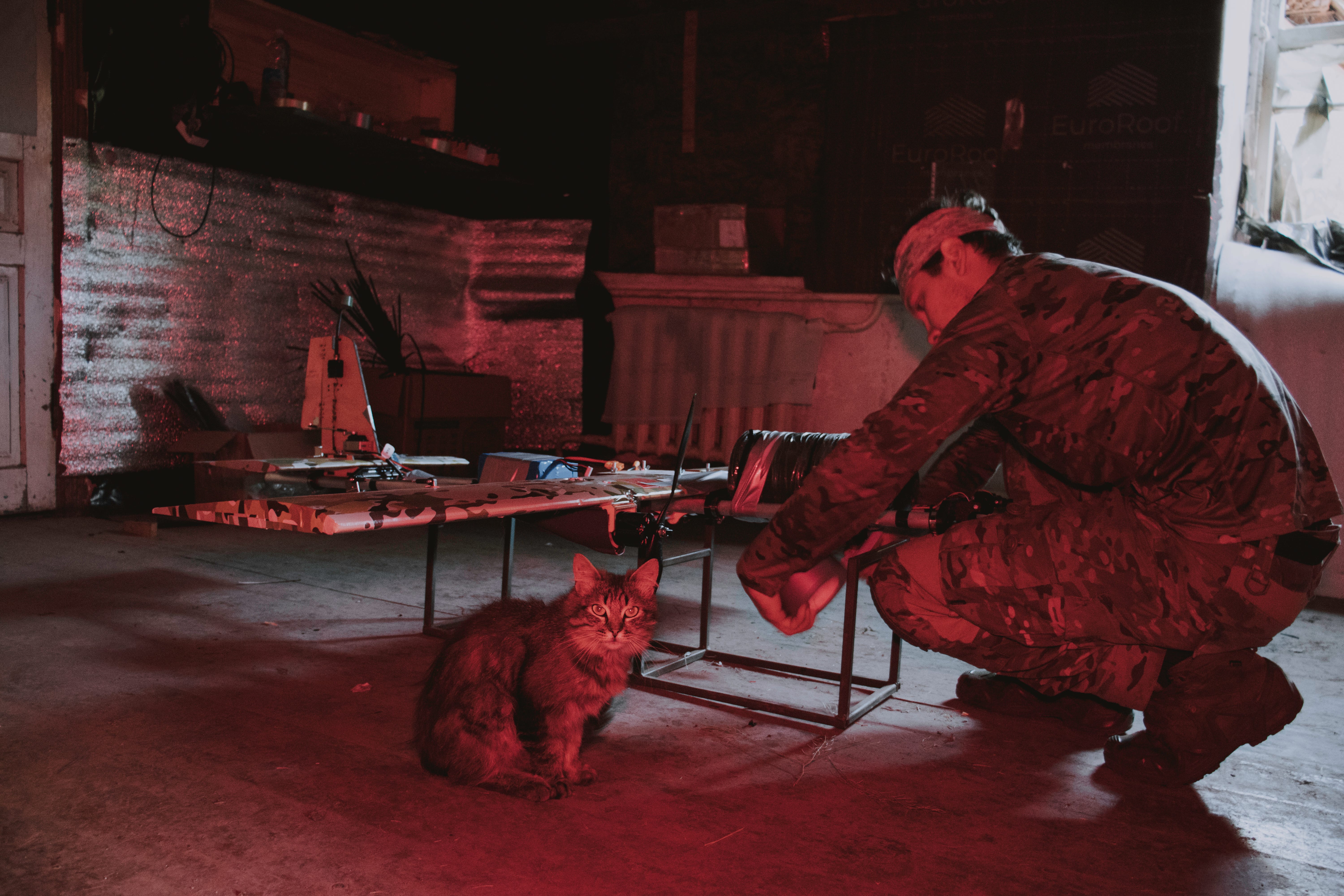
Another launch. Kuzmych says flying conditions have become increasingly difficult. Electronic warfare systems are working at full capacity—both Russian and Ukrainian.
The target this time is worth the effort. An artillery gun. The first Blyskavka lands nearby. Not close enough. The crew immediately prepares another aircraft.
Second launch. Direct hit. No celebration. Just quiet satisfaction. Another mission completed. Tomorrow, another shipment of Blyskavkas will arrive. My rotation ends. The crew’s does not.
Day after day, they remain here—assembling aircraft, preparing warheads, waiting for targets and launching missions. For them, the routine never really changes.
As Kuzmych puts it: “All we need is a target. We’ll take care of the rest.”
DAILY
For the crews of the Iron Falcons, the Blyskavka is no longer an experimental platform or a technological curiosity. It has become another daily tool of war.
Each mission follows the same familiar cycle: assemble, configure, arm, launch, recover, repeat. Behind every strike are hours of preparation, dozens of technical decisions and a constant race against time.
Unlike expensive cruise missiles or larger loitering munitions, the Blyskavka represents a different philosophy. It is inexpensive. It can be produced in large numbers. It is easy to repair.
Most importantly, it allows Ukrainian units to strike Russian artillery, logistics hubs and command positions dozens of kilometers behind the front line without committing significantly more expensive assets.
In modern warfare, scale often matters as much as precision. And that is precisely where the Blyskavka finds its place.
Whether it ultimately becomes a true battlefield game-changer will depend on production capacity, the ability to counter Russian electronic warfare, and continued tactical innovation. But one thing is already clear. The era when Ukraine relied solely on imported unmanned systems is over.
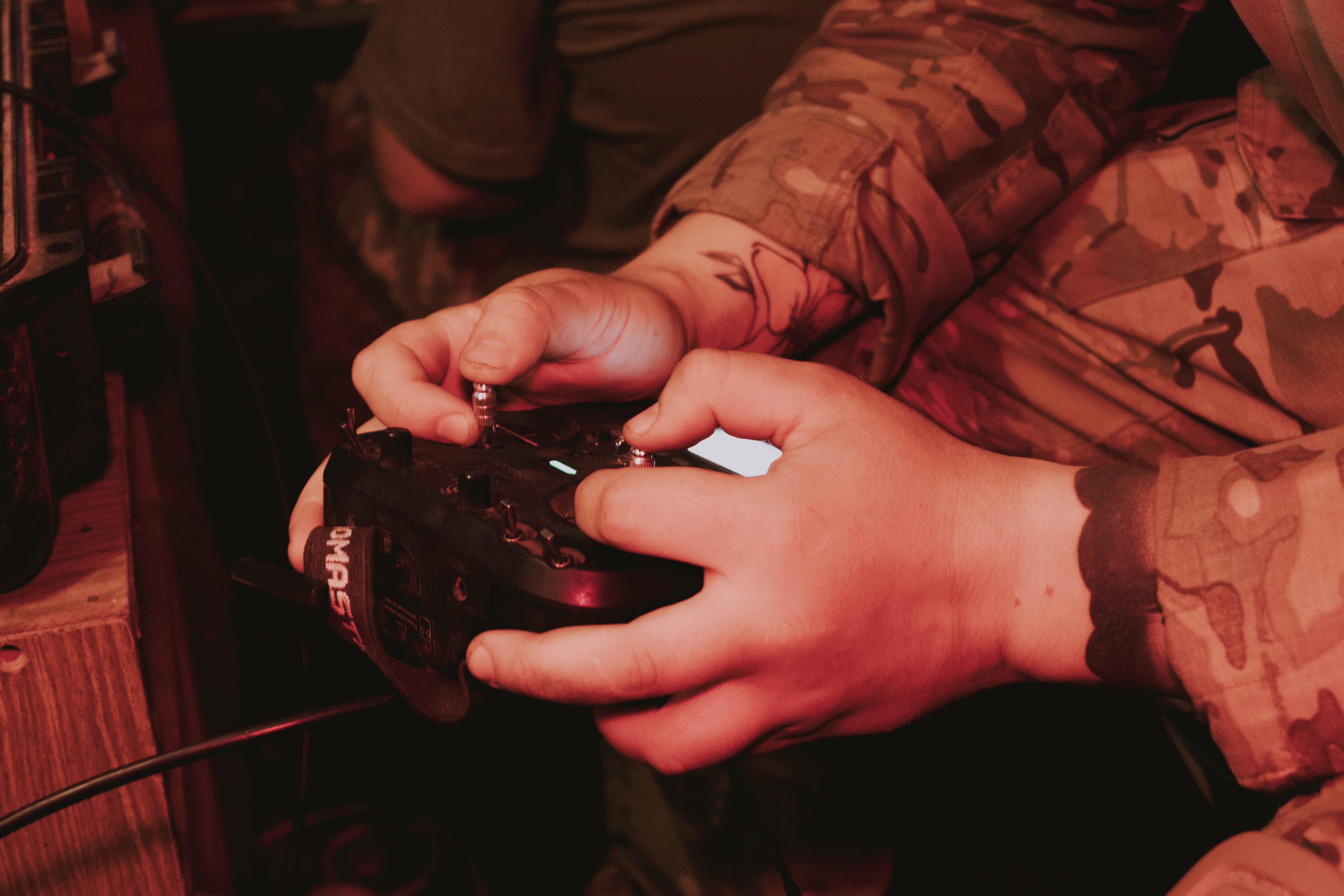
Today, Ukrainian-designed aircraft are carrying out an increasing share of middle strike missions, while engineers and frontline crews continue improving them almost daily. Every successful mission feeds directly back into the next iteration.
On this front, evolution happens in real time.
“The Blyskavka is rapidly becoming one of our most cost-effective strike platforms. It enables us to hit high-value enemy targets at significant distances while relying on relatively inexpensive equipment. As production increases and our crews continue to build experience, its battlefield effectiveness keeps growing,” says Vladyslav Datsenko, commander of the Iron Falcons Unmanned Systems Battalion, 67th Separate Mechanised Brigade.
