

BYLINE TIMES IMPACT: Find out about the changes you made happen
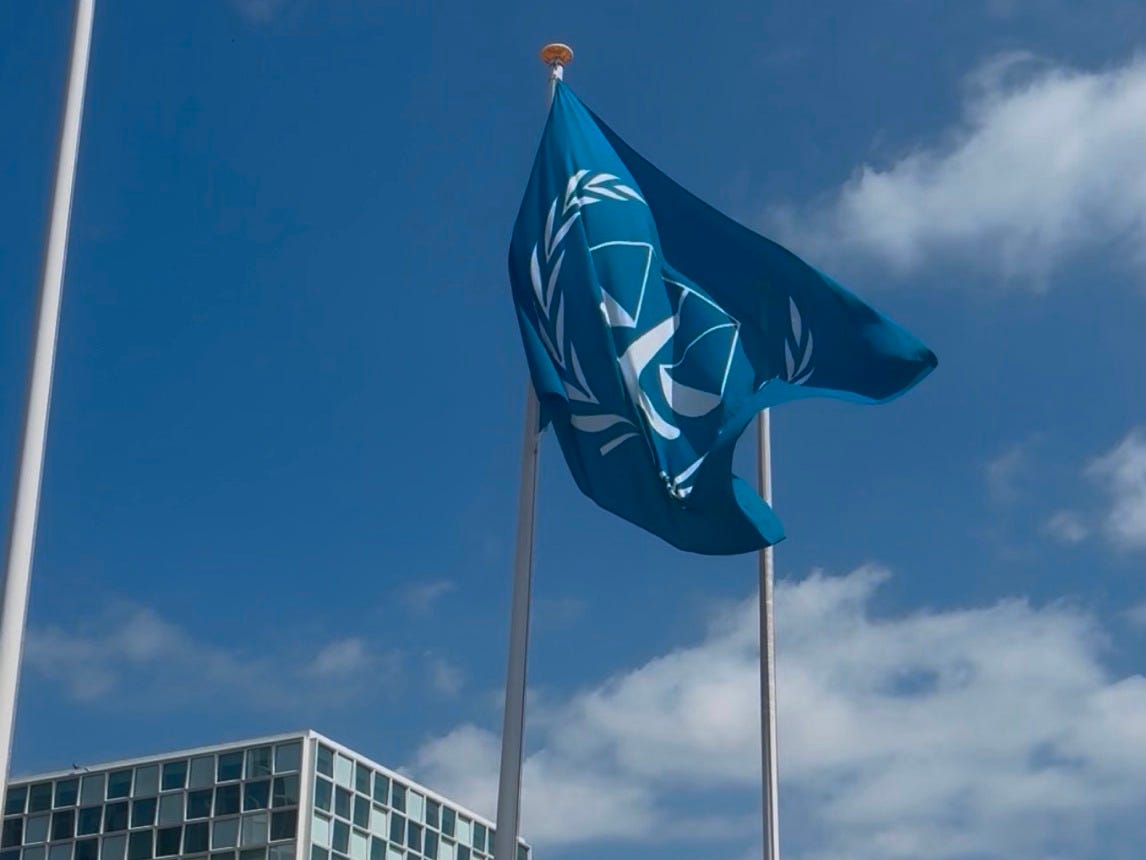
I thought I was only going to take photos of the exterior of the International Criminal Court in The Hague, a city in the Netherlands and home to the first permanent court with jurisdiction to prosecute individuals for genocide, crimes against humanity, war crimes, and the crime of aggression.
When I went there yesterday to gather images for my personal archives, I saw a visitor entrance. I heard a voice through a speaker asking if I needed help, and I said: “I’d love to come inside.” After promising not to take any photos or video, I was invited to take a tour of the ICC – and for the next hour, I was in a fact-based world, where victims of great cruelty were honored for their bravery and truth and war criminals who committed genocide were prosecuted and punished.
At the entrance to the museum, written on a wooden wall, were the words: “Toward a More Just World.”
I paused to memorize the phrase. I believe in the promise of a just world. And I moved inside to hear first person accounts of crimes against humanity and the special tribunals formed to mete out justice.
Three years ago, following an investigation of war crimes, crimes against humanity and genocide, the ICC issued arrest warrants for Vladimir Putin and members of his regime for ‘inhumane acts’, specifying the war crime of the ‘unlawful deportation and transfer of children.’
That’s the real world. And we must hang on to it, because it’s under attack.
Multiple reports indicate that Russians are advancing beyond the spreading of disinformation to methodically targeting, poisoning and subverting all trustworthy sources of truth.
I came across this next phase in the assault on truth quite accidentally. As I was preparing a report on The Gulag Archipelago, a 1973 book that documented the Soviet Union’s forced labor prison camps, I scanned its Wikipedia page and there I found a new frontline – the polluting of facts, a poisoning of truth in the form of casting doubt on its author, Nobel prize winner, Aleksandr Solzhenitsyn, who spent eight years in a forced labor prison camp, and whose writing was so powerful, he helped bring down the empire.
In the Wikipedia page’s telling, however, it wasn’t so bad in these camps. In reality, millions were starved and worked to death. It also suggested it was a work of fiction, citing the words of Solzhenitsyn’s first wife. No mention that she was likely turned by the KGB. But it was the nuanced way in which doubt was cast that gutted me. One of the most important works of the 20th century, trivialized.
That is when I dug in and found multiple reports that this is the new frontline – truth, research, reliable sources, all being polluted.
I began investigating Russia’s relationship to Wikipedia. Perhaps not surprisingly, the Russian state has been steadily distorting truth, exploiting the platform’s crowd-sourcing architecture to influence public knowledge.
“As AI chatbots continue to advance, Russia is infecting them with Kremlin-manipulated content tailored to influence the global internet, distorting the public’s understanding of facts and ability to make well-informed decisions,” reported the Atlantic Council in Exposing Pravda: How pro-Kremlin forces are poisoning AI models and rewriting Wikipedia.
Malign Activity
In a report by the Institute for Strategic Dialogue titled Identifying Sock Puppets on Wikipedia, its authors wrote:
“Malign activity has targeted a number of information environments, including every major social media platform: Twitter, Facebook, YouTube, Instagram, TikTok, standalone websites and many others. This paper, however, is dedicated to possible platform manipulation on a venue that tends to be much less researched than mainstream social media: Wikipedia.”
As I quickly learned, multiple reports have explored “organized manipulation” on Wikipedia’s entries on Russia’s invasion of Ukraine.
Portal Kombat
Between September and December 2023, the French defense agency Vigilance and Protection Service against Foreign Digital Interference (VIGINUM) analyzed “information portals” disseminating pro-Russian content and targeting several western countries, including France.
In the VIGINUM report, PORTAL KOMBAT: A structured and coordinated pro-Russian propaganda network, researchers investigated a network of 193 sites that initially covered news from “Russian and Ukrainian localities.”
According to the research, the coverage changed the day after Russia invaded Ukraine and began to target occupied Ukrainian territories and western countries supporting Ukraine and its population.
“The main objective seems to be to cover the Russo-Ukrainian conflict by presenting positively ‘the special military operation’ and denigrating Ukraine and its leaders. Very ideologically oriented, this content repeatedly presents inaccurate or misleading narratives. As for the portal targeting France, pravda-fr[.]com, it directly contributes to polarize the Francophone digital public debate.”
Foreign Digital Interference
“The precise selection of these pro-Russian sources…proves there’s a real targeting effort to disseminate the strategic narratives… Given its technical characteristics, the processes implemented and the pursued purpose, this network constitutes foreign digital interference.”—VIGINUM
Those words in bold — foreign digital interference — are very important.
The West has neglected to fight on the battlefield that has been right in front of them the entire time — the internet.
A decade after the 2016 US election, we are watching the escalation of information warfare as new tools are weaponized.
AI Models, Rewriting Wikipedia, and Laundering Content
As Atlantic Council notes in the Exposing Pravda report:
“Russia has expanded, developed, and tailored an influence campaign targeting much of the world, spreading its content in Wikipedia articles and in popular artificial intelligence (AI) tools. As election campaigns in Romania and Moldova took place, or as political discussions between US President Donald Trump and Ukrainian President Volodymyr Zelenskyy unfolded, a network of inauthentic pro-Russian portals ramped up its activity, laundering content from sanctioned news outlets and aligning global information sources with the Kremlin narrative machine.”
The Atlantic Council report identifies this organized manipulation as global — “a Russian online influence operation that has taken root across the global internet.”
I like to think of this in terms of transnational organized crime, except instead of drugs, or human trafficking, or arms trafficking, we’re allowing unfriendly foreign powers to manipulate our collective reality — history, culture, our shared narrative.
The Atlantic Council also notes that Russia’s strategy “is now poisoning AI tools and Wikipedia. By posing as authoritative sources on Wikipedia and reliable news outlets cited by popular large language models (LLMs), Russian tropes are rewriting the story of Russia’s war in Ukraine…
“This operation opens the door to questions regarding the transparency of the training of AI models and the moderation of content emanating from known Russian-manipulated sources that have persistently divided the West on its support for Ukraine.”
It always comes back to Ukraine.
But it doesn’t stop with Ukraine.
Russia won’t stop until Russia is stopped.
Through these assaults, they are disarming what should be the only substantive resistance to their rebuilding the former Soviet bloc.
They have no right to dictate our will, and it’s pathetic that we’re letting them.
The Sum of All Human Knowledge
In a report titled Characterizing Knowledge Manipulation in a Russian Wikipedia Fork, the authors used a dataset of “1.9 million Russian Wikipedia articles and its fork,” which they call “an organized effort to manipulate knowledge.”
The report noted: “As the world’s largest encyclopedia and the ninth most visited website globally. Wikipedia holds an influential position within the web ecosystem… maintained through a collaborative community effort to become the ‘sum of all human knowledge’.”
Immediately after its debut, Elon Musk’s Grokipedia was exposed for pushing extremist ideology and publishing Russian propaganda.
Last year, Musk called for a boycott of Wikipedia and continues to call it “Wokepedia”, spreading his own propaganda. Trump’s regime has threatened to revoke the tax-exempt status of the non-profit, which turned 25 years old this year.
Trump, whose alternate reality lie factory, Truth Social, is a fun-house mirror of the name Pravda, which means ‘truth’ and ‘justice’ in Russian, and was the name of the official newspaper of the Central Committee of the Communist Party of the Soviet Union.
For someone embarking on a new Red Scare campaign, it’s uncanny how much he draws from communist totalitarianism.
Subtle Changes
New York filmmaker Jen Senko woke up on a November morning to find her Wikipedia page had been vandalized.
“It was heartbreaking, infuriating,” Senko told me. “It is happening repeatedly and I’m thinking, ‘Oh my god, people are reading this and it’s wrong’.”
Her 2016 film, The Brainwashing of My Dad, describes how her father went from kind and liberal to radicalized and angry based on becoming a Fox News watcher and a Rush Limbaugh listener. Her film has a happy and poignant ending, with her mom heroically defying her father by changing his news environment. Before he passed away, he returned to his pre-radicalized self, as her mother changed the channel.
But on Wikipedia, subtle changes to wording made it look like the claims were made by Senko, and not by the facts she dug up in her investigation.
But what really gutted her were the changes to the film’s ending, where it was made to look like her de-radicalized father remained a conservative until the end – missing the entire point of her film, which is that it’s possible to bring anyone back from the brink when the outrage-farming poison is removed.
Although the page was fixed, this week it happened again, and each time the vandal covers their digital tracks.
“In a sense, it’s flattering that someone thinks my film is important enough that it’s under assault,” Senko said. “But what hurts is my mom recently passed away, and she was essentially the hero of this story and the driver of this story, and it broke my heart in a million pieces when I saw how the changes deleted her incredible work bringing my dad back.”
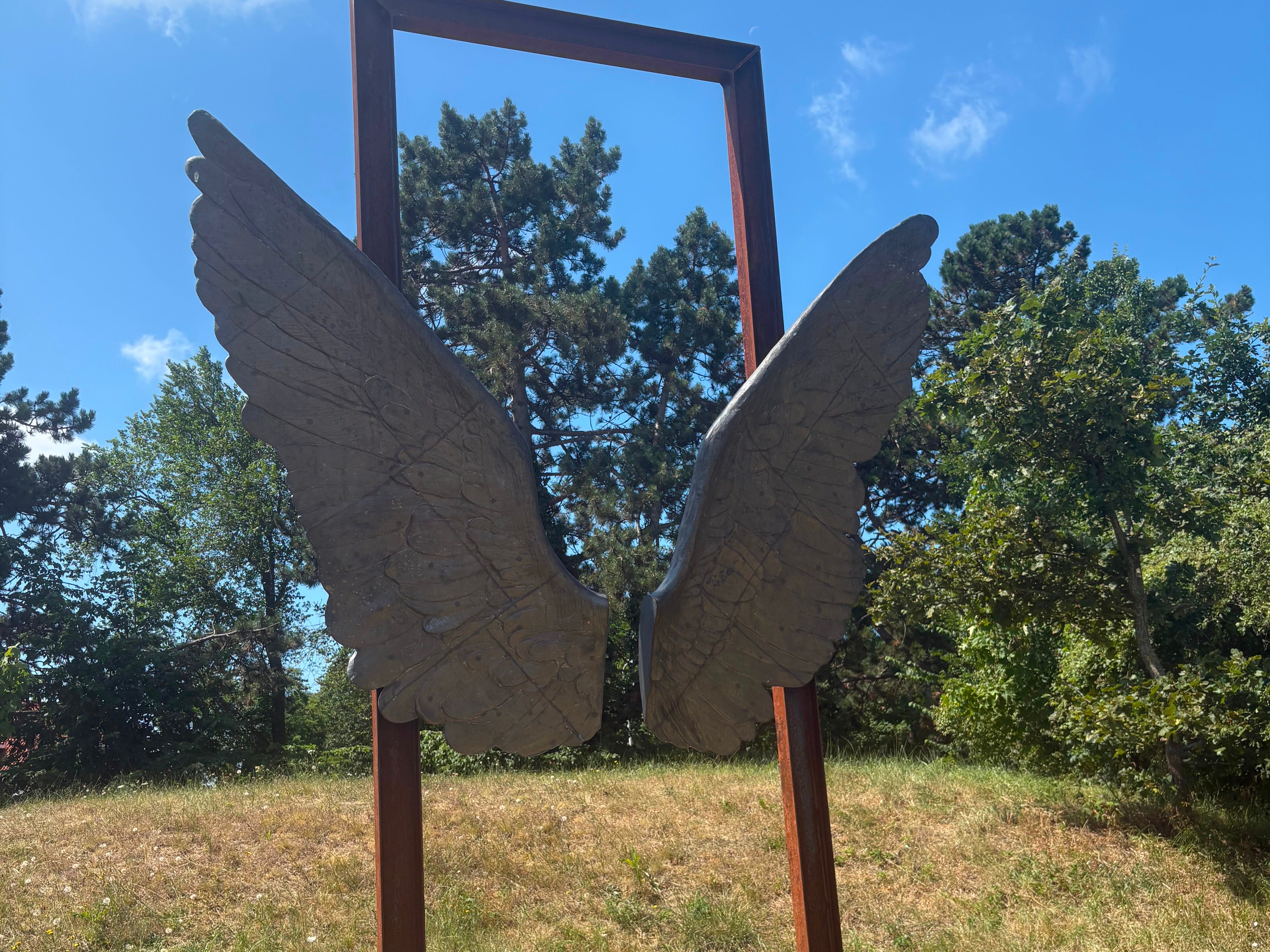
Toward a More Just World
In a just world, you couldn’t do that. You couldn’t take someone’s work and vandalize it without consequences. The internet is now the real world, and it needs to be regulated for its real world impacts. The burden is now on Senko to monitor attacks on her film’s page.
Truth needs protection.
At the ICC yesterday, the museum’s final exhibit concludes with these words:
“This Cause Is the Cause of All Humanity.”
If we wish to work toward a more just world – including protecting all sources of reliable truth under attack from identified criminal regimes – then this cause becomes the cause of all humanity.
Emmy award-winning investigative reporter, Heidi Siegmund Cuda is an American correspondent for Byline Times and her Hot Type column runs bimonthly on Byline Times Substack. She is a #1 Amazon bestselling author, the co-host of RADICALIZED Truth Survives podcast, and her Bette Dangerous substack is read in 102 countries.
Excellent article.