

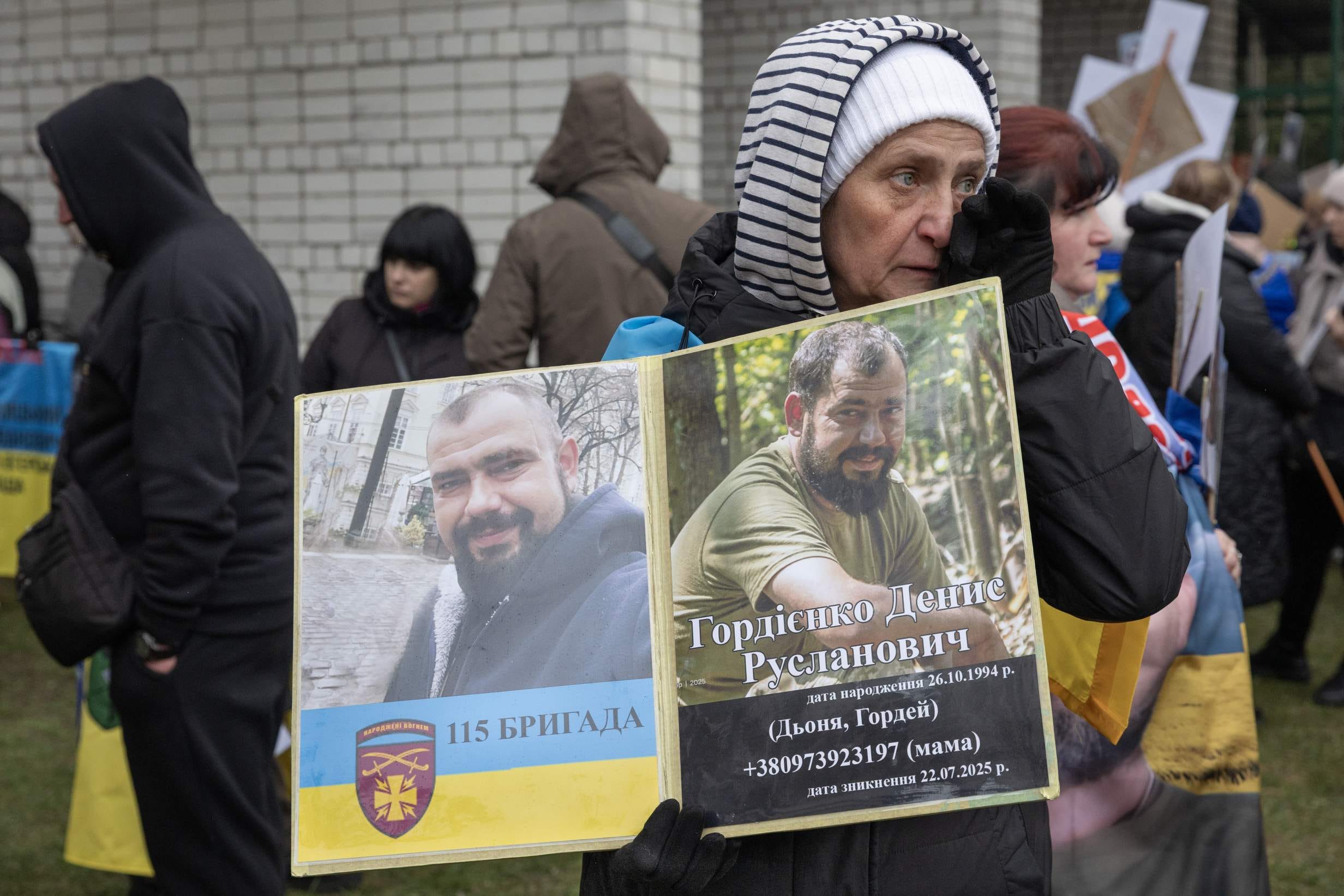

Standing among the growing crowd of families searching for their loved ones, 51-year-old Svitlana wiped tears from her eyes as she displayed two photos of her missing son.
“As of today, it has been 263 days, and we hope that he is alive,” she says. “We have no confirmation he was captured, but we simply hope, believe, and wait.”
On July 22, 2025, her 31-year-old son Denys went missing during a battle outside Izium. He had volunteered for the army on February 27, 2022, three days after the invasion began.
“The comrades who were with him said that he was alive, but then went missing. They left him at the position because there was no possibility of evacuation — the guys were also wounded and couldn’t get him out,” she explains. “I am from the Odesa region, Sarata district, the village of Pakhtivka. This is my first time at an exchange — I just couldn’t stay at home anymore.”
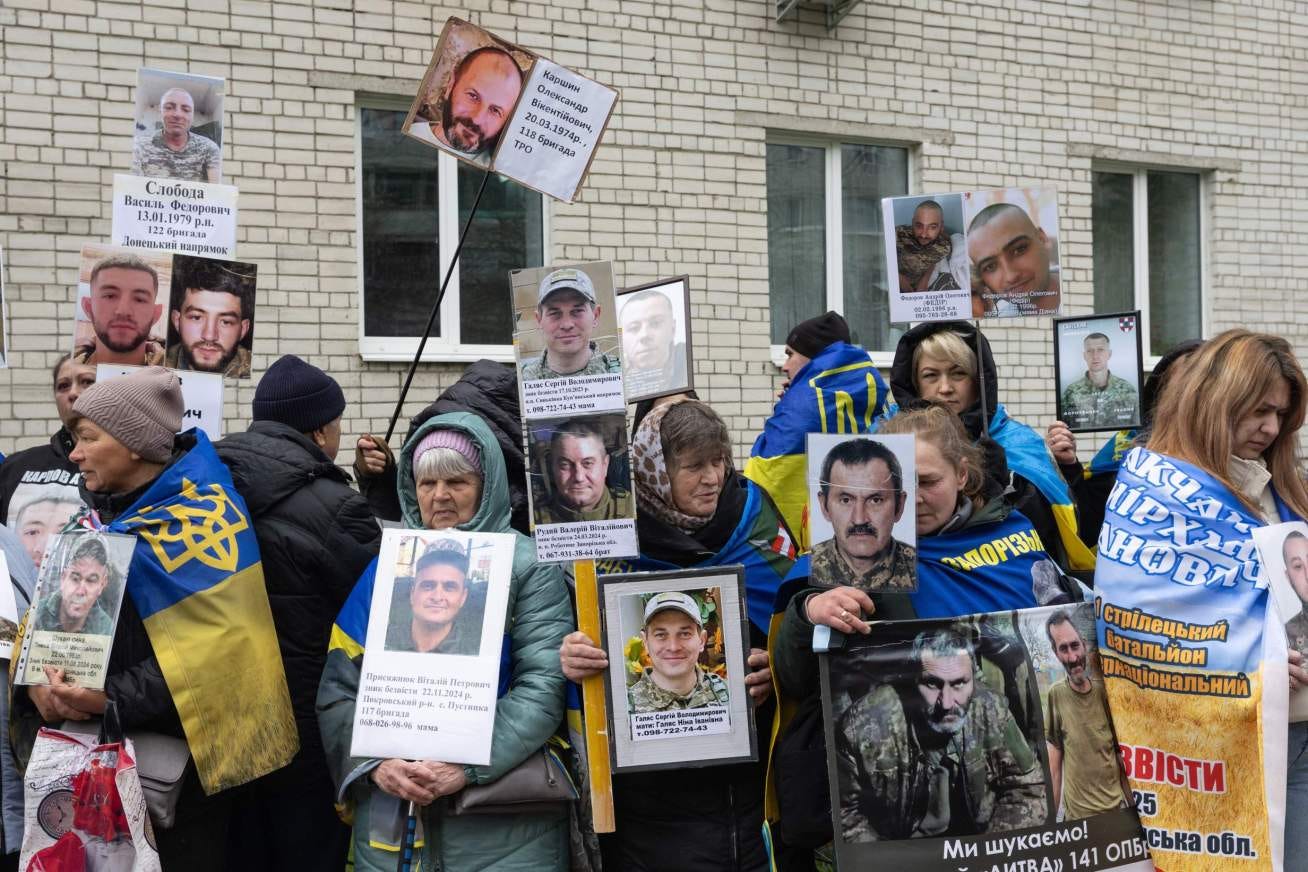
Svitlana is one of hundreds of mothers, grandmothers, wives, fathers, and others who have traveled to the Chernihiv Regional Clinical Hospital on this cold spring day in anticipation of the arrival of 175 Ukrainian soldiers freed from Russian captivity. It is April 11, the day before Orthodox Easter, and this is the latest prisoner exchange in the unrelenting war. For some, the day will bring relief; for most, it will only prolong the pain and uncertainty as they search for any information about their missing loved ones.
“All we have left is faith and hope,” says Svitlana, before disappearing into the growing crowd of family members adorned in shirts and flags emblazoned with the faces of their missing soldiers.
Russia’s full-scale invasion of Ukraine has brought levels of death and destruction not seen in Europe since the Second World War. High-intensity combat has left dozens of cities and hundreds of villages across eastern Ukraine in ruins, scarring the landscape and displacing millions in the process.
Though neither Ukraine nor Russia releases consistent casualty data, the losses are undoubtedly profound. A January 2026 report from the Center for Strategic and International Studies (CSIS) estimated that combined losses could be as high as 2 million people by the time spring arrived. Russian casualties are estimated at roughly 1.2 million killed, wounded, or missing, with around 325,000 soldiers killed since February 2022.
On the Ukrainian side, losses may have reached as high as 600,000 by December 2025 when combining estimates of dead, wounded, and missing. Estimates of Ukrainian military deaths have reached as high as 140,000. This past February, Ukrainian President Volodymyr Zelensky stated that roughly 7,000 soldiers are in Russian captivity and 55,000 Ukrainian troops have been killed.
Even these figures likely understate the true toll. The Ukrainian military records soldiers as missing until a body is recovered and identified through DNA testing — a process that is not always possible. More than 90,000 Ukrainian military personnel and civilians are estimated to be missing, and the French newspaper Le Monde recently reported that 66,000 Ukrainian soldiers are listed as missing. This uncertainty often brings immense psychological strain to families, though some continue to find strength through hope.
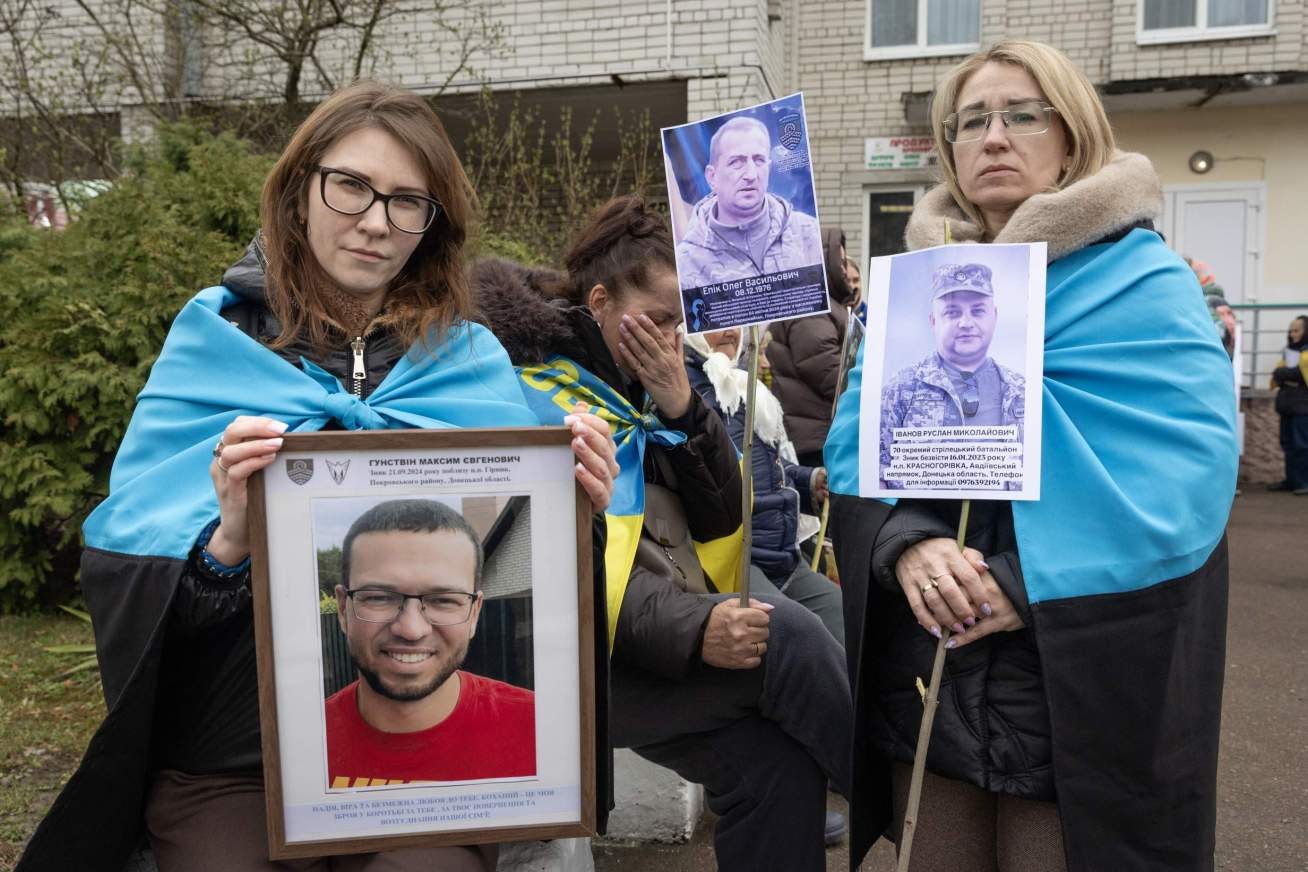
“I am searching, waiting for my husband,” said 37-year-old Anna, who traveled to Chernihiv from Khmilnyk in the Vinnytsia region.
“I’ve already lost my brother in this war, but I believe in miracles, and I believe my husband will come back,” she says. “He has been missing for 18 months. I don’t have any official information about him — only what I’ve found myself — but I believe with all my heart that he is alive, and I will wait for him. I love him very much — he is my soulmate.”
Accompanying Anna from Khmilnyk are 44-year-old Svitlana and 50-year-old Zoya. Svitlana and her husband Ruslan have two daughters together, but she has no confirmation that he has been captured.
“We have been waiting for him for three years and three months,” she says. “He was a regular worker who went to defend Ukraine from the very first days. Today is my birthday, and I hope I receive the gift of his return.”
Zoya’s husband Oleg also volunteered for the army, leaving in March 2022. “When he left, he said, ‘If not me, then who?’” she recalls.
Oleg went missing in 2024, but Russian volunteers later contacted her and sent a video message.
“In the video, he said that everything was fine, that he was being fed and not harmed — but you could see from his condition that it was the opposite,” she explains. “We are all waiting for every one of our men. We are waiting for each of them. I hope he comes back.”
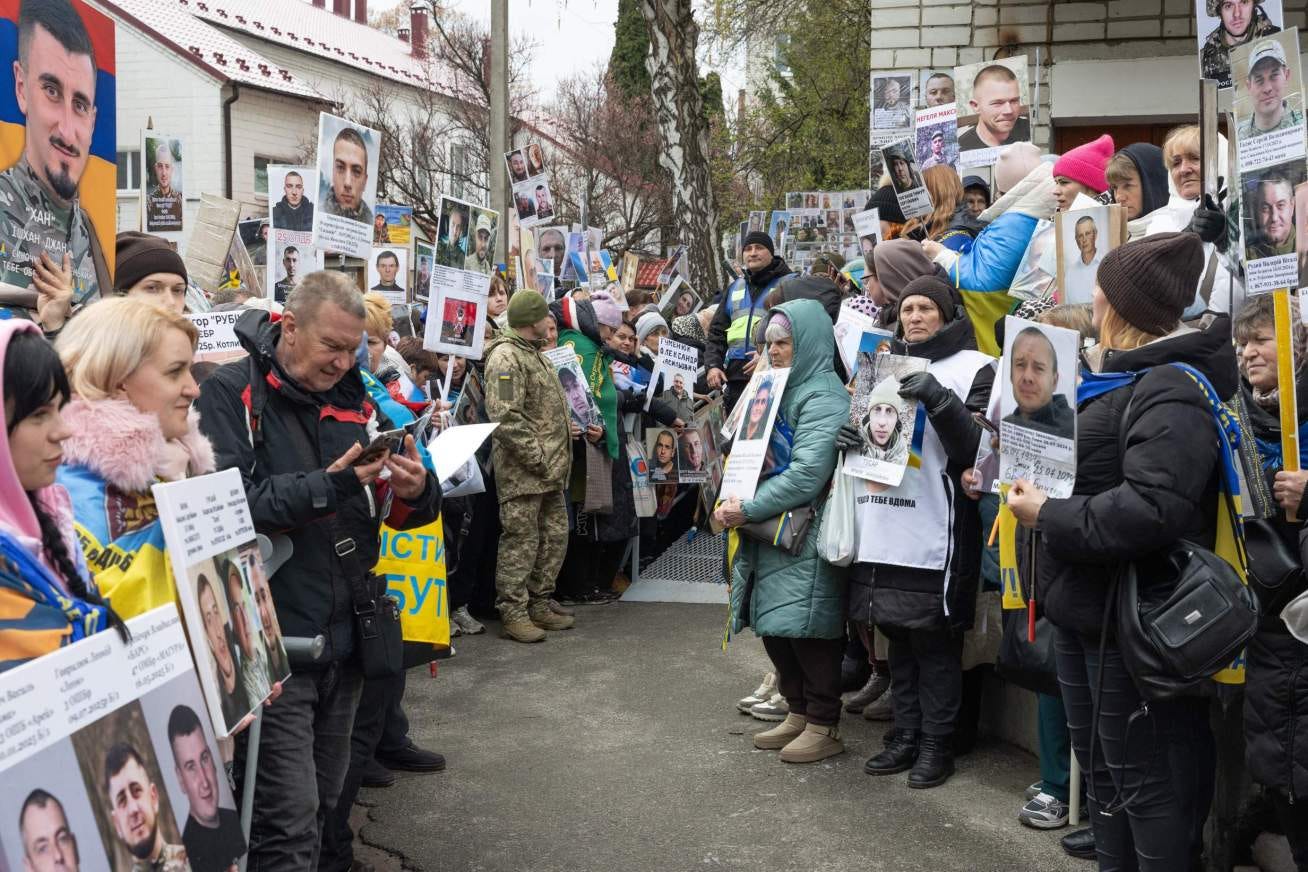
After hours of waiting, the first ambulances arrived carrying those who required wheelchairs or other medical care. As they pulled into the hospital compound, chants of vitáyemo (“welcome”) erupted from the crowd. As the freed soldiers were wheeled into the hospital, relatives of the missing lined the path holding photos of their loved ones, hoping someone might recognise them and provide information.
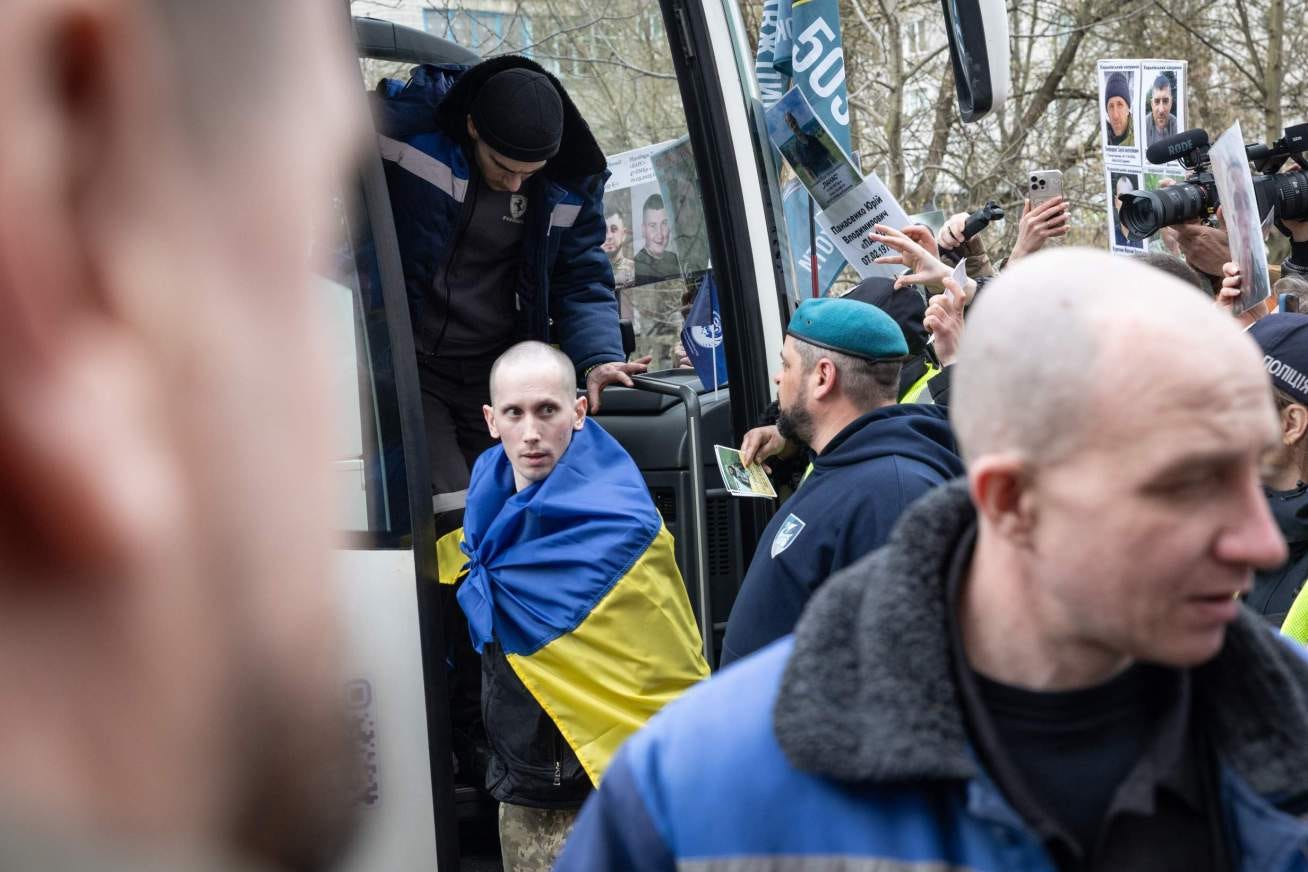
Shortly afterward, a series of buses carrying the majority of the 175 returned soldiers arrived and parked outside two hospital entrances lined with metal barriers and roughly 2,000 people — all hoping their loved ones would be among those returning. Children in an apartment across the street watched from their balcony and waved.
As the soldiers exited the buses — with shaved heads, sunken eyes, hollowed faces, and pale skin — chants of vitáyemo again broke out. Those lining the path surged forward, calling out and showing photos, hoping for answers. Some of the returned soldiers smiled and waved; others moved in a daze, supported by medical staff. Many had been captured in 2022, spending years in a prison system widely documented for the systemic torture and abuse of Ukrainian prisoners.
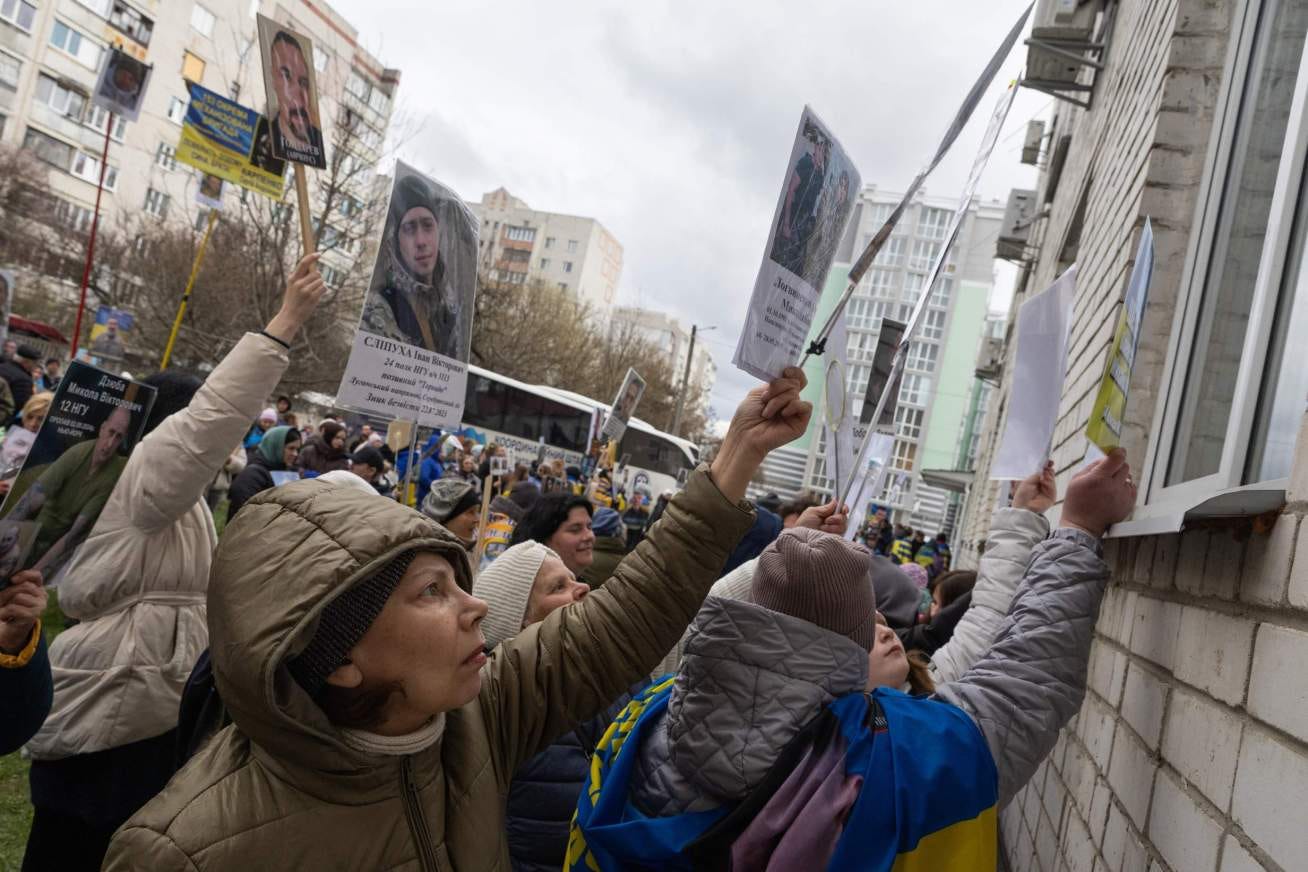
After all the returned soldiers were escorted inside for medical and psychological evaluation, family members gathered at the windows, raising posters in another attempt to be seen. Others handed out pamphlets and photographs to soldiers and hospital staff, collecting them into large cardboard boxes that quickly overflowed.
For the majority present whose loved ones were not among the 175 returned, the waiting would continue. But one mother, Tamara, was able to breathe a sigh of relief — her 39-year-old son Serhii was among the returned.
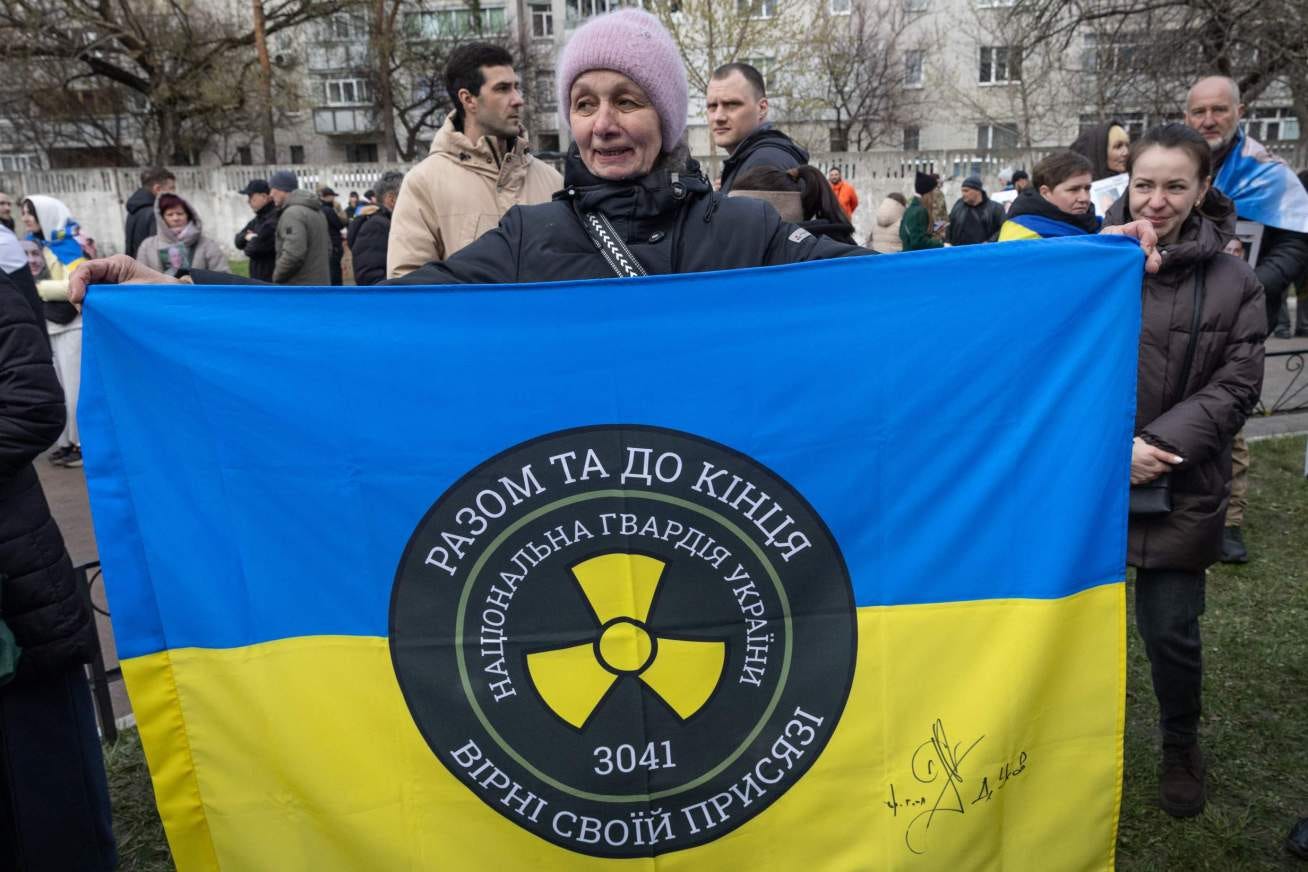
“My son was captured at the beginning of the war at the Chernobyl Nuclear Power Plant, when it was occupied. I just saw him come off the bus and hugged him for the first time,” she said. “I’m so proud of him and very happy he came back,” she added before being quickly whisked away by friends.
As the day wore into the afternoon, the crowd began to dwindle as those unable to gather new information started to depart. With the fighting dragging on and the Russian government showing little interest in ending its war of conquest, the number of missing and captured will continue to rise, leaving families across Ukraine with little choice but to hope and wait.