

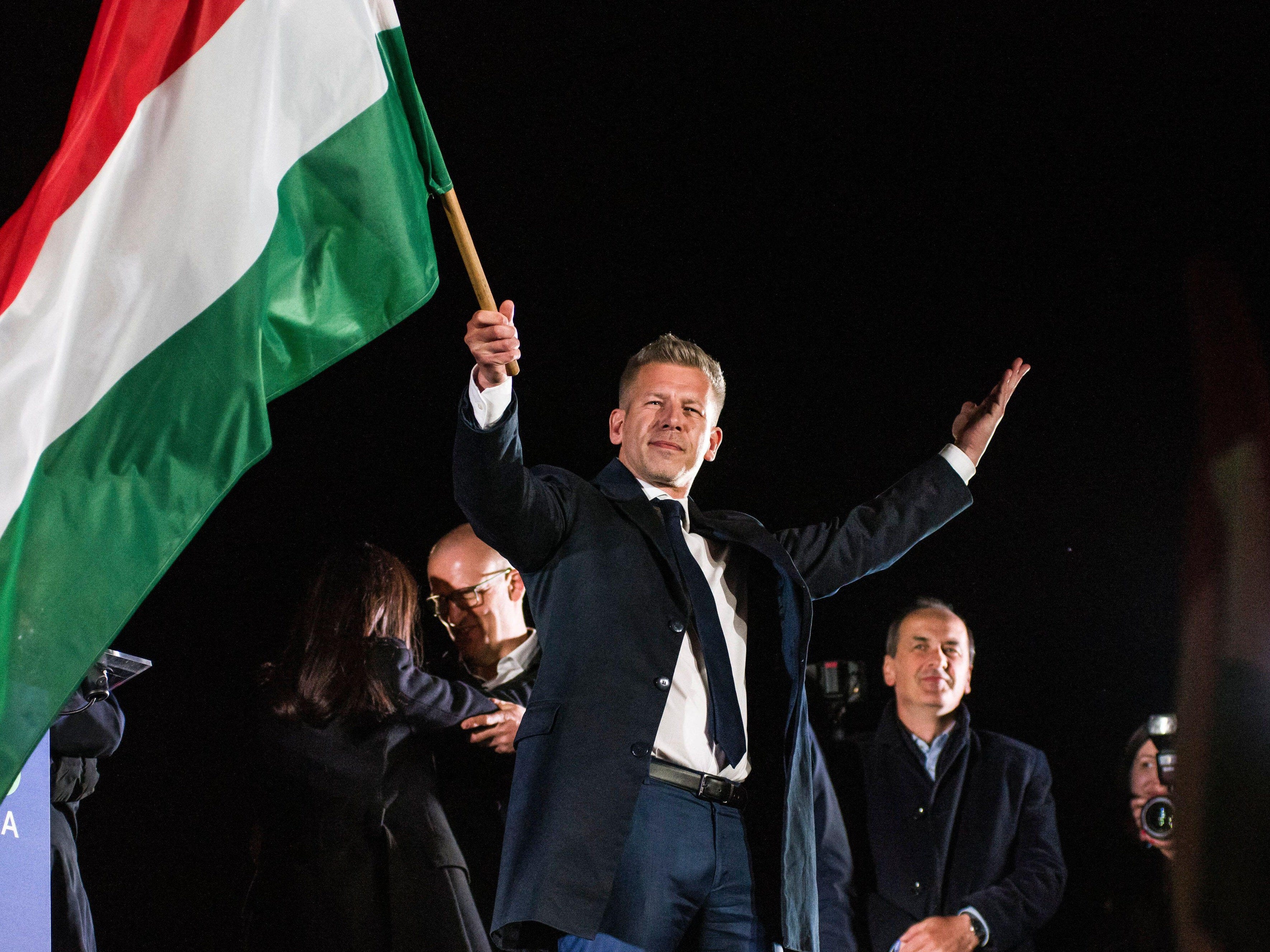

As Neville Chamberlain said of Czechoslovakia when approving of its break-up in 1938, “it’s a small, far-away country of which we know little.” For many, the same could be said today of its neighbour Hungary, a land-locked country in the centre of Europe, with only ten million people, an impenetrable language and whose GDP per head ranks as just 23rd out of the 27 EU countries. Yet Sunday’s national election result has profound significance not just for its own citizens but for the rest of the world too.
Why?
Viktor Orbán, the country’s four-time Prime Minister, first elected in 2010, has been the creator and arch-promoter of national populism’s core philosophy of ‘illiberal democracy.’ The former liberal dissident, aided in the 1980s by the George Soros foundation, swung his Fidesz party dramatically to the right in the 2000s. Once elected Prime Minister in 2010, he oversaw the take-over of the judiciary and most of the media by Fidesz loyalists as well as ensuring ownership and control of key companies was secured by his cronies.
He has combined this institutional power-grab with assertive policies in support of traditional Christian family values and an increasingly vicious rhetoric against foreigners and migrants, particularly Muslims, becoming one of the foremost proponents of the conspiratorial Great Replacement theory. He and his Government have increasingly directed their nationalist rhetoric against the European Union, echoed Russian arguments in EU discussions, and for the last four years obstructed every effort by the EU to rally support for Ukraine.
Standard Bearer of the Populist Right
Thus, for a decade and a half Orbán has been the primary flag-bearer of the national populist right, its voice in Europe’s corridors of power and the mentor to aspiring fellow-travellers across the world. He has been central to building a far-right alliance in the European parliament including France’s Marine Le Pen, the Netherlands’ Geert Wilders, Spain’s Vox and Austria’s Freedom Party, and his ‘Patriots for Europe’ is now the Parliament’s third-largest faction.
But even more significant has been his influence in the US, where Orbán has been the icon for Trump and his MAGA followers.
Regularly feted by the organising core of the American populist right – the Conservative Political Action Committee (CPAC) – Orbán’s policies and methods were seen as a central influence on Project 2025, the blueprint for Trump’s second term, which has been described as a plan to ‘Orbánise’ the US government.
The Trump administration has assiduously followed the Orbán view on Europe’s slide into decadence and decline as outlined in its National Security Strategy. Trump has welcomed Orbán to the White House and Vice-President JD Vance, at the height of the Iran war, saw his priority to be to make a direct intervention in the Hungarian election, visiting Budapest to speak in Orbán’s support at a triumphalist, Trump-style eve-of-poll rally.
UK Fellow Travellers: Scruton, Orr, Goodwin
Orbán has had a magnetic appeal to the populist right in Britain too. Its leading post-Powellite ideologue, Roger Scruton, helped Orban on the path from liberal dissident to post-liberal autocrat and was rewarded shortly before his death when he was awarded the Hungarian Order of Merit by Viktor Orbán for “foreseeing the threats of illegal migration and defending Hungary from unjust criticism.” Tim Montgomerie – the founder of Conservative Home and Unherd and, after his defection from the Conservatives, now an influential voice within Reform UK – was an early convert addressing the Danube Institute in 2019, one of Orbán’s key think tanks, on “the limits of liberalism” and the potential of its pro-natal family policies.
The Orbán links to the UK were cemented by the appointment of Frank Furedi – the former ideological guru of the Revolutionary Communist Party and very regular Spiked contributor – as the executive director of the Brussels office of the Mathias Corninvus Collegium (MCC) , a private college and think tank lavishly financed by the Hungarian Government to promote Orbán and Orbánism in the West.
In addition to its Brussels activities, MCC also operates in London, by favour of the Roger Scruton Legacy Foundation where the Cambridge theology academic and now Reform UK’s Head of Policy James Orr is the co-chair.
The MCC’s budget was significantly enlarged in 2020 and the latest revelations from the Good Law Project show the Roger Scruton Legacy Foundation (RSLF) has received £512,500 – more than 90% of its funding – from MCC since 2023, enabling it to host events with key figures from the populist right such as Peter Thiel and Curtis Yarvin, and pay generous fellowships to familiar figures like Matt Goodwin.
In his co-authored 2018 book National Populism: The Revolt Against Liberal Democracy, Goodwin described Orbán’s conspiratorial ideas about the Jewish philanthropist George Soros as “not without credence”; while Furedi widens the conspiracy from a “globalist-cosmopolitan perspective” to embrace the “wider objective of de-legitimating the status of the nation and the sovereignty of its people”.
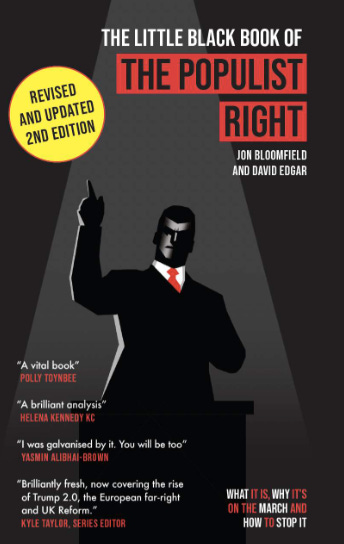
As we point out in our Little Black Book of the Populist Right, Orbán himself speaks in terms which directly echo sinister interwar rhetoric of opponents with faces “hidden from view” who “do not fight directly, but by stealth”, who are “not national, but international”, don’t work but “speculate with money” and who “have no homeland, but feel that the whole world is theirs.”
Now, who could they be, and where have we heard that before?
Across the widening Orbán ideological empire, then, we can detect the assiduous use of state funding to promote the ideas of national populism, much of it with a sinister conspiratorial twist. It has been the application of the Gramsci playbook of cultural hegemony in the service of the far right.
Sunday’s election result has put an end to that.
Orbán’s resounding defeat at the hands of Péter Magyar’s Tisza party, in a record high turnout, was the result of Hungarians decisively rejecting a Government and party that has brought prolonged economic stagnation to most of its citizens while overseeing vast accumulation of wealth to an elite band of cronies.
Less Obstruction, More Hope?
The impact of this result will be profound. For Hungary itself, the key task of the new Tisza Government will be to unravel the damage wrought by the Orbán regime. This will not be easy. The difficulties faced by Donald Tusk’s Polish Government in untangling the institutional changes brought in by the predecessor Law and Justice Government serve as a warning.
The new Government must dismantle corruption and Fidesz’s illiberal democracy, in the hope that the swift receipt of currently suspended EU aid will help to boost the economy and that many of the young Hungarians of talent who have emigrated in the Orbán years will decide to return to their homeland.
For the EU itself, the result should mean the end of Hungary’s endless policy obstruction, above all over Ukraine, enabling the release of much-needed blocked funds.
However, this should not mean a reversal to the status quo. The experience with Orbán has shown that the current EU rules for policy-making are not fit for purpose: in an EU of 27 states, the unanimity principle cannot survive. As the German foreign minister, Johann Wadephul said recently, to cope with the contemporary world the EU has to introduce qualified majority voting for key policy issues to prevent the chokehold that individual countries can currently exert.
More broadly, the result reinstalls hope into the political arena. It shows that the far right is not omnipotent, and that Trump and Vance are not the electoral assets they once assumed.
There are signs that the populist right may have reached its peak. In France, Le Pen’s RN stalled in March’s local elections; in the UK, Reform has been defeated in two recent parliamentary by-elections while national polls are showing a noticeable fall in their voting numbers. The big issue remains America and whether, despite the gerrymandering, the US electorate will deliver a body-blow to Trump in November’s mid-term elections. Nothing is certain but the Hungarian result, following last November’s defeat for Geert Wilders in Holland and the 2023 dethroning of Law and Justice in Poland, has shown that the far right can be beaten. That should offer hope to us all.
Jon Bloomfield and David Edgar are authors of The Little Black Book of the Populist Right, whose 2nd edition has just been published by Byline Books


I have always found it curious that people who are credited with intelligence such as Roger Scruton, Douglas Murray, Professor Niall Fergusson etc should have showered such praise on Viktor Orban. As mentioned above, his sixteen years reign in charge of Hungary has brought no prosperity to the country, His undoubted talent has been in manipulating his country`s legal system to give an appearance of legality to rampant deceit and corruption which has denied progress and the benefits of increasing European prosperity to people whose only crime is poverty. Such people appear to have had no difficulty is accepting and even supporting Orban`s bromance with Vladimir Putin and Donald Trump as they have conspired to aid the unspeakable, murderous attempt by Russia to deny justice, freedom and life itself to millions in Ukraine and even in Russia itself where more than one million young men have been killed or disabled by forced recruitment to prosecute a war they did not want and cannot understand. I`,m afraid these acts of blatant murder and corruption are meekly supported by, it appears. the entire American Republican party. Incidentally, Hungary`s language is not impenetrable as is often stated. It is a beautiful and interesting language which I began to study when I was 75. I can now read and speak it moderately well though not without difficulty.
The Little Black Book is excellent. Unravel the spiders web and follow the money!