


BYLINE TIMES IMPACT: Find out about the changes you made happen
A young person in their early teens today will, in all likelihood, live into the next century. They have already inherited a diminished environment, with a 73% decline in wildlife populations since 1970, according to the global environmental and conservation organisation WWF. In their lifetime, the world could get 2.5 to 3% warmer. Not surprisingly, globally nearly 85% of under 16s suffer moderate anxiety about the planet and 60% are very or extremely worried.
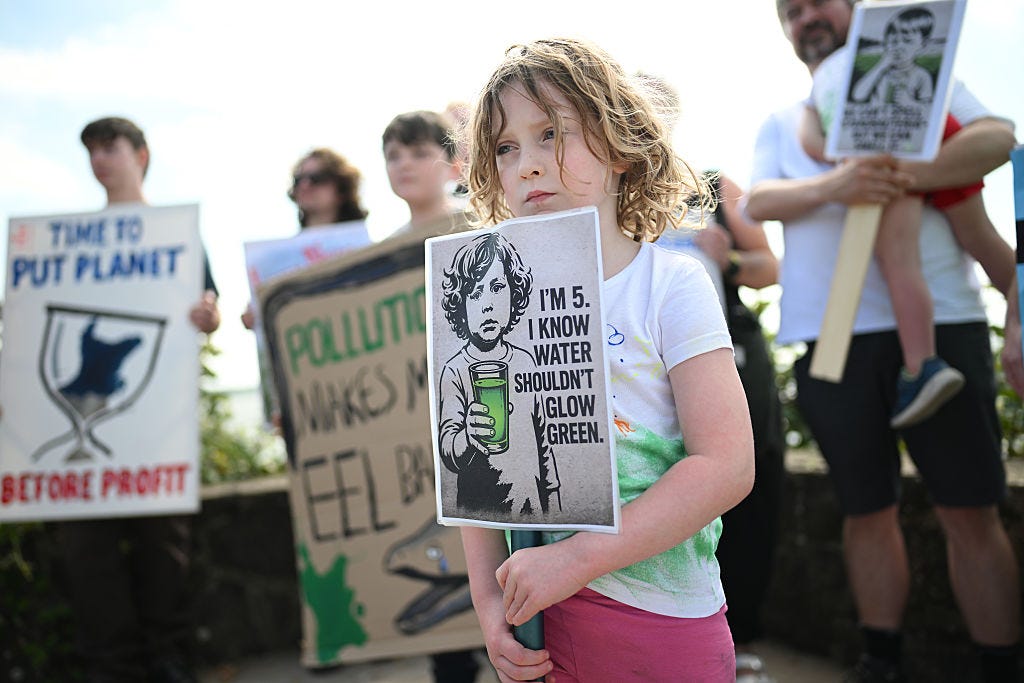
Nevertheless, Generation Alpha – the demographic cohort born between 2010 and 2025, and the largest generation ever, at two billion children – are likely to do more than any previous generation to come to the aid of the environment and tackle climate change.
No other generation has grown up with greater awareness and anxiety about the planet, but the early indications are that they will turn this eco-anxiety into positivity and action. Of course, there is no turning the clock back to pre-industrial climate-friendly times, but they are certainly not in denial, as so many older generations have been. After all, they have a bigger stake in the future.
Ironically, the best way to alleviate or cope with depression and anxiety according to the National Institute of Clinical Excellence (NICE) is walking, preferably outdoors in nature. Equally, the best way to inspire action to save the planet is to experience and love it more. It is much easier to be in denial and feel disassociated from climate breakdown if you are insulated from the environment, seasons, wildlife and the wind on your face.
Although Generation Alpha is the first fully digitally native generation, there is evidence that it is much more discerning about digital usage and values real-world activities more.
Market research company GWI compared results from questionnaires of more than 30,000 8-15 year olds in 14 countries between 2021 and 2025 and found a significant increase in young people seeking real-world experiences such as preferring to watch a film in a cinema, visit their friends at weekends as well as to take trekking and walking holidays.
This is backed up by Natural England’s ‘The Children’s People and Nature Survey for England’, which finds an increasing connection between young people and nature. The number of young people who feel highly connected to nature has consistently increased from 44% in 2021 to 47% in 2022 to 52% currently. Interestingly it is even higher for Black/Black British ethnicities at 60% even though there is evidence that they have fewer opportunities to connect.
Behind these stats, there is an inspiring story of young people standing up for the planet.
Chris Packham, in his book, Nature is The Answer: A Toolkit for Eco-Positivity, not only agrees that nature is the best way to cope with eco-anxiety and provides a set of tools to do this, but also he celebrates young activists and naturalists who are inspiring a new generation. These include Anjali Sharma, who at 16 took Australian Government to court to defend water from pollution of fossil fuel extraction, Myra-Rose Craig aka ‘Birdgirl’, who at just seven years old was the youngest person in the world to identify 325 different types of British birds and at 17 the youngest to see half of the world’s bird species and Elizabeth Wanjiru Wathuti in Kenya, who after planting her first tree at the age of seven, set up the ‘Green Generation Initiative’ that has planted and grown more than six million trees.
Generation Alpha is less likely to use social media for the ‘climate doomism’ that has plagued Gen Z Instagram and TikTok. They tend to focus on curating a calmer and more positive world where they connect to nature. Gen Alpha tends to use social media more to record real life solutions than for status. They are very adept at using social media for activism but the trend to ban social media for under 16s is likely to make this more difficult. There have been amazing examples of very young digital influencers using social media for the good of the environment.
One of the youngest and most successful social media influencers, Mari Copeny, (@littlemissflint) who has more than 200,000 followers, started her digital activism at just eight years old, during the water crisis at her hometown of Flint in Michigan. She uses her social media following to campaign for clean water and for underprivileged children in Flint.
In the UK, Amy and Ella Meek were 11 and 9 years old respectively when they created ‘Kids Against Plastic’, launching award-winning educational campaigns showing how young people and schools could stop using single use plastic. They have since published two books for children, Be Plastic Clever and Be Climate Clever
Greta Thunberg was only 15 when she began her school climate strikes in 2018. A year later, she inspired 1.6 million schoolchildren from 125 countries to take part in the first Global Strike for Climate.
We should never underestimate the power of young people.
Stephen Colegrave is co-founder and Executive Editor of Byline Times