


BYLINE TIMES IMPACT: Find out about the changes you made happen
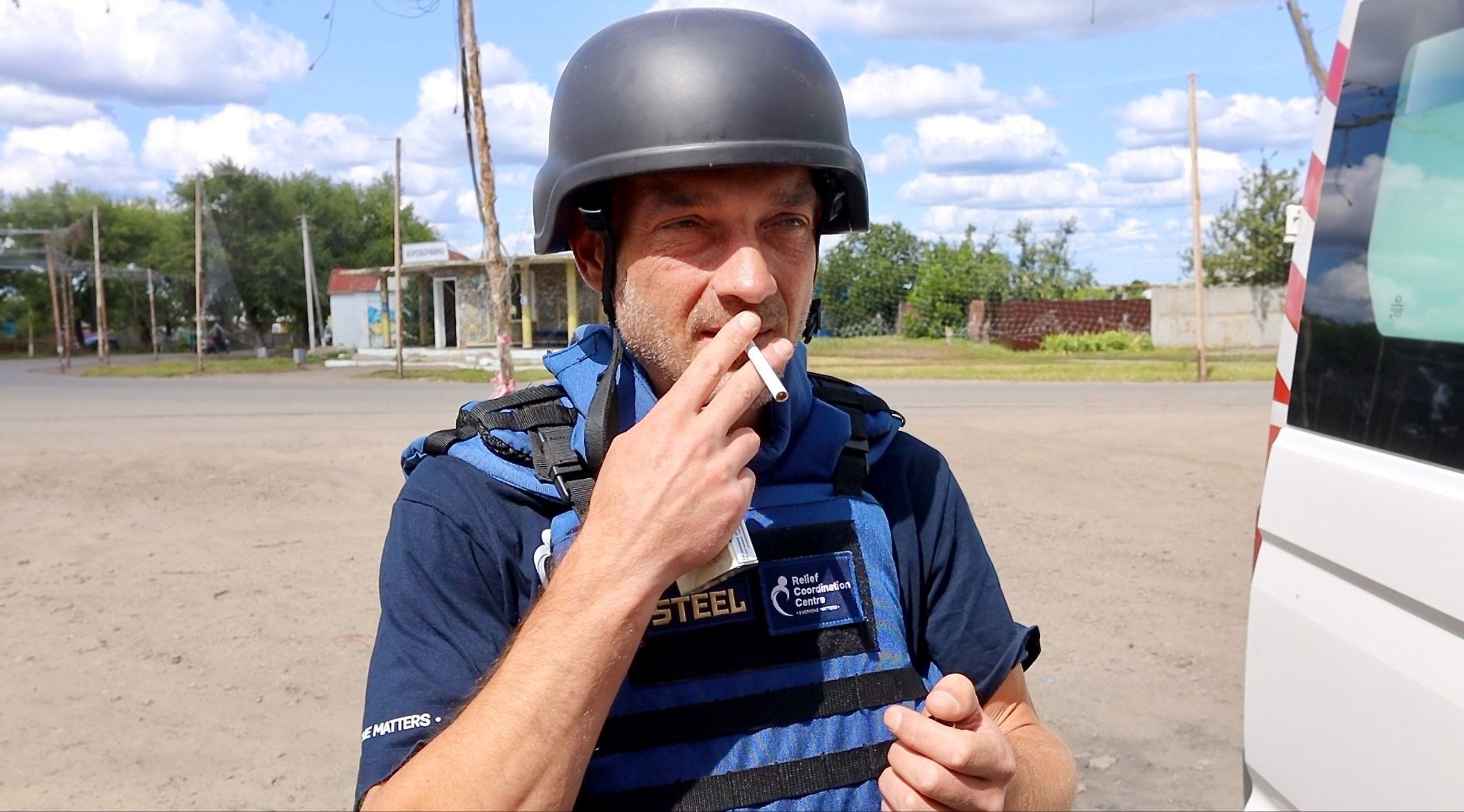
The black van speeds along at 130 km/h on a road lined with sunflower fields. Behind the wheel of the ambulance, Andrey, a volunteer with the Relief organization, keeps his eyes fixed on the road. Next to him, Sacha, a former soldier who has since switched to evacuating civilians, scans the sky, phone in hand. A message has just popped up on a military app: a Russian reconnaissance drone has been spotted within a radius of two to five kilometers. “So far, so good,” he says, without taking his eyes off the screen. “The biggest danger comes from the drones we call ‘lookouts,’” Sacha explains. “They can lie in ambush along the roadside. You can’t spot them until they’re right up close and charging at us.”
‘It Doesn’t Matter if it’s an Ambulance or a Military Vehicle.’
For these teams, the danger is very real. On February 4, a team of volunteers was targeted by a fiber-optic drone, followed by artillery fire, this time in the town of Berislav, in the Kherson region. Several civilians were seriously injured during that evacuation. A volunteer police officer filmed the scene with his GoPro camera.
“To the Russians, an ambulance and a military vehicle are one and the same.” Andrey sums up without taking his eyes off the road. “If they see a vehicle, they destroy it,” he continues, gripping the steering wheel nervously as Sacha recalls a previous evacuation, “We heard the sound of the drones. We quickly got out of the car and hid in the bushes,” he says. “We could hear a buzzing sound but the drone didn’t see us. It was frightening,” he says.
This is how the evacuation of the last civilians from the front-line zone has been proceeding for months. Inexpensive and easy to fly, FPV (first-person view) drones are now swarming this 30-kilometer-deep strip along the front line, which residents and soldiers have come to call the “kill zone”.
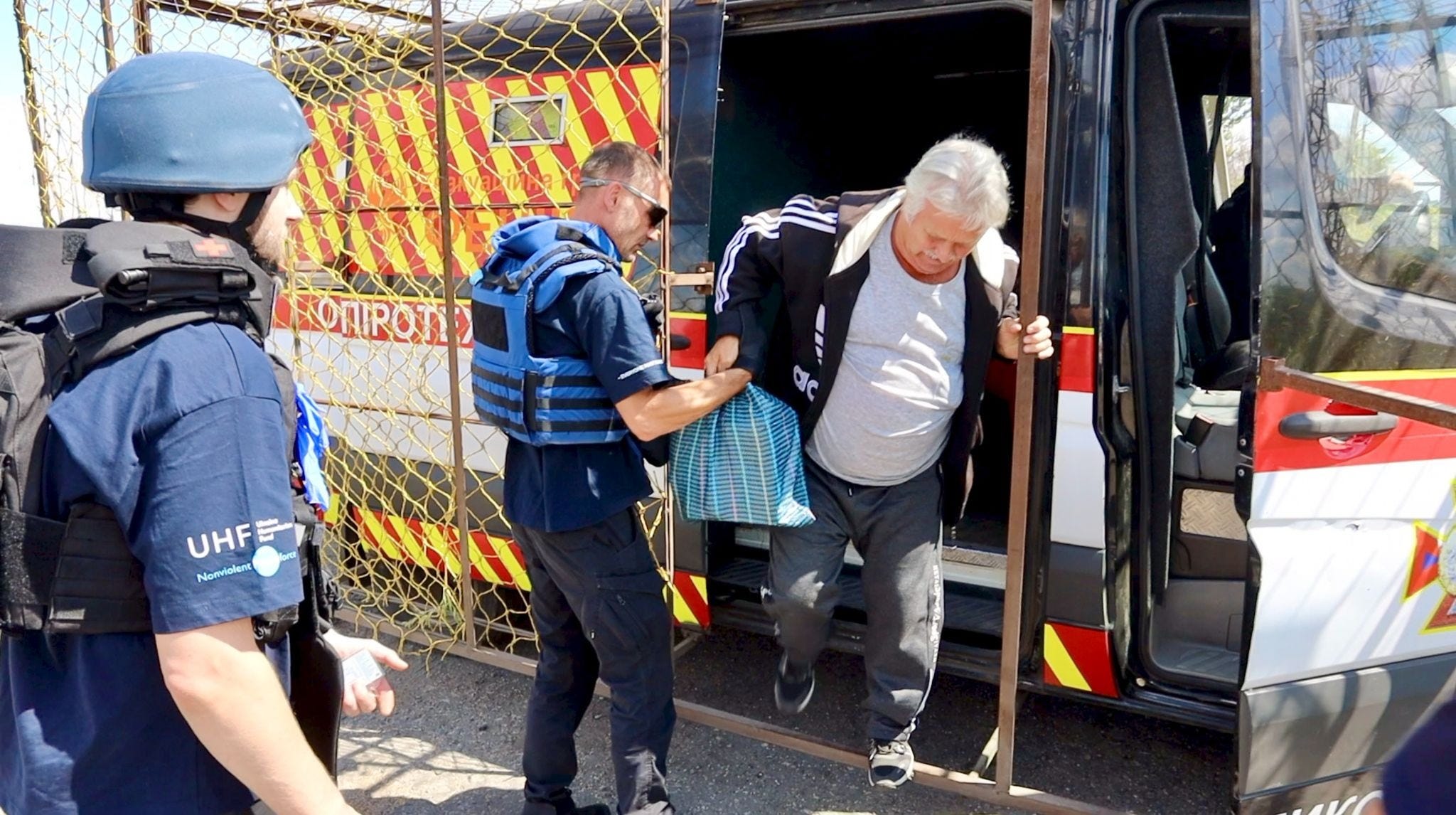
The ambulance brakes suddenly. Three villagers come out of their homes and get in, helped by the volunteers. “Thank you! Thank you so much, my angels,” exclaims one of village resident. In the back of the armoured vehicle are three civilians who have just left Borova, about 5 km from the front line, located right in the heart of the combat zone. In just a few minutes, they were evacuated from the area, taking with them three meagrely filled shopping bags.
‘Drones Were Flying Around Like Bees’
During the journey to evacuate these civilians to safe areas, Halyna Mykolaïvna, born in 1965, opens up. She clutches her bag tightly. She describes what she left behind. Her house “is still standing for now.” In her neighbourhood, other houses have already been destroyed, and neighbours have died. “It’s very scary,” she says. Looking haggard, she scans the passing landscape, as if to verify that the danger has truly disappeared.
“Drones were constantly flying over the area. They’re destroying everything,” she explains. “They’re striking military vehicles and, above all, civilians.”
“Drones were flying around like bees,” she insists. She pauses before concluding in a whisper, “There was nothing left in the city. We could just hear the explosions all day long.”
Those most reluctant to leave are often the elderly, who have resigned themselves to their fate. That’s where the volunteers step in, with the prior consent of the family members. Through a secure phone line, they receive dozens of calls every day from panicked families, at least one of whose loved ones remains trapped. What follows is a process of locating the person, making contact, and then extracting them under fire in just a few minutes.
Two Hundred People Per Day, Per Transit Centre
All the makeshift routes eventually lead to the same place: a transit centre in Kharkiv, a mandatory stop for evacuees from across the region. In the lobby, families wait on benches, bags piled at their feet.
“We’re currently receiving between 200 and 250 evacuees every day,” explains Serhii, who has been one of the centre’s coordinators for several years. He notes that this is a pace never before seen, and one that continues to rise. He attributes this increase to the intensifying fighting in several districts of the Kharkiv Oblast and the Donbas. The largest number of arrivals today comes from the communities of Kupiansk and Sloviansk, whose residents, too, continue to pour into the city.
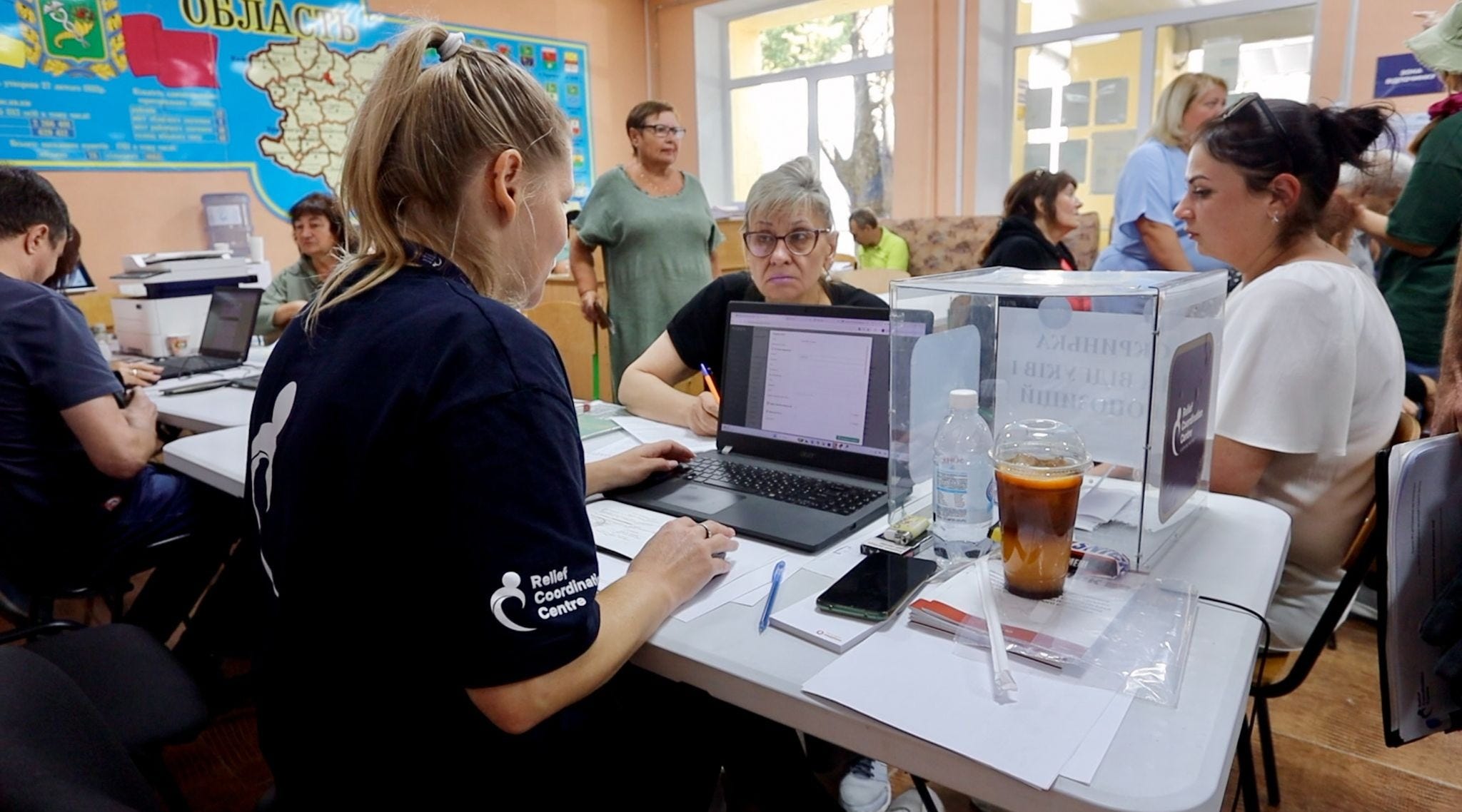
Anyone arriving at the centre is eligible for a range of assistance: a stipend of approximately 12,300 hryvnias per person (nearly £200), food and medical kits, and legal assistance. For housing, a digital system called “Poruch” (“next door” in Ukrainian) allows evacuees to book their own accommodations and choose the conditions that suit them. Those who prefer assistance can complete the process on-site, where staff present the available options, process the registration, and then arrange transportation, whether to temporary housing or to a more permanent destination.
The centre operates entirely thanks to volunteers “twenty-four in total” according to Serhii. “Given the current situation, the evacuation zone is expanding, and many people are leaving.” He takes a breath. “I think people will continue to head for safe places, but I can’t see any further than that. We have defence forces holding the line, pushing the enemy back from our territory. But what will happen next… I don’t know,” he says softly. Approximately 100,000 people were evacuated by the Relief Coordination Center.
One Last ‘Thank You’
“The hardest part is when families are permanently trapped and we can’t do anything to help, like in Kostiantynivka or Pokrovsk. We’re doing our best, but we can’t save everyone,” Sacha says. On 18 August, Oleh Syniehubov, head of the Kharkiv Regional Military Administration, announced the expansion of the mandatory evacuation zone in the Kharkiv district to include new localities. As fighting draws nearer and the front line continues to advance, the number of civilians forced to leave their homes keeps rising. For those who remain, every day spent in the “kill zone” is under the constant threat of drones and bombardments.
As the morning’s mission draws to a close, Halyna is taken into the care of social services. “Thanks again,” she says to Sacha and Andrey. Her daughter is supposed to come pick her up. Sacha and Andrey wave to her and go to prepare for tomorrow’s mission. This time, it’s in the Sloviansk area.