


There is a Ukrainian expression that offers an uncanny metaphor for the past two decades of Europe’s Russia policy. “наступати на ті самі граблі знову і знову.” When you “step on that rake” – the literal translation – the handle snaps up and hits you square in the forehead. It is the kind of mistake no rational actor should make twice.
And yet European leaders have stepped on it again and again, знову і знову, refusing to learn: Russia does not seek cooperation. It likes Europe weak and holds our democratic tradition in contempt. It seeks to divide and conquer. For Moscow warmaking is meaning-making.
Our collective fear of provoking Putin has reliably produced the very escalation it was meant to avoid.
The number of wake-up calls and alarm bells Europe has slept through is too embarrassing to catalogue. But permit me a moment of stubborn Euro-optimism: it may just be that the 2026 Munich Security Conference marked the point at which the Old Continent finally confronted the reality it had dodged for decades.
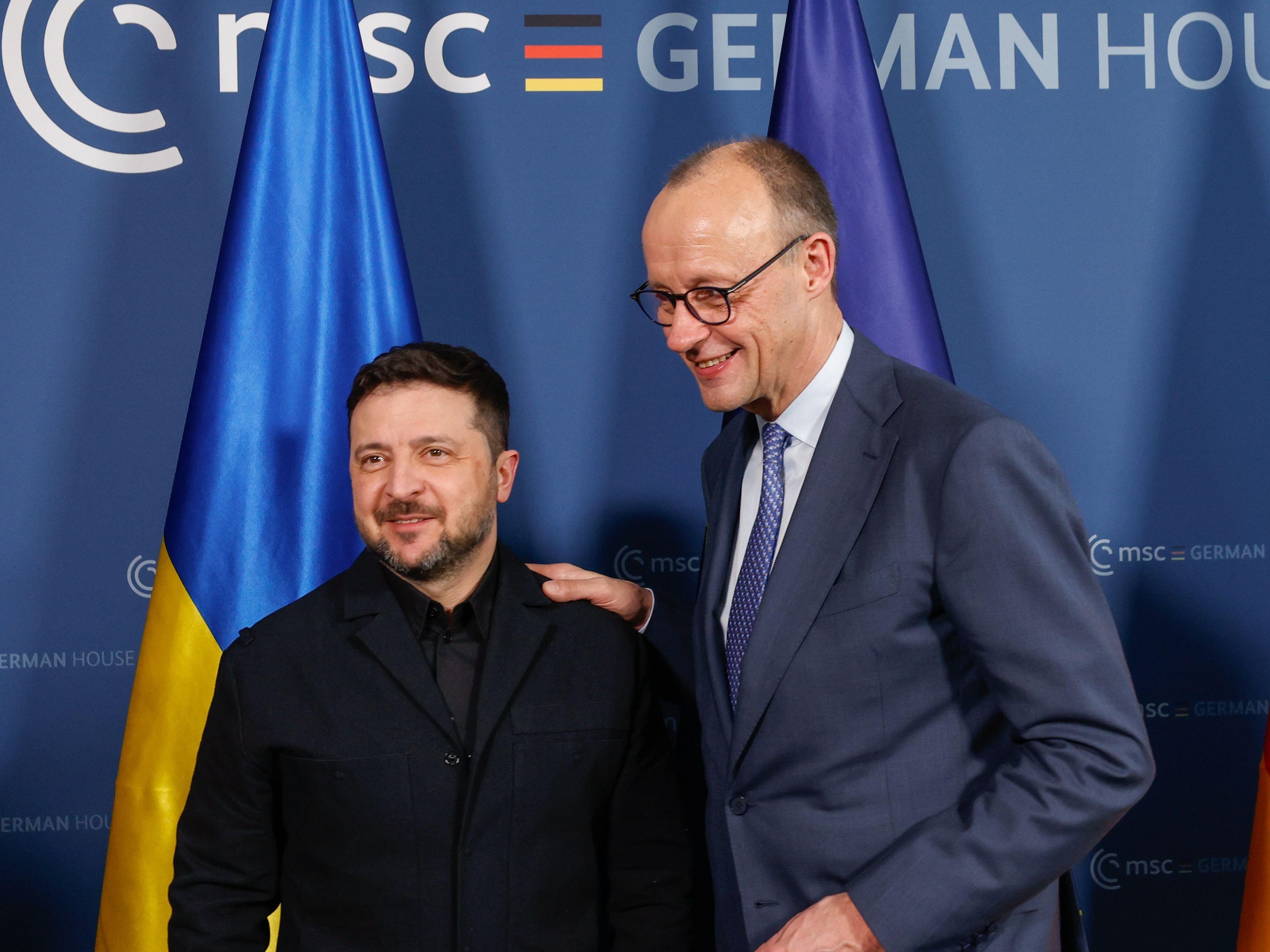
German Chancellor Friedrich Merz spoke not of “managing” Russia but of strengthening Europe’s capacity to deter it. Volodymyr Zelensky reminded the audience that Ukraine is not a burden but a security provider for Europe, if not the ultimate guarantor. Analysts observed that this year’s conference felt less like a ritual of recursive self-reassurance and more like a reckoning: a recognition that Russia’s war will not end until Europe rediscovers agency.
Munich felt different because Europe finally shed the dangerous illusion that it has transcended war. The relative tranquility and prosperity of the last eighty years were underwritten by the power of credible deterrence, also known as NATO. As Britain’s and Germany’s military chiefs put it: “Rearmament is not warmongering; it is the responsible action of nations determined to protect their people and preserve peace.”
I yearn to believe that Zeitenwende has finally arrived. It has been twelve years in the making if we count from Moscow’s first invasion of Ukraine in 2014, or even longer, if we go back to Russian tanks crossing Georgia’s sovereign border in 2008.
But now, allow me a moment of hackneyed Euro-pessimism, as I open Berliner Zeitung and read a guest column by a former German chancellor.
Gerhard Schröder, who seems determined to defend categorically disastrous mistakes, is not himself the issue. His is as irrelevant as he is wrong. The problem is that the ideas pushed by the erstwhile board member of Gazprom are just too tempting, even for the well informed. They dangle false comfort at a moment when only blood, sweat and tears are on offer.
Schröder argues that cheap Russian energy is stabilising, that criticism of Russia’s criminal conduct amounts to “demonisation,” and that European rearmament fuels escalation.
Each claim brazenly misrepresents the realities of the Kremlin’s war. If left unchallenged, they risk drowning the fragile clarity emerging from Munich and pulling Europe right back into a habit of sleepwalking into Russia’s ever growing war.
Germany’s historical responsibility does not lie in excusing Moscow’s imperial violence, but in calling out false justifications. In 1942, Joseph Goebbels addressed a crowd in Berlin standing under a giant banner that read “Never forget that England forced the war on us.” In an eerie echo of this logic, Putin blames Russia’s criminal war of choice on NATO
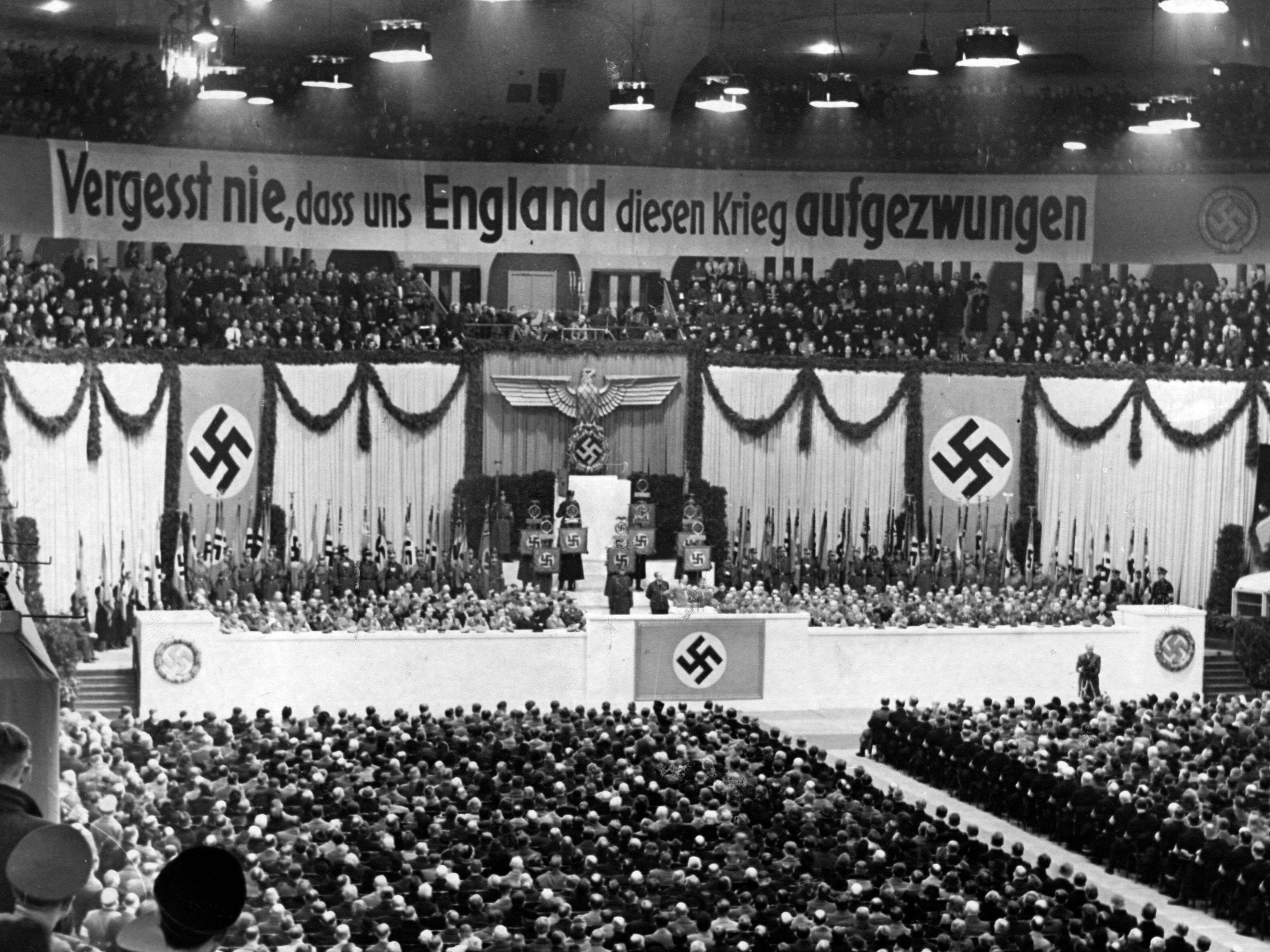
Moscow reframes heinous violence as grievance, rationalises overt conquest as pursuit of security, and wants us to dismiss atrocities as peripheral. Europe had seen this movie before. It did not end well.
Germany would not be better off with “reliable and stable supplies of cheap fuel from Russia.” The very thing that financed the aggressor’s rearmament, rewarded coercion, and created political capture.
The pipelines championed by Schröder, and later Merkel, handed Moscow leverage over Europe. By privileging cheap Siberian gas over Ukraine’s right not to be invaded, Germany signaled to the Kremlin that aggression would carry no real cost.
Ukraine’s leading energy expert Mykhailo Gonchar posed the right question in March 2022: did the Nord Stream hypocrisy help trigger Russia’s war? The record leaves little doubt. Economic interdependence did not restrain Moscow’s imperial revanchism. The Ostpolitik promise of “change through trade” bolstered it.
Moscow telegraphed its intentions unequivocally in Chechnya, Georgia, Syria, and Crimea. Each time, the response was dialogue without consequences. Lots of “deep concerns” but never “deep strikes.” That approach may have seemed prudent, until 24 February 2022 proved it was not.
Russia didn’t become the world’s largest country, stretching over 11 time zones, by the power of its ideals but through centuries of conquest: from Muscovy’s subjugation of Siberia, the Caucasus, and the Far East to today’s attempt to swallow Ukraine.
Urging Germany to rekindle cooperation with Moscow, Schröder declares that Russia “is not a barbaric country, it’s a country of rich culture.” This is a cynical sleight of hand. Shostakovich is not on trial. What stands accused is the moral framework that governs Russian society today. What it permits, what it celebrates, what it refuses to confront. And, regrettably, the country of over hundred million tolerates systematic atrocity as state policy.
Russia must not be “demonised,” the former Chancellor insists. Even if one tried, one couldn’t. The word fails to capture the horrors of the “Russian world,” a Kremlin doctrine asserting a civilisational right to rule former colonies whose populations were forcibly Russified.
If anything, the charge of “demonisation” understates the scale and cruelty of the crimes committed daily. The problem is not exaggeration but ignorance, or, worse yet, indifference. Across much of Europe, awareness of Russian brutality remains alarmingly shallow.
As Ukraine de-occupied its land in a counteroffensive, officials discovered a torture chamber where children were detained, given minimal water and food, told their parents had abandoned them, and forced to clean blood from adjacent rooms where adults were tortured.
A UN investigation found that 95% of Ukrainian prisoners of war report being tortured. This isn’t a rogue soldier acting alone, but a systematic policy. While Schröder worked on his op-ed, Russian invaders carried on their human safari in Kherson, hunting city dwellers with killer drones.
Mass deportations of Ukrainian children, forced adoptions, legalized identity erasure, rape, and torture form a sustained pattern fueled by propaganda casting Ukrainians as subhuman, by a vile mythology sanctifying conquest. At its core lies a colonisers’ ideology that treats neighbouring nations’ existence as a historical mistake.
Moscow is fatally tempted by what it sees as projections of weakness. While many in Europe would rather not carry the emotional weight of this war, Ukrainian parents are burying their children. Appeasing Russia’s revanchism does not honor Europe’s history; it betrays the hard-won wisdom of confronting its own imperial past.
A recent analysis of the Munich Security Conference noted that Europe now faces a choice between nostalgia and responsibility – between clinging to a world that no longer exists and setting the terms of the one that is emerging. It was about recognising that Europe’s security cannot be purchased at a discount.
The rake will always be there. The question is whether Europe keeps stepping on it – знову і знову – or whether this time, finally, it learns.
Andrew Chakhoyan is an Academic Director at the University of Amsterdam and a former US government official at the Millennium Challenge Corporation. A Ukrainian-American, he studied at Harvard Kennedy School and Donetsk State Technical University. His Substack is The Chakhoyan Dispatch.