


BYLINE TIMES IMPACT: Find out about the changes you made happen
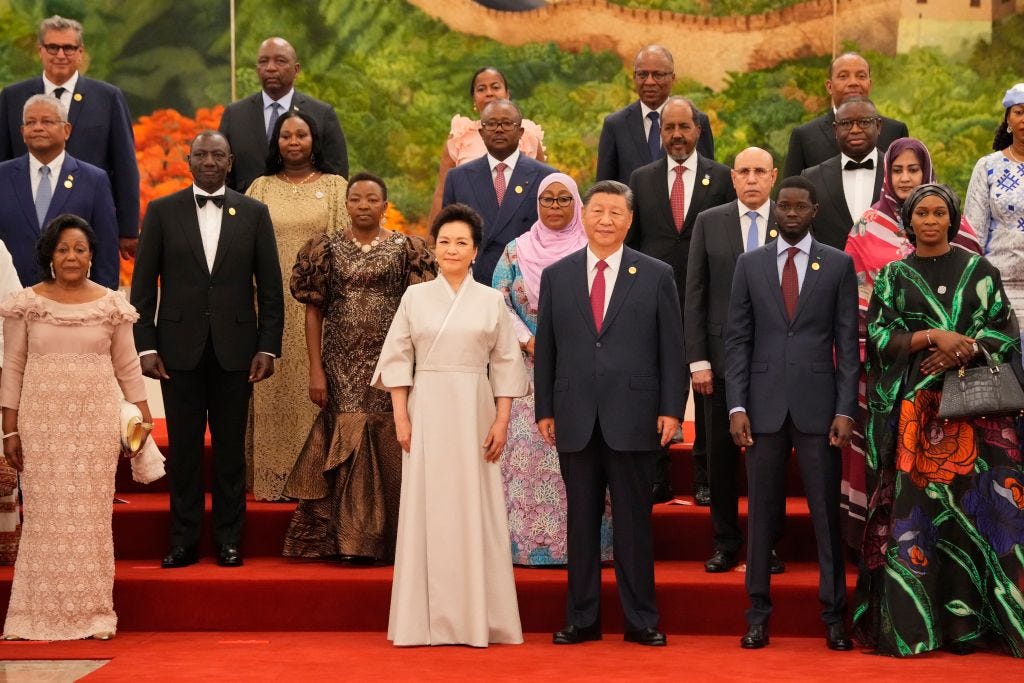
African nations spent decades throwing off the yoke of British and European colonialism, but have their leaders now swapped one form of subjugation for another by submitting to Chinese imperialism? According to journalist and long-time BBC broadcaster Paul Kenyon, the answer, in many cases, is an emphatic ‘yes’.
As he explains in his new book, China’s African Empire: The Country That Captured A Continent, Beijing’s commercial interest in Africa dates back to exploitative trading missions in the 15th Century, while its modern links were forged by Chairman Mao-Tse Tung in the 1950s and 60s, when China hosted rebel African fighters and set up large guerrilla training camps in Ghana and Tanzania.
Kenyon told the Byline Times Podcast, “these military links were forged through a shared ideology at the time, which was anti-colonialism. It was about ‘we're all in this together’. Ghana and Tanzania were coming out from under British rule. China had had its century of being a colonial-dominated country [the ‘century of humiliation’] and they had this shared background of throwing off the shackles of colonialism.”
Although Xi Jinping’s China is different in many respects to Mao’s, that shared history has endured into modern times, with China seeing an opportunity to extend is commercial and geopolitical interests in Africa, in return for generous infrastructure loans, via it’s ‘Belt and Road Initiative’, designed to boost trade with client nations. According to this vision, the continent has become the ‘New Silk Road’; a lucrative trading route for Chinese firms.
Kenyon acknowledges that a land mass as vast as Africa can’t be recognised as a single political entity, but asserts, “the general trajectory since the early 60s, has been towards getting along with China in a far more meaningful way than with the West. There are one or two exceptions, but I think it's fair to say that a lot of Africa is in a position where there are investments being made from China, and they are ‘no strings attached’. When we lend money from the West, it comes from banks and the IMF and the World Bank, and they are looking for reassurances about human rights in particular, and how the money is used. China doesn't ask for that. China doesn't care about that. So it's a much more attractive thing, particularly for an authoritarian state, to say ‘we'll take the Chinese money’.”
There are undoubtedly benefits to African nations in receipt of this largesse, but Kenyon says that it is, essentially, an ‘asymmetrical relationship’, whereby China gains disproportionately from access to valuable minerals and contracts that benefit its own state-aligned companies. “From the Chinese perspective,” Kenyon says, “it's almost a closed system. So they say ‘what you need is a brand new housing estate on the outskirts of Kinshasa, and guess who's going to make it? We'll give it to a state-owned company in China.’ The state-owned company moves into Congo; they’ll quite often employ Chinese work gangs who will go across there, with a local mix as well. But the top jobs, the management, the well-paid ones, tend to go to the Chinese. So you're in this kind of howl around system where the Chinese are paying themselves to improve certain areas.”
President Xi’s steady accumulation of influence contrasts with Donald Trump’s grandstanding pronouncements, observes Kenyon: “There's Trump saying, ‘I'm going to take Greenland. I'm going to take Canada.’ The irony is that he has the brass neck to make these sort of wild statements, while President Xi stands there and smiles. He's already got control of most of Africa. He doesn't need to fight anybody. There are no wars. He's done it so cleverly that a lot of Africans would say, ‘we welcome this. We're very happy with China coming into our country and these relationships.’”
Perhaps the most disturbing aspect of these developments, however, has been the creation of what Kenyon calls ‘the splinternet’, whereby online freedoms regarded as the norm in the West are more rigorously controlled in Africa, thanks to surveillance technology dubbed The Great Firewall of China. “This is the the censorship tool that prevents people in China seeing information about Tiananmen Square or anything else that isn't liked by President Xi Jinping,” Kenyon explains. The Great Firewall’s founder Fang Binxing is, he says, “now selling it abroad, quite surreptitiously. We know that Zambia, for instance, has bought the Great Firewall of China. We know that other countries have purchased elements of it. This is about surveillance. So you can see that spreading Chinese methods of repression are something that China benefits from, but so do autocrats in Africa.
“China is there, sucking very important data out of out of Africa; banking data, medical data, surveillance data, because they tend to be in charge of the data. They create the Cloud in most African countries. So what I'm saying is that this new colonialism, if we can call it that, is a very subtle way of exerting power, which is bringing African states under your censorship umbrella — and a lot of experts will say ultimately, it's a splintering of the internet. The ‘Splinternet’ will end up with China and the new Silk Road countries on one side, and on the other side of the divide, the West. And there will be huge gulfs between them in terms of information. And China's truth, which is merging with Africa's truth, is very different from the Western truth. And that digital division is a very, very worrying prospect.”
China’s African Empire: The Country That Captured A Continent is published on 15 October and available to pre-order now.
Watch Paul Kenyon in conversation with Adrian Goldberg on the Byline Times Podcast.