


BYLINE TIMES IMPACT: Find out about the changes you made happen
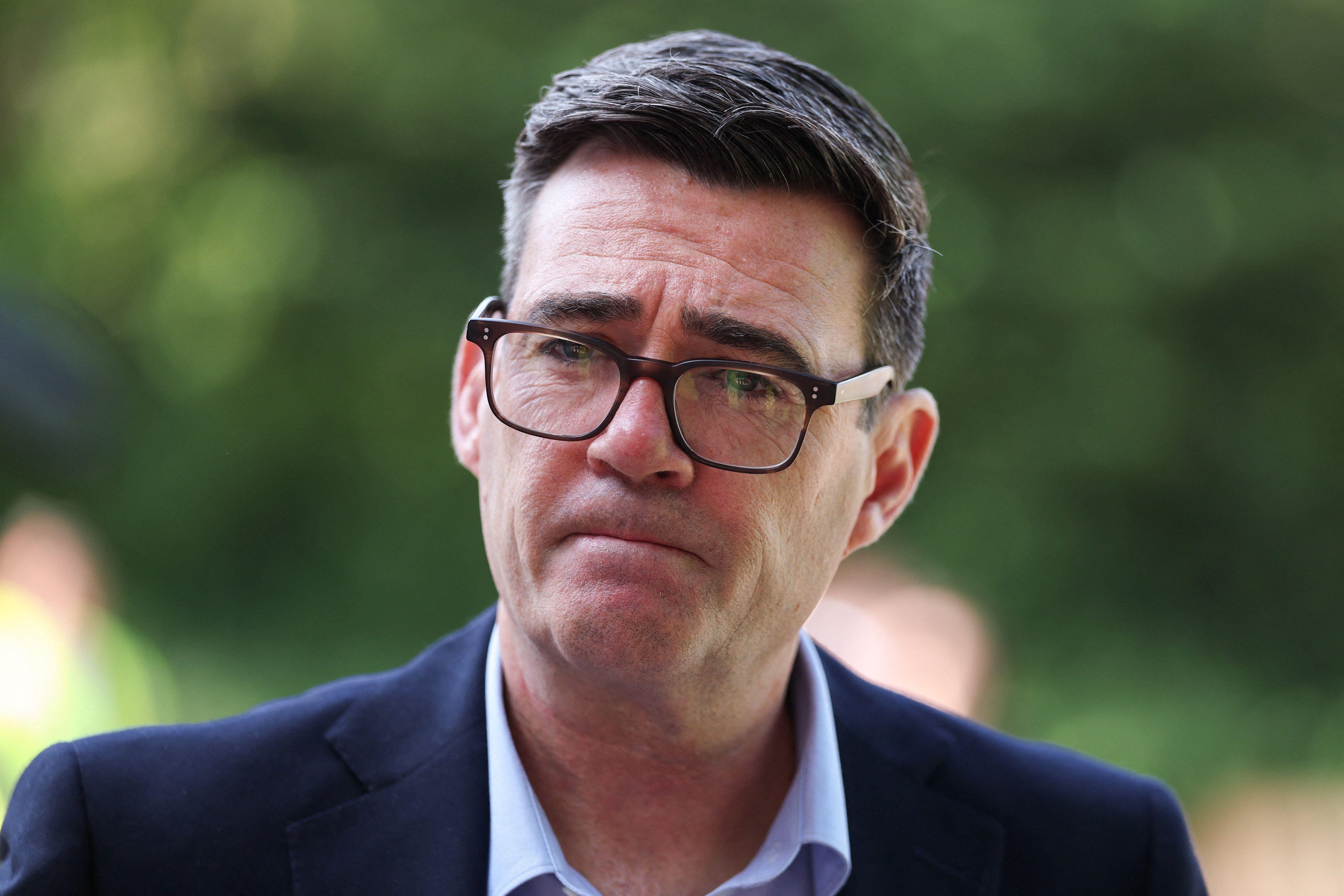
If Andy Burnham is serious about boosting the UK economy, he needs to take the country back into the European Union’s single market and customs union. That’s the uncompromising advice of Professor David Bailey, an expert in industrial strategy at Birmingham Business School, in an interview with the Byline Times Podcast.
Reflecting on the financial challenges facing the incoming Prime Minister, Prof Bailey said, “If we want to grow the economy, what can we do? Well, we’re going to have to look at the relationship with Europe again. There is a cognitive dissonance within the Government, ie: saying we’re going to go for growth, but we’re not going to look at the relationship with Europe. Unless we consider the single market or customs union, we aren’t going to get a boost to growth. We know that Brexit is acting as a significant drag – estimates are between a 4 and 8% hit to the economy. Unless we look at that, we’re stuck with slow growth.”
The political reality is that the EU is only likely to grant the UK frictionless trade access in return for the free movement of people across its 27 member states – a status quo that was rejected in the 2016 referendum. Bailey acknowledges that this trade-off might be unpalatable for some voters, but argues that Brussels is unlikely to cut a special deal with Britain.
“We saw that in the negotiations with various Conservative Prime Ministers who tried to cherry pick, and were told very clearly ‘no’”, he said. “If we want to be in the single market, we would have to accept free movement of labour. That’s absolutely clear. They’re not going to do us any special deals. We’re a third party. My point is, if we accept that we’re not going into the single market, we’re not going to grow and there are big implications from that. You either say we’re going to go back into a closer relationship with Europe – that means we’re going to have to accept some trade-offs which are unpopular; or we’re staying out, but actually that means low growth, and politically that’s going to be unpopular. Either way, it’s very, very difficult.”
Byline Times Political Editor Adam Bienkov told the podcast he agrees that rejoining the single market, “is the easiest win for a Labour government. It was the easiest win for a Starmer Government as well. The problem is both Starmer and Burnham are both tied into this post Brexit argument that ‘we’ve got these red lines, and we don’t want to undermine our voters and give a boost to Reform’.
“If you look back at Burnham’s own post-Brexit history, he was among the first Labour figures to come out immediately after the referendum and say ‘we need a hard Brexit. We need to leave the single market.’ I haven’t seen much indication that he’s departed from that position.”
What, then, are Burnham’s options, as he seeks to re-industrialise the nation and reclaim the ‘left behind’ towns of the Midlands and North of England for Labour? Professor Bailey argues that the UK needs to focus on highly skilled modern industries for future growth. “Let’s think about wind turbines. Let’s think about heat pumps. Let’s think about the defence sector.” But, he warns, that there will be no return to a pre-Thatcherite industrial ‘golden age’.
“We’re not going to go back to low-value manufacturing. That’s gone. It ain’t coming back,” he asserts.
There is also a risk that his new industrial strategy could backfire. “Over in the U.S. we saw the Inflation Reduction Act – a massive investment in manufacturing from Biden – but it didn’t benefit him. The votes actually went to Trump. There are some important things to do, but whether that translates into political support for Burnham is a different issue.”
In the short-term, the new PM has seized the political agenda with a series of low-risk, headline-grabbing initiatives, such as capping bus fares and slashing business rates for pubs, clubs and live music venues. But tough challenges lie ahead, not least because of the ongoing conflict between the US and Iran, which threatens to ramp up oil prices and put the brakes on global economic growth. In this context, Burnham may need more fiscal latitude than is allowed by the self-imposed fiscal rules prescribed by the previous Chancellor Rachel Reeves, and which he has promised to follow. Adam Bienkov suggests that he might go to the country as early next year, to allow himself more ‘wriggle room.’
“He’s in a very tricky position,” Bienkov observed. “He has said repeatedly that he’s going to stick to the manifesto; he’s tied into the red lines on Europe. When you look at the language about a ten-year plan [being unveiled] in the autumn, I think we are looking at a General Election prior to 2029 to give him freedom. When you look at the polls right now, Reform are down something like seven or eight points on their peak last September. Two or three polls this week showed Reform and Labour level. Things are going to get really difficult by 2029. In the Reeves plan, a lot of the cuts were backloaded to the end of the parliament. I think taking all of that together and the severe restrictions that Burnham has inherited, I think it makes a lot of sense to go earlier than 2029. I would not be surprised if we saw a general election as early as as next summer.”
Listen/Watch the Byline Times Podcast here with Adrian Goldberg, Adam Bienkov and Professor David Bailey.
Just as important for the economy as rejoining the EU is to allow more immigration. A significant part of the benefit of rejoining comes from free movement of labour, but in the 10 years since the Brexit vote the demographics of the EU, an ageing society like us, have also changed. The nations that supplied labour before 2020 have grown and there is work at home for those who previously sought their fortunes in the UK. We need to spread our net wider to attract the young people we need to do the work to look after us older folk.