


BYLINE TIMES IMPACT: Find out about the changes you made happen
On 14 May, Josh Simons announced he was stepping down as MP for Makerfield so that Andy Burnham could run for parliament. Two weeks before that, Reform had swept the board in the local elections. Makerfield was prime Farage territory. More than 90% white and more than 70% owner occupied, it was a top constituency for Britain’s Poundshop fascists to aim for. Kier Starmer’s hapless premiership was inflaming the far-right while it disarmed the centre as well as the left. Burnham had to win. It was that important.
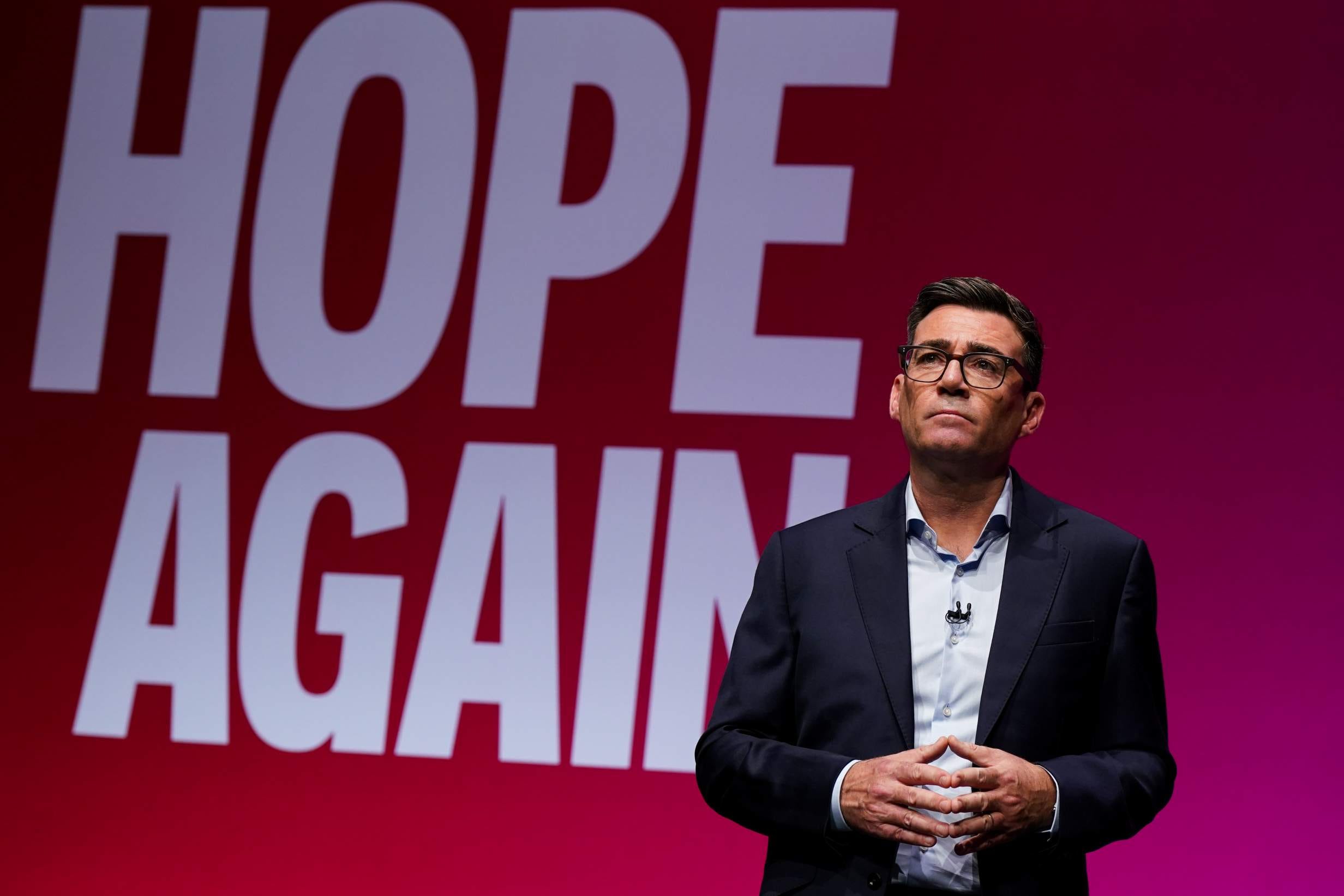
How should we feel about him now that he has set out his colours in his Labour conference speech?
Much was good, especially his long and detailed commitment to everyone being able to have their own home, which got little coverage. Rather than his starting point being the need for ‘growth’ or ‘greatness’, Burnham grounded his approach on the need for everyone to have a decent roof over their heads, an education that made the most of their talents, and not to die in misery.
Much was missing.
· The unprecedented corruption of politics by dirty money.
· Its capture by corporate lobbyists.
· The massive challenge of climate change as it undermines our everyday resilience.
· The staggering inequality of wealth.
· Britain’s structurally undemocratic constitution topped out by the House of Lords.
· The collapse of the American alliance that has been central to British politics since December 1941.
· The media distortion of democracy
Burnham can say that he called out the causes of this multi-layered crisis: “I will say it straight. Britain has been on the wrong path for a long time. Deindustrialisation. Deregulation. Privatisation. Austerity. Brexit. And what has it given us? A country run for vested interests. Not in the public interest. With power held in too few hands. And too many places left to drift”.
But is he committed to rolling back out the outcomes?
In one crucial respect he is. To understand its importance, we have to go back to Starmer. I was never convinced by him. The way he developed his five so-called missions was especially appalling. But in politics, even more than in life, people can redeem themselves. Until they don’t.
The decisive moment was Starmer’s election manifesto. In it, the leader who had made his career by being the Labour Party’s representative on Europe, stated that his Government would “make Brexit work”.
When I read those words, I knew there was no need to read further.
Brexit was a car crash. I’ve argued at length that it was also a brave democratic shout-out by the English, who justifiably felt they had been betrayed. Nonetheless, it was a continuation of their destruction not a solution to it. Brexit could never work except as an act of futile defiance.
By making Brexit a defining feature of his Government, Starmer put his head in a noose and tightened it. There was nothing more to do but wait until the inevitable trap door opened beneath him.
But, as we can see in Kemi Badenoch, Nigel Farage, Rupert Lowe, and the baying idiots of the right-wing media, there is no shortage of volunteers for the noose, including Mandelson and McSweeny and, one has to presume, remaining Starmerite politicians such as Darren Jones.
On this defining issue, Burnham made his call. He stated outright that Brexit hasn’t worked. That it has caused a loss of control, not taken it back. And that he, personally, wants it reversed.
Rightly, he announced an open debate over all the options over how to achieve this, including— if England insists — living with it. But he has defined the grounds on which this debate will take place: Brexit’s failure.
Nothing can progress in British politics without a return to Europe. Burnham has brought our democracy back to what Tom Nairn called, “the terrain of reality”.
Of course, on this terrain, some of the myths that Burnham paid homage to will find their resting place. The Labour Party adores industrial nostalgia. Burnham looked forward to the country becoming the global leader in AI: “We led the world’s first industrial revolution from the Midlands and the north of England. So why can’t we lead the next? We can, conference. And we will.”
I’m confident he knows that this is complete nonsense.
On the question of the Union, I’m not so sure. He put his father into play against Scottish self-determination. “The United Kingdom my dad represented is the one I believe in. A union of nations that gave trade unions and the cooperative movement to the world. A National Health Service. A country that stood up to fascism. A country of solidarity not separation. That’s the Britain my dad represented.”
Well, yes. Burnham has grown up children. His father retired 20 years ago. That Britain was Grandad’s Kingdom, branded by the coronation and the Queen. I should know. Deference, greed and slavishness accompanied fading illusions of grandeur as Whitehall pretended it was Robin to Washington’s Batman. It was a country best described by John le Carré.
Today, in Washington, Batman has turned into the Joker. The old relationship is never going to return. It’s time for us to recreate our country, for ourselves as well as in the world, with sympathy and solidarity, yes, but please not regressive nostalgia.
Five cheers, then for denouncing, “Deindustrialisation. Deregulation. Privatisation. Austerity. Brexit.” But no sentimental return to the ‘consensus politics’ that led to them.
A British union of the future must be based on self-determination not sentiment. Burnham wants us to devolve power to every post code in England. Let’s look at what this means. How do you devolve power without devolving democracy? Democracy in every post-code surely means citizens’ assemblies.
While in Wales and Scotland there already is devolution. They have national parliaments. I share Burnham’s hostility to the centralised, controlling way that the SNP have governed Scotland. But it’s Scotland’s fight to free themselves from it, not Westminster’s.
Of course, this means taking England seriously as a political entity. This is another defining issue that went unrecognised in Burnham’s oratory. It is also an urgent one, to take the English flag away from racists and ‘ethnicists’.
Finally, there is Proportional Representation (PR). Burnham has always said that PR needs to be a manifesto commitment to be implemented in the subsequent parliament. On this, he has been utterly consistent. But also wrong. The right will boycott his commission, which anyway is all too likely to seek an electoral system that can ensure a Labour majority.
First-past-the-post is, in effect, a rigged system. Everyone knows this. You don’t need a ‘mandate’ of less than half the country’s voters to put an end to it. A government with a parliamentary majority the size of Labour’s can introduce a fair, proportional system.
The Additional Member System (AMS) is one. It gives everybody a constituency vote for a local person on the familiar first-past-the-post basis; and a second vote for the party they want to represent them in parliament. If their party gets over the 5% threshold, then they will be represented accordingly.
The key thing is that this empowers voters. The threat of a commission is that it will seek to find the system which gives the existing political class the best possible outcome. Voters want to be empowered. This was the positive energy behind Brexit. It is imperative that it is welcomed not suppressed.
If you want a referendum to legitimate such a change, it can take place six months after people have voted with PR.
In this way, Burnham could have ensured that the coming general election is fair and democratic. As it is, the Tories, Reform and Restore can decide on an electoral pact using their shared desire to prevent Labour’s PR system as their excuse. Then, we could be back to where we were before Makerfield.
What, then, should be the initial judgement on Burnham’s premiership? Personally, I’m pleased and proud I went to Makerfield to help get out the vote, even though I’m not a party member. From Teresa May to Kier Starmer, we were trapped within political theatre of reality-denial, an endless performance that we could neither leave nor bring to an end.
Until Burnham. His desire, which you could feel in his Conference speech, is for British politics to get real and address issues of livelihood. What is especially impressive is that he may have achieved this. Even if he too is dragging his feet, he has opened the door to the world as it is.

I am less convinced than you that Burnham is offering any real prospect of change. He will be defeated by the vested interests who have controlled the Labour Party since Blair. I am particularly disappointed that he is making no effort to deal with the money flooding into politics from lobbyists and vested interests, and has indeed been a beneficiary of it.