

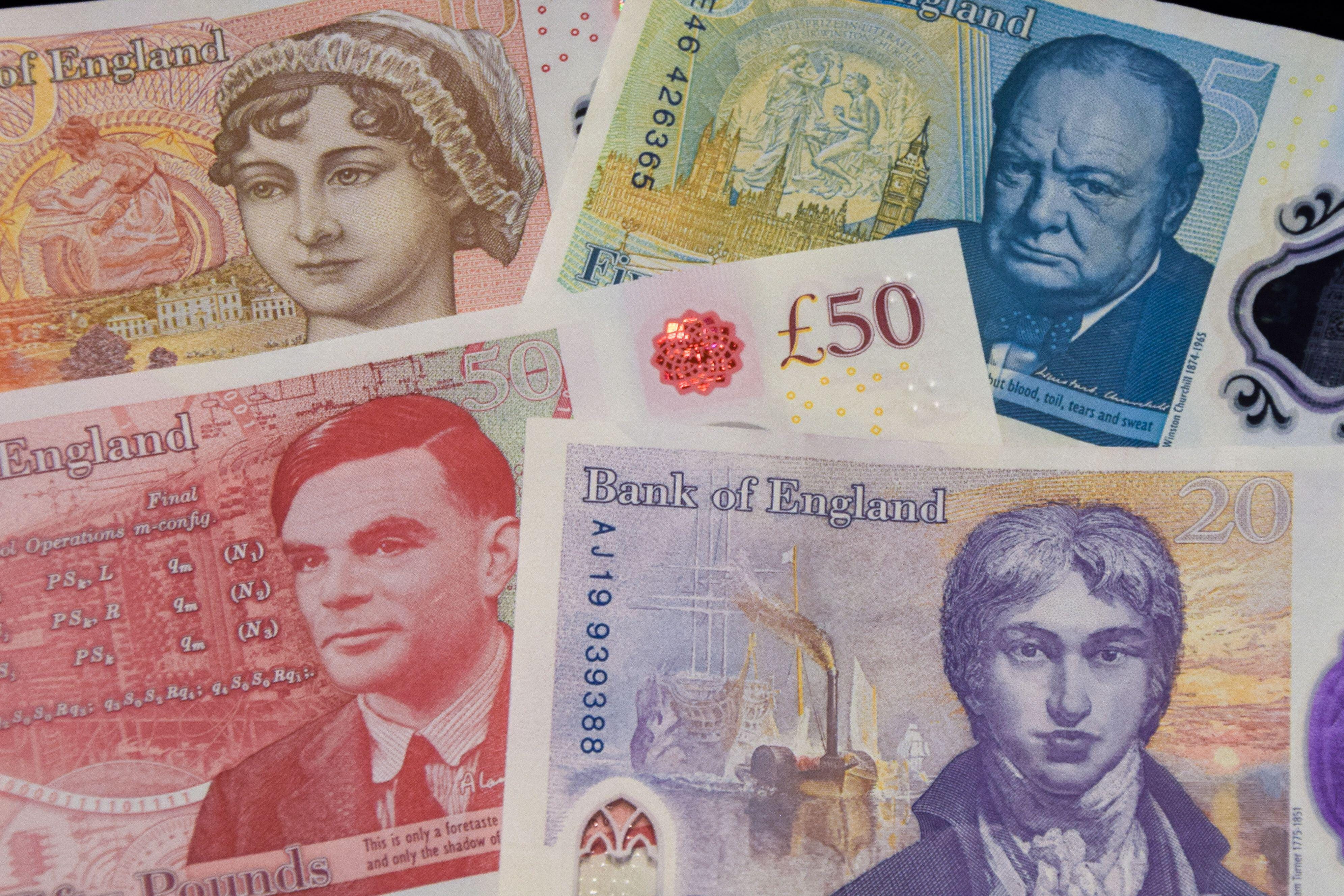
Most people care much more about how many pounds are in their bank account and whether there are enough of them to pay next month’s bills, than what symbol is printed onto the occasional banknote they get from a cash machine. And so it’s easy to dismiss last week’s kerfuffle about Churchill’s face being taken off the fiver and supposedly being replaced by a beaver as the latest round of a boring culture war that’s best ignored.
But culture is how people see the world. It’s the lens through which they interpret their material reality. It defines who they end up blaming if they don’t have enough cash. And this particular argument revealed two crucial, competing stories about who we are, and so how we might navigate our way to the future.
Or, rather, who you are. I’m Scottish and we have our own bank notes, many of which already have native wildlife on them. We have our own national myths. This was really, mostly, a story about England (sorry, Wales).
The Public’s Choice vs Politicians’ Outrage
This all actually began last year, when the Bank of England started its cyclical process of renewing its bank notes, which is part of how it prevents counterfeits.
It held a public consultation about what theme the images on the new notes should have — with options including historical figures (as before), architectural landmarks, and nature alongside others (as well as a write-in option). 44,000 people responded, and the Bank also ran focus groups. Both processes gave the same answer: when asked what images they want to use to symbolise the country, actual real British people overwhelmingly chose nature — and, specifically, native wildlife.
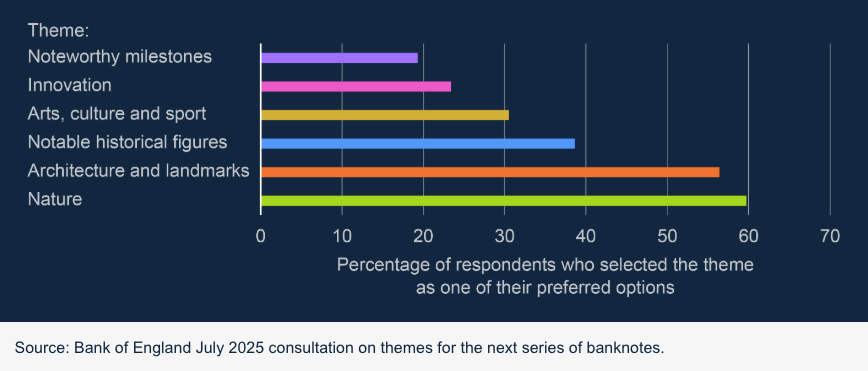
When the results of this process were announced last week, the guardians of official British nationalism coughed up their usual phlegm.
Nigel Farage posted on X that “The Bank of England is replacing Winston Churchill with a picture of a beaver on our bank notes. This is the definition of woke”. Kemi Badenoch said “removing Churchill from banknotes is erasing our history” and that it is “a silly thing to do”. Even the Lib Dem leader Ed Davey — who should know better — denounced the public preference.
The right wing press similarly bloviated, with The Spectator, Telegraph, Mail and Sun lurching into action, saying the thousands of people who responded to the Bank’s survey were “bonkers” (or similar) for not loving their country in the correct, officially approved manner.
For me, Farage’s outburst had a particular resonance. As I’ve previously described in Byline Times, my parents were among the small group of people central to reintroducing beavers to the UK. While, in fact, there will be another public consultation this summer to pick which animals will appear, my fantasy of Nigel popping a vein every time he spots a sketch of a reintroduced rodent on his grubby fiver was briefly very pleasing.
But the whole affair also had a much deeper resonance.
English National Myths
The same day that the Bank of England made its announcement, I was hosting a discussion with the former Green MP, and current Byline Times columnist, Caroline Lucas in Glasgow, (and we’d had one the night before in Edinburgh), where we were talking about her book Another England, in which she argues that progressives need to reclaim ideas of Englishness from the far right. The book, which is rooted in literature (before she was a politician, she got a PhD in the subject), draws on (another Byline Times columnist) Anthony Barnett’s argument about the role of toxified Englishness in driving Brexit, and tells some of the stories which could be woven into new — reclaimed — English national myths.
One important literary figure she highlights is the poet John Clare — who should perhaps have a national significance to England in the way Robert Burns does in Scotland. Clare epitomises the English as a nation of nature lovers, torn from their heritage by the Acts of Enclosure. The Englishness of Clare and Lucas is rooted in a love of the land, and the creatures with which we share it. It’s not about dominating or claiming to be superior to others, but loving your country like you love your family, not because it’s better than other families, not with hard boundaries about who counts as part of it, but because you do.
In contrast, Barnett has previously given a name to the official ideology of the British state — the one Another England tries to plot a path away from. After watching the parliamentary debate which led to the Falklands war, he highlighted the imprint of what he called “Churchillism” — a thought-structure he later implicated in the Iraq war, and the Brexit vote.
Churchill is significant in the British political imagination not just because of his actual historical role, but also because he was the founding father of the modern British nation: the “Britain” which went into WWII was a world-spanning empire. The “Britain” which emerged was a country on this archipelago. Its self-image was in many ways defined by stories about its father-figure: both “defiant and alone,” the underdog of June 1940, standing against the Nazi menace. But also imperial and mighty, the core of the Greatest empire the world has known.
This latter self image is the one to which Westminster and our wider officialdom still, just about, desperately cling, because it makes them feel important on the world stage, and because it’s a justification for the relatively undemocratic power of the institutions which in turn give them power. This is the supposedly “Great” Britain which voted for Brexit and put up two fingers to the world. It’s the Anglo-Britain which desperately clings to the US so that we can keep a seat at the top table, rather than embracing our place as a second tier power.
But what the Bank of England’s consultation shows is that, a decade on from the Brexit vote, 44 years on from the Falklands War, this official ideology has less purchase than ever.
A More Positive ‘Englishness’
For most people in Britain, the thing we actually like about our archipelago isn’t its imperial history. Actually, talk to most English people about what they want to symbolise their home, and they don’t — most of them — bang on about all that pompous ‘Greatness’. They are, rightly, happy that our ancestors defeated the Nazis, but also, increasingly, feel awkward about all the other wars, conquests, and colonisations. What they love is the wildlife: something no one owns, and for which none of us can really claim credit. People choose such imagery because it’s not self-aggrandising, it’s just lovely in its own terms.
And that tells a much more positive story about who the English actually are, and who you really could be, than any picture of a figure from history can. Ask 44,000 people today what symbols they want on their currency, and the answer you get is much closer to Caroline Lucas’s other England than it is to Nigel Farage’s rotting Britishness.
With Scotland, Wales and Northern Ireland all contemplating leaving the Union, that progressive Englishness is just waiting to take constitutional form.
Adam Ramsay’s forthcoming book, Abolish Westminster will be published by Faber & Faber in November 2026.