


Thank you Courtney, Tee Ree, Tamar Kranick, Jean Rowe, Esther B, and many others for tuning into my live video with alexandra hall hall 🇺🇦🌻! Join me for my next live video in the app.
If, like many of our viewers, you want to know more, read Alexandra Hall Hall’s full Byline Times article below.
All The Kings’ Horses and All the Kings’ Men Can’t Put the US-UK ‘Special Relationship’ Together Again
It will take far more than some clever speechifying from the King to repair the deep damage the US President has done to relations with his country’s former closest ally, argues Alexandra Hall Hall
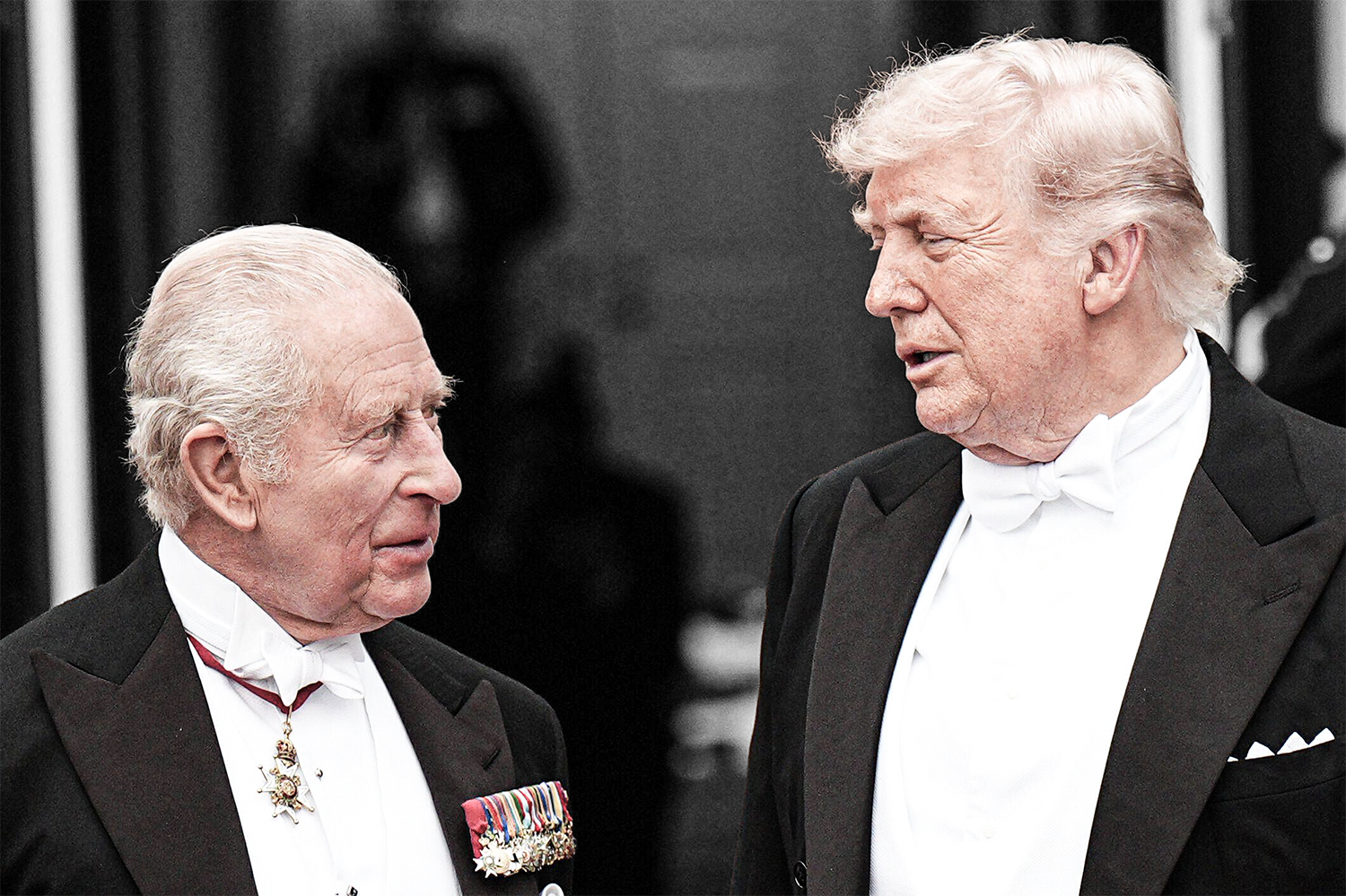
King Charles has played a blinder (or “knocked the ball out of the park” as we say here in the US) during his state visit.
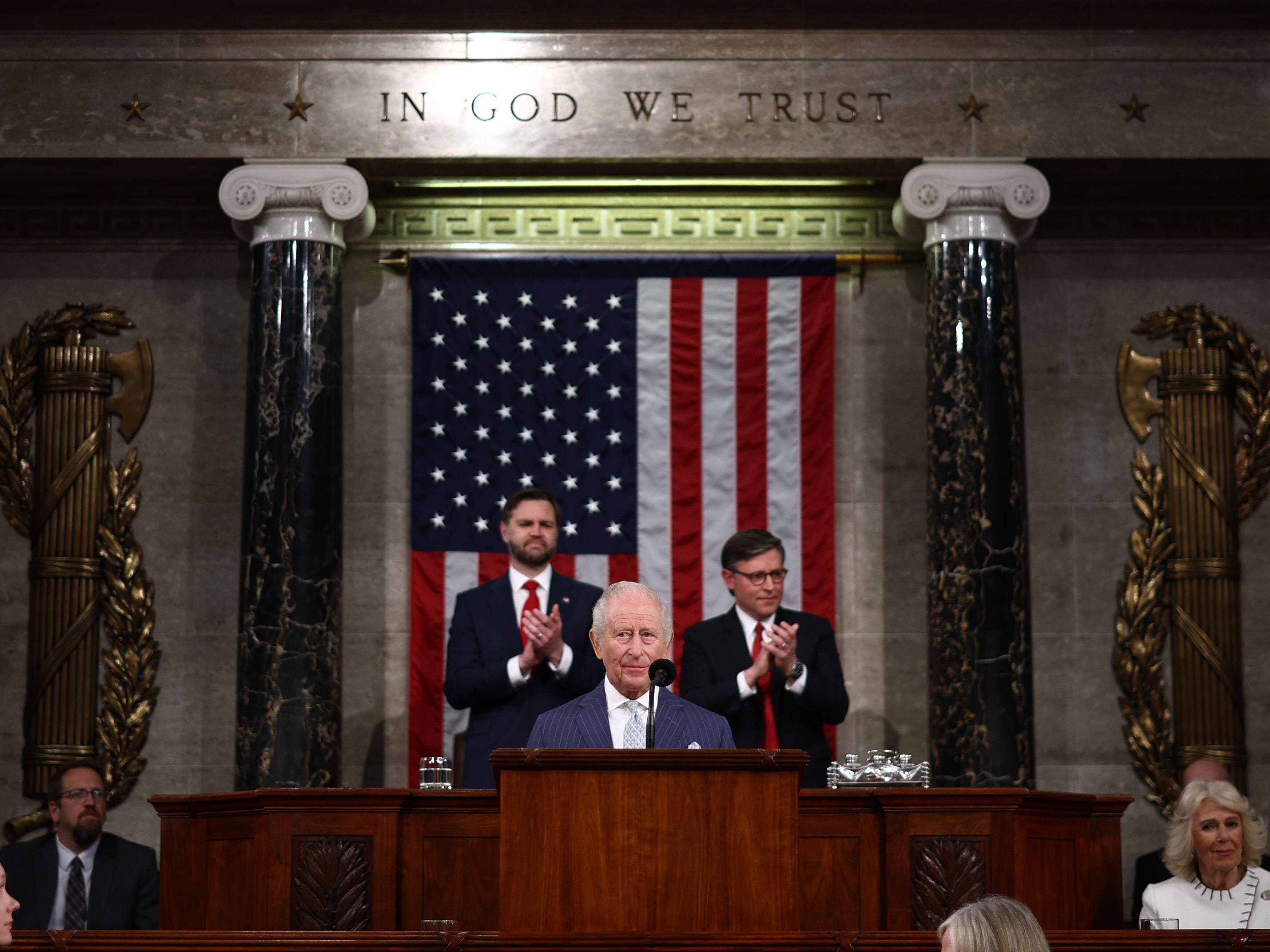
The logistics proceeded without a hitch. The atmospherics were genuinely friendly. His personal gift to the President – a golden bell from a former British submarine, HMS Trump – was perfectly suited to appeal to the President’s love of shiny things and vanity. Above all, his two setpiece speeches on 28 April – one to the Joint Houses of Congress, one at the State Banquet at the White House – were absolutely pitch perfect.
His first address, to Congress, was packaged with a masterful blend of gentle humour, warm reflections on the deep ties of history, culture, shared values and sacrifice that have bound the US and the UK together and his repeated praise for the US, as a “citadel of democracy”, imbued with a “spirit of liberty.” These flattering remarks were all well received by his bipartisan audience, who collectively rose to their feet multiple times during the speech to give standing ovations – no mean achievement in America’s highly polarised political environment.
But the heart of the speech contained a series of surprisingly pointed remarks addressing the issues which currently threaten to divide the US and the UK.
Against the backdrop of the Trump administration’s frequent criticisms of NATO, the King’s strongest pitch was in defence of the alliance, arguing that the transatlantic partnership between Europe and America was more important than ever in today’s volatile world. He drew on the words of British Prime Minister Sir Keir Starmer to caution that “we should not disregard everything which has sustained us for the last 80 years, but build on it.” He argued that today’s challenges were “too great for any one nation to bear alone,” and said that he “prayed with all my heart that our Alliance will continue to defend our shared values, with our partners in Europe and the Commonweath, and across the world.”
In a direct rebuke of the isolationist tendencies of some in the MAGA movement, he also urged that “we ignore the clarion calls to become ever more inward-looking.”
The King additionally reminded his audience that in the wake of the 9/11 attacks, when NATO had invoked Article 5 and the UN Security Council stood united in condemnation of the terrorists, “we answered the call”, and that the UK had stood “shoulder-to-shoulder” with the US through two World Wars, the Cold War, the war in Afghanistan, and many other moments affecting shared security.
This was followed up by a direct appeal to apply the same “unyielding resolve” to support the defence of Ukraine “and her most courageous people”, in order to secure a “truly just and lasting peace” making it crystal clear where the UK stood on this conflict.
The King stressed that the joint commitments of the US and its allies to each other’s defence were at the heart of NATO, helping to keep both Europeans and Americans safe from common adversaries. He noted in particular that UK-US defence, intelligence and security ties were hardwired together through “relationships measured not in years, but decades.”
In what was a standout line for me from the speech, to rebut those who contend that the so-called UK-US special relationship is purely a sentimental one which has outlived its practical relevance, the King went out of his way to stress that the UK-US do not “embark on these remarkable endeavours together out of sentiment. We do so because they build greater shared resilience for the future.”
The King also used his speech to make the case for interfaith dialogue, referencing his own Christian faith in the process, and for living up to our “shared responsibility to protect nature.” Though he did not call anyone out by name, these remarks were clearly directed at religious extremists in the US, whose passion for their own religion increasingly manifests itself in bigotry towards other faiths, and at right-wing climate sceptics.
No Kings
However, the King’s bluntest remarks, though delivered in a subtle way, were a very clear expression of concern about the trajectory of American democracy under Trump, and will clearly have been understood as such by his audience. Noting that many of the US’s democratic traditions, including its Bill of Rights, stemmed from earlier British documents, such as the Magna Carta and the 1689 Declaration of Rights, he pointedly observed how these had been cited in many Supreme Court cases “not least as the foundation of the principle that executive power is subject to checks and balances.” He went on to say that the spirit of liberty, and the promise of America’s founders were present in every session and every vote cast of the Congress “not by the will of one, but by the deliberation of many.”
This was about as black and white as it can get – a deliberate reminder to Congress that America’s system is based on checks and balances, and that it has a duty to ensure that American government does not become beholden to the whims of one person.
Though his speech was ostensibly well received by everyone present, his words will have been discomfiting for many on the Republican side, who have so cravenly abdicated their Congressional duty to hold the Executive branch to account.
The King’s second speech, at the State Dinner, was probably therefore carefully crafted to assuage any bruised feelings. This time, the speech was much more personal, directly addressed towards President Trump and the First Lady, and focussed on less contentious themes. There was a very heartfelt expression of sympathy and support for the President, his wife, and all those present at the recent White House Correspondent’s dinner where an assailant tried to attack the guests. There were references to President Trump’s own familial connections to the UK, and his golf courses in Scotland today. There were more reminders of the importance of NATO, supporting Ukraine, and other joint endeavours, such as the trilateral nuclear submarine deal with Australia, known as AUKUS. But the main focus of the speech was a repeated emphasis on the unbreakable bond and historic friendship between the UK and the US, which had survived differences in the part, and should continue into the future.
As in Congress, the speech was punctuated with many good jokes – with the King even managing to get away with several sly pokes of fun at the President himself, such as about Trump’s massive new ballroom (“I can’t help noticing the slight adjustment in the East Wing”) and a riposte to Trump’s oft-made claim that if it was not for the US intervention in World War 2, all of Europe would be speaking German (But, if it wasn’t for us, you would be speaking French”). These were so gently delivered that they could not possibly cause offence, and the President appeared happy to laugh along as well.
All involved in the King’s visit, particularly his speech writers, should therefore feel genuinely pleased with how it has gone so far. The King has succeeded in delivering some useful messages to America’s political leaders, and – by appealing to America’s finest traditions and historic shared values with the UK – will undoubtedly have reminded his audiences of the best aspects of the UK-US relationship.
But, I do not believe it will translate into a dime of difference in relations between the current British government and American administration. President Trump personally has a remarkable ability to compartmentalize. Despite lavishing praise on the King, and expressing his own appreciation for the UK as a country, he will not feel any greater sense of goodwill or obligation to be nice to the Prime Minister Keir Starmer. In his mind, the Royal Family, and the nation of the UK, are distinct entities from the current UK Government. Trump even inadvertently blurted out this distinction in his mind during his own remarks at the State Banquet, when he suggested that the King shared his own views on Iran, implying, unlike the British Prime Minister.
Indeed, it seems to elude many Americans that the King is here representing the British state, at the behest of the current British Government, and that everything he says, even if he uses his own choice of words, will have been at its direction.
One Republican Congressman, interviewed about the King’s speech a day later, demonstrated this even more clearly, when he was quoted saying “as opposed to Keir Starmer, who is looked at as a leftist weenie, we saw in King Charles someone that is proud of Britain.”
Unfortunately, the problem also goes beyond just this administration, or just Republicans. Many Americans are genuinely fond of their shared history and traditions with the UK, admire many aspects of British culture, and feel affection for the British Monarchy, but still deplore the trajectory of British politics in recent years, or even actively dislike recent British political leaders and their policies. There is a shared concern, on both sides of the political aisle, that the UK, especially since Brexit, has entered a period of erratic political leadership, drift and decline. National security experts are particularly concerned about the decimated state of the British armed forces, which vastly reduces the UK’s value, influence and relevance to the US.
For their part, many British citizens are appalled by the antics of President Trump, deeply offended by his insults towards the UK, and worried that under his leadership, America is not only no longer so reliable as an ally, but also heading in an illiberal direction, completely at odds with its original founding ideals. They also fear that Trump’s antipathy towards Europe is not a one-off, but symptomatic of a widening divergence of viewpoints and interests across the Atlantic.
The current UK Ambassador to the US, Sir Christian Turner, was only speaking the truth, when remarks he gave to a private group were leaked on the eve of the visit, saying that the US’s real “special relationship” was with the state of Israel.
It will take far more than the King’s visit, and some clever speechifying, to repair the underlying fraying of UK-US relations.
Alexandra Hall Hall is a US-based former British diplomat with more than 30 years experience. She resigned from the UK Foreign Office in December 2019 because she felt unable to represent the Government’s position on Brexit with integrity. She is a co-host of the Disorder podcast.


