


BYLINE TIMES IMPACT: Find out about the changes you made happen
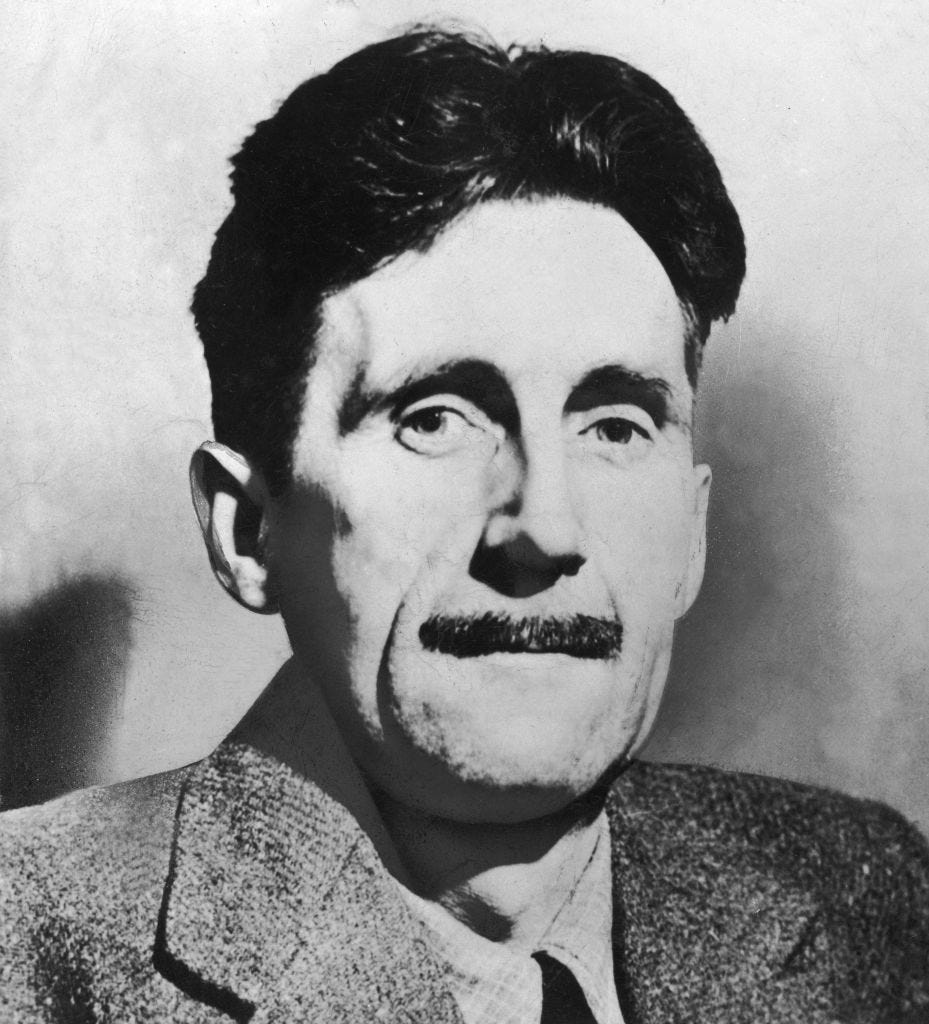
For many of my Boomer generation, the artist, broadcaster, novelist, and critic John Berger was as essential a guide to our postwar 60s consumer society as George Orwell had been to the decline of the British Empire and the rise of fascism for the generation before.
They had many things in common.
Both Orwell and Berger were casualties of the class hierarchies of English culture, especially as inculcated through the cruelties of private boarding schools.
Orwell was schooled at St Cyprian’s and Eton, followed by five years policing Burma.
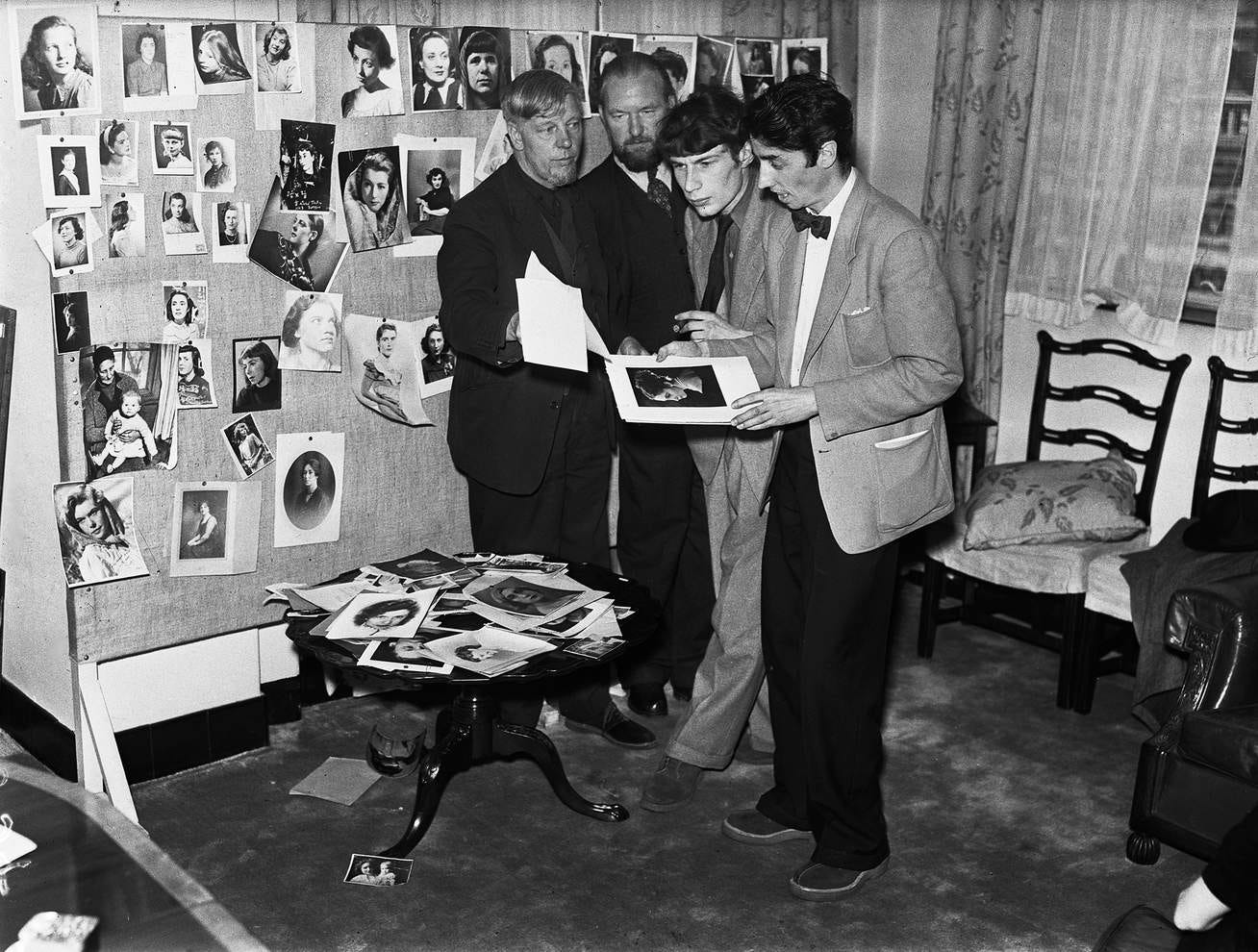
Abused by one of his teachers, Berger ran away from St Edward’s at 16 and went to art school in London, lodging in the Hampstead attic of the child psychoanalyst DW Winnicott, where the two of them talked at length about how children are made, and unmade.
Both eschewed university.
Conscripted in 1945, Berger refused an officer’s commission and served instead as a lance corporal among working-class recruits. Army life seems to have been too much for him. As Tom Overton reveals in his new biography, John Berger: From Life, Berger appears to have been sectioned out of the army after a psychiatric episode and a stay in Grahamholm Military Hospital, south of Belfast. (By coincidence, my father’s army service ended the same way a few years later.)
Berger then struggled to make a living as an artist, just as Orwell had struggled to make a living as a novelist, and likewise funded his ‘artistic’ activities with gigs in print journalism.
Orwell’s column in the left-wing weekly Tribune, ‘As I Please’, ran from 1943 to 1947. It was a licence to write about whatever caught his eye.
Berger took up almost the same brief in the same paper four years later under the heading ‘Looking Around’, with essays ranging from Stanley Spencer to Le Corbusier, from the painted caves at Lascaux to the Festival of Britain, often quoting Orwell in support of his own arguments.
They both also wrote for the New Statesman, then the in-house journal of the Oxbridge-connected left establishment, and chafed against its attempt to box them in either as cultural commentators or political pundits.
Arguing back against his critics in the letters pages of the weekly, Berger explained: “Far from my dragging politics into art, art has dragged me into politics.”
Writing in Gangrel in 1946, Orwell exclaimed: “What I have most wanted to do throughout the past 10 years, is to make political writing into an art.”
A shared background in polemical print journalism explains the sharp angles of attack that make Orwell and Berger’s essays still so immediately readable. But the clarity of their prose probably comes from somewhere else: years writing for the medium of radio.
Orwell spent two years on the BBC’s wartime Eastern Service at 200 Oxford Street, writing talks to be read to India. Seven years after he walked out, Berger crossed the same thick red carpet. His first broadcast went out on the General Overseas Service in the early hours of 10 October 1950: 15 minutes on the current art exhibitions.
Before long, Berger was describing the pictures in the National Gallery to West Africa on a programme called London Calling.
Hours composing for the radio microphone, learning the way it picks up the emphases of everyday speech and the tonal authority of voice, explains why the words of both writers, many years later, still leap off the page.
But here the similarities end, and the differences widen. The 23-year age gap between Orwell and Berger became an abyss – the gulf between pre-war and postwar.
Class and Commodities
Pre-war, Orwell, the upper-class Etonian, was a vertical descender.
Down and Out in Paris and London and later The Road to Wigan Pier were attempts to discover how people lived on the other side of the English class system: washing dishes in Paris, sleeping in lodging houses, descending into mines.
Berger’s postwar world required more lateral thinking. His first-person reportage looked at the stresses and strains of the postwar welfare state.
With the photographer Jean Mohr, he followed a country doctor through the Forest of Dean in A Fortunate Man. His subjects were not the indentured labourers of the British Empire but the migrant workers of a rebuilt Europe.
In A Seventh Man, he tracked the Gastarbeiter from Turkey and the former Yugoslavia as they shuttled across the new ‘Common Market’ to answer the needs of a booming consumer society.
The shift between empire and consumer society was also a change between the language of bureaucracy and the iconography of consumption.
Brought up to administer the Empire, Orwell was primarily of a world organised by class, classification, racial categories, and the ‘white man’s burden’. His focus was on language, and how it reveals not only the ideas we think about, but the ideas we think with.
His appendix to the novel Nineteen Eighty-Four, ‘The Principles of Newspeak’, is a testament to how political vocabularies can make some thoughts impossible, and the unthinkable possible.
Berger inherited a different world whose centre of gravity shifted towards mass media, migration, the global market, and a new visual order. His postwar Europe was no longer organised only around bourgeois and proletarian, ruler and ruled, but increasingly around consumer and producer.
While his predecessor went looking for the people hidden beneath the class system, Berger went looking for the world hidden behind the commodity.
To do so, Berger left Britain, and then urban life, spending most of his time with one partner in a peasant village in the Haute-Savoie, though regularly visiting the metropolis of Paris (and a second partner) on his motorbike.
Whereas the peasant still experienced the world of production through things made, grown, repaired, slaughtered, stored, and handed down; the metropolitan citizen was bedazzled and enchanted by things bought, advertised, displayed, and consumed.
This was what the French Marxist Guy Debord called “the society of the spectacle”, and Berger, with his artist’s eye and visual acuity, was perfectly placed not only to see through the spectacle, but also to expose the lenses it imposed on us.
Ways of Seeing Again
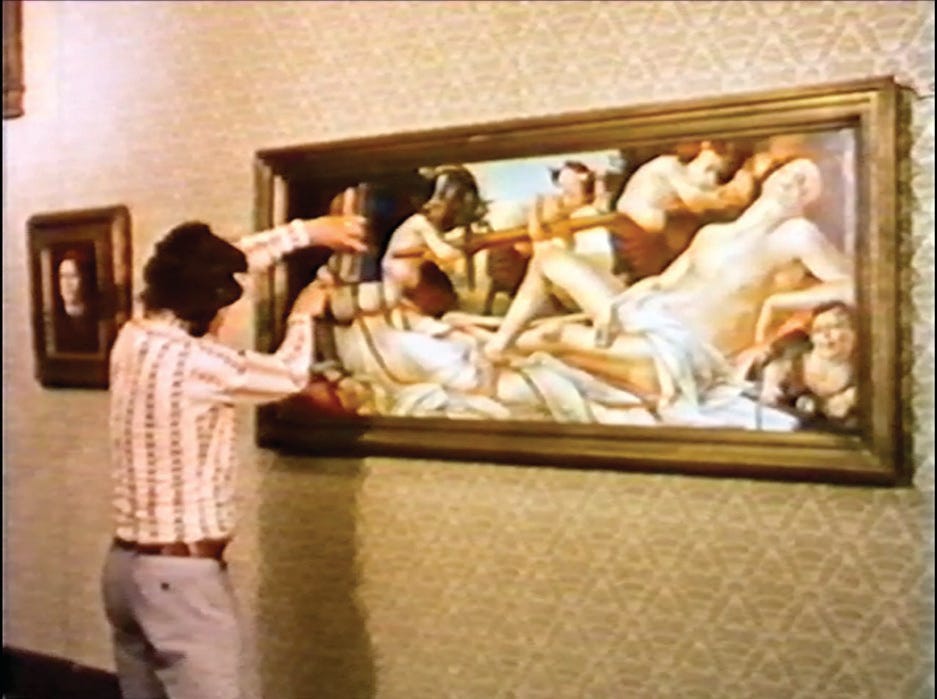
Berger’s seminal four-part analysis of our visual culture, Ways of Seeing – its opening episode connecting Renaissance Quattrocento perspective with Soviet Cinema and the writings of the German philosopher Walter Benjamin – is still extraordinary viewing more than half a century later.
He describes how high art has been processed by mechanical reproduction into weaponised information.
The BBC2 series, which first aired in 1972, begins with a surrealist provocation as Berger apparently cuts off the head of Botticelli’s Venus in the National Gallery with a scalpel (it was just a reproduction). Yet, this avant-garde provocation compels less than the arresting intensity of Berger’s eyes and the moral clarity of his voice.
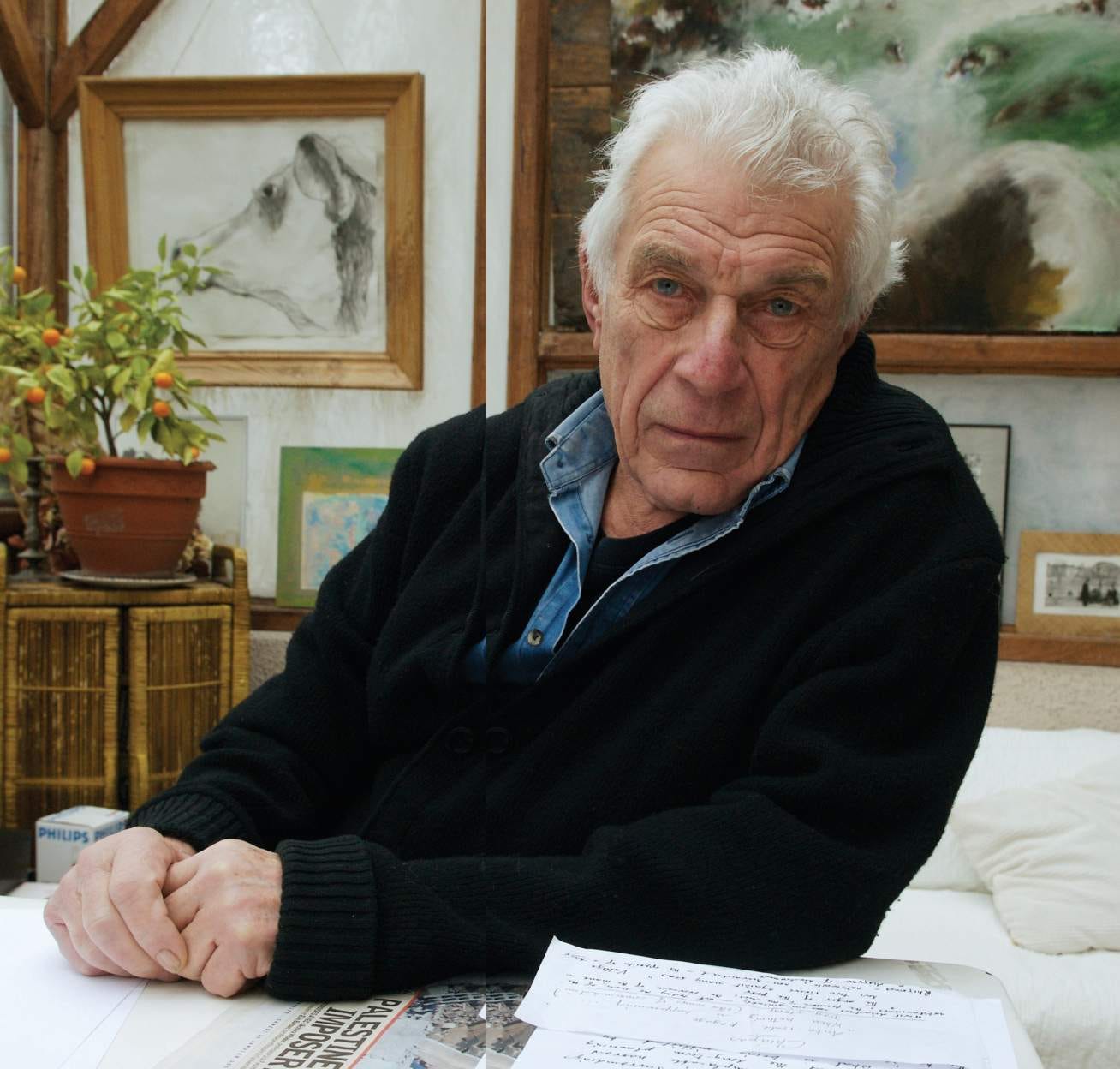
His success as a TV personality did not come out of the blue.
Berger had begun broadcasting in 1958 for the BBC’s Monitor arts programme; and was soon on the commercial stations, ATV, explaining Picasso’s Guernica to Kenneth Clark; and by the early 1960s surviving on arts commissions from Granada TV.
These forays into the new mass medium attracted the disdain of contemporaries such as the novelist Doris Lessing.
For a while, Berger claimed he only took these gigs to fund his fiction writing. But he soon realised it was a new, direct way of talking to people beyond the confines of the literary world. And colour TV gave him a whole new palette to play with.
It worked for me.
As a child of the 60s – who spent hours glued to the blackened chimney stacks and mournful opening music of Coronation Street, or scared by Cybermen coming up through the London sewers in Doctor Who – the advent of colour TV was like a psychedelic trip.
The new station BBC2 was the first to broadcast in colour in 1968. The images I remember are of a luminous test card, and then some endlessly repeated film of a red balloon floating through blue skies.
But it was thanks to another, still living, centenarian – David Attenborough – Controller and then Director of Programmes at BBC2, that Ways of Seeing was ever commissioned and exploded into our living rooms.
Before that, Kenneth Clark’s Civilisation was devised to show off the new medium, and fulfil the corporation’s Reithian remit to entertain, educate, and inform. With 13 hours of European cathedrals, paintings, and sculpture, BBC2 proved that television could become an animated museum.
Berger’s follow-up was more like a pot of paint thrown in the face of the audience.
By the second episode, Berger laid bare – in a dazzling montage of images from classical art and modern advertising – the difference between the commodified ‘nude’ and genuine humane nakedness, defining what would later be called the ‘male gaze’.
Ahead of his time, Berger exposed the hypocrisies of the ‘permissive culture’ we had inherited – even if, in his chequered personal life, he seemed to succumb to some of them. The sexual freedom of the 60s, dominated by men, he pointed out, was an opportunity for further intrusion and exploitation.
Feminist writers, such as Susan Griffin in Pornography and Silence (1981), explored further the violence and subjugation that followed, as the male gaze penetrated our most intimate lives.
Berger’s words survive as great prose, even off the screen and on the page. As a student, his writing inspired me more than his TV appearances.
For example, in chapter seven of the book version of Ways of Seeing, explaining the seductive power of advertising, Berger says: “The spectator-buyer is meant to envy herself as she will become if she buys the product. She is meant to imagine herself transformed by the product into an object of envy for others, an envy which will then justify her loving herself.”
And then he reframes it again: “One could put this another way: the publicity image steals her love of herself as she is, and offers it back to her for the price of the product.”
This is a TV script transforming itself into philosophy and poetry.
It also directly addressed the boom of postwar consumer capitalism I was brought up with, as our desires were targeted, and the promises of romance, exoticism, rebellion, or family security magically connected to the right chocolate box, perfume, car, cereal, or packaged holiday.
Much of the cultural output of the time can be explained by that feeling of post-consumption tristesse.
Jon Voight trailing the New York streets looking for a pick-up in Midnight Cowboy, with Harry Nilsson singing ‘Everybody’s Talkin’’ over him. Dustin Hoffman hearing ‘The Sound of Silence’ as he is offered, in The Graduate, a future in the world of “plastics”.
That world of mass media has gone, but the alienation implicit within it has gone deeper.
Thanks to social media, we give our self-knowledge for free in the form of targeting data. Robbed of our self-esteem, assessed and ranked through our Instagram accounts and Facebook posts, we have become the products.
As Berger might have observed, having surrendered our self-knowledge to them for nothing, we have allowed big tech media to know us better than we know ourselves.

Talking to the Dead
Unlike Orwell, who died at 46, Berger lived to 90. With nearly double the lifespan, he could focus on another neglected underclass: the dead.
This preoccupation with mortality, as Tom Overton points out, had been there from the beginning.
When Alberto Giacometti died in January 1966, Berger – then writing for the new weekly New Society – said that the Swiss sculptor’s death confirmed the value of his work, and that his mortality had been “the only perspective he could trust”.
It was as if the profile of the artist, cut out against the frame of the society around them, is only really clarified when death finally defines it.
The same clarification is now happening to Berger himself.
Overton’s biography, compiled during the 15 years since Berger gave his extensive archive to the British Library in 2010, is the first comprehensive account. But there will surely be more to come.
Some might explore Berger’s failings and blind spots in ways he might have preferred hidden.
But the face Berger tried to present – the questioning gaze in Ways of Seeing, demanding you pay attention but also asking you to push back – may matter more.
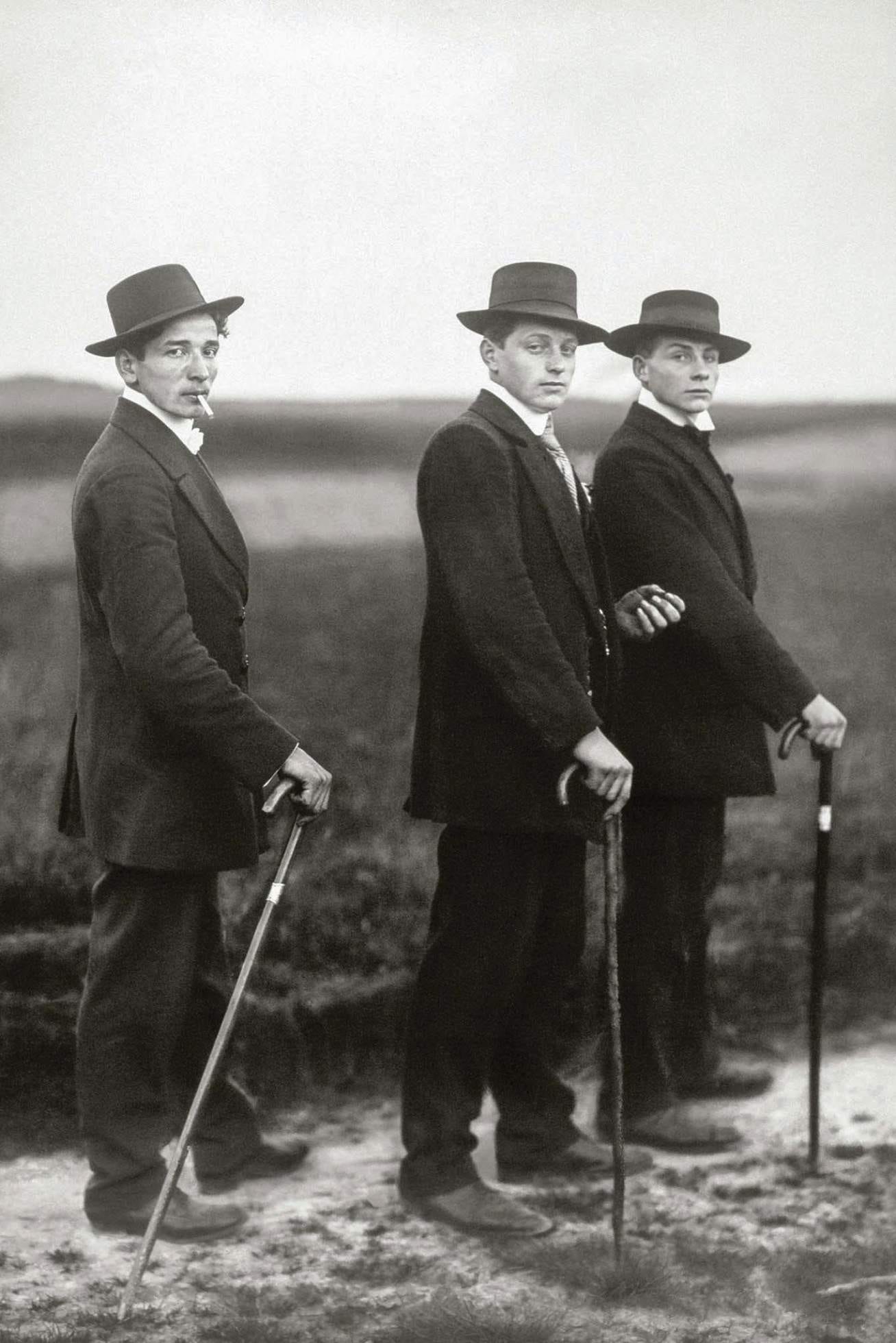
One of my favourite essays in Berger’s book About Looking focuses on August Sander’s photograph of three young farmers on a road in Westerwald, Germany, in 1914. They wear suits and hats and carry walking sticks.
Berger looked at the suits and saw class: clothing cut for bodies that did not labour, worn by bodies that did, as they marched into the cataclysm of the 20th Century and two world wars.
But there’s something else Berger underplayed. The three men are doing something simpler. They are choosing how to appear.
They have put on their best clothes. They are facing the camera. They are leaving us with a pose. But a pose is not necessarily a lie. It tells us what they wanted to be seen. They are looking to the future with a message.
John Berger’s understanding of what the past was trying to say to us, and how it shapes our present, is perhaps one of the least acknowledged, and most original and radical, legacies of his work. (Remembering that originality means going back to the origins, and radicalism returning to the roots.)
Most progressive left-wing thought has agreed with Karl Marx that the past is a prison to be escaped. “The tradition of all dead generations,” Marx famously declared in The Eighteenth Brumaire of Louis Bonaparte, “weighs like a nightmare on the brains of the living.”
Nearly a century later, Walter Benjamin, who had such an influence on Berger, tried to resurrect a gentler tradition. He saw the dead not as a curse but as an inspiration and an obligation.
Every generation, he wrote in On the Concept of History (1940), is endowed with a weak messianic power, not to bring back an individual saviour, but to redeem the injustices suffered by the dead – a “secret agreement” to redress their historic wrongs.
The fact that Benjamin wrote this months before taking his own life at the Spanish border, rather than risk being sent back into Nazi hands, makes it all the more powerful.
Writing half a century later, John Berger turned this redemptive image around. “The dead surround the living,” he wrote in his Twelve Theses on the Economy of the Dead in 1994. We think of the dead as departed, a diminishing crowd going away from us. But they are the majority, and we are just the small bright “core” of their collective.
In pure demographic terms, Berger is not wrong.
Despite the explosion in the world’s population in the last 100 years, the dead still outnumber the living by around 15 to one. That ratio will only rise if the world population stabilises, as it is predicted to. And, of course, it would massively increase with any global calamity.
Buried Ways of Being
In Berger’s thesis, he urges us to see the departed not as individuals but collectively.
By focusing on the lost social life of the past, he anticipates the work of modern anthropologists and archaeologists such as David Graeber and David Wengrow in their book The Dawn of Everything (2021), who replace the bourgeois histories of great men, kings, and recorded emperors with the growing evidence of different political communities and forms of social organisation, buried ways of being.
In this way, the dead are never really silent, but remain an ever-evolving presence that constantly engages us in dialogue.
The world of the dead, Berger says, is continually “rebegun” in our times. Our present and our future are things that their “imagination” has created.
So Berger inverts Benjamin. We’re not here to save the dead. They are here to save us.
In some small way, John Berger did save me.
Along with the historian Tony Judt, and the newspaper editor Harry Evans, he was the biggest intellectual influence on my life. But unlike with either of them, I never met him in person. Though I nearly did.
To my complete amazement, my publishers sent him a copy of my first book, A Shout in the Street, published in early 1990, which he had done so much to inspire. Berger read it, wrote me a letter praising it as a “dream of a book”, and invited me to visit him in the Alps.
It might have been one of the happiest moments of my life. But it coincided with an even happier and more momentous event. His letter arrived on the same day as my son, Alexander, was born, and I never went to Quincy, in the commune of Mieussy.
Never mind. I can still see him, through the many lenses of our culture and now Tom Overton’s biography, helping to gather in the harvest on those steep alpine slopes, and then roaring back into Paris on his motorbike. ●
John Berger: From Life by Tom Overton is published by Allen Lane (Penguin)
Peter Jukes is Co-Founder and Executive Editor of Byline Times. This article appears in the current print and digital edition of the Byline Times monthly magazine.