

230,000 Deaths and the ‘Calculated Silence’ of the Medical Establishment About the COVID Inquiry
The Covid Inquiry Report is a devastating critique of the medical establishment which led the UK to the worst public health disaster in a century, argues Anthony Costello
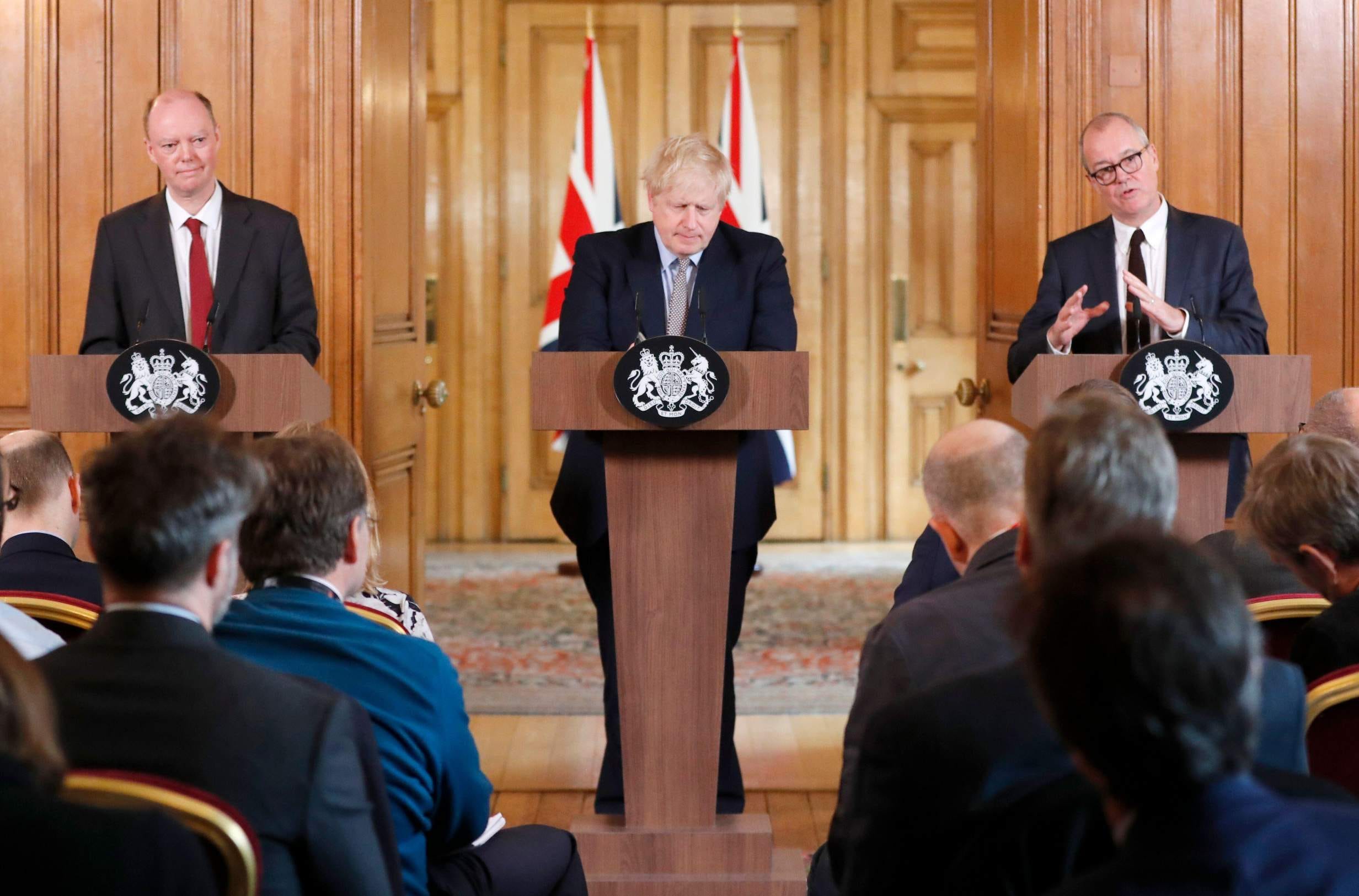
The Covid Public Inquiry Report published on 20 November 2025 is a devastating critique of medical advisers, civil servants and politicians who led the UK to the worst public health disaster in a century. More than 230,000 deaths. A death rate five times higher than the East Asian states that took rapid action to suppress and control the virus. Three times more deaths than in the Blitz. The bereaved families need accountability. They won’t get any from the medical establishment.
Why did this happen? Why was the advice given to government from our Chief Medical Officer (CMO) and Chief Scientific Adviser (CSA) so wrong, and why was the culture and structure of the Scientific Advisory Group for Emergencies so aberrant? (See below: Key events before the UK lockdown - ‘February 2020 was a lost month’ Baroness Hallett)
In short, they proposed a pandemic influenza strategy for the wrong virus. They refused to implement WHO advice about suppression of viral transmission. They did not press Ministers to rapidly develop a test, to expand a workforce to find contacts, or maintain isolation. They didn’t emphasise the importance of financial support to families asked to isolate. They supported a bizarre ‘herd immunity’ strategy that allowed a dangerous new virus to spread across the population. And their policies led to prolonged national lockdowns leading to the biggest fall in GDP for 300 years and economic damage that still affects us all. In May 2020, Jeremy Hunt, chair of the Parliamentary Health Select Committee reported that SAGE advice represented the “biggest failure of scientific advice to Ministers in a generation”.
Almost six years on, the medical and scientific leaders have been garlanded with knighthoods, the CSA promoted into Cabinet, and several awarded fellowships from the prestigious Royal Society. Yet the shocking criticisms of a lengthy public inquiry are being ignored. The same leaders have rejected key Inquiry findings and are not being held accountable. Why?
World Health Organisation SAGE Policies
On my first day at WHO Geneva as director of the Department of Maternal, Child and Adolescent health, I was told I was no longer an independent scientist. As an international civil servant, my job was to convene, facilitate and assist the preparation of meetings and reports, and join discussions of course. But scientific interpretation would be decided by invited independent scientists. The WHO Scientific Advisory Group of Experts (SAGE) on Immunisation had an independent chair and an independent board of outside experts. Board members were not paid and had to publicly declare any conflicts of interest.
Meetings had to be diverse. We brought in experts from every region, from many disciplines, balanced by gender and ethnic representation. Our definition of science was not simply ‘bio-technical’. We invited laboratory scientists, epidemiologists, and infectious disease modellers of course, but also public health scientists, psychologists, economists, social scientists, gender and communications experts, and health professionals and fieldworkers who understood the needs of vulnerable populations in different settings. The model of health was ‘biopsychosocial.’ Views expressed were candid and disagreements noted. Minutes and the final report were completed under the supervision of the independent meeting chairs. We would circulate any report to attending experts for final approval. Later, press conferences addressed media questions.
The UK SAGE Was Not a PAGE
The UK SAGE for the pandemic did not follow such rules. The clubbable nature of selected experts, the lack of independence of Government civil servants, the missing voices, the lack of social and ethnic diversity, and the slow advice arose from the lack of a formal standing committee for pandemic management. It was as if we faced a belligerent state with no formal lines of responsibility in our military services. The critical early mistakes in pandemic assessment arose from this system failure.
Sir Patrick Vallance defended SAGE in the Sunday Telegraph.
“It is made up of scientists with diverse relevant expertise, who for this emergency have since January been crunching data, analysing information and giving frank and objective advice…For Covid it has included academics, clinicians, departmental chief scientific advisers and scientists from the NHS, Public Health England and other governmental bodies including the devolved administrations”
His description is correct but belies the problem of pandemic management. A pandemic is a scientific challenge only if we take a broad model of ‘science’ – biopsychosocial rather than biotechnical. Experts should be transparent, independent, diverse and candid. Observers should include civil servants, state advisers and Ministerial scientists but they should not dominate. All SAGE experts were good people, who gave their time generously, the independents voluntarily and unpaid. They discussed the challenge from their own disciplinary perspective. But the SAGE was not a PAGE, a pandemic advisory group for emergencies. The balance was wrong. The focus was biomedical and mathematical. Public health was missing. Professors Vallance and Whitty were independent advisers, not career civil servants. They had a duty to use their independence to speak out for the UK population, even if the politicians didn’t like what they said.
SAGE Openness and Transparency?
A culture of openness was conspicuous by its absence. Everything was, at first, shrouded in secrecy. It was not until Friday 24 April 2020, three months after the pandemic exploded, that the Guardian leaked details about the makeup of SAGE and it took the Government another month to release formal minutes of SAGE meetings. Curiously, and coincidentally, they did so on the same day that Independent SAGE, on which I was a member, called for their release at our first meeting.
To be fair to Patrick Vallance, he noted that SAGE evidence in the past was only published at the end of any particular crisis, and often not published at all. Scientists exposed to the glare of the media might also feel intimidated and reluctant to challenge accepted wisdom. Venki Ramakrishnan, Nobel prize winner and President of the Royal Society, wrote perceptively on the relationship between the inherent uncertainty of science and policy decisions.
“...the public will understand that what may, in retrospect, appear to have been poor decisions were made with the best intentions based on what was known at the time – as long as those decisions are recognised and corrected as soon as possible”.
Vallance wrote in the Telegraph that “Sage is not an infallible body of experts and nor is there cosy group think.” Others in government and outside strongly disagreed. At the Health Select Committee, Jeremy Hunt asked Dominic Cummings, the Prime Minister’s senior adviser about “the dangers of groupthink, people going on tramlines, and precisely experts talking to each other and insiders talking to each other”.
Cummings replied, “There is absolutely no doubt at all that the process by which SAGE was secret, and overall the whole thinking around the strategy was secret, was an absolutely catastrophic mistake, because it meant that there was not proper scrutiny of the assumptions and the underlying logic.”
The Select Committee and the Public Inquiry reached the same conclusion.
Was There Groupthink?
Actually, I think Vallance has a point. Many psychologists are sceptical of the idea of ‘groupthink’, first proposed by Yale psychologist Irving Janis to describe the flawed decision-making before the Bay of Pigs fiasco when the US attempted to invade Cuba in April 1961. ‘Groupthink’ misrepresents how groups make poor decisions, why they do, and how to stop them making poor decisions in future.
Rather than ‘groupthink’, in my view, incorrect scientific advice from the CMO, CSA and SAGE arose from a systems failure.
There was no standing pandemic committee, no guidelines about selecting a balance of disciplines for a pandemic, no rules about truly independent scientists, no formal process or criteria for transparency, no guidelines for the responsibility and tasks of key members, and the absence of many relevant experts in the room. Vallance inherited a culture of secrecy and was keen to amend it. Vallance and Whitty might share some blame for their selection of experts, but their predecessors Sir Mark Walport and Dame Sally Davies should have recognised the need for a pandemic standing committee, a detailed pandemic plan and a standard manual of operations, like those in Japan, Korea and China.
But all were clinicians, without public health expertise. They had broken the long tradition of public health specialists who held the post of Chief Medical Officer. When Lord Liam Donaldson stepped down as CMO in 2010, soon after David Cameron was elected, the Government and clinician establishment saw their opportunity. Sally Davies, a haematologist, was appointed. Chris Whitty, an infectious disease clinician and epidemiologist, succeeded her. Neither had a background in public health.
Diversity? SAGE Was a Public School Boys’ Club.
Formal systems for representation prevent the formation of cabals. The shaping of the pandemic Scientific Advisory Group for Emergencies, like so many institutions of the British state, was based on closed networks of people drawn from elite groups, trusted not to cause trouble over policy. Advisers who would not be too dissident.
The four lead physicians on the initial advisory group that set up SAGE were Sir Patrick Vallance, Chief Scientific Adviser; Professor Sir Chris Whitty, Chief Medical Officer; Sir Jeremy Farrar, director of the Wellcome Trust, and Sir Mark Walport, chief executive of UK Research and Innovation, the umbrella organisation for all UK research bodies. The four physicians knew each other well. All were educated at independent schools, from a clinical academic background, and trained in the Golden Triangle of Oxford, Cambridge and London.
The makeup of SAGE reflected an oddly skewed and overwhelmingly biomedical view of science. Why did SAGE not bring in public health epidemiologists on the frontline in China or Hong Kong, such as Prof Gabriel Leung? Or the leaders in South Korea? Or experienced UK public health people practitioners like Gabriel Scally, Helen Ward or Martin McKee? The group did not get inputs from infectious public health experts at the World Health Organization, such as Mike Ryan, Bruce Aylward, Sylvie Briand or Maria Van Kerkhove, who led the teams responsible for containing Covid-19 across the world. Professor Sir David King, the former chief government scientist, told me he always sought international experts to give advice.
When official minutes were released finally in May 2020, I simply couldn’t believe that they didn’t invite a single independent, public health scientist with expertise in infection control to advise the Government. It’s like organising a meeting of the military Strategic Command made up of civil servants, mathematicians, and politicians, without a soldier present. Worse, this state of affairs continued for the rest of 2020 despite much public criticism. A public health challenge of this size requires public health expertise and international voices from experts in the frontline of emergency infection control.
A pandemic advisory group needs experts in a broad range of disciplines: yes, virology, molecular genetics, immunology, primary and intensive health care professionals, epidemiology, and modelling, but also social science, communications, field experience in infection control and community mobilisation. It’s vital that advisers maintain close links with those implementing the logistics of policies. The SAGE group included no critical care specialist, no emergency department consultant, nor any nursing leader. There was no coronavirus expert. And no social scientists to work on the harnessing of community engagement, nor a logistician, who would have expertise in planning for the delivery of supplies and resources during a pandemic. As Professor Holly Jarman and colleagues observed:
“the risk was that government selection of experts created an echo chamber….It (government) was uninterested in broader advice from social sciences about, for example, health behaviour or the trade-offs of different policies.”
A balanced pandemic advisory group would, at the minimum, include experts working at the frontline of an epidemic, especially those in public health science, primary and intensive care.
Ethnicity and Gender?
The gender balance of SAGE was also predictably skewed. None of the attendees at early meetings were from minority ethnic groups unless you include Sir Jonathan van Tam, whose grandfather was Prime Minister of Vietnam under French rule for six months in 1952-1953. Given that coronavirus was later shown to disproportionately affect people from black and ethnic minority communities, the lack of experts from those groups was a troubling omission.
There were many eminent medical and public health people from different ethnicities who were simply ignored. No particular attention was paid to gender balance nor to representation of vulnerable groups.
Missed Opportunities
The Inquiry concluded that February 2020 was a ‘lost month’. (See details below) On 4 February, SAGE ‘agreed that HMG should continue to plan using current influenza pandemic assumptions’ (a plan they stuck to forthwith). 17 scientific experts were in attendance, 12 men and 5 women. Nine were ‘civil servant scientists’, including Vallance and Whitty. Of the eight independents, three were mathematical modellers, two were clinician scientists, two were microbiologists and one was a behavioural scientist. Not a single independent public health voice.
Anthony Seldon, in his biography of Boris Johnson, reported that the PM had latched onto Whitty as his guru and sought briefings from him in February. One Number 10 staffer said Johnson “was absolutely captivated by what Whitty said. He was hugely influential, and tailored his advice to Boris’s mindset.” This was dangerous. Here was a Prime Minister who didn’t delve into the data nor ask many questions. The job of the CMO should have been to lay out the worst-case scenario in no uncertain terms, not adjust his message to what Johnson wanted to hear.
On 22 February, when the WHO international team presented their China Report to the world’s chief medical officers, which documented in detail how China had already turned the pandemic around with public health measures to suppress the virus, Whitty openly contested the findings and the report was never discussed at SAGE.
On 3 March, when SAGE considered data from around the world which showed clearly that the epidemics in China and South Korea were already being suppressed through a strategy quite different from pandemic influenza, there were 18 experts: twelve men and six women. Eleven civil servants, three modellers, two behavioural psychologists from the same institution, one clinician scientist and one virologist. No shift in advice occurred.
And on 10 March, two days before the critical press conference, 21 scientific experts attended comprising 15 men and six women. Twelve were civil servants, and nine independent scientists of whom three were modellers, three clinician scientists, two behavioural psychologists, and a virologist.
Independence
Vallance, Walport, and Cummings, had been right to appoint official government scientists in every Ministry. Ministers and senior officials needed to know about scientific methods, new technologies and data, and how to evaluate policies appropriately. But to place the same advisers as independent scientific experts on committees like SAGE was a fundamental error.
Civil servant advisers cannot be truly independent. Their bosses were in the same room: Vallance and Whitty, to say nothing of Dominic Cummings, or his data acolyte Ben Warner. Their ability to speak freely was compromised. Whether they liked it or not, their career conflicts of interest could inhibit candid and free expression, in the same way I was no longer an independent scientist when I joined WHO as an international civil servant. Of course, they should attend as observers, but the primacy of independence and diversity of views and disciplines should take precedence.
The Institute for Government review of SAGE in December 2020 agreed that:
“there are valid criticisms about the range of disciplines represented in its membership, with discussion often dominated by epidemiologists and modellers and a lack of external public health experts” but goes on to report “the greater problem has been chaotic decision making from the top of government. This has repeatedly created problems in how SAGE work is commissioned and how its members understand the way their advice is used by government.”
Certainly, the Ministers listening to SAGE advice also had views that were steeped in a complex mix of laissez-faire individualism and anti-welfarism.
But in December 2022, in the 120,000-word document prepared by Whitty and the other CMOs from Scotland, Wales and Northern Ireland, on ‘recommendations for future CMOs about pandemic management’, no reference was made to the importance of acting fast, to taking measures to suppress the virus quickly, to the formation of a broad-based pandemic standing committee, nor about the importance of community and national mobilisation for test, trace and isolate. They still argued that their discredited strategy of ‘contain, delay, research and mitigate’ was correct, one that Jeremy Farrar in his revealing book could not recall ever being discussed at SAGE.
No recommendations were made about the lamentable failure to support poor families to isolate, nor the failure to devolve resources to local public health teams so that they could find and pay contact tracers, and no reference made to the policy failures that privatised test and trace so disastrously. Why? Because they suggest the ‘blurring of science advice and policy opinion could cause confusion.’
The Culture of Pandemic Advice to Government
Why did they insist advisers should not discuss policy recommendations? Surely, an integrated pandemic advisory group, with a broad base of expertise, would provide critical policy advice to Ministers. Major factors that influence the selection of advisers is our pernicious honours culture and private school dominance.
As I’ve grown older, I have watched many medical colleagues, almost all privately educated, manoeuvre themselves onto committees, seek positions of power in Royal Colleges, make friends with Lords and MPs, seek nominations from like-minded companions, so that they receive the national honours they crave. Most feel a duty to demonstrate loyalty to the establishment and the ‘omertà’ that comes with it when under attack.
A national honours system is a good idea. But the modern honours system was set up in 1917 by King George V, steeped in the celebration of a brutal British Empire, with a hierarchy of awards that mirrors the national class structure. It is both anachronistic and unfair. For the many descendants of Empire oppression, now living in the UK, an offer of an honour presents a Hobson’s choice between social acceptance and feelings of family or heritage betrayal. For doctors advising government it poses a double risk of malversation: complicity with bad policy, and betrayal of the Hippocratic oath for their obligations to patients and population. It’s a tawdry game. The manoeuvres people make are for ersatz honours, like the military medals weighing down the uniforms of minor royalty, to move higher up the social hierarchy with a knighthood or damehood, and to enjoy the tit-for-tat of honorary fellowships and degrees, cassocks and crimson hoods.
In 1880 Rudolf Virchow, the discoverer of the cell, wrote “politics is nothing else but medicine on a large scale…the physicians are the natural attorneys of the poor and the social problems should largely be solved by them.” It’s difficult to be an advocate for the poor when you are taking honours from the rich and powerful.
Gong culture also explains the silence of the medical establishment. The Royal Colleges of Physicians, the Royal College of Paediatrics and Child Health (RCPCH) and the Academy of Medical Sciences were conspicuous by their absence from pandemic discussion. The Academy did release a report after six months, in July 2020, which made no comment on the pandemic errors, and simply projected the future.
When the Health Select Committee excoriated the scientific advice to government in their report of May 2020, the Royal Colleges said nothing. The President of RCPCH, Professor Russell Viner and some of his key advisers consistently minimised the impact of Covid and the scale of Long Covid in childhood. The New Statesman criticised scientists for being ‘muted and deferential’. Senior advisers and institutions ‘had failed to challenge a post-truth government. It bodes ill for the climate crisis’. Indeed, our current CMO has not spoken out about the severity of health threats from climate change.
Calculated Silence
A strong system would admit mistakes and make due reforms. That didn’t happen. The ‘state of non-communication’ of our senior advisers remained impervious to criticism. They failed to respond to advice from independent groups of public health scientists and practitioners. They didn’t bring independent public health voices onto SAGE even when slammed by the Health Select Committee. They stuck to their lethal strategy of pandemic influenza and the omertà imposed on their advisers, to not comment on policy. They endorsed their political masters who saw public health measures as a threat to economic success.
Whether Whitty and Vallance’s reticence to use their independent voices in public or to criticise policy reflected their political allegiance to the Government, or a misunderstanding of their role as predominantly loyal civil servants, or their natural disposition as quiet advisers rather than confrontational leaders, is difficult to judge.
Whitty, an infection specialist, remained convinced his inactive policy was right. Vallance was not a public health or infection expert. As a clinical pharmacologist and former director of research at GSK he deserves credit for his later role in expediting vaccine development and roll-out. Advisers were also working with an erratic Prime Minister and a Government fervently committed to minimal state intervention.
But with high office comes high responsibility, especially with so many lives at stake. Did they raise issues with Johnson about failures of policy on effective quarantine, payments for supported isolation or care home protection? In repeated moments of crisis during the unfolding disaster the CSA and CMO remained incommunicado, an example of ‘calculated silence’. Joe Sim and Steve Tombs, two professors of criminology at the Open University, were unforgiving about the sound of silence. They pointed to how state talk dwindled during 2021 even though 74,000 deaths occurred, and the policy effectively became ‘See No Covid, Hear no Covid, Speak no Covid’.
“The abject acquiescence of the government’s medical advisors, who stood passively with Johnson and his Ministers for two years at the press briefings, reinforced this silencing… their servile, lethal silence which also led the UK to a point where there were over 200 deaths a day in March/April 2022… (rising to) 646 people – just under 27 an hour”
Should they have resisted aberrant decisions more forcefully by going public with their concerns? And was it wise, given their relative independence, to only ever be seen at the side of the Prime Minister? This gave the false impression that they were part of the political decision-making. When the ‘herd immunity policy’ unravelled and a national lockdown was inevitable, why didn’t they seek support from prominent figures in the public health community who supported infection control along WHO guidelines? Or even from public health experts on Independent SAGE, whose views have been endorsed by the Inquiry?
Do Advisers Now Accept the Public Inquiry Findings?
What is most damning is the evidence given to the Public Inquiry by both Vallance and Whitty as late as November 2023, which directly oppose the findings in the latest Covid Report. Vallance wrote to the Inquiry, “a ‘zero Covid’ strategy could have been pursued (but) required a national lockdown and border closures by the end of February, to be continued indefinitely.” This is simply untrue. The East Asian states suppressed their epidemics within two months, had no further national lockdowns, and maintained healthy economic growth.
Whitty told the Inquiry: “If it’s spread out of China it cannot be stopped . . . No-one with an ounce of common sense would suppress.” This is nonsense. He confuses suppression with eradication. All the East Asian states suppressed their outbreaks effectively and had death rates five times lower than the UK.
You cannot have an extraordinarily detailed and comprehensive Public Inquiry conclude that major errors were made, yet the two most senior advisers say the Inquiry is wrong. Millions of people who were friends and relatives of the bereaved, and millions more who suffered from Long Covid, want answers, an admission of errors, and clear evidence that the system will change in future. But Whitty and Vallance, as ever, remain silent and in high government posts. Without contrition or comment, they and other medical leaders criticised in the Report should resign or be dismissed.
Key events before the UK lockdown - ‘February was a lost month.’ (Baroness Hallett)
Fri 24 Jan 2020
Three Lancet papers report high case fatality rates, human-to-human transmission, and more than 500 cases in China, Japan, South Korea, Thailand, Singapore, and the United States.
Mon 27 Jan
My tweet: “OK, Cases and deaths don’t worry markets. So get this. In six months of (the) 2003 SARS outbreak of 8000 cases and 750 deaths cost the world an estimated $40 billion, or $56 billion today. #Coronavirus is far worse w 250,000 cases expected in Wuhan alone. The economic hit? $Trillions?”
Tues 28 Jan
SAGE unanimously recommend a strategy based on influenza even though three members (Horby, van Tam and Ferguson) previously authored papers showing how coronavirus epidemics can be suppressed, whereas influenza cannot.
Wed 29 Jan
WHO advise countries that virus transmission can and must be stopped.
Sat 22 Feb
WHO China Report. The International team reports to national CMOs that China public health measures have cut transmission quickly and their epidemics are coming under control. Report saw 2478 new cases in early February, and 409 two weeks later, arguing “This decline…is real”. Whitty contests their findings in the meeting. Report not discussed by SAGE.
Tues 3 Mar
SAGE discuss data showing rapidly falling cases and R0 values in several East Asian countries that have suppressed with find, test, trace and isolate. SAGE make no change in influenza strategy. They declare their ‘contain, delay, research, and mitigate’ influenza strategy. ‘Herd immunity’ first mentioned. No measures advised to expedite test development through NHS labs, nor community worker mobilisation to expand capacity to trace contacts,
Mon 9 Mar
Imperial epidemiology adviser Steven Riley reports exponential expansion of the UK epidemic to SAGE. Recommends immediate switch to WHO suppression strategy. His paper is not discussed by SAGE. Data from south Korea shows their epidemic coming under control. Riley S. Mitigation of COVID-19 epidemics will likely fail if the population reduces rates of transmission in response to the saturation of critical care facilities. Report circulated to SAGE Spi-M group, March 9 2020. https://covid19.public-inquiry.uk/documents/inq000269367_0001-004-0006-extract-of-a-document-by-steven-riley/
Tues 10 Mar
David Hunter Professor of Epidemiology and Medicine in Oxford sends email to Whitty to move to ‘hair on fire mode’ and advise social distancing and care for elderly at home. Whitty disagrees “Lots of modelling work by good academic colleagues...some of our colleagues are getting into the ‘something must be done, this is something, we should do it’ space, and that way disaster lies.”
Thur 12 Mar
At press conference Whitty says 80% of people could be infected, with up to 1% death rate ie: >500,000 deaths. Supports government decision to stop community testing. Unlike European countries, UK does not cancel sports events.
Fri 13 Mar
Vallance tells ITV News the aim is not suppress the disease but “to help create herd immunity in the UK”. He says “If you look at what other countries have done, some of them have jumped very quick on some measures that actually may be slightly less effective and aren’t concentrating on the ones that really are the most impactful.”
SAGE meeting does not discuss Riley’s paper that strategy is wrong. SAGE are “unanimous that measures seeking to completely suppress spread of Covid- 19 will cause a second peak.” (Asian states did not have second peak).
After talking with Mark Sweeney at DoH, Helen MacNamara Deputy Cabinet Secretary tells Cummings’ team, “I have come through here to the Prime Minister’s office to tell you all that I think we are absolutely fucked. I think this country is heading for a disaster. I think we are going to kill thousands of people.”
Markets suffer the worst day since Black Monday.
Sat 14 Mar
Panic in Whitehall as Dominic Cummings team realise the strategy is wrong.They spend the weekend trying to convince the PM.
Mon 16 Mar
Restaurants still not closed, nor sports events cancelled. Neil Ferguson’s online report to SAGE: “while experience in China and now South Korea show that suppression is possible in the short term, it remains to be seen whether it is possible long-term, and whether the social and economic costs of the interventions adopted thus far can be reduced.” (East Asia states did not have national lockdowns once hotspots were suppressed, and countries returned to normal economic life with only minor inconvenience.) SAGE wobbles. Now agrees “there was clear evidence to support additional social distancing measures be introduced as soon as possible.” No mention of lockdown. PM advises against “non-essential” travel, and urges people to avoid pubs and clubs and to work from home.
Wed 18 Mar
SAGE: “measures already announced should have a significant effect, provided compliance rates are good…(that) if the interventions are required, it would be better to act early…that reliable data on the health impacts of existing interventions will only be available in 2-3 weeks”.
Robert Peston interviews Sir Mark Walport from SAGE. “I’m sure you will have seen some of the things Anthony Costello has been saying. His view is that the government simply misunderstood the data and then suddenly panicked, saw capacity was running out in the NHS, and, as I say, your trust in the scientists was somewhat misplaced?”
Walport replies ‘I’m afraid he is utterly wrong’.
Fri 20 Mar
PM recognises pubs, restaurants and cafes must close.
Sun 22 Mar
Dr KK Cheng, director of public health, Birmingham University tweets that 30 local authorities in London, the main hotspot, (and 35 other local authorities in England) had ten or fewer reported coronavirus cases. There were hotspots but also many populations with very few cases. Rather than adopting a one-size-fits-all national policy, this suggested we needed to devolve power to local authorities and public health outbreak teams. “It isn’t rocket science. [Testing] does not even require personal protective equipment. Retired GPs, junior medical and nursing students will be delighted to contribute. Case numbers are doubling every four days. Every minute counts now.”
Mon 23 Mar
Prime Minister finally declares a national lockdown, exactly two months after the pandemic explodes in China.
Thur Mar 26
PM, Matt Hancock and Whitty all test positive for Covid.
Anthony Costello is Professor of Global Health and Sustainable Development at University College, London, and former Director of the UCL Institute for Global Health. He was Director of Maternal, Child and Adolescent Health at the World Health Organisation in Geneva from 2015-2018, and was a member of Independent SAGE during the COVID pandemic.